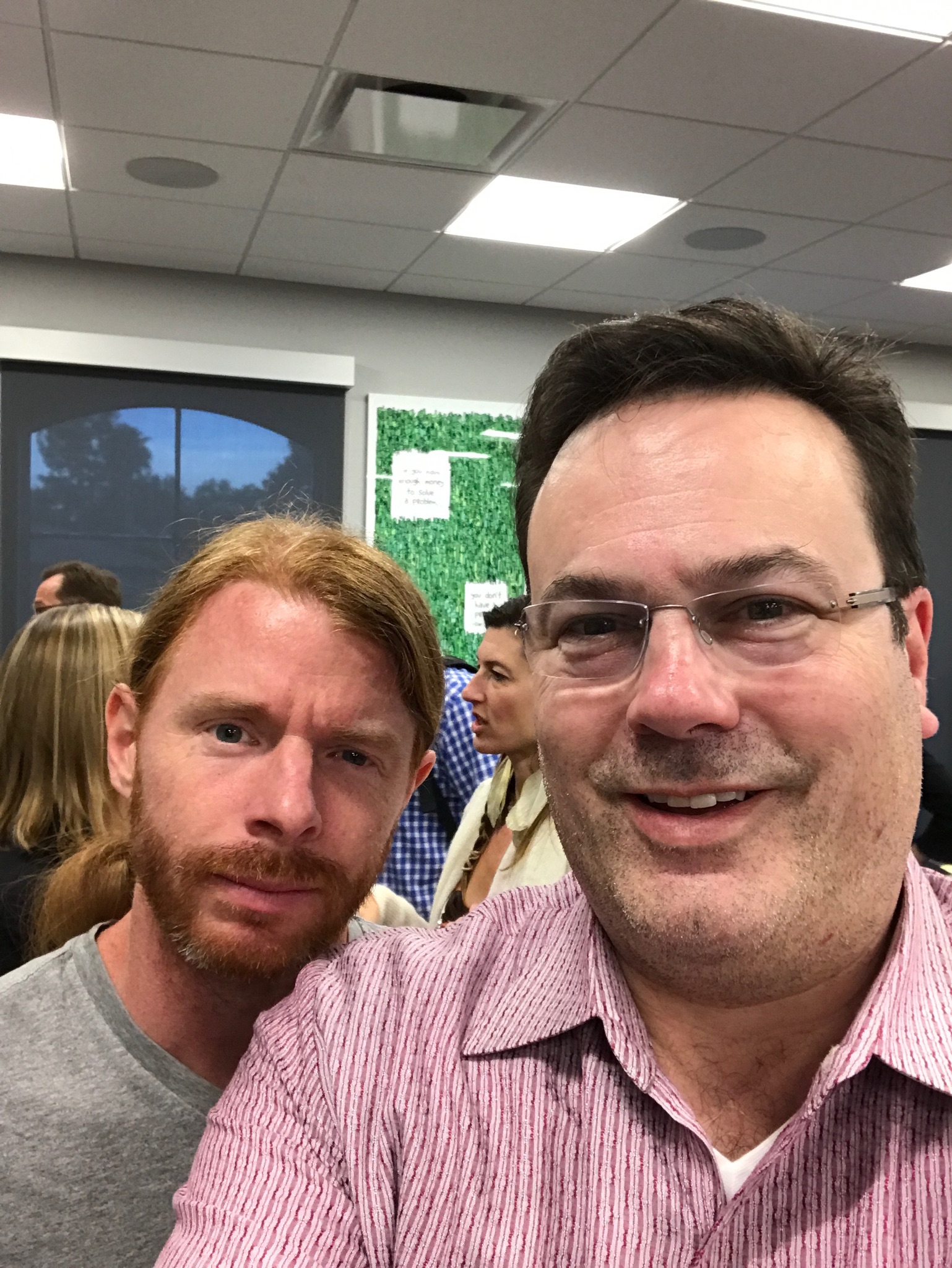
JP Spears is famous for his humor. However, before he found this "character," he made his money as a spiritual coach. One step under the surface, I believe there are a few consistent hidden messages in his humor.
The first hidden message is to let go of what served you that no longer serves you.This is also a key to profitable trading. The market doesn't care what your favorite trade looks like. Nor does it care whether you're comfortable, or how you made money in the past.
You have to be more committed to your results than you are attached to your process.
Many times, your favorite practice is more beneficial to you as a nightlight, which keeps you comfortable, rather than as an alpha-generating strategy, tactic, or technique.
The second hidden message in JP Sears' humor is to look for happiness where it is, not where it isn't. This also is a key to trading. It doesn't make sense to look for a good trade in a bad market. The key is to understand where your edge is, and to use it where and when it exists.
In the video, JP says that we should all stop using our "analytical minds" to trade, and instead use our third eye – and while I don't think my third eye is the answer, I do think our analytical minds can confuse us instead of help us.
Look at it this way: Less than 10% of active traders beat the S&P 500 any given year; and if they beat it one year, the chance is less than a coin flip, that they beat it again the following year.
Most traders understand that analysis and knowledge isn't enough anymore.
So what's the answer?
Well, if you watched the video, I'm leaning towards algorithms and artificial intelligence.
That doesn't mean looking for the "Holy Grail" – or a good set of three to five trading systems either. First, there's no Holy Grail, and it isn't realistic to believe a few systems can handle the chaos of modern markets.
There's always something working in the markets, but there isn't something that works all the time.
There's something to be said for knowing when to switch it up and try something new.
JP Sears was, and is, an emotional healing coach, and licensed "Holisitic Coach Advanced Practioner," but he found then when he posted a YouTube video he was excited when he got a couple hundred views (you can see his more serious origins in this video from four years ago).
He added the funny/satirical aspect as a complement to what he already knew, and it took him to the next level. He now gets millions.
Recently, we talked about billionaires and how they made their money. Today, I want to talk about companies that are valued at over $1 billion dollars.
In tech finance, a "Unicorn" is the moniker applied to private startups when they cross the supposedly mythical $1 Billion valuation level.
Well, fairy tales are coming true more often.
The number of Unicorns doubled in 2015 … and not just in number – but in value as well.
It's mainly comedy, but there are some nuggets of truth hidden in there.
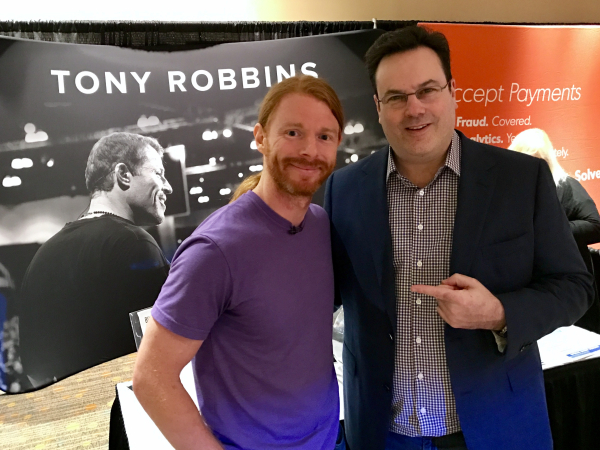
As for the Tony Robbins event, there is a lot of truth woven through lots of entertainment. And I'm always impressed by how masterfully he controls a room!
I've been to many Tony events in the past, but I get something new every time.
One of the ideas I liked was a concept he uses often … Victory is near!
The night is always darkest before the dawn. The storm is roughest before the break. And even after the coldest, darkest, winter … Spring appears.
If you're looking for a relatively short (but representational) glimpse at what Tony does – a good place to start is his TED talk on why we do the things that we do.
Some say change is the only constant … Others remind of death and taxes.
In this video, Bill Gates says we should tax robots.
Are we about to treat robots as "electronic persons"? It isn't unprecedented … we already treat certain business structures like people in tax and legal matters.
But, where does it stop?
If you tax robots … what's the difference between a robot, an algorithm, a cotton gin, or printing press?
Taxing increased productivity could have happened at any time.
Are we ready to change the face of capitalism and society?
At the extreme, it raises a question, if production and efficiency can be raised without as many humans working, what will humans do?
This quickly leads to some far-fetched (but thought-provoking) ideas and conversations. For example, recently Elon Musk (and this presidential candidate) proposed a Universal Basic Income. The basic premise of this is that by giving people the minimum income necessary to survive, you free them up to do what they're passionate about.