Hans Rosling, a Swedish medical doctor, academic, and statistician became famous for just that.
He died last week. Sadly, that is what prompted me to review some of his videos, and to share this.
Rosling called himself an "edutainer." He had a knack for explaining difficult concepts (like global inequality, climate change, disease, and poverty) using a sense of humor and a strange collection of props (including, maps, storage boxes, and colored stones) to tell the story of our world.
For example, in an interview with the Guardian, Rosling beckons: "Let me show you the world," as he used stacks of Lego-like bricks to demonstrate the dynamics of population growth, child mortality, and carbon dioxide emissions.
"The challenge for the world is to get everyone out of extreme poverty and get the richest people to use less fossil fuels so that everyone can share their energy levels," he said.
His messages were often more positive than most would think, demonstrating that life is getting better for more people, if we only bothered to look at the numbers.
Here are links to two other Rosling posts worth a look.
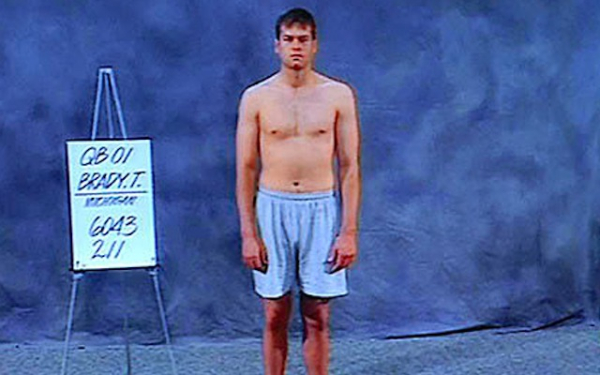
When you see this picture from the 2000 NFL Combine, it's hard to believe that Tom Brady would be a 3-time Superbowl MVP taking the Patriots to their 5th under his reign.
The Patriots are a well-oiled machine, and it's not because their players are better than the rest.
Keep in mind, the NFL is a league at the top of the food chain (their athletes are the best of the best). Moreover, the NFL actively creates rules designed to level the playing field and create parity.
So, it is hard to create a team that 'can't be beaten' – When it happens, it happens because of culture, coaching, and process. Ultimately, somehow, winners find a way to win.
Bill isn't known as the friendliest (and he's certainly not known for dishing out praise) – but he is known for discipline (and lauding hard work when it's deserved).
More importantly, Belichick created a framework of success that isn't reliant on the individual – and it is that which allows the individual to shine.
Frameworks create the structure that allows, focus, specialty, and the freedom to improvise.
The System is the 'system'; but, within it, you can measure what works, who contributes, and use it to identify the best things to try next.
Win, lose, or draw … some things speak for themselves.
In my office, we use a lot of what seems like "futuristic" artificial intelligence approaches to understanding financial markets. Most of my team are technical or data-science specialists that develop and drive the systems that create our systems.
Pretty soon, we may start to question where using humans is still smart or cost-effective.
In the meantime, I'm fascinated by what is becoming possible … and how, even when the A.I. is little more than an elegant use of brute force, incredible results are becoming commonplace.
Recently, in an interview with Tom Bilyeu (co-founder of Quest Nutrition), he addresses the issue of Millennials – and why they seem lazy and unfocused.
Sinek points to four characteristics that help "create" this issue:
Parenting,
Technology,
Impatience, and
Environment.
Sinek suggests that this generation is a product of failed parenting strategies … being told they're special without effort, being told they can have anything they want, and being handed trophies for showing up.
Next, add technology to the mix.
Before millennials, interaction happened in person much more frequently … meaningful trust-based relationships were built with time and effort, and when you were at dinner with friends, or watching a movie, you were at a dinner with friends … not on your phone.
For added irritation, next add impatience (which is a byproduct of instant gratification).
Why wait for amusement when it's a text away? You've got Netflix making video rental a thing of the past, Tinder making dating as easy as "swiping right" and Amazon making it so you don’t have to checkout when you go to a store.
Is it any wonder that these kids have short attention spans?
Now, put those kids in an environment where they're forced to realize you can't rush success, and you can't force meaningful relationships.
It's a recipe that has often terminated without a happy ending.
I thought it would be fun to ask one of them, what they thought about it …
So I asked my son, Zachary. Here are his thoughts.
I was born in 1993. When I was in elementary school, I was already using a computer almost daily, and a lot of my education and entertainment was computer-centric.
As such, I am a textbook “Millennial.”
I use Snapchat too much, I relax by playing video games, and at times I can be unacceptably lazy.
Because of that, I found this interview with Simon Sinek particularly interesting.
I’ve been lucky. My dad did a good job of forcing me to work hard, and valued my efforts more than my results. So, while I'm constantly reminded that I'm lucky I'm not working 80 hour days (and being forced to get a haircut every week) I do feel as if I'm a step ahead of many of my peers.
I still find myself falling in to a lot of the "traps" Sinek describes – I'm reliant on social media; I'm frustrated when my effort doesn't transfer in to immediate impact; and I struggle to not take my phone out in social situations.
I do think the issue is bigger than millennials. It's not just our generation that takes their phones out at meetings and ignores who they're with for someone on their phone. If you pay attention I'll bet you'll notice you do it as well.
The difference, I think, is that millennials spent their formative years in this environment.
This does effect the way we see and interact with the world.
Will we ever measure up to your expectations?
Perhaps not … because our generations approach the world the world so differently.
Nonetheless, we are still capable of great things. We are still driven to create and pursue great things. It's just that we are playing a different game and keeping score a little differently.
Understanding that, in and of itself, can help to close the gap.
I’d love to hear your thoughts on the subject, and any tips you might have for someone relatively new to the corporate world. You can e-mail me at [email protected].
You don't have to be a rocket scientist to understand this quote from Einstein.
"When you are courting a nice girl, an hour seems like a second. When you sit on a red-hot cinder, a second seems like an hour. That's relativity."
It is about more than perception. Here is something that highlights the relative value of time.
The Value Of Time:
To understand the value of a year, talk to a student who has failed an important exam.
To understand the value of a month, talk to a mother who has given birth to a baby a month prematurely.
To understand the value of a week, talk to the publisher of a weekly newspaper.
To understand the value of an hour, talk to a couple in love who are separated and want only to be together again.
To understand the value of a minute, talk to someone who has just missed their train or plane flight.
To understand the value of a second, talk to someone who has lost a loved one in an accident.
And to understand the value of a millisecond, talk to someone who won the silver medal at the Olympic Games.
Time waits for no one. So it is important to remember to make the best use of the time you have.
That Doesn't Mean Time Is Scarce Or Has To Be A Constraint:
Time is often thought of as a constraint or a scarce resource. There are lots of phrases that highlight this type of thinking. For example: I don't have enough time; I'm running late; I'm up against a deadline; There are only 24-hours in a day; or, I’m going as fast as I can. As you might guess, that list goes on further. Yet, time does not have to be that way … it can be a tool instead.
So, I started to think about how I used time. Was I making the most of it … or taking it for granted? It didn’t take much introspection to notice a few of the ruts I fell into. I'm going to talk about one of them, here, because a small shift had a massive impact. The thing we changed was our pace.
A Change of Pace:
When I jog, the beginning and the end are the hardest for me. Yet, after I find that initial pace and I settle into a comfortable rhythm, the majority of the run is relatively painless. My mind and body switch to an nearly automatic mode and I have time to think about many things.
Work is similar in many respects. Once a team gets in a rhythm, work and progress are somewhat automatic. Breaking inertia is a challenge; but people recognize that it's a challenge. The more insidious problem is to fail to recognize that the work rhythm that's comfortable, and which produces progress, is still a rut. It doesn't stretch and challenge the team to strive for more. Yet, this stretching is what drives innovation. It's the thought we haven't had yet … and a new perspective that changes everything.
Changing your pace can be an incredible catalyst to make that happen for you. For example, imagine that we put together a new portfolio in two weeks, on a wholly new tech platform, with new markets, and using new techniques. Then we tested, re-balanced and rebuilt that portfolio in one week. What we did, or the time in which we did it, wasn’t important. The important part is that it caused the team to work at a radically different pace than before. It was a sprint.
Moreover, this sprint caused us to re-think what we do, and more importantly, how we do it. Many of the innovations and new distinctions that we discovered through this process will work their way into other areas of our work, and will act as a catalyst for us to re-evaluate the way we do things.
A Challenge For You:
I challenge you to consciously change the pace of something that you are already comfortable doing a certain way. The pace can be faster, or the pace can be slower … it doesn't matter. Then notice what comes up for you, and what new opportunities and possibilities you discover.
Time is a valuable resource. Take this opportunity to re-examine how you can best view and use time to make the most of it.

 In my office, we use a lot of what seems like "futuristic" artificial intelligence approaches to understanding financial markets. Most of my team are technical or data-science specialists that develop and drive the systems that create our systems.

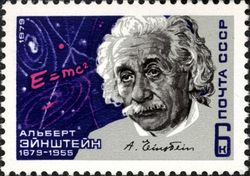 In many senses time is relative.