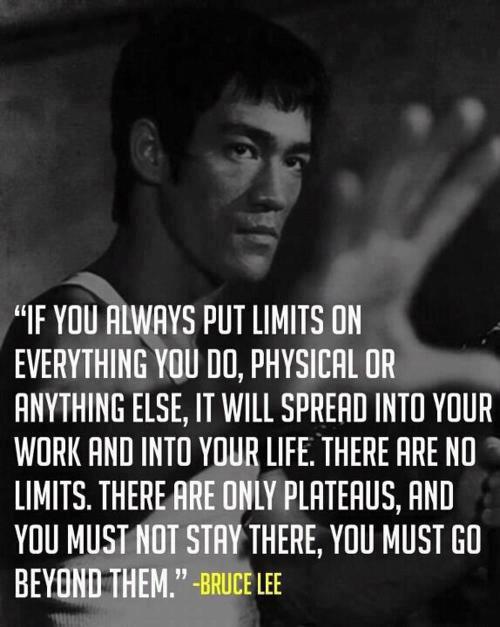
If you always put limits on everything you do, physical or anything else, it will spread into your work and into your life. There are no limits. There only plateaus, and you must not stay there, you must go beyond them.
Energy flows where
focus goes … and questions are a great way to direct focus.
Planning is one
thing, “real life” is another.So, how do
you give stakeholders a clear picture of what’s happening, the relevant business
terrain, and the best path for them to navigate given their daily challenges
and objectives?
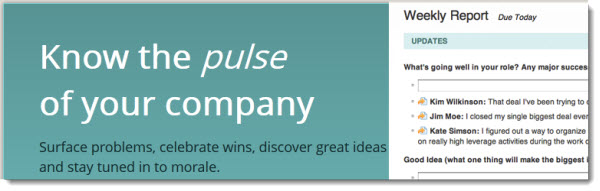
15Five is a
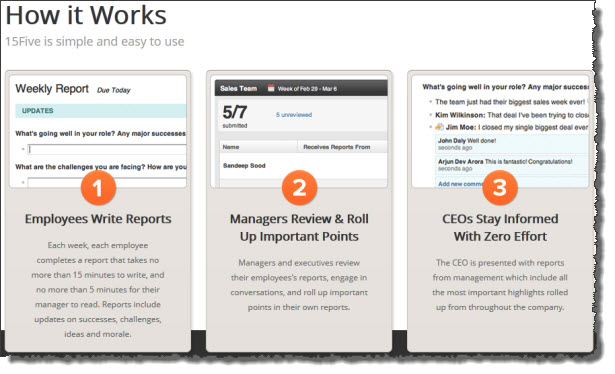
management tool that can help with those issues.It consists of a few simple questions that
each of your direct reports has an opportunity to fill out each week.
The name, “15Five”, comes
from the concept that it should take someone 15 minutes to think about and fill
out their answers to these questions; while it should take you about five
minutes (per person) to review those answers and give feedback. These responses
can be public or private, as you see fit.
The good news is that
15Five is simple and usable.You’ve
probably heard the phrase “Garbage in, garbage out.”More importantly, though, “Nothing in,
nothing out.”If people don’t use a
tool, it is tough to benefit from it, regardless of how “good” it is.
So, How Did Our Team Respond to This New
Tool?
Predictably, after a
week or two of using it, several members of the team approached me to ask how
long they'd have to do this. However, just a few weeks later, some of those
same people shared how much they're enjoying the process.
Ultimately, they
recognize that it's helping them raise their focus from the immediate to a
chunk higher. They also recognize that it's a chance to have a one-on-one
conversation with their boss about what they want to talk about … without
taking time away from their work or interrupting their focus time.
The 15Five process
also gives respondents a chance to think about and prepare worthy answers
(rather than to feel tongue-tied or regretful that they failed to mention
something when they had the chance).The
result is something they are likely to be proud of – and something to build
upon.
For the manager, it
is a chance to give individual attention to each respondent. It also provides
an easy way to comment (or ask for additional information) about specific
ideas. Just click a button and write your note. The other party gets an email
that they can respond to directly, or they can see it in the conversation
thread for that week’s report.
Where Is Value Added?
15Five helps people
think about the business (rather than simply working through their daily grind).
It helps them recognize why what they are doing matters, and how what they are
doing helps move things in the right direction. As a result, using the tool builds confidence and momentum. Ultimately,
15Five helps people steer themselves to take appropriate actions and make
better decisions.
As a trader, I
understand that price is the primary indicator of the market. However, to get a
better understanding, many traders use secondary indicators (like sentiment,
momentum, rate of change, or even the response to good or bad news). Beyond a direct communication tool, these are
the types of insights that the 15Five feedback mechanism makes possible.
For example, don't
just look at one week's set of responses in a vacuum. Instead, notice the tone
and the amount of care that someone uses when they send you their information.
Coachable Moments.
Here is another
example.If someone typically writes
three or four sentences to respond to a particular question, but this week they
only responded with three words, that might be an important thing to pay
attention to and note.
Sometimes a
non-answer is important. Last week one of the questions was “What
challenges are you facing? How are you going to fix it, and where do you need
help?”Someone answered that
they were not facing any new challenges that week. Great, right?Or, is that really an opportunity for
coaching?
In that situation, my
response was: “There are always challenges. Sometimes they are easy to spot
because they clearly present themselves as problems.Other times they can show up as opportunities
or choices … Sometimes, however, they are harder to identify because they could
stem from something as subtle as conflicting desires. Remember that the goal of the question to look above the
day-to-day activities to focus on your higher level intent and purpose.”
The point is that 15Five
gives you great opportunities to add value – and the time to notice coachable
moments. Here are some examples:
Is
somebody telling you what they “don't
want” rather than what they
intend to do?
Are
they so focused on the obstacles and challenge that they forget to recognize the opportunity or potential
competitive advantage?
Are
there opportunities to include other
people to create a unique ability team rather than a solo effort?
Are
there things that you can express
gratitude about or help the other person to feel proud about?
Are
they focused on the forest for the trees? If so, what is a quick compass check to ensure that we are moving in the
right direction?
Are
they focused on the right part of the problem; and have they right-sized it into chunks small enough to work on
effectively?
What does this
accomplishment make possible? And
how can we continue to build confidence and momentum?
From my perspective, the
thought process and preparation may be more important than the answers
themselves.
So, Is It Worth Paying For?
15Five helps avoid
communication problems by creating and preserving appropriate context for
decision-making.In addition, it is a
tool you can use to effectively direct focus and “steer” the company.
It is also worth
noting that 15Five feels like a separate tool. Because of that, I suspect people respond differently to it than they would
to a simple email or a discussion thread on the corporation’s private intranet.
Ultimately, this
process is something that people like better and gain more value from as they
do it more and do it better.
Energy flows where
focus goes … and questions are a great way to direct focus.
Planning is one
thing, “real life” is another.So, how do
you give stakeholders a clear picture of what’s happening, the relevant business
terrain, and the best path for them to navigate given their daily challenges
and objectives?
15Five is a
management tool that can help with those issues.It consists of a few simple questions that
each of your direct reports has an opportunity to fill out each week.
The name, “15Five”, comes
from the concept that it should take someone 15 minutes to think about and fill
out their answers to these questions; while it should take you about five
minutes (per person) to review those answers and give feedback. These responses
can be public or private, as you see fit.
The good news is that
15Five is simple and usable.You’ve
probably heard the phrase “Garbage in, garbage out.”More importantly, though, “Nothing in,
nothing out.”If people don’t use a
tool, it is tough to benefit from it, regardless of how “good” it is.
So, How Did Our Team Respond to This New
Tool?
Predictably, after a
week or two of using it, several members of the team approached me to ask how
long they'd have to do this. However, just a few weeks later, some of those
same people shared how much they're enjoying the process.
Ultimately, they
recognize that it's helping them raise their focus from the immediate to a
chunk higher. They also recognize that it's a chance to have a one-on-one
conversation with their boss about what they want to talk about … without
taking time away from their work or interrupting their focus time.
The 15Five process
also gives respondents a chance to think about and prepare worthy answers
(rather than to feel tongue-tied or regretful that they failed to mention
something when they had the chance).The
result is something they are likely to be proud of – and something to build
upon.
For the manager, it
is a chance to give individual attention to each respondent. It also provides
an easy way to comment (or ask for additional information) about specific
ideas. Just click a button and write your note. The other party gets an email
that they can respond to directly, or they can see it in the conversation
thread for that week’s report.
Where Is Value Added?
15Five helps people
think about the business (rather than simply working through their daily grind).
It helps them recognize why what they are doing matters, and how what they are
doing helps move things in the right direction. As a result, using the tool builds confidence and momentum. Ultimately,
15Five helps people steer themselves to take appropriate actions and make
better decisions.
As a trader, I
understand that price is the primary indicator of the market. However, to get a
better understanding, many traders use secondary indicators (like sentiment,
momentum, rate of change, or even the response to good or bad news). Beyond a direct communication tool, these are
the types of insights that the 15Five feedback mechanism makes possible.
For example, don't
just look at one week's set of responses in a vacuum. Instead, notice the tone
and the amount of care that someone uses when they send you their information.
Here is another
example.If someone typically writes
three or four sentences to respond to a particular question, but this week they
only responded with three words, that might be an important thing to pay
attention to and note.
Sometimes a
non-answer is important. Last week one of the questions was “What
challenges are you facing? How are you going to fix it, and where do you need
help?”Someone answered that
they were not facing any new challenges that week. Great, right?Or, is that really an opportunity for
coaching?
In that situation, my
response was: “There are always challenges. Sometimes they are easy to spot
because they clearly present themselves as problems.Other times they can show up as opportunities
or choices … Sometimes, however, they are harder to identify because they could
stem from something as subtle as conflicting desires. Remember that the goal of the question to look above the
day-to-day activities to focus on your higher level intent and purpose.”
The point is that 15Five
gives you great opportunities to add value – and the time to notice coachable
moments. Here are some examples:
Is
somebody telling you what they “don't
want” rather than what they
intend to do?
Are
they so focused on the obstacles and challenge that they forget to recognize the opportunity or potential
competitive advantage?
Are
there opportunities to include other
people to create a unique ability team rather than a solo effort?
Are
there things that you can express
gratitude about or help the other person to feel proud about?
Are
they focused on the forest for the trees? If so, what is a quick compass check to ensure that we are moving in the
right direction?
Are
they focused on the right part of the problem; and have they right-sized it into chunks small enough to work on
effectively?
What does this
accomplishment make possible? And
how can we continue to build confidence and momentum?
From my perspective, the
thought process and preparation may be more important than the answers
themselves.
So, Is It Worth Paying For?
15Five helps avoid
communication problems by creating and preserving appropriate context for
decision-making.In addition, it is a
tool you can use to effectively direct focus and “steer” the company.
It is also worth
noting that 15Five feels like a separate tool. Because of that, I suspect people respond differently to it than they would
to a simple email or a discussion thread on the corporation’s private intranet.
Ultimately, this
process is something that people like better and gain more value from as they
do it more and do it better.
Bottom Line: It
clearly adds value. Give it a try.
Imagine being a performing artist who has a song what's on the top of the charts. Now imagine how much time and effort you put in to getting that song "just perfect." The perfect phrasing; when to breathe just a little bit deeper in order to hit that note; the gestures and dance steps to make it even that much more special …
Now imagine the other side of artistry … The fact that it's "perfect" means that it's no longer challenging. How do you convey something special if it's no longer special to you?
It's just as true for business person is it is for a performing artist; there's always something new — and there is always a possibility of something more.
Below is a music video put together by the artist called Gotye. You probably know him from his “Somebody That I Used To Know” video, which has now been played more than 300 million times.
The version below isn't the music video that made him famous. Instead, he put this video together solely from clips that he found on the Internet of people either imitating, innovating, or parodying his original work of art.
Watch Gotye's "Somebodies" … In some ways, it may be better than the original.
What a great reminder that you can always find "just a little bit more" if you're committed to searching for it hard enough.
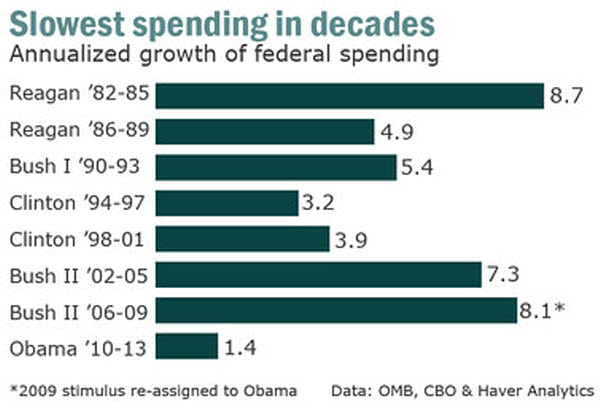
Are you confused? At this point, we've been exposed to so many conflicting ideals and "facts" that it's hard to know anything.
For example, if I asked you "Who was the smallest spending president since Eisenhower?" – What was the first name that came to your mind? Did you guess Barack Obama? Well, according to this Forbes article, that may be the correct answer.
In a situation like this, many dispense with facts in favor of beliefs.
As a trader, I believe the market tips his hand by showing how it responds to news. When good news is met with selling, that tells you something. However, when bad news is met with price surges, that tells you something very different.
In this case, the US equity markets are at highs they haven't seen in a decade, despite facing more than a little geopolitical, economic, and political instability.
Doesn't your gut tell you we've seen the low for the year? Isn't there part of you (that wants to argue with your better judgment) saying "Don't fight the Fed" … ?
It is entirely possible that markets rally hard into the election.
I may not have facts, but sometimes it's easier to hold beliefs than Hope.
Whether you like the Cowboys, or not, one thing we can probably all agree about is that old white dudes shouldn't rap too often. At least that's what my kids tell me when I try it.
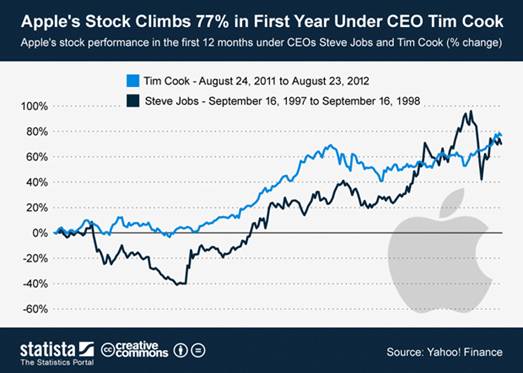
One year ago, on August 24, 2011, Apple announced the resignation of Steve Jobs as CEO and named Tim Cook his successor. Questions as to whether Apple would continue to thrive without its iconic CEO Jobs immediately surfaced.
One year later, it can be said that Tim Cook did a very good job, given the enormous footsteps he had to fill. During his first year as CEO, Apple’s stock price climbed 77 percent and Apple became the most valuable company in the world.
Interestingly, in the first 12 months after Steve Jobs had been named interim CEO of Apple in September 1997, Apple’s stock also soared more than 70 percent. The obvious difference being that Apple was on the verge of bankruptcy in 1997 and Jobs managed to turn the company around.
Tim Cook didn’t need to turn anything around but he managed to keep the company where it was when he took over: on top. That’s not too bad an accomplishment to start with.
Further, the big patent case win will shape the competitive landscape for years to come … onward.
We
were looking for an easy way to track employee time and activities. On one
hand, we wanted to ensure that people are working (and that they were working
on the "right" things). On the other hand, we didn't want to disrupt
focus time or hinder performance.
After
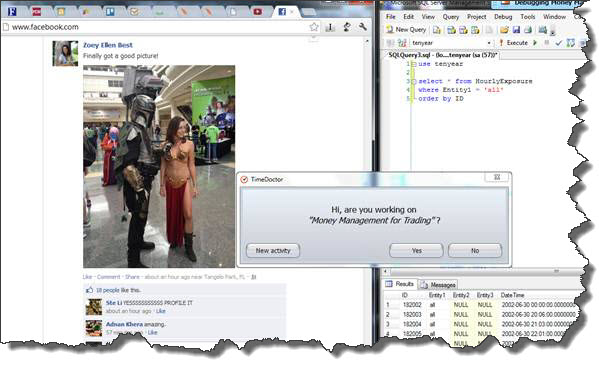
doing some research, we found a tool called "Time Doctor". It sends daily reports to workers (and
their managers) of current tasks and the time log for the previous day.
This
software also tracks web sites visited and applications used. As you might
hope, if someone seems to be spending too much time on “distracting” sites like
YouTube or Facebook, it “nudges” them by asking whether or not they are still
working. Likewise, after a period of inactivity, Time Doctor will ask whether
or not that time was spent working.
It
is worth noting that Time Doctor does these things automatically, with minimal
disruption or effort.
The
application consists of a desktop component which connects with a server and
provides reports to management via e-mail (or a website). That means it works great even when people are in different locations.
You
Can’t Manage What You Don’t Measure.
With
that said, collecting data is different than gaining insights from data. For example, Time Doctor helped us figure-out what the chunks (or sub-projects) really looked like at the work level; this allowed us to name and right-size them at the planning level.
In addition, employees
can gain insights about how they actually spend their day compared to how they
planned to spend their day. Likewise, this data is useful at planning sessions
to ensure that we actually do the things we said we were going to do — and
that people are working on doing what is necessary for “success” in their job.
When someone is working too long — that may show effort; but you don't necessarily want people working harder. It is an opportunity to discuss delegating, automating, or just saying "no" to certain things. With growth, many projects become possible. As a team, you have to be careful with your choice of which ones get scarce resources (your time, machine cycles, etc.). Your choice to do something often means a corresponding choice not to do something else. That choice should be conscious.
Time Doctor creates an opportunity to do more than just say "No" to a task … Instead, it can be the catalyst to re-direct that work to a different resource. Something that would cause overflow for someone
might be a career upgrade or great opportunity for someone else.
What
Are You Trying to Improve?
A
tool like Time Doctor is not a replacement for assessing someone's actual work
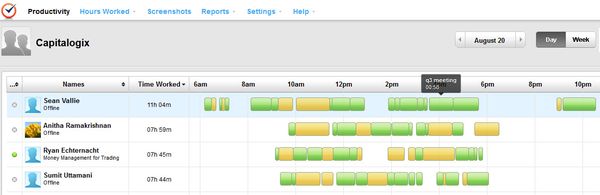
output, yet, it’s a very powerful tool to get extra data points. For
example, you can find-out how many hours someone has been working, who they
have been collaborating with, and whether they are in front of a computer or a
customer?
Right
out of the box, Time Doctor does what it's supposed to do. Nonetheless, if you
want to get more out of it, you have to have the right intent.
Simply
seeing a list of the tasks and activities that people work on throughout the
day is useful. However, using that information to time when you talk with
them, or help coach them to spend time on higher priority items is when you are
actively managing and adding value, rather than simply data tracking.
So check out Time Doctor. It is an effective productivity and
management tool for your team. Used properly, it will help you mark good management practice and encourage your team to a higher standard of performance and participation.
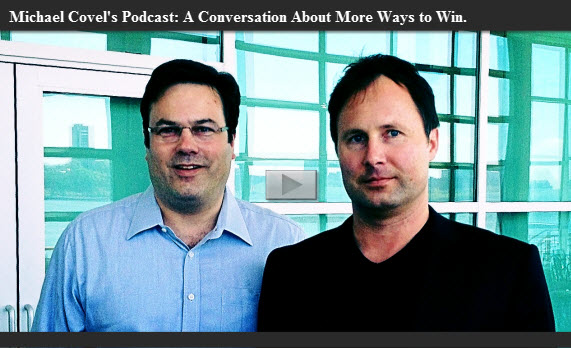
In addition, he has been talking with great traders and thought leaders about a wide range of topics. I'm honored that he chose to talk with me last week. Here is a link to the Interview.
We talk about the business of systematically finding edges through all sorts of different approaches – not only trend following. I like to think of it as finding more ways to win.
And we talk about a broader range of topics as well. For example, we discuss the "E-gene", and how entrepreneurism is at the core of what we practice.
Other topics include:
how hunches can be dangerous;
turning your hobby into your business;
recognizing patterns;
thinking big;
the "three levels of mastery" – cognitive, emotional, and physical;
how minimum standards can define your life;
how systematic trading can define your minimum standards; and
controlling emotions through automation.
We also discuss the importance of the world outside America, and which area both of us agree is important to keep an eye on.
There is a lot of good stuff in the interview. Hope you enjoy it.