Business

  • Setting Yourself Up For Success

    We're about to usher in a new year – along with its promise and pressure.

    We get a fresh start.  We look forward to what we will achieve – but history says we rarely achieve everything we hope (it is also true that we rarely achieve things we don’t hope for).

    So, dream big dreams!

    Personally, I’m excited about 2019. Despite the volatile market and uncertain political climate, Capitalogix has spent almost 20 years preparing for where we are today. 

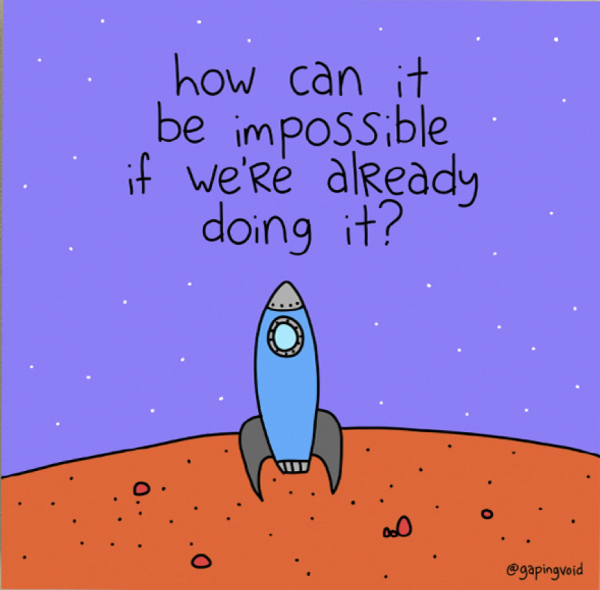
    Regardless of the outcome, we are doing things that seemed like science fiction even a few years ago.  

    I commissioned this image to remind our team to keep shooting higher.
     

    How Can It Be Impossible If We're Already Doing It_GapingVoid


    Resilience, resourcefulness, and a worthy goal are the keys to many entrepreneurial success stories.

    In the spirit of New Year's Resolutions – I’ll add that a deliberate approach to goals is important too.

    Commit to your bigger, directional compass, goals. 

    Once you know what your long-term goal is, it is relatively easy to plan out the steps you need to achieve that goal.  Achieving smaller goals reinforces success, builds momentum, and makes continued progress feel more likely.

    Extra points if you make them SMARTs (Specific, Measurable, Attainable, Realistic, and Time-Sensitive).

    It's not "I want to lose weight this year" it's "I want to exercise at least three times a week and track my calories daily so I lose at least 1 pound each month."

    Actions speak louder than words, and your words can distract you. 

    If your goal is to win first place at a competition, focus on the metrics of a first-place finish instead of the medal. This makes the goal concrete and sets an internal locus of control on your victory.  This also means that you don't need to tell others your goal too soon. Studies show that when you announce your intention to a goal in public, you decrease the likelihood of you succeeding

    Ask yourself: 

    Are the people around you the right people? Are you putting your money where your mouth is? Are you taking ownership of your actions, even when you can find excuses not to?

    It's okay to misstep, it's okay to get stuck – but recognize what you've done and move forward. 

    Often the most frustrating thing that any of us feel on a regular basis is to want something really bad, and not be able to get it right away.

    It's getting so that it's increasingly rare to find people who are truly willing to put in the requisite time necessary to get the traits or items they want.  Our world today is trying to teach us that we must get what we want immediately; that it's our right.  And that's why so many of us are jealous, smoke or drink, are overweight, use drugs, etc. …

    Life is NOT like school.

    In school, you can trick yourself into thinking you're doing great if you cram for exams and get decent scores. It is possible to get fairly good grades for a while that way.

    But you don't learn it.  You're likely to just remember it until the exam is over… maybe.

    In school, you can fool the system and yourself.  In the rest of the world, success leaves clues (and an imprint on you and your behavior patterns).

    Real life is like a farm.

    On the farm, you must choose what to plant.  Then, you must move the rocks, buy the seeds, till the soil, plant the seeds, buy and maintain the equipment, pull weeds, keep the pests away, water the crops, fertilize, etc.  And, for the most part, it’s not one and done … you need to keep up with what’s needed every day!

     

    Depositphotos_2758787_xl-2015

    Follow the plan, and with some luck, you’ll harvest a decent crop at the end of the season.

    Life is like this, too.  You can't "cram" in life. 

    Don't be fooled.  Overnight successes often take a lot longer than you’d think to gestate.

    Luck often takes a lot work.  

    Put the effort in today and you'll get luckier and luckier.  Will it be immediate?  Probably not.  Beat this into your head… Anything truly worth having is worth the time, the effort, and the sacrifice you need to invest in order to get it.

    My grandkids one day will look back and say "Wow, our grandpa sure was in the right place at the right time." And to a certain degree, they're right … but it took a lot of work to be this lucky. 

    It's also important (once you've accomplished your goal) to set new goals. Capitalogix has a 20-year plan from today, and that's because I never got comfortable with what we'd accomplished.

    If you're standing still, you're moving backward. 

    Here's to a successful 2019 and an even more successful 2040.  

    Onwards!
  • How Does America Use Its Land?

    America is big and pretty heavily populated.  Surprisingly, 28% of the land is owned by the government (check out this YouTube video). 

    As you might guess, the eastern US holds almost no federal land while the Western US has states that are primarily federal land (Nevada is 84.9% federal land). 

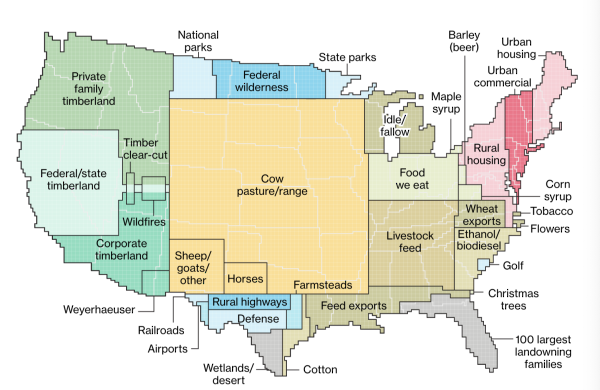
    Bloomberg had an interesting series of infographics that covered America's land use and relative profitability.

    To start, can you guess what takes up the most space … 


    Cows. 


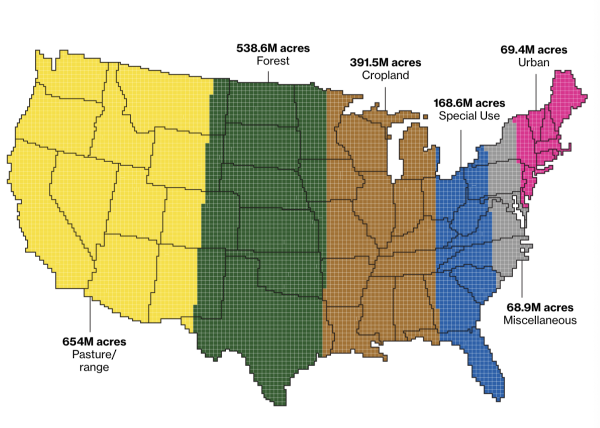
    Over 41% of the land in the contiguous US revolves around livestock and livestock feed. The farmland used to feed us is an afterthought in comparison – it makes sense when people talk about cows' environmental effect. 

    Screen Shot 2018-12-19 at 10.55.18 AMDave Merrill and Lauren Leatherby via Bloomberg

    Urban areas make up only 3.6% of land use – but four out of five Americans live there (and this area accounts for about 40% of GDP). 

    The map below gives us a rough idea of the split of U.S. land.  

    Screen Shot 2018-12-19 at 11.21.58 AM

    Dave Merrill and Lauren Leatherby via Bloomberg

    Urban growth is outpacing other categories, but we're also doing a good job of repairing forestland.  According to The Land Report magazine, the land owned by the top landowning families has grown to be larger than Florida – and is continuing to grow. 

    There are a couple extrapolations that you can make from this information – but I'm curious  … what do you take from this?

  • The Psychology Behind Gambling (and Everyday Traders)

    Vegas and Wall Street share a lot in common. 

    Over Time … The House Wins

    Casinos only offer to play games that they expect to win.  In contrast, gambling customers play even though they know the odds are against them.

    Why does this happen?  The rush of a win, the chance of a big win, and random reinforcement are common factors that incent people to play lotto, go to a casino, or try to trade.

    Chemicals like adrenaline and dopamine play a part as well.  Even in a sea of losses, your body can't help but crave the chemical reward of even a small win, 

    The "House" knows this and engineers an experience that takes advantage of it.  

    In the case of casinos, every detail is meticulously crafted to extract you from your money – from carpet patterns to the labyrinthian layouts, the music, the lights and even the games themselves. 

    Here is an infographic that lays it out for you. 

    Casino-psychology-infographicBojoko via DailyInfographic

    Most people aren't gamblers … the fear of losing big inhibits them.  However, when people were instructed to "think like a trader," they showed considerably less risk-aversion when gambling. 


    The illusion of control convinces us we can overcome the statistics. 


    When you almost get it right – when you miss the jackpot by one slot on a slot machine, when you just mistime a trade to get a big win – you're more likely to play longer, and place bigger bets … because you're "so close"

    It's human nature to want to feel in control. 

    This is why you find a lot of superstitious traders & gamblers. If you wear this lucky item of clothing … if you throw the dice in this particular way … if you check your holdings at this time every day … you have control. 

    There is a big difference between causation and correlation. 

    It is not hard to imagine that the majority of a trader's activities do little to create a real and lasting edge.  


    Skill vs. Luck

    There are games of skill, and there are games of chance.

    In a casino, poker and blackjack are considered games of skill.  In contrast, slot machines are considered a game of chance.

    In trading, predicting markets is much different than using math and statistics to measure the performance of a technique.

    Much of what we do is to figure out how to eliminate the fear, greed, and discretionary mistakes humans bring to trading.

    In trading, "Alpha" is the measure of excess return attributed to manager skill, rather than luck or taking on more risk.

    We believe in Alpha-by-Avoidance … Meaning much of what we do is figure out what to ignore or avoid so that the majority of the games we play are games of skill rather than games of chance.

    Are you playing the right game?


  • A Look Back At The Future, Part 2

    As the holiday season begins, I was thinking about my father.

    I love him and miss him … but, truth be told, I teased him mercilessly about being technologically challenged (especially around the holidays, when I'd buy him a new gadget –  only to roll on the floor laughing while watching him try to figure it out).

    Karma is a bitch!  My Dad used to say "whatever you make fun of me for … will happen to you." 

    I didn't yet realize how fast the world was changing … or how quickly I'd find it hard to keep up. 

    In 2015 I wrote an article about this titled "A Look Back at The Future". 

    It's only four years later … and somehow my realizations seem out-dated.

    It's not just me, it's everyone! 

    Realize that human perception is linear, but technological growth isn't.

    As technology progression evolves and quickens, it is going to get harder to keep up.

    Check out this video from 1974 … It shows Arthur C. Clarke making some impressive guesses about the future of technology.


    Now that we're here, it may not seem like an impressive prediction … but how cool was it that Arthur C. Clarke believed a computer would fit on a desk in 1974?   

    Do you think that you can predict what a computer will look like in 2034? 

    Artificial Intelligence, quantum computing, augmented reality, neuro-interfaces, etc. are all going to change the face and nature of computing and perhaps life itself

    We live in exciting times!

    Onwards.

  • Tackled on Thanksgiving

    Happy Thanksgiving!

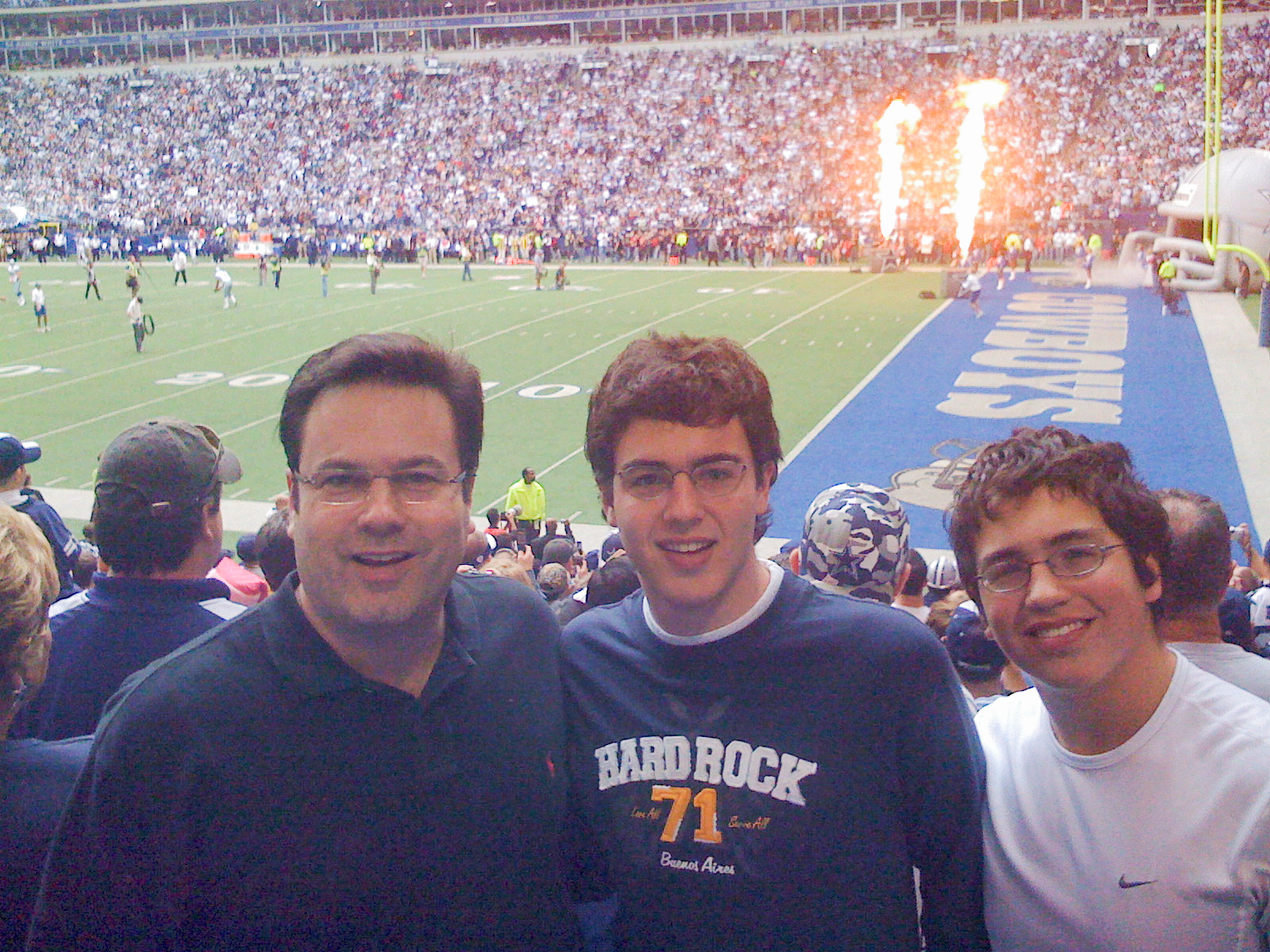
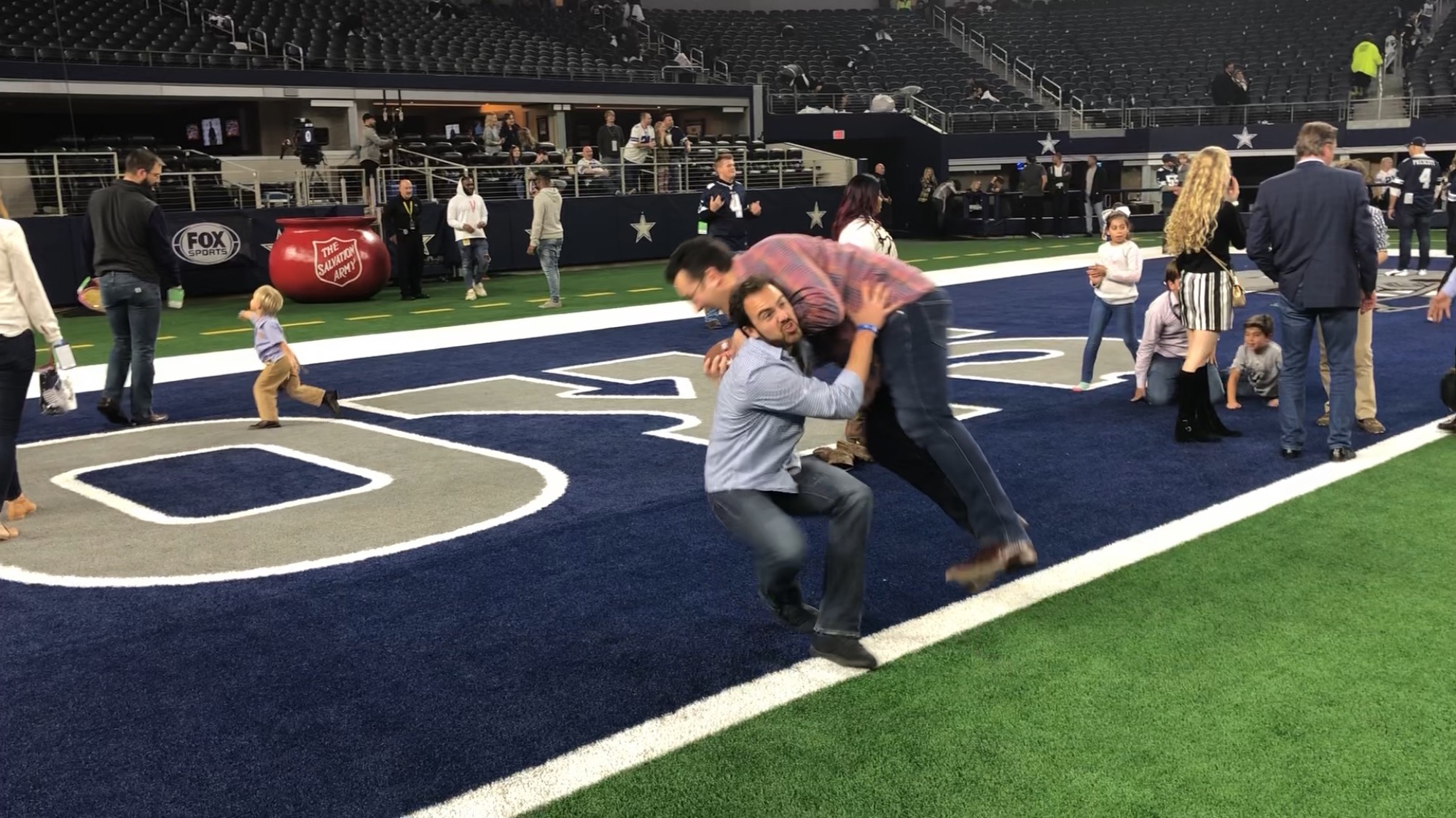
    My children came to town, and we continued our tradition of spending time together watching some football. The top photo is from 2008. 

    IMG_0083

    IMG_0965


    After looking at this picture, I recognize the burden I impose on my sons.  Some would call it crushing. 


    IMG_6349


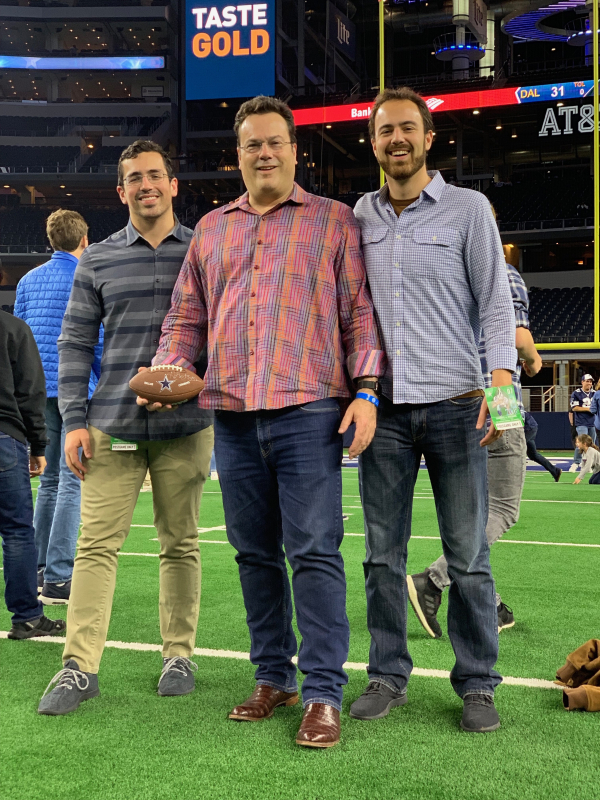
    That's my oldest son, Ben. He's a good sport.

    My youngest son, Zach, was happy to make sure that I got mine too. 


    He still plays Rugby. 

    I am thankful for my family, my company and that I continually face a better class of challenges … forging a path to a bigger future.

    What about you?

  • Storage Wars

    Have you ever seen the posts showing what happens in a minute on the Internet?  The speed and scope of activity is amazing …  so is how fast it is increasing.

    The same is true for storage.  It is getting bigger and cheaper quickly.

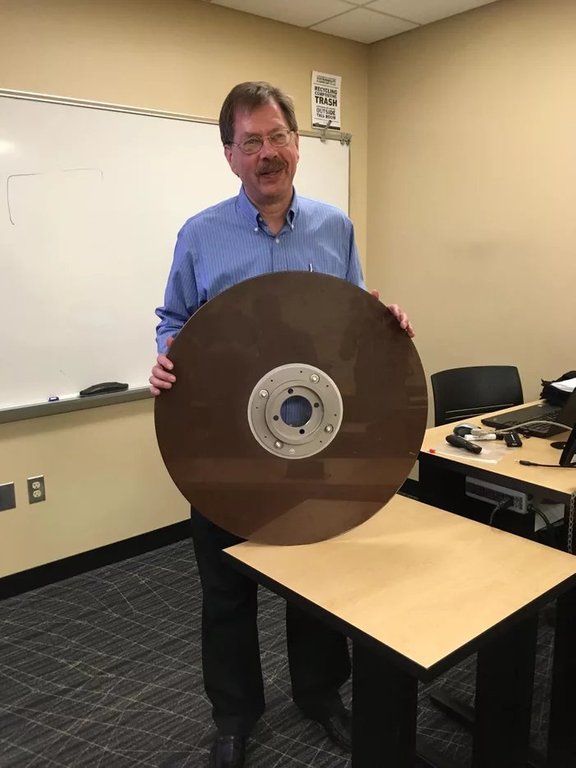
    This picture shows an IBM VP holding a 10 MB hard drive from the 1960s.   

    V06ve00dpdz11via novartistic

    When it was invented, I bet they wondered how someone could ever fill it.  Now imagine what it cost back then.

    For context, here are some things you can do with 10 MB of space:

    • Download approximately 3 songs
    • or 5 medium-sized photos
    • or store 50-100 HTML e-mails
    • or a 3 minute low-quality video (or 48 frames of 4k footage).

    Things are changing.

    Here's a link to a 256 GB flash drive that you can buy for about $50 dollars … and here's a link to a working prototype of a 1 TB flash drive.

    Here are some things you can do with 1 TB of space:

    • Store 17,000 hours of music
    • or an 85,899,345 page word document. (source)
    • or 250 full-length movies
    • or 310,000 photos.

    I wonder how someone could ever fill it?

    Crazy!

  • The Six Biggest Mistakes Ordinary Investors Make

    It's your livelihood, it's your retirement, it's your future. 

    Tony Robbins released an infographic on the six biggest mistakes ordinary investors make

    1. Seeking confirmation to your own beliefs
    2. Conflating recent events with ongoing trends
    3. Overconfidence
    4. Swinging for the fences
    5. Staying Home (tendency to invest in things that are familiar)
    6. Negativity Bias (tendency to overemphasize negative experiences)

    In other words, the biggest threat to your trading profits is your own brain.  Humans are wired to avoid pain and seek pleasure … and those tendencies just aren't conducive to smart trading. 

    It's getting harder to find an edge, let alone maintain one. 

    If you don't know what your edge is, you don't have one.

    The reality is, over 90% of trades are electronic, and over 70% are algorithmic.

    Do you think those numbers are going to increase or decrease?

    Firms are using faster computers and smarter algorithms.  On top of that, high-frequency traders are skimming alpha on the executi0n. 

    Here's one thing you can predict … It is getting harder for humans to trade against the machines.

    Momentum is building … but, it already happened.  The new world of trading is quantitative. 


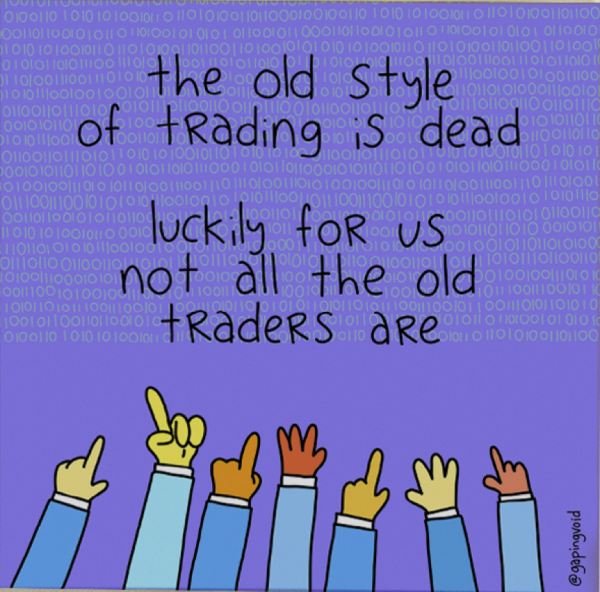
    The Old Style of Trading Is Dead Luckily Not All The Old Traders Are_GapingVoid

     The best way to avoid fear, greed, and discretionary mistakes is to avoid them.