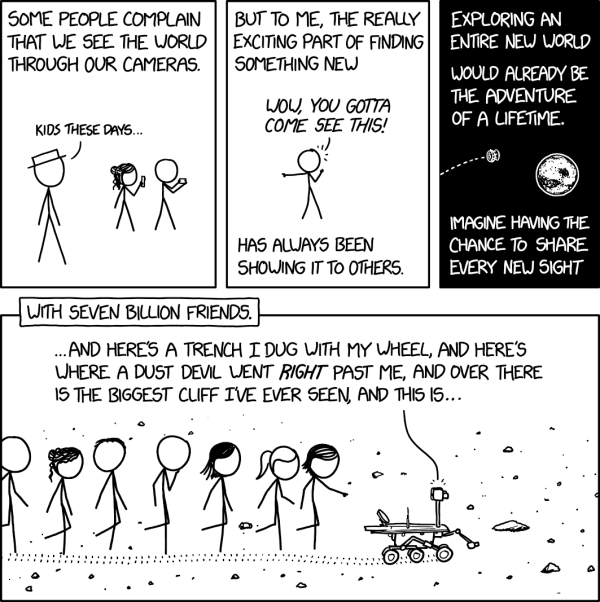
NASA's Mars Opportunity Rover has officially lost contact with earth after a fierce dust storm. Its last message was "My battery is getting low and it's getting dark." The rover's original mission was scheduled for 90 days … it lasted 14 years.
This week, I spoke on stage at IBM's Think! 2019 conference in San Francisco. Our topic was "Gaining a Financial Edge through Fast Data and Analytics." I think it went well (both the presentation and our exposure to lots of useful technology, talent, and opportunities).
Moscone Center was filled with people clamoring for information about artificial intelligence, big data, and flexible computing (think of it as being able to do what you want locally, in the cloud, or with a hybrid cloud … or through hardware or software). That means solutions are becoming independent of how they are produced, delivered, or consumed.
Pretty Cool! But, remember, the hype cycle precedes the adoption and benefits cycle. This will be an interesting decade.
The conference was in San Francisco. That is where my oldest son lives. Lucky for him, the most romantic Valentine's Day dinner is one spent with your dad right?
I thought it was fun. For them, at least there was Absinthe involved to dull the pain.
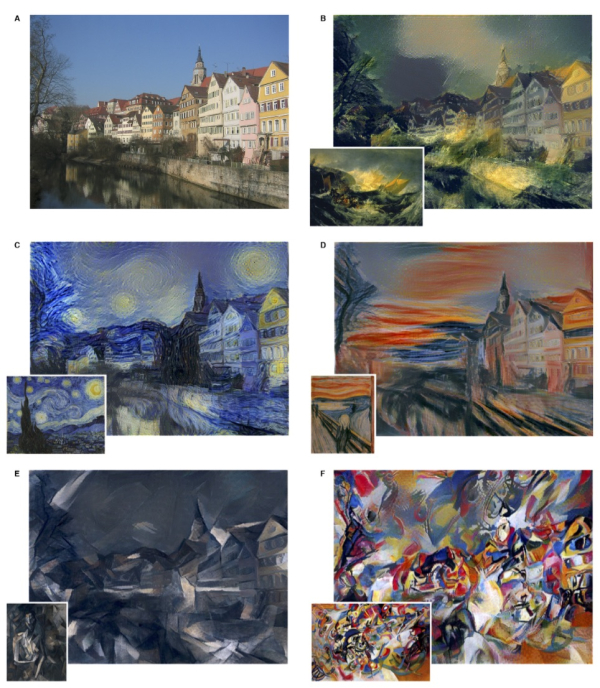
One thing that Deep Learning excels in is analyzing pictures & videos, and creating facsimiles or combining styles. If you want to create art with deep learning look no further than the Deep Dream Generator or deepart.io which use Convolutional Neural Networks to combine your photo with an art style (if you want to do it on your phone another cool tool to check out is Prisma).
Deepfake is it's exactly what it sounds like … the use "Deep Learning" to "Fake" a recording. For example, a machine learning technique called a Generative Adversarial Network can be used to superimpose images onto a source video. That is how they made this fun (and disturbing) Deepfake of Jennifer Lawrence and Steve Buscemi.
While this is a fun example, Deepfakes create very real concerns. They're often used for more "nefarious" purposes (e.g., to create fake celebrity or revenge porn and to otherwise make important figures say things they never said). It's likely you've seen videos of Trump or Obama created with this technology. But it is easy to imagine someone faking evidence used at trial, trying to influence business transactions, or using this to support or slander causes in the media.
The theory is a Super Bowl win for a team from the AFC foretells a decline in the stock market and a win for the NFC means the stock market will rise in the coming year.
There is one big caveat … it counts the Pittsburgh Steelers as NFC because that's where they got their start.
If you accept that caveat, it has been on the money 33 years out of 41 – an 80% success rate. Sounds good, right?
Rationally, we understand that football and the stock market have nothing in common. And we probably intuitively understand that correlation ≠ causation. Yet, we crave order, and look for signs that make markets seem a little bit more predictable.
The problem with randomness is that it can appear meaningful.
Wall Street is, unfortunately, inundated with theories that attempt to predict the performance of the stock market and the economy. The only difference between this and other theories is that we openly recognize the ridiculousness of this indicator.
More people than you would hope, or guess, attempt to forecast the market based on gut, ancient wisdom, and prayers.
While hope and prayer are good things … they aren’t good trading strategies..
As goofy as it sounds, some of these "far-fetched" theories perform better than professional money managers with immense capital, research teams, and decades of experience.
I have a thought experiment I often ask people that come into my office.
What percentage of active managers beat the S&P 500 any given year?
… Now, what percentage beat the S&P 500 over 15 years?
The answer is about 5% (and that's in a predominantly bull market). That's significantly worse than chance. That means something they're doing is hurting, not helping.
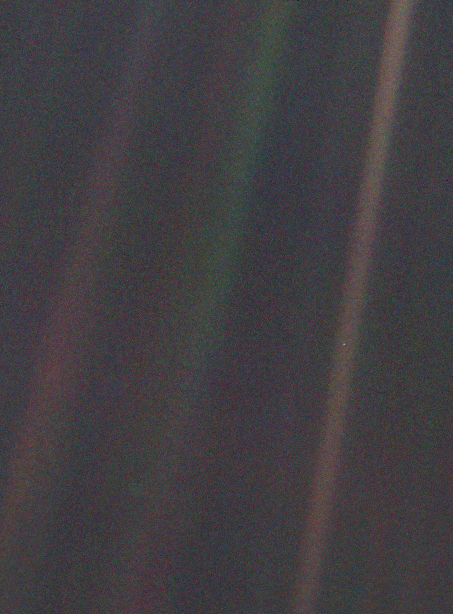
In 1977, the Voyager 1 launched into space. Just over a dozen years later, the Voyager 1 spacecraft had traveled farther than any spacecraft/probe/human-made anything had gone before. It was approximately 6 billion kilometers away from earth. At that point, the Voyager 1 was "told" by Carl Sagan to turn around and take one last photo of the Earth … a pale blue dot.
The resulting photo is impressive precisely because it shows so little in so much.
"Every saint and sinner in the history of our species lived there–on a mote of dust suspended in a sunbeam." – Carl Sagan
Earth is in the far right sunbeam – a little below halfway down the image. This image (and the ability to send it back to earth) was the culmination of years of effort, the advancement of technology, and the dreams of mankind.
The resulting speech from Carl Sagan is still profound, moving, and worth a listen.
Look again at that dot. That's here. That's home. That's us. On it everyone you love, everyone you know, everyone you ever heard of, every human being who ever was, lived out their lives. The aggregate of our joy and suffering, thousands of confident religions, ideologies, and economic doctrines, every hunter and forager, every hero and coward, every creator and destroyer of civilization, every king and peasant, every young couple in love, every mother and father, hopeful child, inventor and explorer, every teacher of morals, every corrupt politician, every "superstar," every "supreme leader," every saint and sinner in the history of our species lived there–on a mote of dust suspended in a sunbeam.
The Earth is a very small stage in a vast cosmic arena. Think of the rivers of blood spilled by all those generals and emperors so that, in glory and triumph, they could become the momentary masters of a fraction of a dot. Think of the endless cruelties visited by the inhabitants of one corner of this pixel on the scarcely distinguishable inhabitants of some other corner, how frequent their misunderstandings, how eager they are to kill one another, how fervent their hatreds.
Our posturings, our imagined self-importance, the delusion that we have some privileged position in the Universe, are challenged by this point of pale light. Our planet is a lonely speck in the great enveloping cosmic dark. In our obscurity, in all this vastness, there is no hint that help will come from elsewhere to save us from ourselves.
The Earth is the only world known so far to harbor life. There is nowhere else, at least in the near future, to which our species could migrate. Visit, yes. Settle, not yet. Like it or not, for the moment the Earth is where we make our stand.
It has been said that astronomy is a humbling and character-building experience. There is perhaps no better demonstration of the folly of human conceits than this distant image of our tiny world. To me, it underscores our responsibility to deal more kindly with one another, and to preserve and cherish the pale blue dot, the only home we've ever known.
Today, we have people living in space, posting videos from the ISS, and high-resolution images of space and galaxies near and far.
We take for granted the immense phase shift in technology. You have more computing power in your pocket than we first used to go to the moon.
As humans, we're wired to think locally and linearly. We evolved to live our lives in small groups, to fear outsiders, and to stay in a general region until we die. We're not wired to think about the billions and billions of individuals on our planet, or the rate of technological growth – or the minuteness of that all in regard to the expanse of space.
However, today's reality necessitates we think about the world, our impact, and what's now possible for us.
We created better and faster ways to travel, we've created instantaneous communication networks across vast distances, and we've created megacities. Our tribes have gotten much bigger – and with that, our ability to enact massive change has grown as well.
Space was the first bastion of today's innovation, but today we can look toward A.I., medicine, epigenetics, and more.
It's hard to comprehend the scale of the universe and the scale of our potential … but that's what makes it worth exploring!
I went to Havana with a diverse group of business people, financial professionals and representatives from the US Fed.
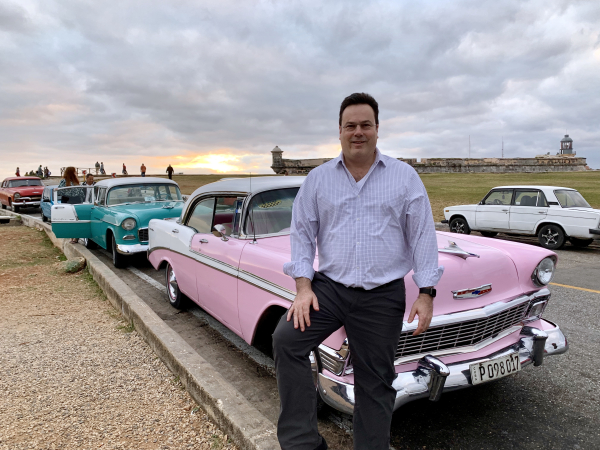
Here is a photo taken with some of the classic cars that proudly dominate the roads despite cheaper Russian and Chinese alternatives.
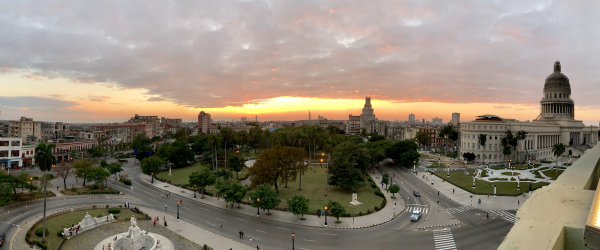
The city was beautiful … dirty and broken, for sure … but still beautiful. Here is a view from my hotel room.
I commented that it was almost like seeing a severely wounded elephant. You can tell that it's hurt (and barely a shadow of its old self). Nevertheless, you can see the amazing bone structure. It is easy to imagine what it once was.
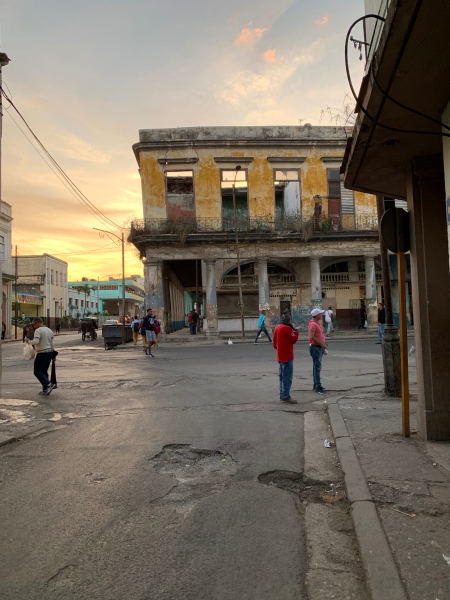
In Cuba, the geography and the architecture are amazing. However, money hasn't been spent on the upkeep. Even though people live there, it seems surreal (almost like a post-apocalyptic wasteland).
In the story of Exodus, the Jews spent 40 years wandering the desert after escaping from Egypt. That means two generations of people, who didn't remember life as slaves, were ultimately the ones who entered the “Promised Land”.
On some level, that's how Cuba is now. Most inhabitants weren’t born (or can’t remember) the 1960s. They have known nothing but this.
Cuba is an interesting place … and I’d bet that it has an interesting future.
The “lack” had a side effect. It produced a mutation. A portion of society grew more resourceful and resilient.
Like natural selection … nature finds a way.
The rules change, the players change, even the game itself changes … That is how new ideas and new leaders emerge.
Sometimes, almost no one notices. Sometimes they do.
Porn was the launchpad for video streaming, mobile-enabled sites, VR, and (unfortunately) pop-up ad technologies.
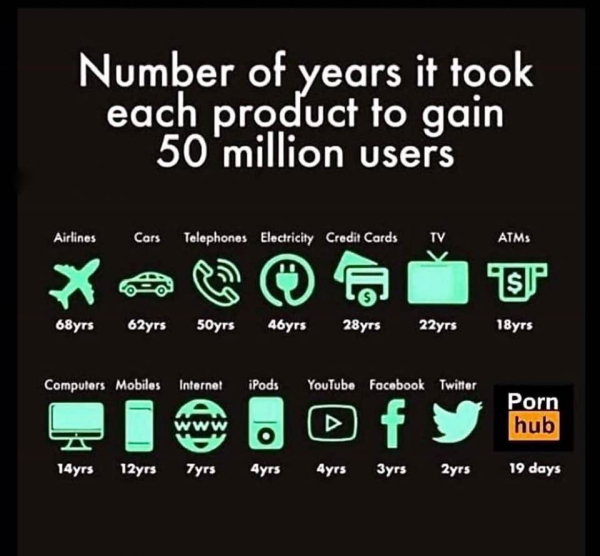
With that said, the next chart surprised me. It shows the number of years it took for various products to gain 50 million users.
Pornhub tracks data like its business depends on it. Well, it is the number one site for pornography. What does that mean? In 2018, over 5,517,700,000 hours of porn was watched on their site. That’s approximately 6,298 centuries of video.
Moreover, last year, it got 33.5 BILLION visits. That’s 1,064 people a second, or 92 million a day. To put that in perspective, that's more people than live in the entire country of Germany.
Here are some additional factoids about its use.
4403 Petabytes of data transferred (574 MB of data for every person on earth)
Consumed more bandwidth than the entire internet in 2002
Stormy Daniels was the number 1 "trend" search in 2018 (followed by Fortnite …)

 via XKCD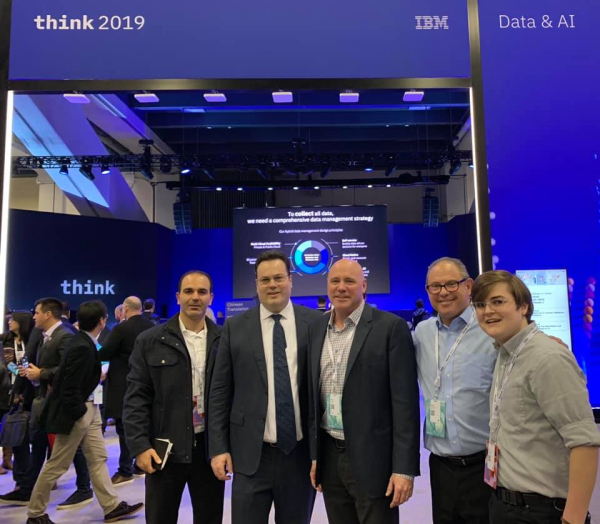


 via
via