Business

  • Gartner’s 2018 Hype Cycle for Emerging Technologies

    With all the "fake news" and manufactured social buzz, it's hard to identify what technologies are reaching maturity and which ones are fads. Gartner's Hype Cycle attempts to solve that problem. 

    What's a "Hype Cycle"?

    As technology advances, it is human nature to get excited about the possibilities and to get disappointed when those expectations aren't met. 

    At its core, the Hype Cycle tells us where in the product's timeline we are, and how long it will take the technology to hit maturity. It tells us which will survive the hype have the potential to become a part of our daily life. 

    Gartner's Hype Cycle Report is a considered analysis of market excitement, maturity, and the benefit of various technologies.  It aggregates data and distills more than 2,000 technologies into a succinct, contextually understandable, snapshot of where various emerging technologies sit on the hype cycle.

    Here are the five regions of Gartner's Hype Cycle framework:

    1. Innovation Trigger (potential technology breakthrough kicks off),
    2. Peak of Inflated Expectations (Success stories through early publicity),
    3. Trough of Disillusionment (waning interest),
    4. Slope of Enlightenment (2nd & 3rd generation products appear), and
    5. Plateau of Productivity (Mainstream adoption starts). 


    Understanding this hype cycle framework enables you to ask important questions like "How will these technologies impact my business?" and  "Which technologies can I trust to stay relevant in 5 years?"

    What's exciting this year? 

    Currently, people are probably "too" excited about IoT platforms, Deep Learning, and Virtual Assistants. The idea isn't they won't stand the test of the time, but there's an artificial influx of people inflating the adoption numbers. Once the chaff is separated from the wheat – you can expect these to succeed. Autonomous driving, connected homes, and mixed reality have matured past the hype phase. 

    For comparison, here's my article from last year, and here's my article from 2015. Click the chart below to see a larger version of this year's Hype Cycle.
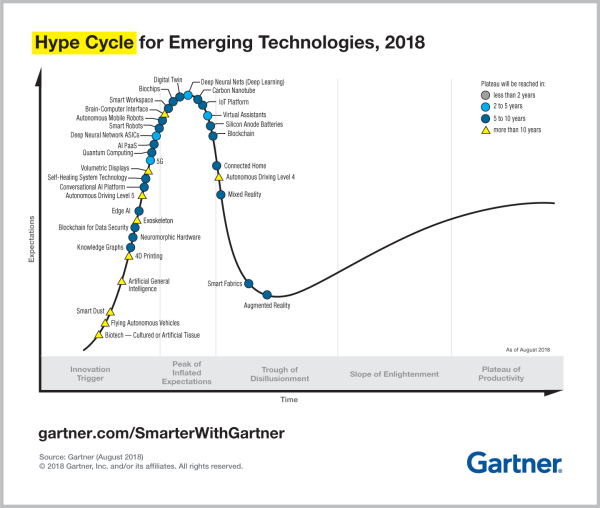
    PR_490866_5_Trends_in_the_Emerging_Tech_Hype_Cycle_2018_Hype_Cycle via Gartner

    This year, Gartner organized the 17 highlighted technologies into 5 encompassing trends:


    • Democratized AI (autonomous driving, conversational AI, deep neural nets, etc.) is one of the most disruptive classes of technology. It's becoming more readily available due to open source and cloud computing. There's a burgeoning field of "makers" inspired to push the boundaries of what's possible.  
    • Digitalized Ecosystems ( blockchain, IoT) support emerging technologies by being the foundations for dynamic systems. There's a shift from discrete infrastructure systems to comprehensive ecosystems. Think of blockchains potential impact on tracking and communication.  
    • Do-It-Yourself Biohacking (biotech, biochips, exoskeletons, AR) is something I've talked about before. Dave Asprey is a public face of this movement and we shot a video together last year. The future is bringing implants to extend humans past their perceived limits and increase our understanding of our bodies; biochips with the potential to detect diseases, synthetic muscles, and neural implants. 
    • Transparently Immersive Experiences (connected home, smart dust, volumetric displays) represent the blending of where human stops, work starts, and things exist. Imagine a theoretical smart workspace where electronic whiteboards capture all your notes and disseminate them, sensors let you know where people are and what they're working on, and everything in your office interacts directly with your IT platform. This creates much more contextual and personalized experiences.  
    • Ubiquitous Infrastructure (5G, carbon nanotubes, quantum computing) means that infrastructure is becoming a less competitive advantage. As infrastructure becomes cheaper, more ubiquitous, and faster, it becomes background noise.  


    Looking at the overarching trends of this year, it's also fun to look at what technologies are just starting their hype cycle. 

    • Artificial Tissue (Biotech) could be used to repair or replace portions of, or whole, tissues (cartilage, skin, muscle, etc.)
    • Flying Autonomous Vehicles can be used as taxis, but also as transports for other things such as medical supplies, food delivery, etc. Amazon and Uber are likely excited about this development – and expect it in the next couple of years. 
    • Smart Dust opens up the possibility of monitoring essentially everything by creating a vast network of minuscule sensors that can detect various inputs. 
    • Artificial General Intelligence
    • 4D Printing would theoretically allow us to print objects that reshape or self-assemble over time


    Which technologies do you think will survive the hype?
  • Social Media Is Changing Everything: A Reprisal

    I came across a post from 2009 about social media. 10 years later, with the knowledge of how much data we use today, it's quite a read.

    Here it is in its full glory. 

    Social Media Is Changing Everything: October 18th, 2009

    My son won't use e-mail the way I did. So how will people communicate and collaborate in the next wave of communications?

    Here is a peek into the difference that is taking hold.  I was looking at recent phone use.  The numbers you are about to see are from the first 20 days of our current billing cycle.

      • My wife, Jennifer, has used 21 text messages and 38 MB of data.
      • I have used 120 text messages and 29 MB of data.
      • My son, at college, used 420 text messages, and is on a WiFi campus so doesn't use 3G data.
      • My son, in high school, used 5,798 text messages and 472 MB of data.

    How can that be?  That level of emotional sluttiness makes porn seem downright wholesome. 

    But, of course, that isn't how he sees it.  He is holding many conversations at once.  Some are social; some are about the logistics of who, what, when, where and why … some are even about homework.  Yet, most don't use full sentences, let alone paragraphs.  There is near instant gratification.  And, the next generation of business people will consider this normal.

    Is social media a fad? Or is it the biggest shift since the Industrial Revolution?

    Welcome to the World of Socialnomics.  This video has a bunch of interesting statistics … and is fun to watch. 


    Other Resources:

    Social Media Is Changing Everything: April 20th, 2019 

    Looking at the stats from 2009 is pretty funny

    • My son was using 472 MB of data a month
    • Hulu had grown from to 373 million total streams in April 2009
    • Only 25% of Americans in the past month said they watched a short video on their phone

    For some context, I looked up the comparative numbers for 2018. 

    • I picked a random month in 2018 … in August my son used 10.85 GB of data. He doesn't text as often – but has sent/received 282,000 snapchats since downloading it 5 years ago.
    • Hulu has over 20 million subscribers who streamed more than 26 million hours a day in 2018 
    • People spend over five hours a day on their smartphones on average. 70% of web traffic happens on a mobile device, and more than 50% of videos are watched on mobile (93% of twitter videos). 

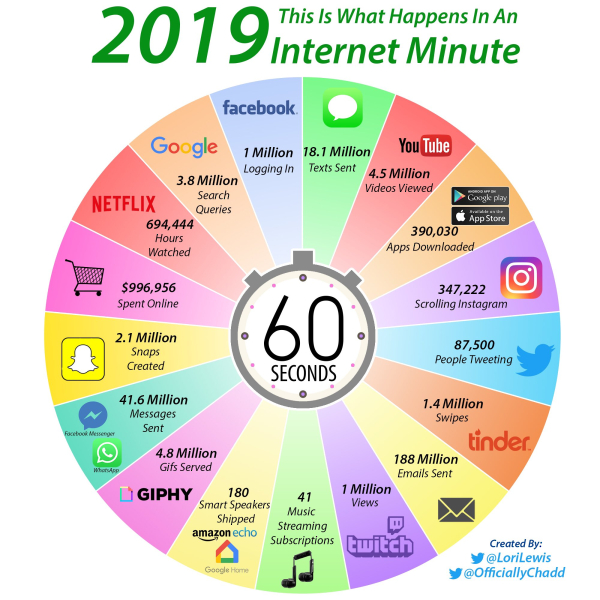
    Here's what happens every minute of every day on the internet

    D0-86c4XcAMTmla

    via Lori Lewis and Chadd Callahan


    A little different than 2009 …

  • Reinventing Hedge Funds

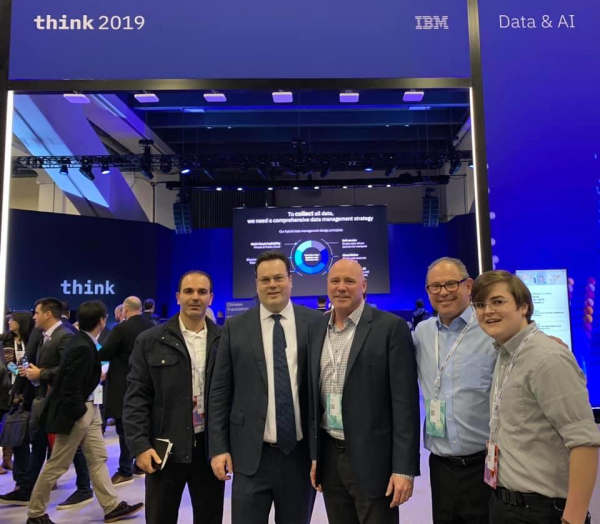
    Two months ago, I spoke at IBM's Think 2019 Conference with iOLAP's Chris Jordan. Our talk was Gaining a Financial Edge through Fast Data and Analytics.


    0


    The crux of our presentation was that high-performance computing and advanced technology stacks are fundamental to today's trading strategies.

    Earlier this week, IBM released a commercial we shot together about how IBM's Integrated Analytics System (IAS) is helping us re-invent hedge funds.  Check it out.


    via IBM Analytics

    Think of it this way: 

    Evolution of TradingEach generation of traders finds new ways to play the game and to generate Alpha (the excess return generated by manager skill, rather than luck or excess risk). As soon as enough people adopt a strategy (or figure out a way to combat it), the edge begins to decay.

    When computerized data became available, simply understanding how to download and use it generated Alpha. The same could be said for each later evolution: the adoption of complex algorithms, access to massive amounts of clean data, and the adoption of AI strategies.

    Each time a new shift happens, traders pivot or fail – it's not that active trading stopped working – it's that the tools and styles necessary to play that game evolved.

    We use a similar concept we call "Active Switching".  Instead of simply trying to pick stocks or markets, we use advanced technology and techniques to choose markets, techniques, risk levels, and allocation strategies. Further, we use Active Switching to make many decisions, great and small, that together allow us to build portfolios that adjust themselves to changing market conditions.


    Playing a New Game


    Confusion is the catalyst to most trades.  What that means is the ability to parse information … to create a contextual map of meaning and figure out where there's signal and noise … is the new table stakes for playing that game.   ~ Howard Getson


    Historically, most active traders don't beat the S&P in any given year … and even less beat it with any semblance of consistency.  But those that do – the ones that have been doing it for long enough that it's not chance … exercise a willingness (and a skill) to adapt quickly. 

    One of Charles Darwin's best-known concepts is: It is not the strongest species that survive, nor the most intelligent, but the ones most responsive to change.

    While computers have made information accessible to everyone, they've also created a massive asymmetric information advantage for those who have both the access and the skill to best use the massive amounts of data now available.  This is more complicated than it seems.  You need the information, the technology, the process, and the people.  There is so much data available now that figuring out what to ignore is probably more important than what to use.  Likewise, the ability to ingest, clean, validate and curate the data is a huge hurdle that most can't clear.


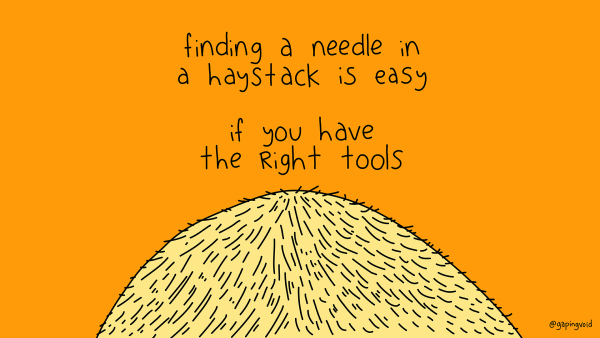
    FInding A Needle In A Haystack_PPT Size


    Even with those skills, it's harder than ever to take advantage of inefficiencies (edges) than ever before.  The edges are smaller, more fleeting, and surrounded by more volatility and noise.  It's like finding a needle in a haystack.  That being said – finding a needle in a haystack is easy when you have a metal detector. 

    That's where A.I. has come in for us. We use A.I. to develop algorithms, to analyze markets, and to create meaning where humans can't find any. 


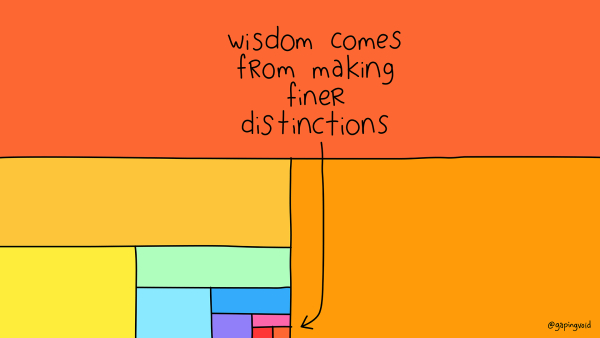
    Wisdom Comes From Making Finer Distinctions_PPT Size


    We live in exciting times.  Onwards!

  • Don’t Miss The Forest For The Trees: Change Blindness

    There are few certainties in life … according to Benjamin Franklin:

    "Our new Constitution is now established, and has an appearance that promises permanency; but in this world nothing can be said to be certain, except death and taxes."

    According to the ancient Greek philosopher Heraclitus: 

    "Change is the only constant in life" 

    He's also quoted as saying "everything changes and nothing stands still."

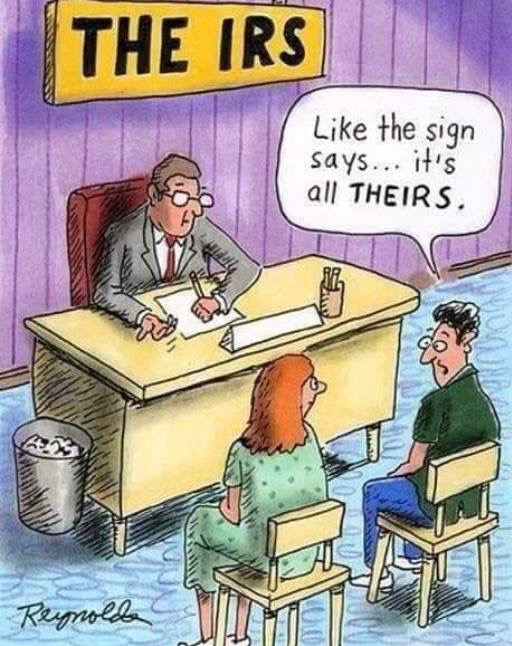
    Maybe he didn't pay his taxes. 

    Change is a constant, yet, it's often hard to see the forest for the trees. 

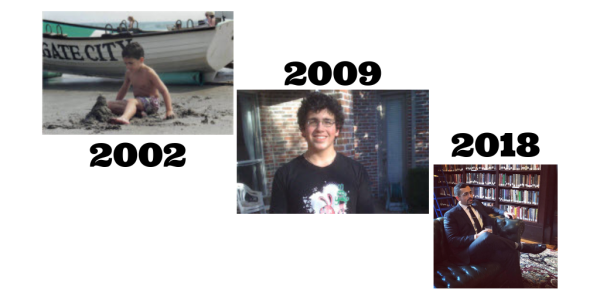
    It seems like just yesterday that my son, Zach, was making sand castles on the beach – or wearing silly t-shirts. Now, he's 26, the soft spot on his head has filled in enough to consider him an adult – and he is generally unrecognizable from that kid on the beach at the Jersey Shore. 

     1

    On a day-by-day basis, I rarely noticed the change. However, looking at old pictures makes it obvious that there was massive growth and progress. 

    So, what did I notice?  Sometimes it was what a great kid, or how loving, he had been.  Other times, it was almost the opposite.  Or, perhaps, I noticed that he didn't eat vegetables, or that he drove with a heavy foot.  In any case, what I focused on is what my life seemed filled with, to me. And it was mostly about the moment.  The bigger picture was lost (or hidden) behind the small things that make up the fabric of our life (or at least our perception of our life).

    It is human nature.  Survival of the fittest rewarded a focus on avoiding predators or other dangers … as well as recognizing the opportunity to eat. 

    Thousands of years later, fear and greed still drive more than we like to admit.  It is also a big part of the engine that drives our markets. 

    It is all about perspective, isn't it? 

    We are where we are. It doesn't really matter how or why we got there. We are here. And little-by-little we won't be here anymore.

    If you are looking at the country or the economy, realize that it took years to get here. Simply changing a regime won't flip a switch.  Some changes happen in slow-motion. 

    Or, perhaps from our perspective, some changes appear to happen in slow-motion … but what others see as change, you see as symptoms of the root cause. 

    From different vantage points, the rate of change can seem different.


    2

    The same can be said for changes in a person or changes in a business. It's easy to see the gap between where you are and where you'd like to be. Regardless, you will probably get there faster by building momentum and confidence by focusing on the improvements and progress you're making. If you change your perspective – you may realize you've made more progress than you thought. 

    Tough times are great opportunities to discover character.  I'm often amazed at the innovation and insight that occurs at times like these!

    Don't pay so much attention to what you think you have to do that you forget the reason you're doing it in the first place. 

  • Robocalls and Taxes: These Are A Few Of My Favorite Things

    What're everyone's two favorite things? Paying taxes and receiving robocalls, obviously

    Phone scammers used to just target the elderly or those with poor English skills, but today, they go after everyone. In fact, Americans received over 30 billion robocalls last year … and it's only getting worse. Around half of those are "legal," but more and more are scams.

    Those scams increase during tax season. 

    Several of my friends have received calls from the "IRS" demanding immediate payment. That is a scam. The IRS has stated repeatedly, they will not call you asking for your credit card numbers over the phone, they will not threaten lawsuits, and they will not call you unless they've already tried reaching you by mail. 

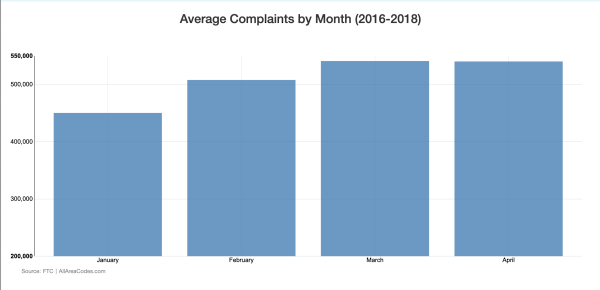
    According to the FTC, robocall complaints in March and April are 20% higher. They're the icing on the tax season cake. 


    Screen Shot 2019-04-05 at 9.24.44 AMvia allareacodes


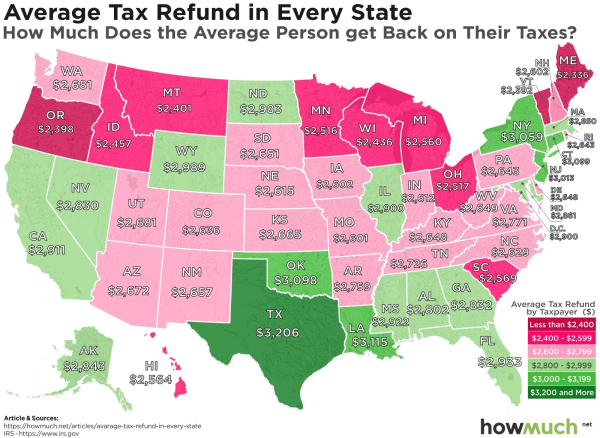
    If increased robocalls weren't enough, you can expect your refund to be 8% lower than last year. Though the average refund is still several thousand dollars, and my home state of Texas can expect the highest returns. 


    Tax-refund-by-state-(1)-1eb6

    via HowMuch

    Texas tops the list (Everything IS bigger in Texas) with $3,206 as the average tax refund. Maine inhabitants bottom out the list with $2,336.

    It's worth mentioning that these refunds represent federal figures, and don't take into account any refunds from your state government – meaning there's likely more money flowing back to taxpayers than this map illustrates. 

    What many people don’t understand is that the size of your tax refund isn’t solely based on tax cuts or raises.

    Getting a refund feels like a win, but it represents an interest-free loan to the government for the last year. In an ideal world, you'd have a refund of $0 – meaning you paid exactly what you were supposed to.

    Don't forget to file your taxes (Monday, April 15th is the deadline to file without an extension) and if you want to protect yourself from robocallers, here are some tips: 

    • Don't answer calls from unknown phone numbers – let them go to voicemail and call back if necessary
    • If you do accidentally answer a spam call, don't press any buttons or speak, as that simply alerts them that they've reached a working phone number
    • Don't call a scammer back, and don't engage with them … it's like talking with cops, Anything you say can and will be used against you 
    • To decrease legal calls sign up for the federal and state do not call lists
    • Check out CTIA's tip sheet on How to Stop Robocalls to see a list of apps available to prevent robocalls on your mobile OS
  • Believe Nothing and Trust No One … April Fools!

    April Fools is a good chance for some much-needed levity, but it's also an opportunity for tone-deaf companies to try and resonate with their younger clientele. You get some fantastic pranks and funny jokes, but you also get some cringe. 


    via Google

    The Good

    • Google claimed to have a physical screen cleaner feature on their phones that would also create a long-lasting non-stick shield.  
    • Spotify replaced Discover Weekly playlists with Discocover Weekly playlists, including actual disco cover songs from artists you listen to. 

    The Bad

    • Logitech said it was rebranding its wireless mice as "hamsters" since they don't have tails. 
    • U.K. Based Libert Games created a "Trump V Kim Nuclear Foosball Table" which comes with latex masks of Donald Trump and Kim Jong-un  so you can truly embody the roleplay. 

    The Ugly 

    • HyperX and Nissin Cup Noodles combined to create a pair of headphones with Cup Noodles as the earpads and a fork instead of a microphone … so you can slurp your noodles while gaming. Efficiency at it's finest. 
    • Elon Musk released an auto-tuned rap song called "RIP Harambe" about the Cincinatti Zoo Gorilla who was unceremoniously killed in 2016


    Yet, some of the best April Fools pranks came ages ago: 


    The Best of All Time

    • In 1957, the BBC ran a segment on the Swiss growing pasta on trees. The story was on television, and back then, the television wouldn't lie to you … right?!
    • In 1974, a local Sitka, Alaska prankster Oliver Bickar flew 70 old tires into Mt. Edgecumbe – a volcano that had been dormant for 400 years -  and set them on fire. It was such a good prank that the Associated Press ran with it, Alaska Airlines used it in ads, and the admiral of the Coast Gaurd called the prank a "classic."
    • In 1996, Taco Bell announced it had purchased the Liberty Bell and named it the "Taco Liberty Bell" in an effort to help the national debt. 


    What's the best prank you've played?  Here's mine.

  • Sardines in a Tincan Hurtling Through The Air

    I fly a lot.

    In fact, I just hit five million "butt-in-seat" miles on American Airlines. 


    190331  HMG ConciergeKey Stats


    I don't expect to continue at this place forever … but now is the time to push.

    I have a different workflow when I travel, and it works for me.

    Ultimately, I believe that good things happen when you are in motion! 

    Many people, however, are focused on the hassle.

    The practical realities of travel mean I spend some time thinking about the things airlines do well or poorly.  Nonetheless, I appreciate the benefits more than the frustrations.

    Yes, it is true … Status means much less today than it used to.  Every week it feels like they make the space between seats smaller while the time for finding overhead luggage space gets shorter. 

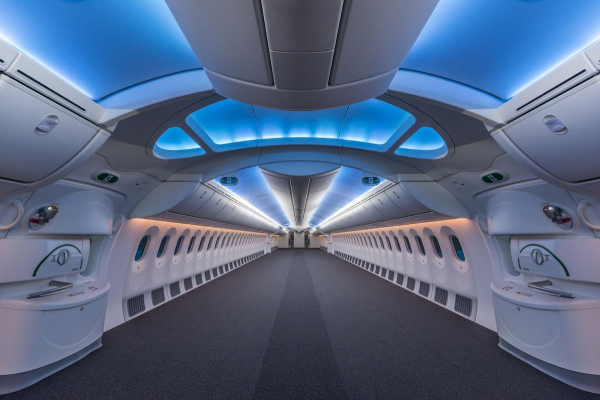
    Yet, the planes themselves are getting better.  Here, for example, is what an empty 787 looks like. 


    Yyng800cpqf21


    It looks more like a set from Star Trek then the hellscape passengers complain about on a regular basis. 

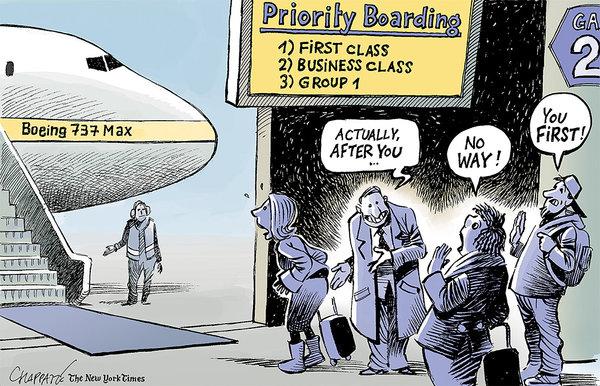
    What about the boarding process? 

    Here is a video that presents the findings from studies on experimental boarding methods that work better. 


    via CGP Grey

    If you really don't like commercial flying, you can fly on any of the "economical" private options like JetSmarter or WheelsUp. Or, better yet, you could be like this guy and buy the world's only private Boeing 787 Dreamliner. 


    via Sam Chui

    You can rent it out for a measly $70k an hour … What a bargain!