Business

  • How Much Electricity Does Bitcoin Use?

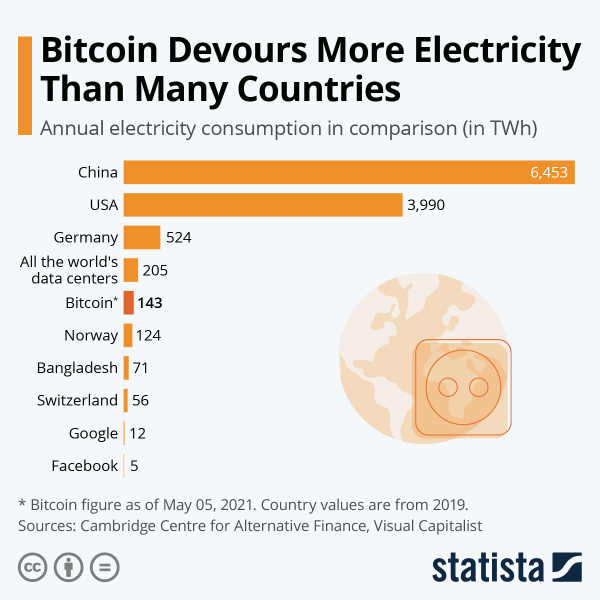
    Electricity use is one of the common complaints people have when talking about Bitcoin adoption and mining. 

    So, how much energy have we been using to mine Bitcoin?

    More than you might’ve guessed.

    The world is changing.


    Bitcoin-energy-usage

    via Daily Infographic

    I know several people that are getting more into mining as cryptocurrency continues to grow in popularity (despite the downturn). 

    While this amount of energy usage is startling – and bad for the environment – there are many ways to reduce the consumption of electricity by cryptocurrencies. 

    On the other hand, this might be an interesting alternative data source that gives us a different perspective about the ongoing popularity and commitment people have towards a currency.


  • It Isn’t Whether Tom Brady Is Retiring – It’s About When … and Why We Care?

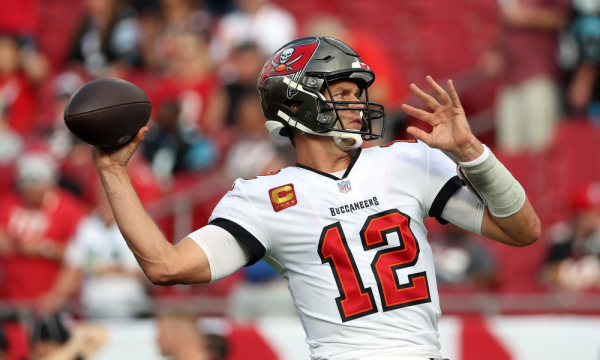
    In 2017, I wrote an article “asking” why the Patriots were so good. Then Tom Brady left, the Patriots have suffered (somewhat), and Tom Brady won another Super Bowl with the Buccaneers. 


    1363675203

    Now, several sports pundits are reporting that he may be retiring. Tom Brady insists that he hasn’t made a final decision yet

    Of course, there is the matter of the $15 Million portion of his signing bonus that becomes payable to him on Friday. That might explain the “confusion” on timing?

    Regardless, all this talk reminded me about what makes Tom Brady special. 

    There is a difference between ‘luck’ and ‘skill’.

    Both exist … yet, luck favors the prepared.

    In life, as in sports, hard work often beats talent (especially if talent fails to work hard).

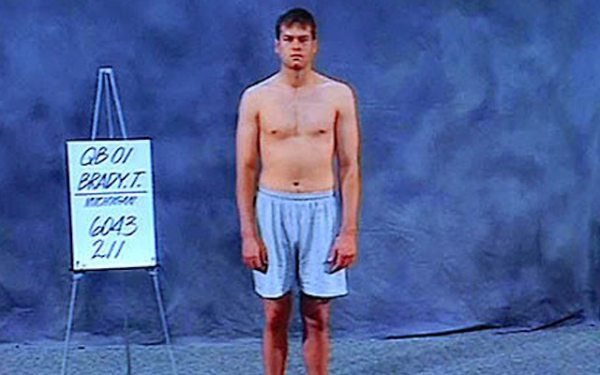
    But, when you see this picture from the 2000 NFL Combine, it’s hard to believe that Tom Brady would be a 7-time Superbowl MVP taking the Buccaneers to the Super Bowl in his first year with them. All at the geriatric (for an NFL player) age of 44. 


    6a00e5502e47b28833027880138f19200d-600wi

    via CBS Sports

    When I talked about the Patriots, I focused on the fact that they were a well-oiled machine with a powerful framework of success that allowed individual greatness to shine. 

    I think Brady’s continued success is emblematic of that. 

    Tom Brady is a paragon of culture, process, and hard work. Much of his approach was molded by his time with Belichick, but of course, he gets enormous personal credit as well. 

    He expects the best of himself and brings out the best in his teammates. That’s enabled him to stay a top-level competitor despite not being the strongest, fastest, or most mobile QB (and that was when he was young). 

    As well, Tom Brady is remarkably consistent and disciplined; his diet, his routine, his exercise, his film routine, etc. All NFL athletes have impressive routines for the most part, but take a look at Tom Brady’s routine. It’s a routine built for him and his needs – and he’s got it dialed in. He doesn’t need to waste time trying to get big in the gym, so he focuses on 9-key exercises to support his goals. 

    The System is the ‘system’; but, within it, you can measure what works, who contributes, and then use those insights to identify the best things to try next.

    Win, lose, or draw … some things speak for themselves. And whether he retires today, next year, or never, we don’t need to wait five years to know he’s a Hall of Fame player with an incredible career. 

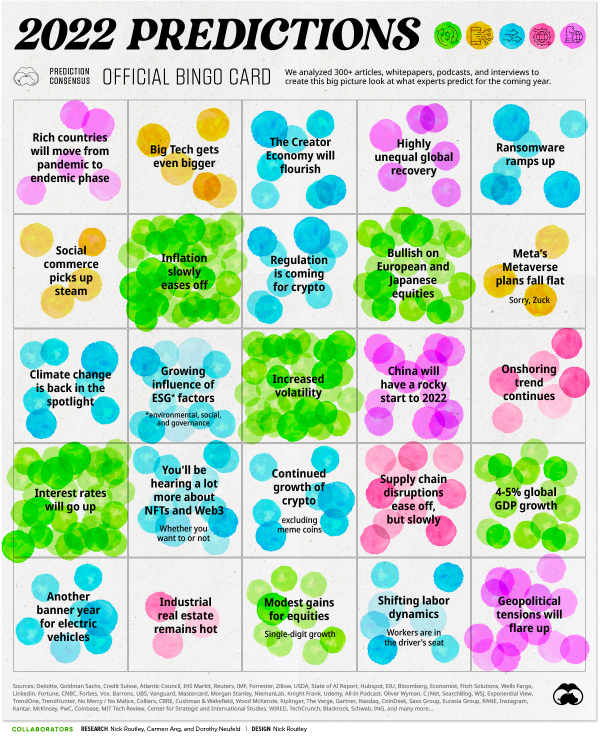
  • 2022 Predictions

    About a month ago, I shared visualcapitalist's 2021 predictions to check how well they fared at the end of the year. 

    Honestly, the list was pretty good. It wasn't perfect, but you wouldn't expect it to be. 

    In that article, I asked this question: 

    What's going to happen as a result of the continuing pandemic, inflation, interest rates, the ongoing supply chain issues, and the growing anxiety and unrest brewing underneath the surface of the new normal? In January, we'll get to see VC's predictions. Before that, what do you expect to happen in 2022?How'd These 2021 Predictions Fair?

    With that, here are visualcapitalist's 2022 predictions

    Prediction-consensus-2022-1via visualcapitalist

    Let's be clear – most predictions are either vague and easily guessed (and therefore not helpful) or random conjecture. 

    But, there's value in prediction, and there's value in analyzing the data before you. The caveat is that prediction is better when it's applied to human nature and not the machinations of fate, and data can be a distraction if it's not being carefully curated and analyzed to remain relevant to your goals. 

    For example, I agree with their general direction for technology. Tech is continuing to grow in influence, and as Web 3.0, the blockchain, and AI mature as platforms for sub-technologies, I think their importance is only going to skyrocket. 

    Prediction can also be entertainment. I certainly catch myself looking for patterns and differentiators for everything from whether my meal is going to come to the table correctly, to who's going to win the Super Bowl. 

    I know the chances are low, but I still think it's going to be the Cowboys … 

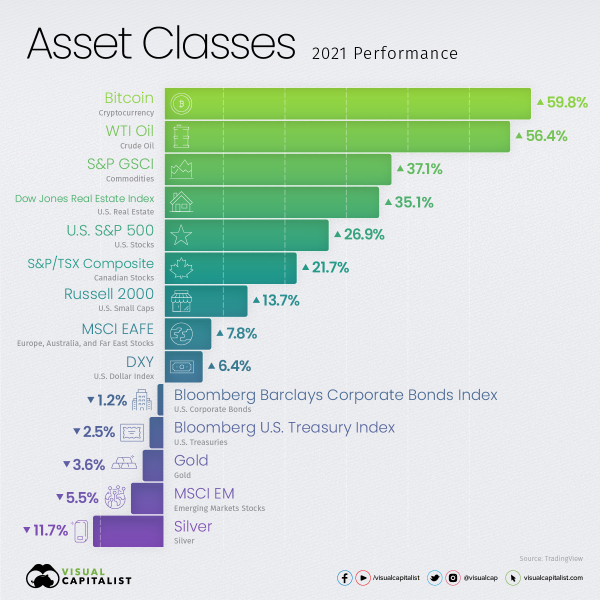
  • How Markets Performed in 2021

    2020 was a roller coaster of volatility, and while 2021 was as well, most asset classes saw improvements as the world reopened. 

    But it wasn't all smooth sailing.  There were significant supply chain struggles and rising inflation … not to mention the rising cases of COVID. 

    Regardless, markets are not the economy, and while there are numerous factors to think about, I've always found markets interesting. 

    Maingraphic-asset-class-2021via visualcapitalist

    2021 was a year of rampant speculation, in part because so many systematic traders underperformed.  For example, Renaissance reportedly saw ~15 billion in outflows last year (despite double-digit returns) as their clients likely moved towards more "exciting" opportunities. 

    Of course, some of those "exciting" opportunities were cryptocurrency-related.  Moreover, chasing performance like that is often mean-reverting.  Yet, I've seen a massive increase in interest among various business groups in crypto, Web 3.0, and the Blockchain. 

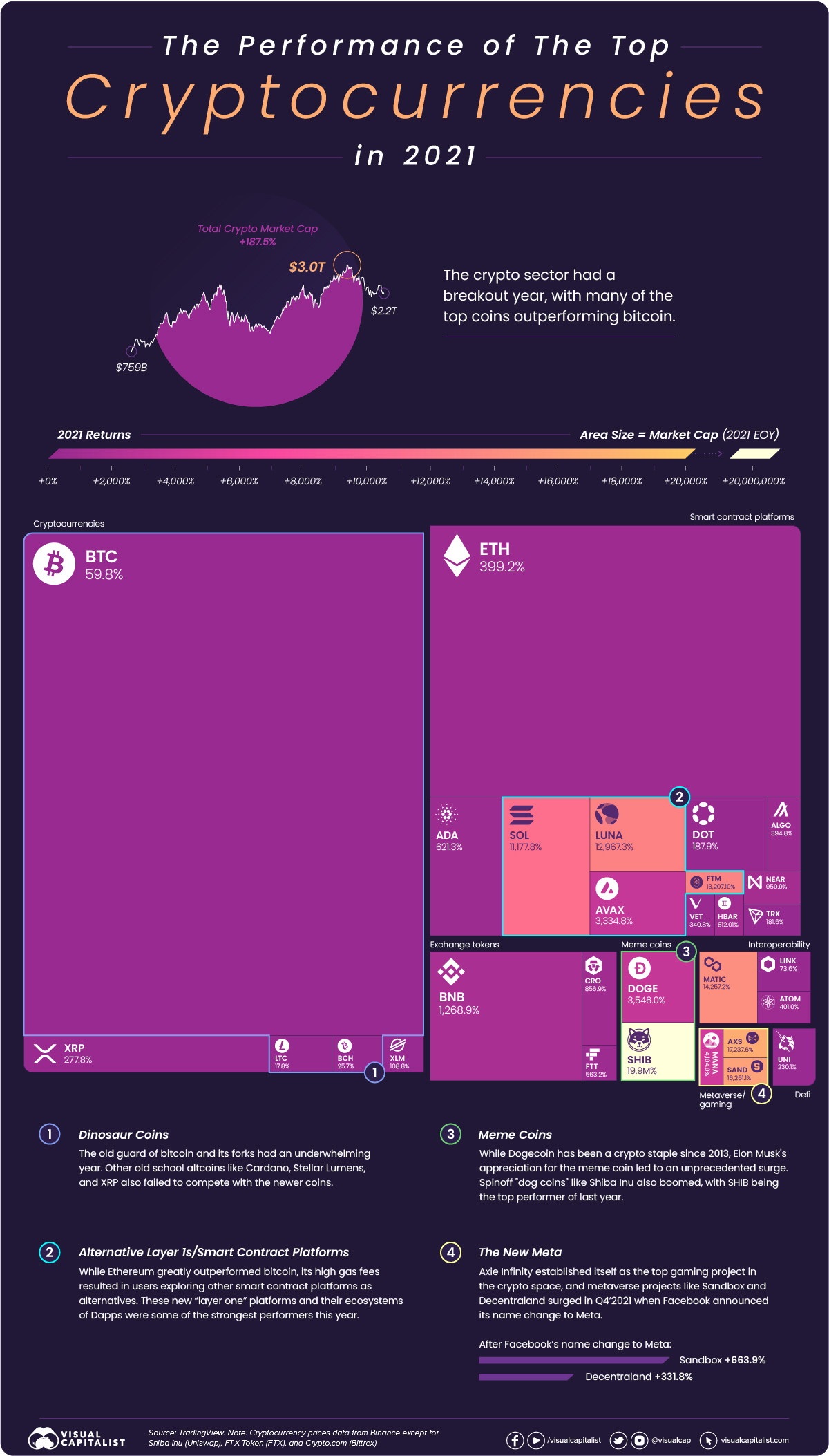
    Cryptocurrencies

    While crypto generally performed well in 2021, 2022 has seen a drop that erased over $1 trillion in value

    Crypto-Performed-in-2021_03via visualcapitalist

    The reality is that crypto markets matured a lot in 2021.  The thousands of coins are mostly a distraction, but there are many interesting coins from various sectors with interesting technology behind them.  There is increased infrastructure and decreased correlation between coins.  Unfortunately, not enough to keep this drop from affecting the whole space. 

    So the question is, is this a "discount" for people to buy into the space, or a sign of future troubles?

    It's no secret that I've always been a fan of Blockchain but cautious of cryptocurrencies

    I think there is a lot of money to be made speculating in cryptocurrencies, but how much of that money being made is attributed to luck vs. skill?

    Crypto's are interesting, in part, because they're a digital currency decentralized over a peer-to-peer network.

    The more people are willing to accept it as a medium of exchange, the more valuable it becomes (and the more it becomes a stable store of value).

    Supposedly, decentralization provides it safety from censorship and government interference – meaning it has value as an international currency and as a currency for black-market transactions.  But, in my opinion, that remains to be seen (and I consider it unlikely for most cryptocurrencies).

    However, the worth of a Bitcoin isn't just based on sentiment (on one hand, there are desires to avoid fiat currency vagaries, government interventions, and scrutiny, while having a fair price discovery method, etc.  … on the other hand, there are also the costs to mine a Bitcoin, transaction fees, etc. and crypto has recently been under fire for its huge environmental impact).

    Compared to a reserve currency – whose worth is primarily influenced by trade value and other macroeconomic factors – watching crypto's volatility can be scary. 

    That being said, as adoption increases and more businesses enable it, it's possible that it will continue to legitimize.  For the time being, I remain a long-term skeptic because there is too much working against it. 

    Many of my initial complaints are centered on coins as currency.  I get that there are already many interesting uses of Blockchain that will also help to bring credibility to coins as a store of value. 

    The question for me is, even if cryptocurrency is here to stay long-term (and avoids government control), which coins will it be?  Do they even exist today?

    I'm positive there is money to be made related to the Blockchain, NFTs, and cryptocurrencies.  But, at this point, it's a speculators game, and I think the best way to capitalize on this trend sustainably is to sell picks and shovels for the gold rush, instead of trying to stumble upon gold. 


  • Betting On The Super Bowl

    Trying to get rich quickly? Want to know if the markets going to be bull or bear this year?

    Look no further than the "Super Bowl Indicator".

    Shutterstock_158031044-1-1

    The theory is a Super Bowl win for a team from the AFC foretells a decline in the stock market and a win for the NFC means the stock market will rise in the coming year. 

    There is one big caveat … it counts the Pittsburgh Steelers as NFC because that's where they got their start. 

    If you accept that caveat, it has been on the money 33 years out of 41 – an 80% success rate. Sounds good, right?

    Come on … you know better.

    Here are some other "fun" stock market fallacies:

    Back to Reality

    Rationally, we understand that football and the stock market have nothing in common.  And we probably intuitively understand that correlation ≠ causation. Yet, we crave order and look for signs that make markets seem a little bit more predictable.

    The problem with randomness is that it can appear meaningful. 

    Wall Street is, unfortunately, inundated with theories that attempt to predict the performance of the stock market and the economy. The only difference between this and other theories is that we openly recognize the ridiculousness of this indicator.

    More people than you would hope, or guess,  attempt to forecast the market based on gut, ancient wisdom, and prayers.

    While hope and prayer are good things … they aren’t good trading strategies..

    As goofy as it sounds, some of these "far-fetched" theories perform better than professional money managers with immense capital, research teams, and decades of experience.

    I have a thought experiment I often ask people that come into my office. 

    What percentage of active managers beat the S&P 500 any given year?

    … Now, what percentage beat the S&P 500 over 15 years?

    The answer is about 5% as of 2019 (and that's in a predominantly bull market), and I have to imagine it's only gotten worse in the past two years.  That's significantly worse than chance. That means something they're doing is hurting, not helping. 

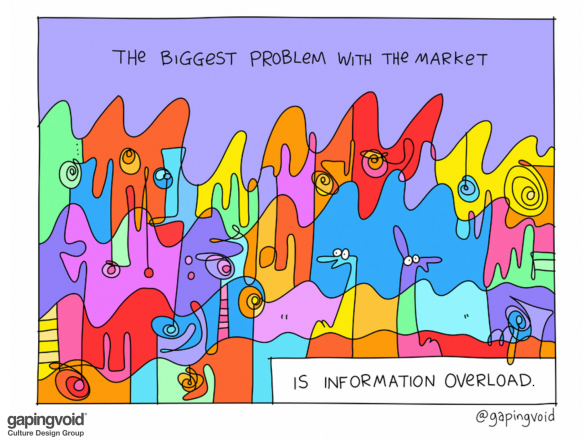
    Screen Shot 2019-01-30 at 1.22.32 PM

    via Gaping Void

    There's simply too much information out there for us to digest, process, rank, and use appropriately.

    Every second you spend looking at a market is a second wasted.

    There are people beating the markets — not by using the Super Bowl Indicator … they're doing it with more algorithms and better technology. 

    There will never be less data or slower markets.

    Onwards.

  • Cowboys Are Out of the Playoffs Again

    It's always exciting for me to watch the Cowboys make the playoffs. Meanwhile, yesterday, the San Francisco 49ers ended the Cowboys season in the first round of the playoffs. 

    Only one team can win the Super Bowl.  I know that.  Yet, most seasons, somehow, I expect the Cowboys to have a real chance.  That form of hope and wishful thinking comes with being a fan. 

    Whether you like football or not, one thing we can probably agree about is that geriatric white dudes shouldn't rap. At least … that's what my kids tell me when I try. 

    Unfortunately, Cowboys owner, Jerry Jones,  didn't get the memo. 

    Here is the video.


    Hopefully, our season (next year) will be better than that video. 

    For another light-hearted NFL video, here is an oldy, but goodie.

    It is kind of the opposite of one of those old Kung Fu movies where the dubbed words you hear aren't synched with the mouth movement. 

    Here it looks like they are saying what you hear … it's just that someone changed the words.  You could call it "So THAT'S what they were saying …"

     This video works for the same reason trading often doesn't … Humans are great at finding patterns (even when there isn't really a pattern to find).

    Regardless, this was fun (and it's gotten over 70 million views on YouTube).


  • A Look At The Future Through Today’s News

    Inspiration comes from many places. 

    I'm grateful for the many groups I'm in, and smart people I know, because they're shortcuts to insights that can be hard to find. 

    One can also find inspiration through events, books, and more. 

    But, while it's easy to discredit mainstream news sources … there's plenty of insight to be gained just from keeping track of various news sources. You have to take them with a grain of salt, and find the articles that provide a different perspective too, but it's still a valuable exercise. 

    It's part of the reason I share my weekly links and this newsletter. They give me a reason to continue to do research and stay on my toes. 

    With that, here are some interesting articles I found recently on advancements in technology. 

    • In VR, You Can Become Your Own Psychologist – There's a new VR psychology treatment where you play both patient and psychologist. It has promising results in leading to detachment from habitual ways of thinking about personal problems. This is on top of already interesting VR technology around meditation and psychedelics
    • Synthetic tissue can repair hearts, muscles, and vocal cords3D-printed tissues have been growing in popularity recently. Also making progress is synthetic tissue made of a new biomaterial in the form of an injectable hydrogel. It's durable and porous, both important qualities in creating wound repair that can handle the movement and stress put on hearts and vocal cords. 
    • AI Is Discovering Patterns In Pure Mathematics That Have Never Been Seen Before– Mathematicians using computers to discover patterns is not new, but now deep learning models are not only assisting in analysis but formulating conjectures and approaches for formerly unproven ideas. This is a promising indicator for many spaces including chemistry, metallurgy, and material sciences (on top of trading of course). 
    • DARPA Funded Researchers Accidentally Create The World's First Warp Bubble – Warp drives have been part of science fiction for a long time – and science for a decent amount of time as well. Warp drives have been theoretically possible since 1994 but were deemed "impossible" due to their use of theoretical materials and massive amounts of energy. Now, there's tangible progress as a real (but very tiny) warp bubble was successfully modeled. This is very fledgling, but it's always exciting to see science fiction become reality. 
    • Renewables 2021 by IEA – I remember when renewable energies were not only ineffective but very costly. Now, 95% of the new electricity capacity from 2021-2026 is expected to be from renewables. Now, IEA bases their estimates on historical data, so they over underestimate the adoption curves. I would take that number as conservative. Just remember that capacity is different than coverage. Several countries are making a lot of progress on renewables, and several are making none. 

    Have you found any other articles you found interesting?

    Always looking for more sources to read. 

  • Lincoln: The Entrepreneurial President

    A few months ago, I brought my cousin Matt Pinsker, an expert in civil war history and Abraham Lincoln, to talk to an exclusive mastermind. He did an outstanding job of relating Lincoln's letters and history to the entrepreneurial mindset. 

    It was a hit. 

    So, I'm excited that I also convinced him to do a podcast with me, Dan Sullivan, and Steven Krein on the ultimate entrepreneurial president. Steven Krein is also my cousin, so it was a family affair. 

    We talk about revolutions, technology, future-orientation, and more. It's a great episode, and worth listening to for entrepreneurs, history buffs, and anyone looking to thrive in a changing world. 

    Hope you enjoy it. 

  • Getting Ready For The New Year

    I love planning for the new year – both personally and professionally. 

    I've always been a big picture person – so I tend to think in 5, 10, 25-year increments … but thinking about the coming year is helpful too.

    I think about it a bit like using a map.  Even if you know your intended destination, you still have to start with 'where you are' in order to figure out the best way to get there.

    There are seemingly infinite potential paths … but motion in a direction isn't really "progress" if it doesn't take you towards your desired destination.

    As we reach the final week of 2021, I thought I'd revisit how I set New Year's resolutions. 

     

    Future


    To start with, resolutions only work if you actually "want" to make them happen. It's one thing to hope that something magically falls in your lap; it's another to want to put in the work. 

    With that being said, here are some tips. 

    • Focus on What You Want.
    • Focus on Why You Want It.
    • Focus on Ways You Might Get it.
    • Focus on Evidence of Progress.

    Below, I'll take you through an example of each of the four steps.

    Moving Towards a Solution, Rather Than Suffering From the Problem.

    Before I got back into my health, my first instinct was to think, "I need to lose weight."  Knowing that "you're fat" isn't helpful … my head quickly translates that to something a tad more positive, yet generic, like: "I choose to be healthy and vital, and to live a healthy lifestyle."

    Blah, blah … They are just words.  What I needed was something specific, measurable, and actionable.  How about: "I will lose 15 pounds and stop eating after dinner."  OK, but that isn't inspiring, and there isn't much for me to do. I can do better than that.

    Figure-Out a Big Enough WHY, Rather Than Worrying about the HOW's.

    This post isn't about health and fitness; it is about the mindset and techniques you can use to set empowering goals and plans in any situation.

    So, while I could list many ways to lose weight (and I might even remember to do some of them), leveraging a driving force creates momentum.  In other words, the first step in "Doing" is knowing WHY you want something.

    I really do want to be healthy, fit, and vital (it sure beats the alternatives), and I want to have the energy and confidence to live and enjoy my life fully.  The world is my playground, and I want to take advantage of more opportunities to play with family and friends.  However, to do those things, I must find better ways to live a healthy lifestyle.

    The WHYs are just as important for business goals too.

    Focus on Potential Solutions, Rather than Problems or Challenges.

    Obstacles Exist. The bad news: I don't eat fish, and I don't like vegetables (unless French Fries are vegetables).  My joints aren't close to healthy from years of violent contact sports. I rarely get 7 hours of sleep, and who'd have thunk it, but being a CEO of a startup is stressful.  The good news: is none of those things matter; and even if they did, it just would mean that I have a lot of room for progress.

    It is natural to focus on obstacles. But most obstacles are surmountable – with a big enough WHY, even I'll start to eat vegetables. Instead of dwelling on the limitations, use them as a reminder to focus on potential solutions instead. They are beacons, pointing the way.

    How do you do it?  To focus on solutions, you can make two action-based lists: one is of things To-Do … and another is of things Not-To-Do.

    Here are some of the sample To-Do Items:

    • I will drink more water than coffee.
    • I will stretch, or do basic calisthenics, on days that I do not go to the gym.
    • I will make a healthy shake as a meal replacement rather than a snack of min-meal.
    • I will focus on relaxation and meditation as much as I focus on strength & physical exercises.

    Here is the actionable list of Not-To-Do Items.

    • I will not buy new bigger pants or wear stretchy pants because of an expanding waistline.
    • I will not eat snacks out of their container – and will portion out what I want first.
    • I will not compare my current level of fitness to what I used to be able to do. Instead, I will focus on my actions and improvement.

    Create Healthier Habits.

    It is easy to follow a routine.  So, here's another tip … make your routine better.  Here are some examples of things you could do to make being healthier happen with less effort.

    • Pre-sort your vitamins into daily doses, and keep them by the coffee machine.
    • Buy healthy snacks, like fruit, raw nuts, or organic energy bars (instead of chips).
    • Enjoy listening to music or listening to a book/podcast during your "exercise time." Dedicating time to something doesn't mean you can't be multitasking.
    • Park at the end of the parking lot, so you get to walk.
    • Meet with friends at the gym or a hiking spot rather than a bar or restaurant.

    You get the idea.  Get in the habit of looking for ways to create better habits.  What habits could you alter slightly to make a big difference?  Which things can you automate or outsource?

    For two books about the subject, I recommend Tiny Habits by B.J. Fogg and Willpower Doesn't Work by Benjamin Hardy. 

    Focus on Your Progress.

    In this case, it really is about the journey.  Instead of keeping track of how far you have to go … notice how far you've come. Utilize an internal locus of control. It is about creating energy, momentum, and a sense of possibility.  You may have a big, hairy, audacious goal in mind.  That's fine, as long as you realize that reaching each milestone along the way is still an accomplishment.

    • Find shoes that don't hurt your feet.
    • Pick a gym or a personal trainer that you enjoy.
    • Run more than two laps without stopping.

    It doesn't matter what they are … they all count, as long as you know that you are moving in the right direction.

    Summary

    The point of this exercise was not really to focus on fitness. These techniques and goal-setting tools work in any situation. The principles are:

    1. First, figure out what you want and why it is important to you. Only focus on the few things that are actually important to you. 
    2. Second, find something you can do, right now, which moves you in the right direction.
    3. Third, notice which things create (rather than take) energy. Spend your time on those, and automate or create routines to take care of the rest.
    4. Fourth, plan forward, but measure backward. Set milestones so that you can recognize and celebrate your progress.

    In my business, this translates to having a mission and vision – it's what we want, why it's important to us, and a basic strategy to get there. Then we create yearly "Big 3" goals that move us toward that long-term vision. Then, the team creates SMARTs (goals that are specific, measurable, attainable, relevant, and timely) and KPIs (key performance indicators) so they know where to spend their time, and what milestones tell them they're on the right track.

    It isn't magic, but it works.

    Hope this helped.