While markets continue higher. Questions remain about how much of the recovery is manufactured.
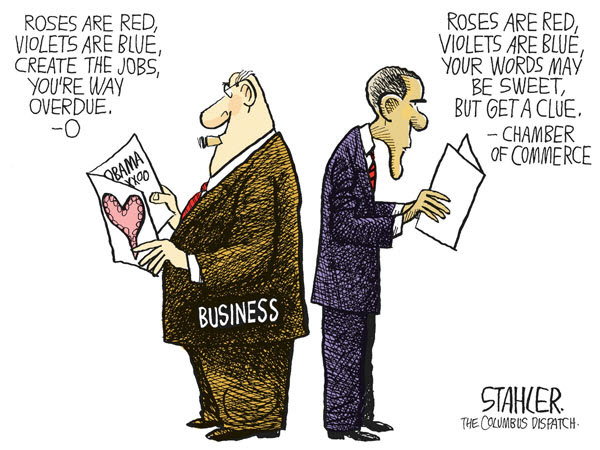
Good thing it's Valentine's Day and we can share our true feelings with each other.
Insider Transactions Show Lots of Selling.
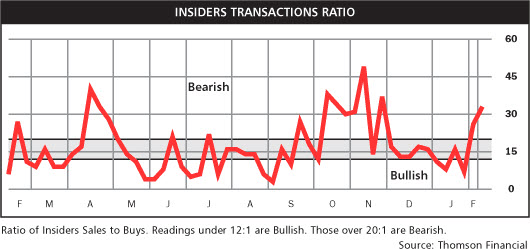
According to Mark Hulbert, corporate insiders have been selling for more than a few weeks while the market has been going up.
While that means the people with the most inside knowledge are selling … it hasn't changed the fact that stimulus continues to push prices higher. Price is the primary indicator. While the torrent of insider selling is unmistakeably bearish, the market has ignored the less important measure.
Here is the insider transaction ratio based on data from Thomson Financial:
Meanwhile, while corporate insiders as a group are busy selling their company’s shares as fast as they can, they have no qualms about issuing buy backs of those same shares with the corporations money. According to Trader's Narrative, US share buybacks are at the highest level since the fall of Lehman Bros. Last week, $27.3 billion buybacks were announced – the highest since September 2008. Companies are continuing to use their massive cash hoard to repurchase shares.
This may make shareholders happy and drive per share earnings growth but many fret that this is a sign that performance is once again being artificially manufactured instead of earned through profitable performance or growth. According to research from Citigroup, 37% of the per share growth of earnings in the S&P 500 may be traced back to buybacks if they match last year’s pace.
While markets continue higher. Questions remain about how much of the recovery is manufactured.
Good thing it's Valentine's Day and we can share our true feelings with each other.
Insider Transactions Show Lots of Selling.
According to Mark Hulbert, corporate insiders have been selling for more than a few weeks while the market has been going up.
While that means the people with the most inside knowledge are selling … it hasn't changed the fact that stimulus continues to push prices higher. Price is the primary indicator. While the torrent of insider selling is unmistakeably bearish, the market has ignored the less important measure.
Here is the insider transaction ratio based on data from Thomson Financial:
Meanwhile, while corporate insiders as a group are busy selling their company’s shares as fast as they can, they have no qualms about issuing buy backs of those same shares with the corporations money. According to Trader's Narrative, US share buybacks are at the highest level since the fall of Lehman Bros. Last week, $27.3 billion buybacks were announced – the highest since September 2008. Companies are continuing to use their massive cash hoard to repurchase shares.
This may make shareholders happy and drive per share earnings growth but many fret that this is a sign that performance is once again being artificially manufactured instead of earned through profitable performance or growth. According to research from Citigroup, 37% of the per share growth of earnings in the S&P 500 may be traced back to buybacks if they match last year’s pace.
This video does a good job of explaining the unintended consequences of government programs that attempt to “solve” what is perceived as a problem, yet the solution causes more problems than it solves.
I don’t know anything about the National Inflation Association which produced this video, so it isn’t an endorsement of them. Just thought it was interesting.
The Economist put together an interesting graphic that shows which countries match the GDP and population of America's states?
You probably know that California, on its own, would rank as one of the biggest economies of the world. As a result of its recession, these days, it would rank eighth (falling between Italy and Brazil).
But how do other American states compare with other countries?
Taking the nearest equivalent country from 2009 data reveals some surprises. Who would have thought that, despite years of auto-industry hardship, the economy of Michigan is still the same size as Taiwan's?
By the way, this is similar to a map I first saw in 2007 at "StrangeMaps". More on that here; and it gives you a chance to see how things have changed since then.
The Economist put together an interesting graphic that shows which countries match the GDP and population of America's states?
You probably know that California, on its own, would rank as one of the biggest economies of the world. As a result of its recession, these days, it would rank eighth (falling between Italy and Brazil).
But how do other American states compare with other countries?
Taking the nearest equivalent country from 2009 data reveals some surprises. Who would have thought that, despite years of auto-industry hardship, the economy of Michigan is still the same size as Taiwan's?
By the way, this is similar to a map I first saw in 2007 at "StrangeMaps". More on that here; and it gives you a chance to see how things have changed since then.
It is a slow day in a damp little Irish town. The rain is beating down, and the streets are deserted.
Times are tough. Everybody is in debt and everybody lives on credit.
On this particular day, a rich German tourist is driving through the town, stops at the local hotel and lays a €100 note on the desk, telling the hotel owner he wants to inspect the rooms upstairs in order to pick one to spend the night.
The owner gives him some keys and, as soon as the visitor has walked upstairs, the hotelier grabs the €100 note and runs next door to pay his debt to the butcher.
The butcher takes the €100 note and runs down the street to repay his debt to the pig farmer.
The pig farmer takes the €100 note and heads off to pay his bill at the supplier of feed and fuel.
The guy at the Farmers' Co-op takes the €100 note and runs to pay his drinks bill at the pub.
The bar owner slips the money along to the local prostitute drinking at the bar, who has also been facing hard times and has had to offer him "services" on credit.
The hooker then rushes to the hotel and pays off her room bill to the hotel owner with the €100 note.
The hotel proprietor then places the €100 note back on the counter so the rich traveler will not suspect anything. At that moment, the traveler comes down the stairs, picks up the €100 note, states that the rooms are not satisfactory, pockets the money and leaves town.
No one produced anything. No one earned anything. However, the whole town is now out of debt and looking to the future with a lot more optimism.
And that, ladies and gentlemen, is how the bailout package works.
It is a slow day in a damp little Irish town. The rain is beating down, and the streets are deserted.
Times are tough. Everybody is in debt and everybody lives on credit.
On this particular day, a rich German tourist is driving through the town, stops at the local hotel and lays a €100 note on the desk, telling the hotel owner he wants to inspect the rooms upstairs in order to pick one to spend the night.
The owner gives him some keys and, as soon as the visitor has walked upstairs, the hotelier grabs the €100 note and runs next door to pay his debt to the butcher.
The butcher takes the €100 note and runs down the street to repay his debt to the pig farmer.
The pig farmer takes the €100 note and heads off to pay his bill at the supplier of feed and fuel.
The guy at the Farmers' Co-op takes the €100 note and runs to pay his drinks bill at the pub.
The bar owner slips the money along to the local prostitute drinking at the bar, who has also been facing hard times and has had to offer him "services" on credit.
The hooker then rushes to the hotel and pays off her room bill to the hotel owner with the €100 note.
The hotel proprietor then places the €100 note back on the counter so the rich traveler will not suspect anything. At that moment, the traveler comes down the stairs, picks up the €100 note, states that the rooms are not satisfactory, pockets the money and leaves town.
No one produced anything. No one earned anything. However, the whole town is now out of debt and looking to the future with a lot more optimism.
And that, ladies and gentlemen, is how the bailout package works.
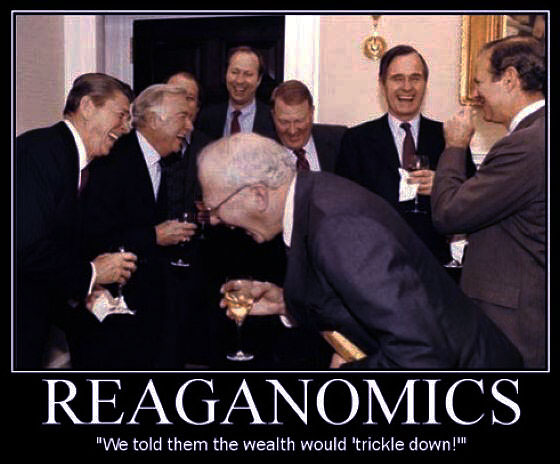
Ah, the good old days. "We told them the wealth would 'trickle down'."
Now, watch video titled “Obama Kicks Door” spoofing the President’s reaction after extending the Bush Tax-Cuts. While Jay Leno’s Tonight Show obviously faked the video, they probably nailed the President’s reaction to the compromise. Here it is.
Ah, the good old days. "We told them the wealth would 'trickle down'."
Now, watch video titled “Obama Kicks Door” spoofing the President’s reaction after extending the Bush Tax-Cuts. While Jay Leno’s Tonight Show obviously faked the video, they probably nailed the President’s reaction to the compromise. Here it is.

 Image by Getty Images via @daylife


 So this is how it's done …