
News satire from The Onion. It is funny, well done, and like most good humor … it has an insightful kernel of truth. This one provides a different perspective on employment and outsourcing.
-
What If You Outsourced Your Job Overseas?
News satire from The Onion. It is funny, well done, and like most good humor … it has an insightful kernel of truth. This one provides a different perspective on employment and outsourcing.
-
Capitalogix Commentary 08/09/09
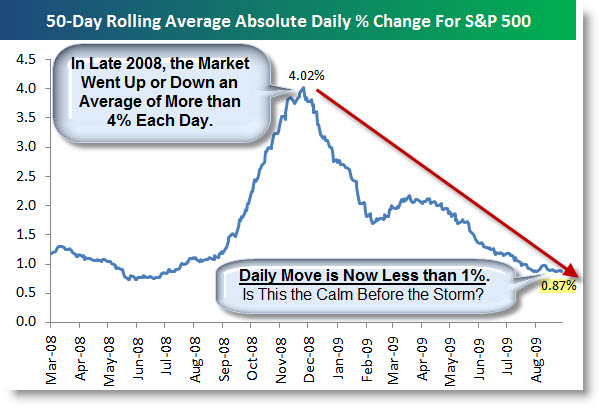
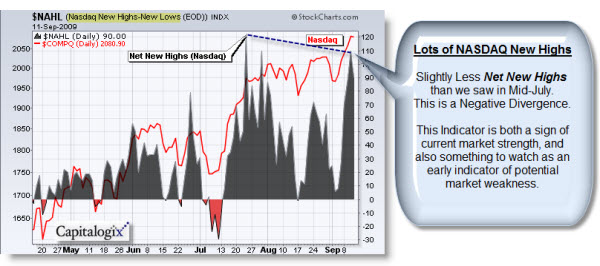
The rally continues, and the S&P 500 has gotten back above 1000. Pretty impressive on many fronts. How does it compare to other markets though? This chart shows how several other world markets have done so far in 2009.
The strength of the rallies don’t make sense to me based on logic. But trends don’t depend on logic. So, I dusted-off my copy of Trend Following and will simply ride the bucking bronco.
Why Citigroup’s Volume Is Significant.
Last week saw some interesting trading in Citigroup, as it recorded an “utterly insane” amount of volume – 2.7 BILLION – in a single day. That huge volume value caused problems throughout the financial information world. Financial systems are designed to handle certain ranges of values. If a number is outside that range, it “overflows” the data field for that value. Citigroup’s volume overflowed, which should tell you something about how likely that level of trading is to occur.
I watch volume patterns. Capitulation bottoms typically happen on huge volume spikes. I don’t know if the reverse holds true as well. But the markets are extended so I’m watching things a little more closely.
What About Gold?
If the Markets start a deeper pull-back, then Gold looks poised for a break-out to the upside. Here is a chart showing a potential Reverse Head-and-Shoulders bottoming pattern. There recent shoulder is a triangle pattern, which indicates we should expect expanded volatility soon.
Business Posts Moving the Markets that I Found Interesting This Week:
- Can ‘Cash for Clunkers’ Help Jump-start the Auto Industry? (Wharton)
- More Stimulus: Senate Adds $2 Billion to ‘Clunkers’ Plan. (WSJ)
- Job Losses Slow to 247,000; Unemployment Rate Dips. (WPost)
- Will Apple’s iTouch Tablet Will Become Its Flagship Product? (Seeking Alpha)
- What the Hotness of Your Waitress Says About the Economy? (NY Mag)
- More Posts Moving the Markets.
Lighter Ideas and Fun Links that I Found Interesting This Week
- Google Developing An Operating System for the Cloud (TechReview)
- Did Cyber-Warfare Tactics Take Down Twitter & FB This Week? (TechChuck)
- NFL Formulating Game Day Twitter Policy (WPost)
- Protect Yourself Against Social Media Identity Hijacking. (MediaPost)
- Innovation Is A Hot Topic For Big Businesses Too. (NYTimes)
- More Posts with Lighter Ideas and Fun Links.
-
Capitalogix Commentary 08/09/09
The rally continues, and the S&P 500 has gotten back above 1000. Pretty impressive on many fronts. How does it compare to other markets though? This chart shows how several other world markets have done so far in 2009.
The strength of the rallies don’t make sense to me based on logic. But trends don’t depend on logic. So, I dusted-off my copy of Trend Following and will simply ride the bucking bronco.
Why Citigroup’s Volume Is Significant.
Last week saw some interesting trading in Citigroup, as it recorded an “utterly insane” amount of volume – 2.7 BILLION – in a single day. That huge volume value caused problems throughout the financial information world. Financial systems are designed to handle certain ranges of values. If a number is outside that range, it “overflows” the data field for that value. Citigroup’s volume overflowed, which should tell you something about how likely that level of trading is to occur.
I watch volume patterns. Capitulation bottoms typically happen on huge volume spikes. I don’t know if the reverse holds true as well. But the markets are extended so I’m watching things a little more closely.
What About Gold?
If the Markets start a deeper pull-back, then Gold looks poised for a break-out to the upside. Here is a chart showing a potential Reverse Head-and-Shoulders bottoming pattern. There recent shoulder is a triangle pattern, which indicates we should expect expanded volatility soon.
Business Posts Moving the Markets that I Found Interesting This Week:
- Can ‘Cash for Clunkers’ Help Jump-start the Auto Industry? (Wharton)
- More Stimulus: Senate Adds $2 Billion to ‘Clunkers’ Plan. (WSJ)
- Job Losses Slow to 247,000; Unemployment Rate Dips. (WPost)
- Will Apple’s iTouch Tablet Will Become Its Flagship Product? (Seeking Alpha)
- What the Hotness of Your Waitress Says About the Economy? (NY Mag)
- More Posts Moving the Markets.
Lighter Ideas and Fun Links that I Found Interesting This Week
- Google Developing An Operating System for the Cloud (TechReview)
- Did Cyber-Warfare Tactics Take Down Twitter & FB This Week? (TechChuck)
- NFL Formulating Game Day Twitter Policy (WPost)
- Protect Yourself Against Social Media Identity Hijacking. (MediaPost)
- Innovation Is A Hot Topic For Big Businesses Too. (NYTimes)
- More Posts with Lighter Ideas and Fun Links.

-
How Much Is a Burger at the Cowboys’ New Stadium?
"Everything's bigger in Texas" takes on new meaning while touring the new Dallas Cowboys football stadium. The stadium cost over $1.1 billion to construct; and it makes a big statement. In addition to being massive (large enough that the Statue of Liberty would fit comfortably inside), the new structure is quite distinctive and technologically innovative.
From inside the stadium,
with the roof closed, it was designed to look like the old Texas
Stadium's roof (with its visual trademark hole). However, it can be fully-shut or fully-opened. Actually, it does a lot more than open; it slides back and then the end-zone entrances shift sideways to create the appearance of a totally open stadium, all the way out to the parking lots. My sons and I tried to figure-out how they did this … and surmised that they spent a whole bunch of money and a lot of time to make this stadium act like a Transformer.Another technological marvel is the high-definition video screen hanging above the field. It is a massive, and currently the world's largest screen. It measures more than 11,500 square feet (72feet
tall and 160 feet wide) and weighs over 1.2 million pounds. In addition to experiencing the event live, they've tried to make the multimedia experience in the stadium better than you'd get on your television set. It will be easy to follow the action from any seat in the stadium.By the way – that screen, alone, cost more ($40 million) than the entire construction of the Cowboys' previous home, Texas Stadium ($35 million).
In addition, the Cowboys owner, Jerry Jones, has shown that he is an innovative business man as well. He focused on selling far more suites than stadiums before this had available. Moreover, even though the stadium is designed to hold approximately 80,000 people for normal events, it can expand to hold over 100,000 people for special events (like next year's Super Bowl).
He extended an olive branch to the common man. Not in the price of a pizza, which costs $60 at the stadium. However, the Cowboys now offer a "Party Pass" that allows access to the game for $29, so long as you're willing to stand in the concession areas. Believe it or not, that Party Pass idea is getting great press and opens the live game experience to a whole different range of socioeconomic backgrounds. At least until they see how much a burger costs of the stadium. I cut off the price of the alcohol or you'd need a drink.
Here is my impression of watching a game there.
Other Information:
- Here is a link to Cowboys Stadium site and its Wikipedia Entry.
- Here is a link to the Dallas Cowboys Football Club.
- Here is a link a multi-media Fly-Through of the Stadium and other to Videos.
- Here is a link to an Interactive Virtual Seat Map.
-
A Trend-Following Book Worth Reading
People often ask me which trading books I'd recommend. I've read a lot of books about trading; and though some of them are good, only a handful stand out.
Michael Covel wrote a couple of the trading books I consider worth
reading. The first is called "Trend Following", and the second is
called "The Complete TurtleTrader".Many books are little more than marketing for their author or an
attempt to sell a "magic bullet" to less experienced traders. In contrast, both of Covel's books are simple enough that a novice would gain valuable information
from them; yet there's enough content and nuance that experienced traders also will
benefit from the books.I've always loved Jack Schwager's "Market Wizard" book series. Covel's books are different than these because they deal with a narrower subject … more deeply. Yet they are similar in terms of the value-added content they provide and how accessible they are; and that's high praise from me.
Covel has an engaging writing style. He keeps things interesting by telling stories rather than simply providing a mechanical "how-to" textbook. You get enough narrative and detail about accomplished traders to give you a sense of their personality, thought process, and some of the key ideas and distinctions that help make them successful. In addition, he backs-up his research with lots of data, charts, and links to additional information. This makes it easy for you to continue on your own.
What is In the Trend Following Book?
The "Trend Following" book:
- explains the basics of trend following;
- introduces you to the some of the great trend following traders;
- explains the positives and negatives of the technique from a
performance standpoint; - shows how trend followers did during big
events, crashes, and panics; - and the later part of book focuses on the
human-nature side of trading, decision-making and building trading
systems.
I like how Covel segments his books logically, and in bite-size chunks. That means I can pick it up and read something without feeling compelled to start at the beginning and read all of it at once.
For example, I just opened Trend Following (to page 253) and saw "Five Questions for a Trading System". In this section he lays-out things to consider when evaluating a system. Examples include how the system determines which market (and how much exposure) to trade, as well as what constitutes entry and exit triggers? Then, in addition to explaining the basics, there are examples and quotes from other traders about the topic. And he extends the discussion to include emotional issues like how much money you intend to make, the level of time and effort you intend to invest, and the strengths and weakness you bring into the equation. Bottom-line, he goes out of his way to give you a thorough
understanding … while getting his points across in an
easy-to-understand, informative, and interesting ways.I found myself referring to both of these books several times in the past several months. If you're looking for something to read (or for some new ideas about trading and money management) I recommend you check out these books.
- Here is a link to Covel's Blog.
- Here is a link to Covel's Videos on YouTube.
- Here is a link to his TrendFollowing website.
- Here is a link to his new movie, Broke.
-
A Trend-Following Book Worth Reading
People often ask me which trading books I'd recommend. I've read a lot of books about trading; and though some of them are good, only a handful stand out.
Michael Covel wrote a couple of the trading books I consider worth
reading. The first is called "Trend Following", and the second is
called "The Complete TurtleTrader".Many books are little more than marketing for their author or an
attempt to sell a "magic bullet" to less experienced traders. In contrast, both of Covel's books are simple enough that a novice would gain valuable information
from them; yet there's enough content and nuance that experienced traders also will
benefit from the books.I've always loved Jack Schwager's "Market Wizard" book series. Covel's books are different than these because they deal with a narrower subject … more deeply. Yet they are similar in terms of the value-added content they provide and how accessible they are; and that's high praise from me.
Covel has an engaging writing style. He keeps things interesting by telling stories rather than simply providing a mechanical "how-to" textbook. You get enough narrative and detail about accomplished traders to give you a sense of their personality, thought process, and some of the key ideas and distinctions that help make them successful. In addition, he backs-up his research with lots of data, charts, and links to additional information. This makes it easy for you to continue on your own.
What is In the Trend Following Book?
The "Trend Following" book:
- explains the basics of trend following;
- introduces you to the some of the great trend following traders;
- explains the positives and negatives of the technique from a
performance standpoint; - shows how trend followers did during big
events, crashes, and panics; - and the later part of book focuses on the
human-nature side of trading, decision-making and building trading
systems.
I like how Covel segments his books logically, and in bite-size chunks. That means I can pick it up and read something without feeling compelled to start at the beginning and read all of it at once.
For example, I just opened Trend Following (to page 253) and saw "Five Questions for a Trading System". In this section he lays-out things to consider when evaluating a system. Examples include how the system determines which market (and how much exposure) to trade, as well as what constitutes entry and exit triggers? Then, in addition to explaining the basics, there are examples and quotes from other traders about the topic. And he extends the discussion to include emotional issues like how much money you intend to make, the level of time and effort you intend to invest, and the strengths and weakness you bring into the equation. Bottom-line, he goes out of his way to give you a thorough
understanding … while getting his points across in an
easy-to-understand, informative, and interesting ways.I found myself referring to both of these books several times in the past several months. If you're looking for something to read (or for some new ideas about trading and money management) I recommend you check out these books.
- Here is a link to Covel's Blog.
- Here is a link to Covel's Videos on YouTube.
- Here is a link to his TrendFollowing website.
- Here is a link to his new movie, Broke.
-
PC Prices – An Offer I Couldn’t Refuse
Does it make sense to try and fix a broken PC? I used to think so; now I’m not so sure.
I’m often early adopter of technology. That’s kind of code for “I’ve had to reformat my computer many times over many years”. And when it came to hardware, let’s just say that the local CompUSA people smiled when I walked in the door. I love technology; and it seems that I never met a faster video card, bigger hard drive, or clever invention that I didn’t want to buy.
Your Rules of Thumb May Be
Out-Dated. Mine Were.Over the years, I developed a strategy for acquiring new computers.
I typically bought the absolute top-of-the-line, as soon as the second
version of it came out. Oh, I bought many when the first version came
out; but that’s how I developed a strategy to buy one-step back from
the newest and best.A lot has changed in the PC industry. For example, our local CompUSA and Circuit City stores are now closed, and today I got a pretty good idea why that happened.
My laptop finally gave out; and all of my software utilities, Internet searches and efforts had failed to bring it back to life. My wife made me promise to go get a new machine before I drove myself (or her) crazy.
What Kind of Deals are Available Today?
So this morning I walked into my local Best Buy determined to find a worthy replacement. I was quite surprised to find that I walked out the door with a brand-new laptop, much more powerful than the one that had broken, for less than $500.
I also found a desktop machine with Intel’s newest chip, 9-gigs of memory and a terabyte hard disk for about $1,000.
That means hardware is becoming disposable. There comes a point where it’s literally not worth trying to fix something, or re-load an operating system and your programs to make something work reasonably well, when you can upgrade to a newer more stable platform for so little money.
What Does This Mean For You?
The point is technology is now cheap enough that you should look at your business and think about the point of diminishing returns. Which machines are calling-out to you that they are past their prime, and it’s time to replace them with something new?
The PC manufacturers are trying to get rid of their Vista machines … because the new Windows 7 operating system officially comes out this fall. I recommend you take this opportunity to investigate what is out there … and bring some of it home.
-
PC Prices – An Offer I Couldn’t Refuse
Does it make sense to try and fix a broken PC? I used to think so; now I’m not so sure.
I’m often early adopter of technology. That’s kind of code for “I’ve had to reformat my computer many times over many years”. And when it came to hardware, let’s just say that the local CompUSA people smiled when I walked in the door. I love technology; and it seems that I never met a faster video card, bigger hard drive, or clever invention that I didn’t want to buy.
Your Rules of Thumb May Be
Out-Dated. Mine Were.Over the years, I developed a strategy for acquiring new computers.
I typically bought the absolute top-of-the-line, as soon as the second
version of it came out. Oh, I bought many when the first version came
out; but that’s how I developed a strategy to buy one-step back from
the newest and best.A lot has changed in the PC industry. For example, our local CompUSA and Circuit City stores are now closed, and today I got a pretty good idea why that happened.
My laptop finally gave out; and all of my software utilities, Internet searches and efforts had failed to bring it back to life. My wife made me promise to go get a new machine before I drove myself (or her) crazy.
What Kind of Deals are Available Today?
So this morning I walked into my local Best Buy determined to find a worthy replacement. I was quite surprised to find that I walked out the door with a brand-new laptop, much more powerful than the one that had broken, for less than $500.
I also found a desktop machine with Intel’s newest chip, 9-gigs of memory and a terabyte hard disk for about $1,000.
That means hardware is becoming disposable. There comes a point where it’s literally not worth trying to fix something, or re-load an operating system and your programs to make something work reasonably well, when you can upgrade to a newer more stable platform for so little money.
What Does This Mean For You?
The point is technology is now cheap enough that you should look at your business and think about the point of diminishing returns. Which machines are calling-out to you that they are past their prime, and it’s time to replace them with something new?
The PC manufacturers are trying to get rid of their Vista machines … because the new Windows 7 operating system officially comes out this fall. I recommend you take this opportunity to investigate what is out there … and bring some of it home.
-
Xobni: Looking at Your Inbox Backwards
I think Xobni is a great tool. Here is a video demo showing how it can help you.
Microsoft Outlook is one of the most important computer programs that I use. I say this because so much of my day is spent interacting with it.
I'm not the kind of person who watches for each incoming e-mail message, and constantly re-prioritizes my day. Nonetheless, I subscribe to a number of newsletters and alert services, and interact with many people throughout the day (some via e-mail, others by phone). That means Outlook is my hub, and I find myself there many times a day. So finding tools to help organize, search, and make better use of this type of information better is important to me.
One of the tools that I've come to rely on is called Xobni. In case you're not familiar with it, that spells "in-box", only backwards. And the reason is that it gives you a totally different perspective on your in-box and how you access and manage your personal information. This tool has gone through several iterations, and I consider it fairly mature. It adds the ability to see all the information about the person who sent you an e-mail including all prior e-mails, their contact information, a live link to their Linked-In and Facebook information streams; any files exchanged, a list of related contacts, and a bunch of other features. Rather than try to describe all that for you here. Take a look at the video; it does a pretty good job of explaining why this can save you time and make your experience with Outlook easier and more productive.
Here is a link to Xobni's Product Page.
Here is the announcement of Xobni Plus.