There are times in life when it is hard to imagine finding a path to victory.
So often the answer is as simple as committing to the outcome desired, showing-up, playing full-out, and giving your best until there is absolutely nothing left.
Don't let the cartoons fool you; you can learn a lot in a little over 10 minutes. I really like the visualization technique (of drawing what is spoken); it is surprisingly effective.
In today's business environment, is it optimal to entice people with a sweeter carrot, or threaten them with a sharper stick?
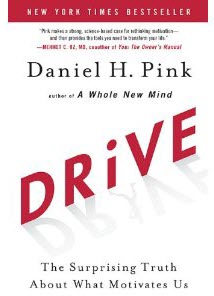
In his book, Drive, Pink calls for a different approach … one that is built much more around intrinsic motivation. Around the desire to do things because they matter, because we like it, because they're interesting, because they are part of something important. The new operating system for our businesses should revolve around three elements: autonomy, mastery and purpose.
In other words, the main point is that when someone is already intrinsically motivated, applying extrinsic motivation (in the form of reward for good behavior or punishment for bad behavior) is self-defeating because it detracts from the intrinsic motivation, which is a much more powerful force.
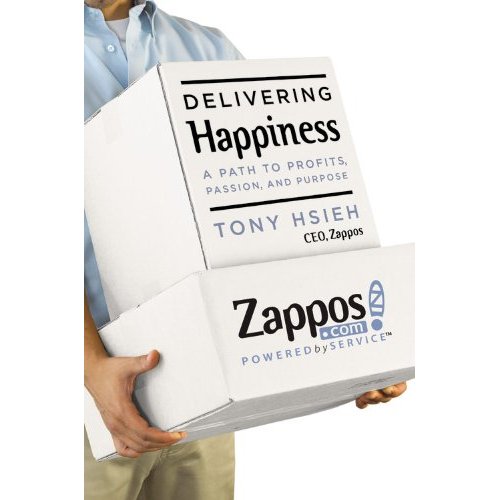
I've been reading a pretty good new book that is an interesting mix of stories, life-lessons, and business content. It combines a behind the scenes peek into the situations, emails, checklists, sample interview questions, and "Happiness Framework" that led to some surprising results.
For example, here are Zappos' Core Values from which they develop their culture, brand, and business strategies:
In 1999, Tony Hsieh (pronounced Shay) sold LinkExchange, the company he co-founded, to Microsoft for $265 million. He then joined Zappos as an adviser and investor, and eventually became CEO.
In 2009, Zappos was listed as one of Fortune magazine's top 25 companies to work for, and was acquired by Amazon later that year in a deal valued at over $1.2 billion on the day of closing.
So, you might guess that he learned a few things about what worked, and what didn't.
In his first book, Tony shares the different business lessons he learned in life, from a lemonade stand and pizza business through LinkExchange, Zappos, and more. Ultimately, he shows how using happiness as a framework can produce profits, passion, and purpose both in business and in life.
I've been reading a pretty good new book that is an interesting mix of stories, life-lessons, and business content. It combines a behind the scenes peek into the situations, emails, checklists, sample interview questions, and "Happiness Framework" that led to some surprising results.
For example, here are Zappos' Core Values from which they develop their culture, brand, and business strategies:
In 1999, Tony Hsieh (pronounced Shay) sold LinkExchange, the company he co-founded, to Microsoft for $265 million. He then joined Zappos as an adviser and investor, and eventually became CEO.
In 2009, Zappos was listed as one of Fortune magazine's top 25 companies to work for, and was acquired by Amazon later that year in a deal valued at over $1.2 billion on the day of closing.
So, you might guess that he learned a few things about what worked, and what didn't.
In his first book, Tony shares the different business lessons he learned in life, from a lemonade stand and pizza business through LinkExchange, Zappos, and more. Ultimately, he shows how using happiness as a framework can produce profits, passion, and purpose both in business and in life.

 So often the answer is as simple as committing to the outcome desired, showing-up, playing full-out, and giving your best until there is absolutely nothing left.