Personal Development

  • The Pace of Success

    Capitalogix started in my home.  The first employee sat at a tiny desk behind me.  Their job was to exit the trades I entered.  This was an early attempt to avoid the fear, greed, and discretionary mistakes that humans bring to the business of trading.

    We started to grow … and somehow got to 23 people working in my home.  It literally overtook my office, dining room, and the entire upstairs. Neighbors noticed (and expressed their displeasure).

    Looking back, it seems crazy (and my wife seems Saintly).  But somehow, at the time, it felt natural. 

    Incubating the company in my home, and growing it the way we did resulted in a closeness (a feeling much like family) that pays dividends, even today.

    Speed matters … both fast and slow.  

    I shot a video on the subject. Check it out


    There is a concept in business expressed by the phrase "measure twice and cut once."  It's much easier to do something the right way from the beginning rather than trying to fix it after you mess it up. 

    It saves time and creates a better end result. 

    Beginning with the end in mind is powerful.  I often spend what looks like "too much" time imagining the bigger future.  What will things look like when we are ten-times bigger?  Who will we serve?  What dangers will keep me up at night?  What opportunities will we be trying to attract or capture?  What strengths will give us confidence?  Who will we be collaborating with … and about what?  It helps build a roadmap that makes it easier to understand whether particular activities are aligned with our future (or just something we are doing now). 

    I prefer to optimize on the longer-term rather than the shorter-term.  That isn't always possible or practical … but when it is, that is my preference.

    Pace is important – and a focus on "what's the best next step" is an important driver at Capitalogix, but sometimes in order to go fast, you have to go slow. You may miss out on something, but the ultimate payoff is often worth it. 

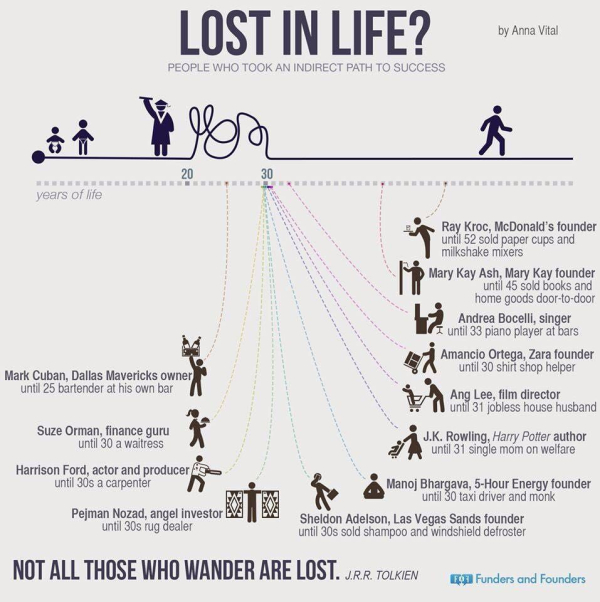
    It's a good lesson for personal growth as well.  There is no right timeline. No one size fits all.  Take your time. Find your path. 

    DQKRk6pWAAMtoQiAnna Vital via Adioma

    Hope that helps. 

  • The Intelligent Investor

    There are many different methods of investing – and I've experimented with quite a few of them (fundamental, technical, statistical, quantitative, machine learning, etc.).

    Ultimately, I believe most trading techniques work until they don't. 

    I don't believe that any technique always works … but I do believe that there is always something that works. 

    Likewise, I believe that there is always a best next step.

    Evolutionarily, the strongest or smartest doesn't necessarily survive … The quickest to adapt and adjust to its changing environment is the one that gains advantage.

    Consequently, it makes sense to be on the lookout for sources of new learning (even if they are old).

    In the same way that reading news from an opposing slant can inform your decision – studying other beliefs may help you find the underlying truths (or spark the insight you needed).

    Warren Buffet is a famous value investor. He does immense research on companies, attempts to buy them at a discount and then hold on to them for long periods of time.  On some levels, our approach to the markets is radically different.  On the other hand, it would be crazy to ignore the brilliance of what he "knows" and what he does.

    One of his favorite books on investing is titled The Intelligent Investor by Benjamin Graham. It's a great introduction to the basics of value investing (versus speculating) and the role of inflation, margin of safety, etc. 

    It's worth a read … but if you want to watch a good summary, here's a six-minute video


    via Financial Freedom

    If you aren't learning, you're dying.

  • What’s In The Box?

    “Words can be twisted into any shape. Promises can be made to lull the heart and seduce the soul. In the final analysis, words mean nothing.
    They are labels we give things in an effort to wrap our puny little brains around their underlying natures,
    when ninety-nine percent of the time the totality of the reality is an entirely different beast.
    The wisest man is the silent one. Examine his actions. Judge him by them.”

    ― Karen Marie Moning

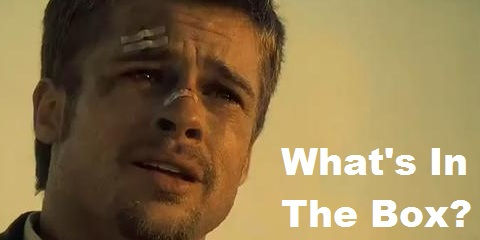
    The current sociopolitical climate has me thinking about the consequences of labeling things, creating boxes, and simplifying ideas into news-ready headlines.


    Whats-in-the-boxvia Se7en

    With more news sources than ever and less attention span than ever, you see ideas packaged into the attention-grabbing parts. The focus isn’t on education on issues anymore, but getting the click, making you stay on their page longer, sending you to a new article completely unrelated to the reason you clicked to the page.

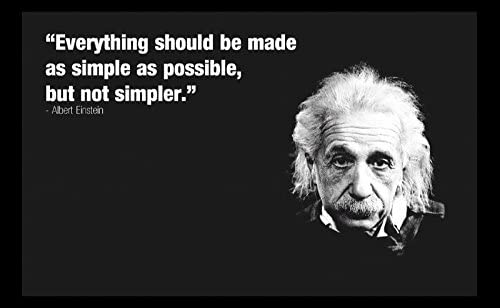
    Complex issues are simplified not even into their most basic forms – but instead into their most divisive forms because there's no money in the middle.


    200705 Einstein's Simplicity Quote

    via Quote Investigator.

    The amplified voices are those on the fringe of the average constituents' beliefs because those are the ones who are often the most outspoken.

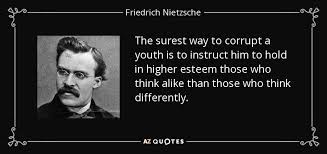
    Issues that should be bipartisan have been made "us" versus "them," or "liberal" versus "conservative," or "right" versus "wrong."


    Neitzche

    via BrainyQuotes.

    In psychology, heuristics are mental models whose purpose is to help you make decisions easier. They’re a starting point to save mental bandwidth, allowing you to spend more brain cycles on the important stuff.

    That’s a great use of "boxes" and "simplification" … but shouldn't preclude deeper thought on important issues.

    In an ideal world, we would all have the bandwidth to view each individual case of an issue as a whole issue within itself. Most things in this world are various shades of grey, and when you change your vantage point, you can change your answer.

    I recognize that’s not realistic.

    Instead, I encourage you to remember to continue to think and learn … even about things you already knowConfirmation Bias is one of the more common forms of cognitive biases.  Here is an infographic that lists 50 common cognitive biases.  Click to explore further.


    200705 50 Cognitive Biases Small
    via VisualCapitalist.

    Important issues deserve extra research. New insights happen in between the boundaries of what we know and what we don't.  Knowledge comes from truly understanding the border between what you are certain and uncertain about. 

    I challenge you to look beyond the headlines, slogans, and talking points you like most. Look for dissenting opinions and understand what’s driving their dissent. Are they really blind or dumb (or are their value-systems just weighted differently)?

    Not everything needs to be boxed. Not everything needs to be simple.


    Applying This Lesson  

    “I am ashamed to think how easily we capitulate to badges and names, to large societies and dead institutions.”
    ― 
    Ralph Waldo Emerson, Self-Reliance

    I love learning a lesson in one space and applying it to other spaces. It’s one of the cool things about AI. An algorithm can learn rules in the construction space that may help in the medicine or trading space.  Everything’s a lesson if you let it be.

    In that vein, the lesson on labeling also applies to yourself and your business.

    Many things are true because we believe them to be, but when we let go of the past beliefs, the impossible becomes possible, and the invisible visible.  

    The past doesn’t define the future, and your personality isn’t necessarily permanent.

    We are our choices … and you can make choices today that change who you are (and what you or your business is capable of) tomorrow.

    Hope that helps – Onwards!

  • Generations of Fathers

    Happy Father's Day!

    Both of my children are adults now. It's strange to consider them fully-functioning autonomous adults – because I remember their childhood like it was yesterday (like worrying whether the soft spot on their heads would ever fill in and harden up, or if they'd ever stop sleeping with a nightlight). 

    Today, they're men doing great things,  and I get to be proud of them.  I also get to be proud of my role in their growth and proud of passing down the wisdom of my dad, and his father, and the rest who came before me. 

    It has been 20 years since my father died … Crazy how time flies! He was my best friend and an amazing mentor. His vision for what I could become helped shape and inform my goals, my accomplishments, and yes, me.

    For example, after winning the State Championship in the shot put, my dad came down from the stands onto the field.  He hugged me and told me that he knew I could do it. Then, he looked deeply into my eyes and asked whether I was a little disappointed?  "Disappointed?" I asked. "But, Dad, I won."  He looked at me and said, "Winning is great … but you didn't throw a personal best."   He was proud, and he loved me.   He recognized that winning was important … but he wanted to remind me that the other throwers weren't my real competition.  

    In life, to be and do your best, the competition is really with yourself; and we both knew I could do better.

    My Dad believed in setting high standards.  He taught me that most people's lives are defined by their minimum standards.  Why?  Because once those standards get met, it is easy to get distracted and complacent.

    One of his favorite sayings was, "The difference between good and great is infinitesimal."  This applies to many things. For example, people who are good take advantage of opportunities; people who are great create them. 

    As time goes on, I recognize how much of my Dad is in me. And, likewise, how much his father was a part of him … and how parts of all of us have somehow become a part of my children. 
     

    83079882-e8c3-4f1b-899c-ad8551cf90fc

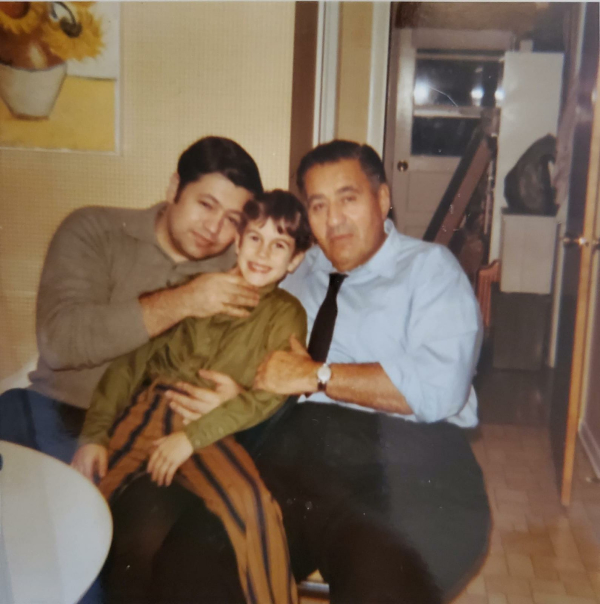
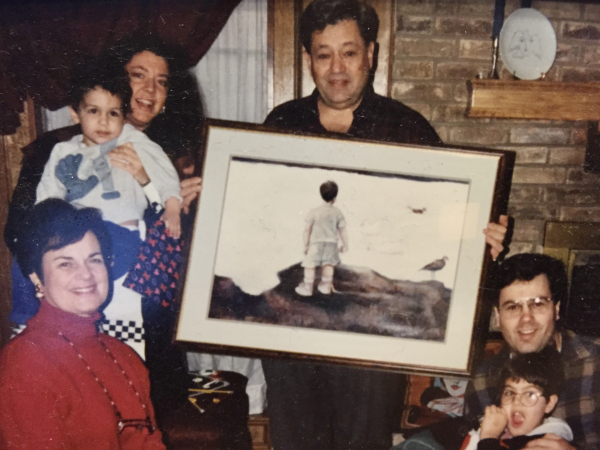
    Me, my dad, and grandfather

    My Impact on My Children

    I hope I've imparted many important lessons to my children – but one of the most impactful lessons was teaching them to enjoy reading. 

    Some parents try to limit the amount of time their kids spend watching TV or playing video games. I tried something different.  Instead, my kids earned their games by reading books. And, they also received more books in the process. 

    Here's how it worked. 

    When they finished a book, it was their right, and my obligation, to take them to the bookstore for us to pick up the next book together. Likewise, when they finished ten books, it was their right, and my obligation, to take them to the computer store or game store for them to choose any game they wanted.

    When they finished a hundred books, they earned a game system. 

    There came a point when I wanted one of my sons to start reading grown-up books. He was comfortably reading a particular genre (teen fiction) and didn't want to read the kind of books that I thought he was ready to read (and might enjoy more).  So, I created a bonus system that counted a specific book (it might have been a Tom Clancy novel) as three books.  I didn't force him; I just let the easier path to a reward "whisper" in his ear what to read. Once he finished that, he never went back to teen fiction.

    As they started to get into their teenage years, I needed to up the ante a little. So, 500 books meant they got a laptop of their choice. Both boys cashed in and probably felt like they were taking advantage of their dad.

    So, Who Got the Better Bargain?
    IMG_8265

    Three generations of Getsons

    Fortunately, in child-rearing, everyone can win. My sons love reading to this day – and have learned that they can accomplish anything they set their minds to… one step at a time. 

    My sons weren't ever forced to stop watching TV, or read a certain type of book, and always had endless things to keep them entertained. 

    Win-win. 

    I like to think each generation becomes better (as people and parents) due to the cumulative experience of the generations that came before them. 

    We stand on the shoulders of giants. 

    I look forward to seeing how my (eventual) grandchildren turn out, and how little pieces of me and their great-grandfather show up. 

    Hope you had a great weekend.
  • Carol’s Keeping Me In Shape

    As I get older, I become more conscious of my mental and physical health. It's easy as an entrepreneur or business person to lose track of your health – but investing in your personal health can be the best thing you do for your business.

    Many of my friends now believe that with technology and a sustained focus on health & longevity, they can live past 100. They're paying attention to genetic, physiologic & biochemical makeup, cognitive function, body composition, cardiovascular performance, hormonal status, and much more. Whether they're going to live past 100 or not, I can see the daily results in the quality of their life and the way they look. 

    It's the reason I started working with APEXDr. Jeffrey Gladden's concierge medical wellness practice.

    They've got me eating salads, taking supplements, and thinking about what it takes to be healthy, fit, and vital. 

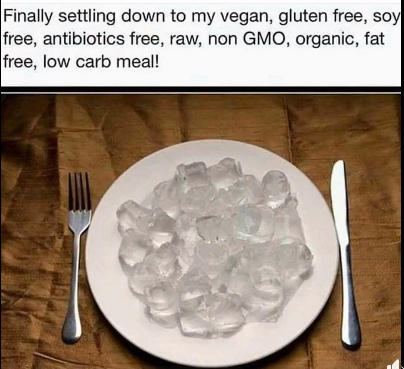
    The goal is to enjoy life though … Not to deprive yourself as this image portrays …

    Getting healthy


    Exercise is also an important part of the "healthy, fit, and vital" equation.

    With gyms being closed during the recent Quarantine, I found another tool that I fell in love with.

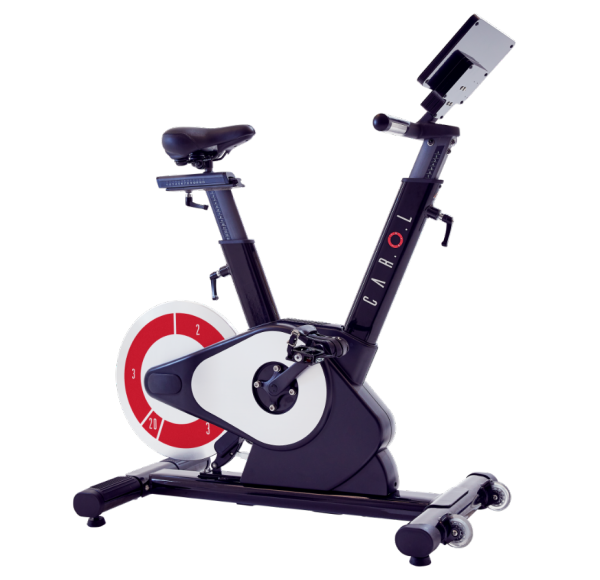
    Her name is Carol; an AI fitness bike that personalizes a HIIT workout for you,  based on your fitness and your preferred workout length. It makes it way easier for me to fit workouts into my schedule (and way harder to justify skipping a session). 

    Carol 

    The promise is an "hour's worth" of exercise compressed into an 8-minute workout that really only has two 20-second periods of intense effort.

    The science is sound. My experience is that it works for me.  I've done it for about two months now.  The results are undeniable (in terms of muscle tone, endurance, 20% improvement on many of the metrics tracked by the bike, etc.).

    The more you use it the smarter it gets. It automatically adjusts to give you exactly the resistance you need to keep you motivated and to continue making progress.

    I've been impressed. Working-out at home has always been a struggle for me. I've bought other tools for lifting or cardio, but they tend to end up as coat racks or space fillers. 

    Exercise has a "social" component for some people ( comes to mind). Some people need the "social" component of exercise to get through hard workouts (think Peloton or OrangeTheory.) The Carol bike doesn't fully satisfy that part of exercise … but they do a great job of keeping the session short, fun, and gamified (so that you know where you are, how you are progressing, and where you stand in the rankings).  The combination of the efficiency of the workouts – and being able to see that you are getting fitter, objectively, has been just what I needed. 

    Besides Carol's website, here is a link to check out their YouTube channel

    Onwards. 

  • Sometimes, Less Is More

    The idea of “less is more” was popularized in 1947 as an argument for minimalism. But today, more than ever, minimalism is important in all aspects of life. You can see it in the resurgence of simplistic design, or Marie Kondo, or in the re-popularization of stoicism

    There’s too much competition for our attention. We can’t buy everything we see on TV, deep-dive into every interesting topic we learn about on the internet, or track everything that’s happening in the world.

    Instead, we tend to focus on what is relevant or interesting to us.

    In business, there are Specialists and Generalists.  It isn’t hard to imagine that their reading lists, habits, and sources of happiness or fulfillment are probably quite different.

    The same is true for  Simplifiers and Multipliers (which is a concept that Dan Sullivan at Strategic Coach has written a book about).

    In your business career, to get to where you are, you’ve been successful at two things. You’ve simplified things, which gave you an advantage. And you multiplied things, which gave you an advantage.  Said a different way, as a simplifier, you took something that was complex for everybody else, and you made it simple. And as a multiplier, you took something that was a new solution, and you had successes multiplying it out in the world so that a lot of people could get the advantage of your simplifications.

    But the truth is most people are either primarily simplifiers or multipliers.  The best partnerships happen when you pair the two.  Amazing conversations happen when a simplifier says to a multiplier, “I’ve got this really neat solution … What would you do with it?” Each has something the other doesn’t; and the combination is often exponential.

    I am primarily a simplifier.  So, I tend to look for people or technologies to multiply what I produce.

    I shot a video on the topic. Click here to watch.


    The internet and global digital economy enable you to find an audience for almost anything. 

    No matter how far you niche down to find your true calling, there are likely people who are just as excited about what you do as you. 

    So, sometimes less is more.

    Are you a simplifier or a multiplier?

  • Solid Advice from MMA fighter Chael Sonnen

    Chael Sonnen is a famous retired mixed martial artist. He was also a coach on the show The Ultimate Fighter

    The advice in the video is fantastic – whether you're fighting in the ring or your own personal battles. 


    via UFC

    Silencing the voice in your head that says "you can't" is impossible, but ignoring the voice, and learning to compete with it is entirely possible. 

    Failure is an option, but it's the only option available if you don't try. Motion begets motion. And, with persistence, failure can be a stone on the path to eventual success. 

    Onwards! 

  • Here’s How Time Works Now…

    At this point, time feels like an illusion. My son, Zach, was recently musing on how nebulous time has felt during quarantine … ebbing and flowing between passing too fast and lasting an eternity. 

    But, what does he know?! At 50+ years in age, time flows much differently than it did in my youth…

    Right? It's not just me?

    Eli Grober wrote a piece for McSweeney's titled "Here's How Time Works Now". It is conspicuously fitting. 

    Here at Time, we’ve made a few changes you may already be experiencing that we think you should know about. Please see below.

    A Minute

    A minute used to be sixty seconds long. We thought this could be spiced up. A minute can now either be one hour, or it can take 3.5 seconds. We hope you enjoy this new feature.

    A Day

    You may remember that a day used to take place over the course of 24 hours. We felt this was too much. A day is now over the moment you first ask yourself, “What time is it?”

    It does not matter what time it actually is when you do this. As soon as you ask or think, “What time is it” for the first time that day, even if it is still ten in the morning, it will suddenly be eight at night. Does that make sense?

    A Week

    A week was once measured over the course of seven days. Our testing showed that this has been way too short, for way too long. So we made a big adjustment: a workweek now takes an entire year. From Monday to Friday, you will feel like it’s been (and you will actually age) an entire year. This is non-negotiable. This brings us to…

    A Weekend

    A weekend doesn’t exist anymore. You will go to sleep on Friday and you will wake up on Monday with a vague memory that you may have watched an entire TV show (every episode, every season) sometime in the last 48 hours.

    Read the Full Article via McSweeney's

    What year is it?

  • The Power of Asking The Right Questions

    There's immense power in asking the right questions. 

    Finding the right answers can be valuable too – but I'd argue finding the right questions is more important than finding the right answers. 

    To some extent, if you ask the right questions, the answers don't matter as much as how easy it was to find appropriate answers, proof of progress, or meaningful momentum.

    I shot this short video on the power of asking the right questions. Check it out. 


    The exercise of asking the right questions is really an exercise in the power of framing – of digesting or accessing information differently. There's power even in the reframing of the same question:  "How do I survive the pandemic shelter-in-place quarantine?" vs. "In what ways has the pandemic shelter-in-place quarantine improved my relationships (or productivity, or health)?

    In my experience, asking someone what they want often results in a response about what they don't want.  Yet, when the obstacle becomes the path forward it becomes easier to find the "hidden" gift.

    You control what you make things mean and how things make you feel. In many respects, this is the difference between feeling sad or happy or feeling like a victim versus someone in control of their destiny.  Your ability to control your perception is the difference between feeling like life happens to you or for you

    It's the same when tackling a research problem. When I hear "it can't be done" my first thought is usually "It can be done … just not the way you were thinking about it."

    The most important advances in society were impossible until they weren't.  The examples are too numerous to list.  But imagine telling someone in the middle ages that you could communicate with people around the globe in real-time, while seeing their faces, and sharing documents.  They'd try you as a witch faster than you could say "Zoom!" 

    The term Moonshot, in a technology context, is an ambitious, exploratory, and ground-breaking project that was considered to be impossible (like going to the Moon).

    Success is often a function of using Moonshots to set direction, then asking the right questions, being willing to see things differently, and finding a way to move in the right direction while gaining capabilities and confidence.  As long as you are doing those things, the trick is to keep going until you get there.  The result is inevitable if you do those things and don't give up.

    Onwards!