Personal Development

  • Treat Your Business Like A Football Team

    We're now midway through the Cowboys Season, and despite injuries plaguing the team, we just had a fantastic 43 – 20 victory over the Rams. 

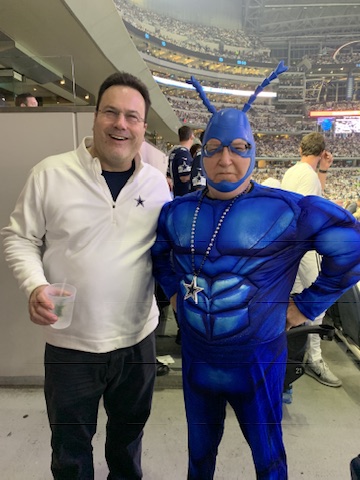
    At every game, I run into this guy, and every game he wears a different creative, and well-thought-out costume.  He sits on the 50-yard line. He wears Ferragamo shoes and a nice watch.  For his day job, he is the Head of Psychiatry at a well-known hospital in the area.  Yet, something about this game captures his imagination.
    UNADJUSTEDNONRAW_mini_3a71

    Jerry Jones does a lot right in how he builds his "Disney Ride."  But this post will focus more on what the coaches and players do. 

    I'm regularly surprised by the levels of innovation and strategic thinking I see in football.

    Football is something I used to love to play.  And it is still something that informs my thoughts and actions.

    Some lessons relate to being part of a team, while others relate to the coaching or management side of things.

    Some of these lessons stem back to youth football … but I still learn things watching games – and even more, from watching Dallas Cowboys practices at The Star

    Think about it …  even in middle school, the coaches have a game plan.  There are team practices and individual drills.  They have a depth chart, which lists the first, second, and third choices to fill certain roles.  In short, they focus on the fundamentals in a way that most businesses don't.

    The picture, below, is of my brother's high school team way back in 1989.

     Framingham South Flyers Football Brochure From 1989

    To re-state, most businesses are less prepared for their problems than an 8th-grade football team.  Now, that might sound offensive to some of you – but if you think about it … it's pretty accurate. 

    Losing to an 8th Grade Team

    I shot this video right before the COVID-19 shutdown.  I encourage you to watch it.  I think it's 3 minutes well spent.


    Football teams think about how to improve each player, how to beat this week's opponent, and then how to string together wins to achieve a higher goal.   

    The team thinks of itself as a team.  They expect to practice.  And they get coached.

    In addition, there is a playbook for both offense and defense.  And they watch game films to review what went right … and what they can learn from for use later.

    Contrast that with many businesses.  Entrepreneurs often get myopic … they get focused on today, focused on survival, and they lose sight of the bigger picture and how all the pieces fit together. 

    The amount of thought and preparation that goes into football – which is ultimately a game – is a valuable lesson for business. 

    What about when you get to the highest level?  If an 8th-grade football team is equivalent to a normal business, what about businesses that are killing it?  That would be similar to an NFL team. 

    Let's look at the Cowboys. 

    Practice Makes Perfect

    How you do one thing is how you do everything.  So, they try to do everything right. 

    Each time I've watched a practice session, I've come away impressed by the amount of preparation, effort, and skill displayed.

    During practice, there's a scheduled agenda.  The practice is broken into chunks, and each chunk has a designed purpose and a desired intensity.  There's a rhythm, even to the breaks.

    Every minute is scripted.  There's a long-term plan to handle the season … but, there was also a focus on the short-term details and their current opponent.

    They alternate between individual and group drills.  Moreover, the drills run fast … but for shorter time periods than you'd guess.  It is bang-bang-bang – never longer than a millennial's attention span.  And they move from drill to drill – working not just on plays, but also on skillsets (where are you looking, which foot do you plant, how do you best use your hands, etc.).

    They use advanced technology (including advanced player monitoring, biometric tracking, and medical recovery devices … but also things like robotic tackling dummies and virtual reality headsets). 

    They don't just film games, they film the practices … and each individual drill.  Coaches and players get a cut of the film on their tablets as soon as they leave.  It is a process of constant feedback and constant improvement.  Everything has the potential to be a lesson. 

    Beyond The Snap

    The focus is not just internal, on the team.  They focus on the competition as well.  Before a game, the coaches prepare a game plan and have the team watch tape of their opponent in order to understand the tendencies and mentally prepare for what's going to happen.

    During the game, changes in personnel groups and schemes keep competitors on their toes and allow the team to identify coverages and predict plays.  If the offense realizes a play has been predicted, they call an audible based on what they see in front of them.  Coaches from different hierarchies work in tandem to respond faster to new problems. 

    After the game, the film is reviewed in detail.  Each person gets a grade on each play, and the coaches make notes for each person about what they did well and what they could do better.

    Think about it … everyone knows what game they are playing … and for the most part, everybody understands the rules and how to keep score (and even where they are in the standings).  Even the coaches get feedback based on performance, and they look to others for guidance. 

    Imagine how easy that would be to do in business.  Imagine how much better things could be if you did those things.

    Challenge accepted.

    And, in celebration of a Cowboys win … here's me doing a cartwheel.  I'm sure my body will feel great tomorrow …
     

  • The Power of One Data Point

    I love statistics.  But I also recognize how easy it is to be tricked by data.

    Here is an example illustrating how factually accurate statistics can be misleading without proper context. 

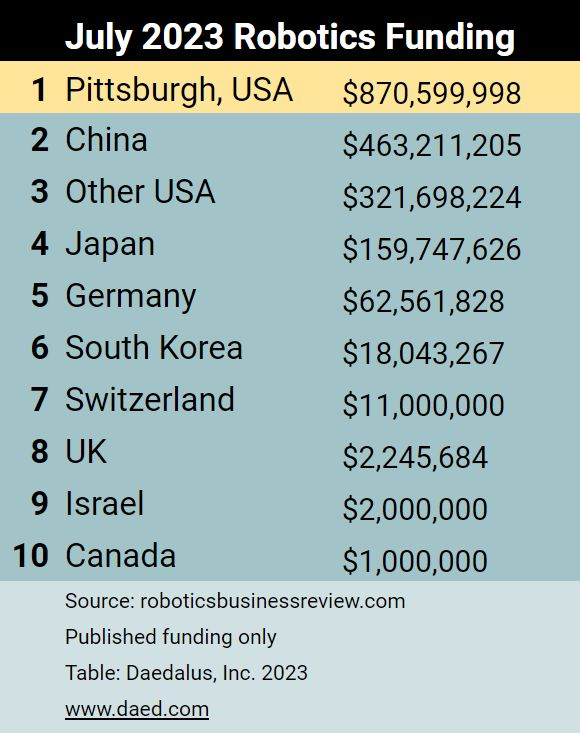
    Take a quick look at this chart showing Robotics funding in July 2023.


    1694121538381


    If you look at that chart, you might conclude that Pittsburgh is a Mecca of innovation in robotics.  Carnegie Mellon is there.  That makes sense, right?

    However, there's an immediate red flag … it's only for the month of July 2023

    So the question becomes … why? 

    Turns out, that entire number is essentially the result of a single check to Stack AV to recapitulate what was Argo.  Argo is a Ford and VW-backed autonomous vehicle startup, and Stack AV is the founders' new self-driving startup. 

    One significant move skewed the scale so strongly that it trumped major countries' expenditures that month. 

    There's often an issue about not having enough data to be statistically significant.  Another common issue is confusing coincidence with causality.

    This isn't meant to undermine the effect of one data point on a chart.  For example, think about Taylor Swift's impact on the economy.  Taylor's Eras Tour has already netted more than $100M but also reportedly has had a $5B impact on the economy.

    Cincinnati reported that Taylor Swift's Concert Tour brought $90M to their city in two days.  Her 60,000 attendees pushed the city's hotels to 98% occupancy rates.  Beyond that, her concert-goers also consumed the city's restaurants, bars, tourism, and retail. 

    Here is a different example of accurate data leading to an unusual conclusion, At a Genius Network meeting this week, the creator of OsteoStrong and the X3 bar spoke about people's misconceptions about fitness and workouts.  One point, in particular, caught my attention.  He claimed that most people only get stronger as a direct result of their workouts about ten times in their lives.  This isn't true of competitive athletes or weightlifters – but the average gym goer.  Why? His logic was you only get stronger when you take your muscle to failure, past its previous limits.  Most people rarely work out to exhaustion and don't keep track of their best.  They often stop one rep – or even half a rep – before there's a meaningful improvement. 

    A good lesson for life. 

    As entrepreneurs, we've all seen people get the "one big break" or the "one domino" that led to success.  The goal is often to be good enough that you only have to get lucky once.

    While one data point can ruin a statistic, it can also change your life. The power of an inflection point. 

    Hope that helps.

  • Adapting To New Technologies

    Figuring out how to leverage new capabilities to achieve what you want is a master skill.  It is a big part of what I do.  Consequently, many of my conversations revolve around new technologies and how to utilize them.  Likewise, I frequently write about these types of topics in blog posts.  However, I often incorporate these discussions as brief segments at the conclusion of articles on broader subjects or specific technologies.

    Recently, I created a video that consolidates many of my high-level thoughts about this.  Take a look.


    Adapting To New Technologies

    The future is scary to people who have gotten comfortable in the present.  They hope the future looks like the past because, if that happens, they already have it solved.

    But that's not typically how life happens.

    I often say, "Standing still is moving backward," and "You're either growing or dying."

    So, when I hear people pushing back against new technologies, I cringe a little.

    Smart people find a way to take advantage of promising new technologies rather than avoid them.

    To use a surfing metaphor, it is easier (and more fun) to ride a wave than it is to resist it.

    A skilled surfer doesn't try to catch every wave.  Likewise, knowing you want or need to ride doesn't mean you should blindly do it.  It is OK to skip a smaller wave to ride a bigger one (or to wait for a smarter or safer starting point).

    Last week we talked about how new technologies can be a distraction. Especially when you adopt them haphazardly. 

    When adapting to new technologies, I think there's a 4-step model you should follow. 

    1. Improve
    2. Innovate
    3. Redefine
    4. Transform

    It's almost like Maslow's hierarchy of needs … you have to deal with things like food and shelter before you can deal with affiliation or self-actualization. 

    The Improve phase is the most important because this is when you take what you already do and make it better.  Doing this first increases productivity and revenue in your business and buys time and space for you to focus on what comes next.  It's also a way to show that you're making progress in the right direction, increasing capabilities, and building confidence (which is the fuel you need to continue making progress).

    Next, many try and jump straight to transformation … but that's a mistake.

    Transform is the big hairy, audacious goal that you want to make possible.  It's the mountain top you're trying to climb.  It's helpful to know what that is.  But, when trying to climb the mountain, you still have to take the steps in front of you.

    The first step on the mountain is to Innovate.  It's about what you could do, and what you should do – instead of what you're already doing.

    Redefine is where you start climbing the mountain and adding new capabilities to your arsenal.  You're now at a stage where you can imagine a bigger future and grow your vision to match your new capabilities.  In a sense, you're playing the same game, but at a different level and with different expectations.

    When you finally make it to Transform, you are playing a new game (often on a different playing field) and you're likely influencing not just your company but other companies.  At this point, it's common for former competitors to come to you with ideas and money, looking to collaborate.

    Another key mistake entrepreneurs make is they pivot to something completely new.  When you're charting a path up a new mountain, you will find unstable ground or insurmountable peaks.  At that point, many people give up and look for something new.  They start wandering in different directions.  That's a lot of wasted movement.

    My rule at Capitalogix is "This or something better."  When we reach a roadblock, we're allowed to go around it, but only if it's an improvement on our current goals. 

    This framework is the underpinning of two other frameworks I've shared before.  In the spirit of getting it all in one place, I want to share those as well. 

    The first is how we turn thoughts into things

    Adopting Technology In Your Business 

    Understanding human behavior and what stays the same is the secret to technology adoption at scale – because it's not the best technology that wins, it's the most popular … and you can "win the game" with fantastic usage of unadopted technology.  Earlier, I mentioned you don't have to ride every wave.  You just have to skillfully ride the waves you choose.  This framework is meant to help you do that.  It helps you turn thoughts into things and explains how ideas scale with respect to capabilities, audience, and monetization.


    While the Technology Adoption Model Framework stages are important, the ultimate takeaway is that you don't have to predict what's coming, only how human nature works in response to the capabilities in front of them.

    It's a bit cliche, but to paraphrase Wayne Gretzky, you have to skate to where you think the puck will be (or, at least, lean in the right direction).

    Desire fuels commerce.  As money fuels progress, the desire grows … and so does the money funding that path.  As such, the path forward is relatively easy to imagine.

    Each stage is really about the opportunity to scale desire and adoption.

    It isn't really about building the technology. Instead, it is about supporting the desire.

    If you understand what is coming, you don't have to build it, but you can figure out where you want to build something that will make that more likely or benefit from it.

    This model is fractal.  It works on many levels of magnification or iteration.  What first looks like a product is later seen as a prototype for something bigger.

    For example, as a Product transforms into a Platform, it becomes almost like an industry of its own.  Consequently, it becomes the seed for a new set of Capabilities, Prototypes, and Products.

    SpaceX's goal to get to Mars feels like their North Star right now … but once it's achieved, it becomes the foundation for new goals.

    This Framework helps you validate capabilities before sinking resources into them. 

    In the video, I walk you through several examples of companies, their innovations, and how they fit into each stage.  I even used Capitalogix as an example. 

    I'm also attaching a fillable PDF of the form we used so that you can run through this with your business as well. 

    No alt text provided for this image

    Both of the above frameworks are high-level approaches to help you understand the path forward.  They're strategic.  The following is more tactical and best used in team discussions.

    Taking Your First Steps 

    Innovation Activity Centers are the underpinning of each stage.  They're the framework within the framework that ensures you're equipped to take decisive action.  And drive your journey toward transformation. 

    No alt text provided for this image

    While the stages and seasons of your business change, the activity centers and foci within your business don't have to.  That's what allows you to stay steadfast in ever-changing currents.

    Each of these activity centers requires a different type of person working on it, different KPIs, and different timelines.

    I shot a video going into more detail on these activity centers as well.


    Conclusion

    Understanding these models makes it easier to understand and anticipate the capabilities, constraints, and milestones that define the path forward (regardless of how the world changes).  They're a path towards technology adoption – though there are others. 

    We are making lots of progress refining these models, which are the basis for our plans to expand our Amplified Intelligence Platform.  I look forward to improving it and sharing it with you all again.

    Ultimately, frameworks aren't important if you aren't using them, and imperfect action beats perfect planning if you never act – but I hope you use these frameworks to help clear the path as you walk it.

    Feel free to reach out if you have any questions or comments about the idea (or how to implement it). 

    Onwards! 

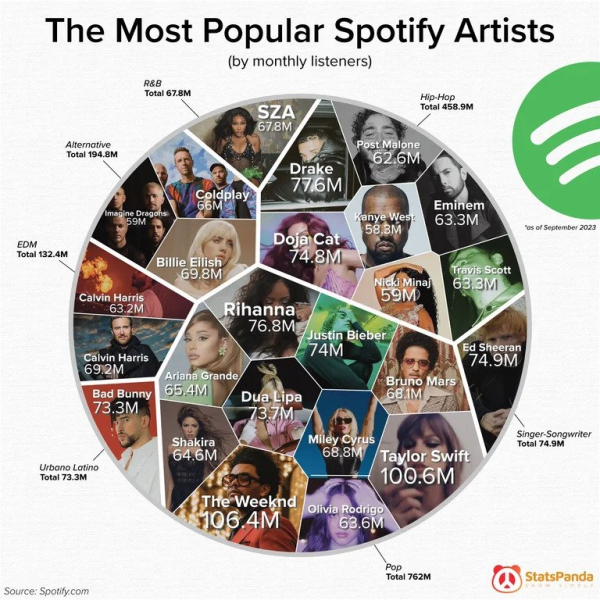
  • The Most Popular Spotify Artists

    Time and technology march forward relentlessly. 

    It is easy to keep up – until you pause or slow down.

    Being an Early Adopter was a big part of my identity.  At this point in my life, I am still early with respect to new technologies, but I feel like I'm losing touch with a lot of today's culture. 

    Perhaps this started over a decade ago?  I remember finding my sons' slang and music off-putting. 

    As an aside, my youngest son, Zach, went through a phase where it felt like he used the verbal tic … "Dude" in every other sentence.  Parenting trick – I broke his habit by screaming "FOOPDEEDOO!!" every time he said it, regardless of when it happened, where we were, or who we were with. 

    If it's crazy and it works … it's not crazy.  He certainly stopped saying "dude". 

    OK, back to the point.  I realize that the Top 40 is basically a list of 40 songs that I don't know (and feel like I only randomly know some of the artists).  Meanwhile, my staff laughingly refer to my favorite stations on SiriusXM radio as old-man music.

    To make the point further, my research assistant asked me if I knew about Bad Bunny.  To me, it sounded like a Disney cartoon for Halloween.  But, apparently, he is a Grammy-winning recording artist who won "Album of the Year" for music that I had never heard.

    It didn't take long to get to the list of top Spotify artists.  For the record, I do know most of those artists – but admittedly few of their songs. 

    Here is the list.  How did you do?

    Ezgif.com-webp-to-jpg

    via StatsPanda


    But as I said, listening to the Top 40 is getting harder for me.  Where's the rock (or songs with discernable melodies)?! 

    Meanwhile, I'm about to start a new art exhibit. I call it "Jen Sleeps At Pop Concerts" 

    IMG_0263

    So far, we've got Taylor Swift, Coldplay, Beyoncé, Ariana Grande, Bob Seger, the Eagles, and the Rolling Stones. In case you're curious, she did not fall asleep at John Legend, Queen, or Ed Sheeran. 

    Times are changing …

  • A Fun NFL Statistic, and an AI GM?

    I love football.  As such, it is fun for me to watch the games.  But I also like the business of the game as well. 

    Over time, I've become a fan of the league … and how deliberate they are about building teams and developing players.

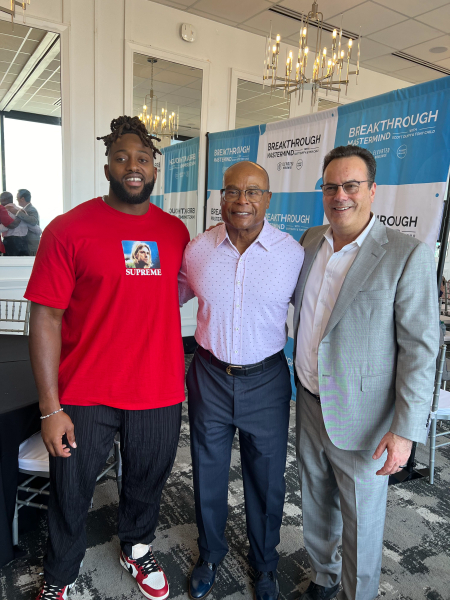
    Last week, I got to give a series of talks to a high-level entrepreneur group called Breakthrough Mastermind.  Some of the other speakers included NFL Hall of Famer Mike Singletary and a starter on the league-leading Dallas Cowboys Defense, Osa Odighizuwa.  Here is a picture of us from the event. 

    IMG_5737

    Let me know if you want a link to the actual presentations.  I talked about AI and how it frees you to be your best.  Osa spoke about what it takes to be a Pro, and Mike talked about teamwork and building teams.

    It is Football Season.  And, if you know me, then you know I'm a Cowboys fan (despite being raised in Philly, with season tickets to the Eagles – and Boston, with season tickets to the Patriots).

    So, the week one 40-0 victory over the NY Giants was fun to watch. 

    It was even more fun after I saw some stats about this loss. 

    According to ESPN Stats & Info:

    • The 40-0 win was the largest shutout victory in Dallas's history.

    • Dallas is the fifth team in NFL history to open their season with a 40-plus-point shutout on the road, and the first since the 1999 Steelers.

    • The Cowboys are the first team in NFL history to open the season with a 40-plus-point shutout of a team that made the playoffs the previous season.

    But feeding my occasional need for Schadenfreude … the stats get worse for the Giants. 

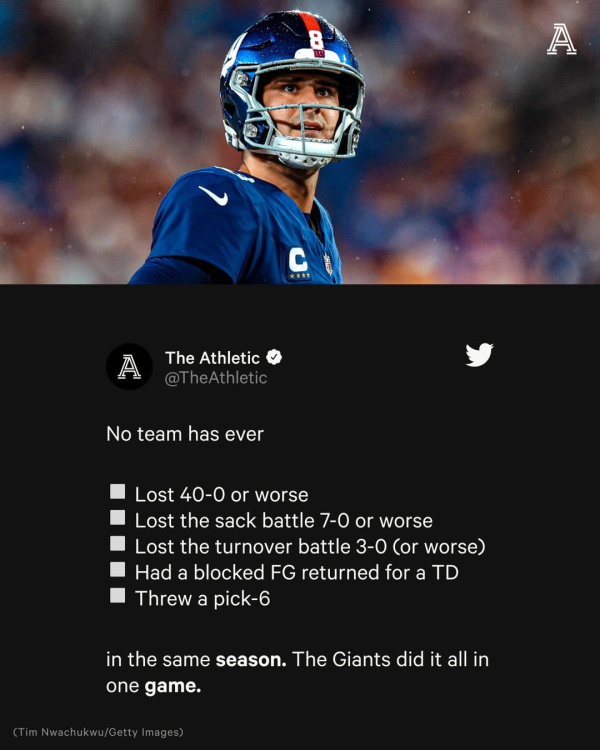
    In this game, they lost 40-0, got sacked seven times, to the Dallas Cowboys zero, they also lost the turnover margin 3-0, and had their opening drive field goal attempt blocked (and then returned for a touchdown), and their QB, Daniel Jones, then threw a pick-six. 

    Supposedly, no team has done that in a single season – let alone a single game. 

    377986325_1671679623312657_1266856846558813814_n

    via The Athletic

    See, math can be fun!

    Week Two was similar for the Cowboys against the NY Jets.  My friend and lifelong Jets fan, Brian Kurtz, attended and wrote this well-thought-out blog post on the experience.

    And for some additional contrast and dynamic tension … ponder this!

    Jerry Jones Is Going to Live Forever.

    As if the Cowboy's experience wasn't enough to bring people in, Jerry has now immortalized himself as the mirror from Sleeping Beauty, excuse me, I mean as a virtual AI screen at AT&T Stadium. 

    It's a truly interactive experience where you can ask Jerry questions, and get responses in his voice – from an AI trained on the real Jerry Jones. 

    And this is only the beginning. 

    People joke that new technologies are always adopted by porn first, gambling second, and then the entertainment industry after.  These technologies have made their way to the NFL which means they are on their way to much broader adoption sooner than you might expect. 

    We do live in exciting times! 

  • Tikkun Olam & Kintsugi: Happy Rosh Hashanah

    Yesterday, I celebrated the Jewish New Year – Rosh Hashanah – with my family and our friend Ben Hardy.

    IMG_6430

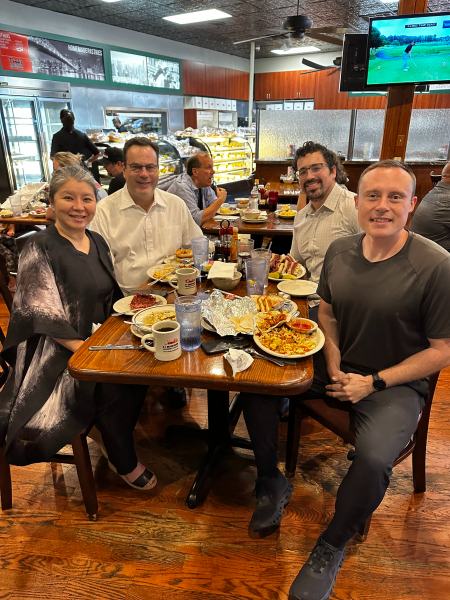
    Ben joined us for services and lunch at one of our favorite local delis.

    Next week is Yom Kippur, which is the Day of Atonement in the Jewish religion.

    As part of the holiday, participants read a list of sins (available here), apologize for those committed, and ask for forgiveness.  Read the list … much has changed, but apparently, human nature hasn’t.  

    Even if you have managed to stay on the right side of the Ten Commandments and haven’t killed or stolen … you have most likely been frivolous, stubborn, hurtful, dismissive, or judgmental (I know I have …).  

    To help mark the importance of the day, participants read a poem called the Unetaneh Tokef. Below is a brief excerpt that captures the spirit. 

    Who will rest and who will wander, who will live in harmony and who will be harried, who will enjoy tranquillity and who will suffer, who will be impoverished and who will be enriched, who will be degraded and who will be exalted.

    On one hand, you can read that and pray for Divine intervention (or perhaps favor), or you can recognize that we each have a choice about who we want to be, how we show up, and what we make things mean.  Your choices about these things have very real power to create the experience and environment you will live in during the next year.

    As we shared our holiday with Ben, I started to think about what lessons from other cultures we could leverage in our interpretation of the day.  One concept came straight to mind … the Japanese art of Kintsugi. In Kintsugi, the Japanese mend broken pottery by gilding the fractures with gold, silver, or platinum.  This treats the breaks and damage as an element that adds value and enhances the beauty of an object (preserving a part of its history) – rather than something that simply diminishes the object. 

    Diapositive5

    This concept is an excellent reminder as we try to repair some of the breaks happening in the American culture war, and the damages of the isolation and death during COVID.  Our steps backward are just as much a part of our journey as our steps forward.  As you heal, it is also important to remember to heal the world around you as well.  In the Jewish faith, that concept is called Tikkun Olam

    One of the themes of Yom Kippur is that you’re only ever one good deed from tipping the scale towards good for yourself and others.  As you recognize and repent for your sins, it’s important to appreciate the good you did (and do) as well. 

    100 Days Left

    There are just over 100 days before the start of 2024.  Many will spend those 100 days stressing about the upcoming elections, grumbling about how 2020 was mishandled, and pretending it’s the universe’s fault they didn’t accomplish what they set their mind to … yet, 100 days is enough time to sprint, to make a change, and to end the year on a high note. 

    There is plenty of time to make this your best year yet.  What can you do?  What will you do?

    What could you do to make the life of someone around you better?  Likewise, how can you let others know you’re thankful for them?

    To reference a book by Ben Hardy (and Dan Sullivan), transformational change is often easier than incremental change (because you don’t have to drag the past forward).

    So, what can you do that would trigger 10X results?   Will you?

    I hope you all experience growth in your mental state, your relationships, and your businesses.  

    Best wishes for a great day, and an even better year!

  • Sign Up For My New AI Newsletter

    I'm launching a new newsletter - with a twist.  The newsletter will be fully automated and produced by an AI we are training to pick out the articles to highlight and share.


    Don't Let the Past Get In the Way of the New.

    Even though a lot of what I think and write about is innovation, exponential technologies, and automation … until now, what we write and send has been the result of human effort rather than artificial intelligence or technology. 

    Sure, portions of the process leverage technology … but humans have written the vast majority of what you read here. 

    It takes many hours a week.  Frankly, many more hours than you would guess!  

    Still, I enjoy working on the Weekly Commentary and the list of links that I share.  It is a labor of love (or OCD?) that I have been producing for about twenty years!

    If you aren't a subscriber yet, please click here to get it!

    We currently send out two weekly e-mails.  The one that comes out on Fridays is a hand-curated list of links that I found interesting during the week.  The Sunday edition has two articles written by me and my son, Zach, along with a few more links. 

    Deep down, I know that AI is now good enough to curate a high-quality list of articles in a more efficient, effective, and certain way than what I produce.

    So, we are about a week away from launching this.


    Image


    This is my John Henry Versus The Machine.

    And I'll tell you what – I'm worried.

    The new AI-generated newsletter is really good. 


    Why Play a Losing Game? 

    I know that I will lose … But I also know that I will win.  And so will you!

    This does not have to be an "either-or" decision.  This is a "both-and" decision.  Meaning … I don't have to decide whether to stop producing by hand, in order to also produce with AI.

    One of the challenges with AI is that the fitness function you choose significantly impacts the result you achieve.

    If the purpose of the newsletter was only to produce a quality newsletter in less time, with less effort, and with greater certainty that readers engage … then the result is inevitable.  The AI newsletter wins.

    However, I didn't choose to produce the newsletter for the newsletter.  The newsletter is a natural result of my nature. I did the research because I wanted to do the research.

    I am naturally curious and passionate about these things.  It's what I think about.  It's who I am … and what I do.

    The Weekly Commentary and Link List are strategic byproducts of something that I'm going to choose to do anyway,


    AI Won't Replace the Real Magic.

    One of my beliefs about AI is that you shouldn't use it to replace your Unique Ability.  In other words, don't try to automate, delegate,  or outsource something you are great at, if it gives you energy.  The goal is to magnify "magic," not replace it.  The goal is to spotlight and support those areas by taking away things that are frustrating, bothersome, distracting, or taking cycles away from something that would produce a greater result with less energy.

    The point is, I can do both.  I will still do research because it gives me pleasure, knowledge, and a greater likelihood of continuing to learn and grow. I will continue to write and curate. 

    Why?  Because it's also an important part of my thinking process.  I think when I speak.  I think when I write.  But more importantly, I think when I am preparing to speak or write.  I wouldn't be me if I didn't go through that process.  I also don't believe my ideas or opinions would continue evolving without the challenge and effort.

    And I will also enjoy evolving new and different channels of communication.

    Hopefully, we all benefit.

    So, I hope you sign up for the new newsletter. We'll be sending out the first e-mail within the next week or two. 

    As I've said, I love writing and researching.  I'm an innovator at heart. 

    Many read my articles because of my commitment to AI, new technologies, and the future.  Most of my exploration has been centered on Capitalogix and our Amplified Intelligence Platform.  But there are a lot of exciting new use cases of AI, and I'm exploring many of those apps right now. 

    For example, as you could have guessed, one such use that I'm excited about is AI-curated newsletters.  Many people I trust and respect have started using Daily.AI, including Peter Diamandis, Dan Sullivan, Joe Polish, and Chris Voss. It's clearly a successful modality. 


    A Thousand Mile Journey Starts With a Single Step.

    Hopefully, you are excited about the new newsletter and the value you will get from it.

    I'm confident it will only improve – because it learns from what you value. 

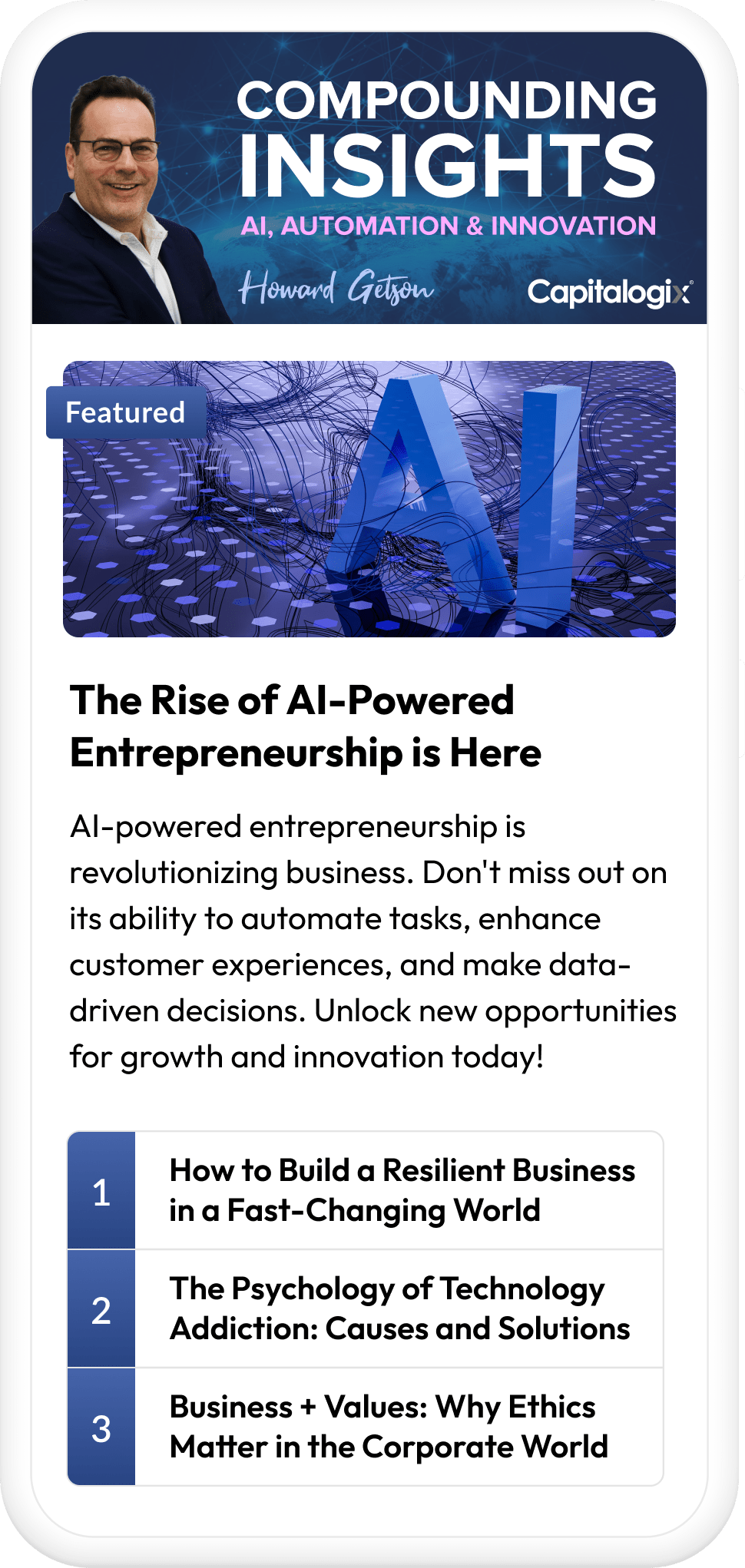
    To start, the newsletter will focus on these three topic areas: 

    1. How to build a resilient business in a fast-changing world
    2. The Psychology of technology & technology addiction
    3. Business ethics and AI ethics in today's world. 

    But that is just the starting point.  It is set up to consider the same type of offshoots as I normally would.  So, it will remain diverse and educational. 

    Please sign up and let me know what you think about it.   

  • Media Bias and You in 2023

    Information is Power.

    Consequently, your choice of information source heavily contributes to your perceptions, ideas, and worldview.

    Coincidently, news sources are a lightning rod for vitriol and polemic.

    I am still somewhat surprised by the abject hatred I hear expressed toward a particular news source by those who hold an opposing bias.  This often leads to claims of fake news, delusion, and partisan press.  Likewise, it is common to hear derision toward anyone who consumes that news source.

    Perhaps the reality is that most sources are flawed – and the goal should simply be to find information that sucks less?

    It's to the point where if you watch the news, you're misinformed, and if you don't watch the news, you're uninformed. 

    News sources aren't just reporting the news … they're creating opinions and arguments that become the news.  Moreover, many consumers don't care enough to think for themselves or to distinguish facts from opinions.

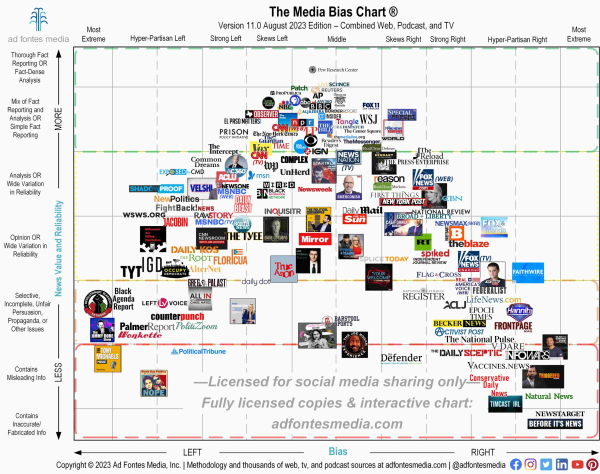
    Here's a chart that shows where news sources rank on various scales.  It has default options and over 1400 sources you can add to the interactive version.  You can click the image to go to an interactive version with more details.  It gets updated every year, and this year's just got released.

    Media-Bias-Chart-11.0_Aug-2023-Unlicensed-Social-scaled
    via Ad Fontes Media

    I once spent fifteen minutes arguing about how you know whether the information in this chart is accurate.  If you're curious about their methods, click here

    The "new normal" is to distrust news agencies, big companies, the government, and basically anyone with a particularly large reach. 

    Perhaps even more dangerous is the amount of fake news and haphazard research shared on social media.  Willful misrepresentations of complex issues are now a "too common" communication tactic on both sides … and the fair and unbiased consideration of issues suffers.  

    Social media spreads like wildfire, and the damage is done by the time it has been debunked (or proven to be an oversimplification).  Once people are "convinced," it is hard to get beyond that. 

    In reality, things aren't as bleak as they seem.  People agree on a lot more than they say they do.  It is often easier to focus on "us" versus "them" rather than what we agree upon jointly.  This is true on a global scale.  We agree a lot.  Most Democrats aren't socialists, and most Republicans aren't fascists … and the fact that our conversation has drifted there is intellectually lazy.

    This idea that either side is trying to destroy the country is clearly untrue (OK, mostly untrue).  There are loonies on the fringes of any group, but the average Democrat is not that unlike the average Republican.  You don't have to agree with their opinions, but you should be able to trust that they want our country to succeed. 

    I don't know that we have a solution.  But there is one common "fake news" fallacy I want to explain at least a little. 

    It's called the Motte and Bailey fallacy.  It's named after a style of medieval castle prioritizing military defense.

    Launceston_Castle_-_geograph.org.uk_-_22242

    Launceston Castle via Chris Shaw, CC BY-SA 2.0

    On the left is a Motte, an artificial mound often topped with a stone structure, and on the right is a Bailey, the enclosed courtyard.  The Motte serves to protect not only itself but also the Bailey. 

    As a form of argument, an arguer conflates two positions that share similarities.  One of the positions is easy to defend (the Motte), and the other is controversial (the Bailey).  The arguer advances the controversial position, but when challenged, insists they're only advancing the moderate position.  Upon retreating, the arguer can claim that the Bailey hasn't been refuted or that the critic is unreasonable by equating an attack on the Bailey with an attack on the Motte. 

    It's a common method used by newscasters, politicians, and social media posters alike.  And it's easy to get caught in it if you don't do your research. 

    Conclusion

    As a society, we're fairly vulnerable to groupthink, advertisements, and confirmation bias

    We believe what we want to believe … so it is hard to change a belief (even in the face of contrary evidence). 

    But, hopefully, in learning about these fallacies, and being aware, we do better. 

    I will caution that blind distrust is dangerous – because it feels like critical thought without forcing you to think critically.

    Distrust is good … but too much of a good thing is bad. 

    Not everything is a conspiracy theory or a false flag.

    Do research, give more credence to experts in a field – but don't blindly trust them either.  How well do you think you're really thinking for yourself?

    We live in a complicated world that is getting more complex. 

    Hopefully, knowing this encourages you to get outside your bubble and learn more about those with whom you disagree.

    Who knows … Something good may come from it?