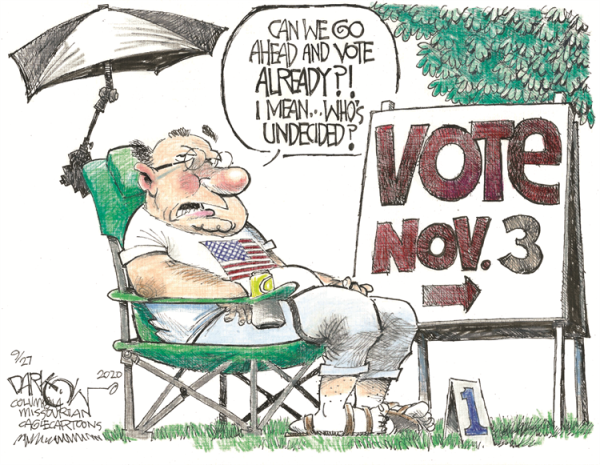
It's election season! Early voting is now open in most places.
Regardless of your preference, it doesn't count if you don't vote.

It's election season! Early voting is now open in most places.
Regardless of your preference, it doesn't count if you don't vote.

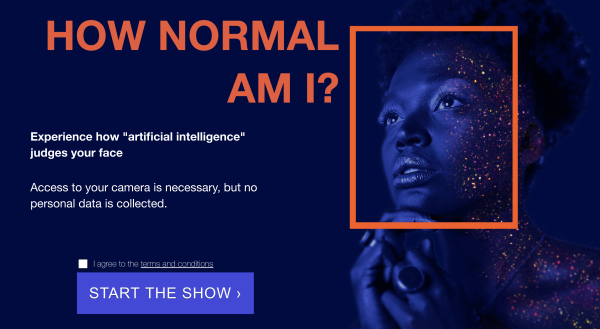
Project SHERPA recently released an AI-powered tool that analyzes your face and reveals how average it is.
It's called How Normal Am I?
via How Normal Am I?
It's an interactive video that uses your webcam to walk you through the various assessments on BMI, emotion, beauty, etc. At the end, it'll give you your life expectancy, and then your "normal score".
It's not the most complex use of AI, but it provides interesting insights, and is becoming increasingly prevalent.
Governments, police stations, retail stores, etc. all use this technology to track individuals, and if you remember one of my previous articles – there are plenty of cameras to go around.
If you did the demo, were you surprised by the results?
Interesting stuff!

Here are some of the posts that caught my eye recently. Hope you find something interesting.
The ubiquity of Machine Learning algorithms remains a topic of interest because we, as a society, still haven't come to terms with what "acceptable" use looks like, and what privacy looks like in the post-AI world.
Algorithms are helping you pick out your next gift on Amazon, controlling what you find on Google, they're suggesting new music for you on Spotify, and they're doing their best to keep you on their website.
They're following you in stores, on the streets, and many would argue they're tracking your phone calls, text messages, and more.
With all that being said, I do think it's important to have a cursory knowledge of the things that impact our lives … so, even if you're not an AI-aficionado, I think it's important to somewhat understand how machines learn, and how powerful they're becoming.
The video is a bit simple in its explanations, but it describes some important concepts.
The video focuses on Genetic Algorithms, which is one type of machine learning – and neglects some of the other more complicated approaches.
As machine learning gets more complicated and evolved, it gets harder for a human to understand what makes it good … and that's okay. Understanding the direction AI is heading is more important than truly understanding the intricacies.
It's human nature to feel safer when we understand something. It's human nature to envision machines as making human-like decisions, just faster.
Of course, just because it suits human nature to believe something, that doesn't make it true.
Part of what makes machine learning exciting is that it can do a lot of things well that humans are really bad at.
In reality, it doesn't matter why a bot is making a decision, or what inputs the bot is making the decision on. What matters is the performance and level of decision-making in relation to itself and to other options (and whether the bot is biased).
With respect to trading, focusing on the markets is a distraction.
For the most part, I don't care how markets are doing.
I care how our systems are doing and I care how the portfolio is doing.
It's a brave new world, and not only is big brother watching, but algorithms are too.
Live long and prosper!
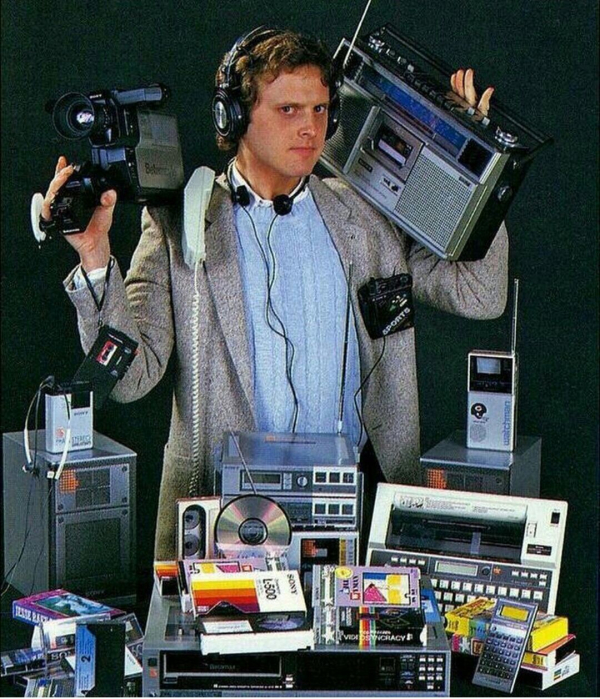
We take for granted a lot of the technology we have today. Computers and phones have evolved so fast that it's hard to remember that they haven't been around for many years. When my youngest son was born in 1993, cassette tapes and the Sony Walkman were still popular, I had a wired phone in my car, and we had a Macintosh-II in the study.

Everything in this photo now exists in the cheapest of smartphones.
For a blast from the past and a look back at what used to be top-of-the-line … here's a video of people buying a computer in 1994.
via David Hoffman
Video transfer and playback. 160-megabyte hard drive. 32 megahertz. All for the low price of $2,000.
Pretty cool to see how far we've come! Still, someday soon, they will look back at the tech we have now as "primitive" and "quaint".
I can't wait!
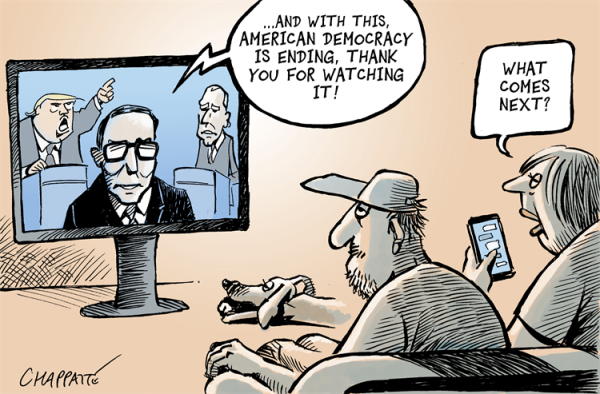
Did you watch the first presidential debate this week? I have friends on both sides of the fence, but we all agreed the debate was a mess.

Here are some of the posts that caught my eye recently. Hope you find something interesting.
As I get older, time seems to move faster … but it's also true that as I get older, more is accomplished every minute.
Technology is a powerful force function.
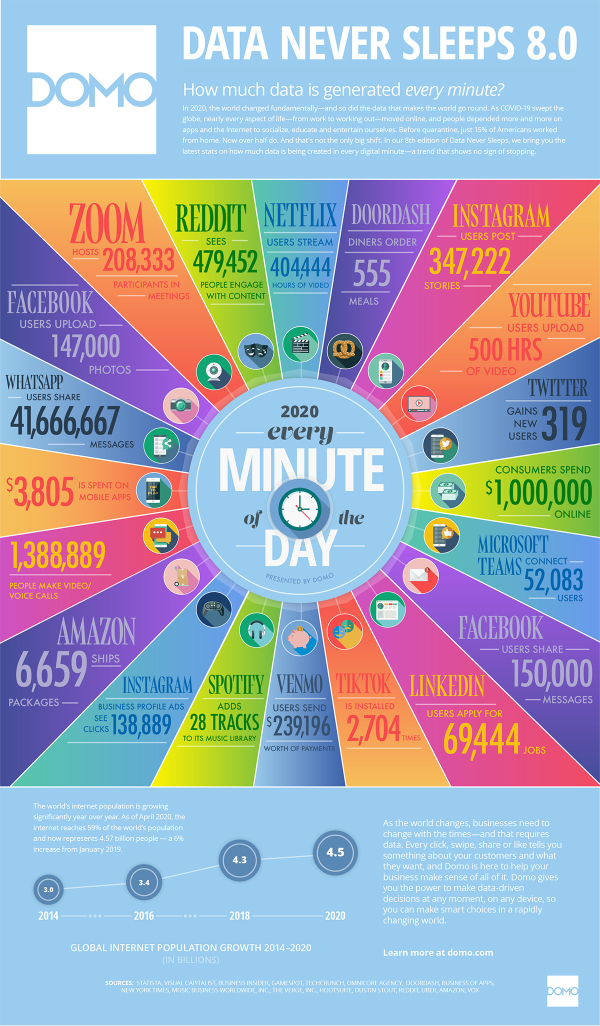
Every couple of years I revisit a chart about how much data is generated every minute on the internet.
In reverse chronological order, here's 2018, 2015, and 2011.
Here's an excerpt from 2015 for some perspective:
Compared to 2008 here is what's happened with social networks:
- The number of people online has more than doubled from 1.4 billion to over 3 billion
- Facebook has gone from 80 million users to more than 1.4 billion
- Twitter had 2 million accounts and now it is 300 million and counting.
- The number of smartphones was 250 million in 2008 and today there are more than 2 billion. That is an 800% increase!
Today this is what happens every minute on the web.
- 4 million search queries on Google
- Facebook users share 2.46 million pieces of content
- Email users send 204 million messages
Over the course of its (pretty short) history, the internet has been arguably the most important battlefield for relevancy and innovation.
So, what does the internet look like in 2020?
DOMO via VisualCapitalist
Partially as a result of the quarantine, you're seeing an increase in digital cash transfers with tools like Venmo, an increase in e-commerce shops like Shopify, and an increase in (you guessed it) collaboration tools like Zoom or Microsoft Teams.
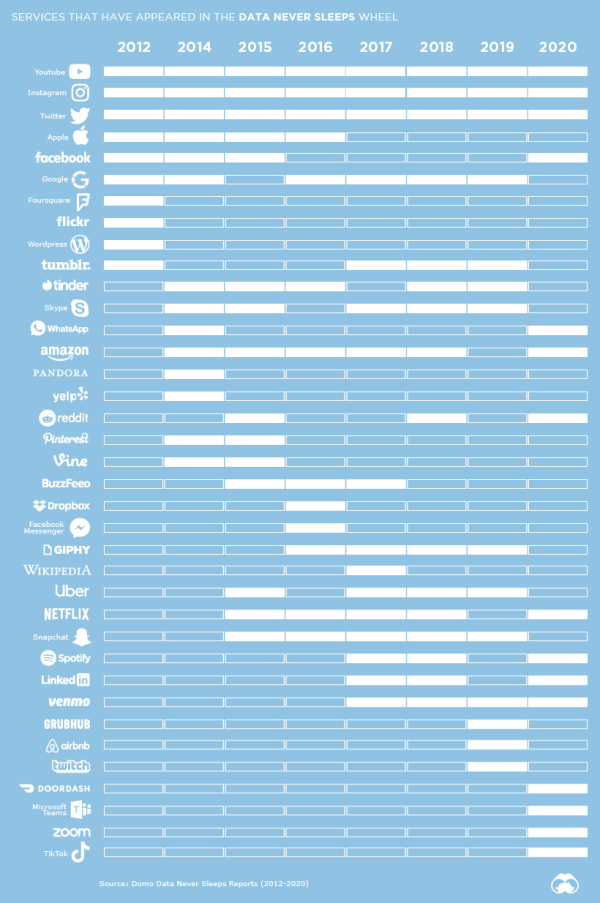
This year, DOMO also created a chart that shows the services that have appeared in the graphic since 2012. It's an interesting way to look at the relevancy and staying power of different companies and technologies.

We're currently in a time period of massive competition and turnover. Innovation means incumbents are being challenged every day, and the status quo doesn't stay that way for long. Even within the S&P 500, you're seeing companies stay a member for shorter periods of time.
You have to stay on your toes to maintain an edge. I think you can expect increased competition, increased volume, and as a result, increased noise vying for your attention or fueling your distraction.
A few weeks ago was Rosh Hashanah – The Jewish New Year, and this evening starts Yom Kippur – the Day of Atonement. The practice around these holidays is a good reminder to take account of where you are and appreciate the blessings around you. It was a reminder to me to sprint towards the end of 2020 with the energy of a new year.
Yom Kippur is a lot like a Catholic confession, but it happens once a year. The holiday is a mix of contemplation, mindfulness, and contrition. Ultimately, we apologize for the sins we've committed against ourselves, our communities, our friends, and our faith. Also important is the promise to do better next year. On top of repenting, we fast (no food or water) for a full day to make sure we're mindful.
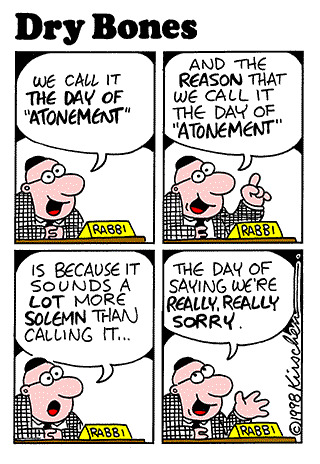
via Dry Bones
It's interesting how little human nature has changed in the past several thousand years. The list of sins is just as relevant today as I imagine it was back then. Even if you have managed to stay on the right side of the Ten Commandments, and haven’t killed or stolen … you have most likely been frivolous, stubborn, hurtful, dismissive, or judgmental (I know I have …).
To help drive the importance of the day, we ceremoniously read a poem called the Unetaneh Tokef. Below is a brief excerpt because it's a powerful read, regardless of faith.
Who will rest and who will wander, who will live in harmony and who will be harried, who will enjoy tranquillity and who will suffer, who will be impoverished and who will be enriched, who will be degraded and who will be exalted.
On one hand, you can read that and pray for Divine intervention (or perhaps favor) or you can recognize that we each have a choice about who we want to be, how we show up, and what we make things mean. Your choices about these things have very real power to create the experience and environment you will live in during the next year.
This year, my local Synagogues are closed due to the pandemic. As a result, I happen to be in Cabo for today. As I look at a photo I took, I find myself thinking about that lesson – that we have a choice about who we want to be, how we show up, and what we make things mean.

The picture is just a picture. The story you tell about it (or what it means to you) is actually more important than the image itself.
Someone asks their religious leader if they can smoke during prayer time … consequently, they are told “of course not” and reminded to take prayer time seriously and to treat it as a sacred moment. Meanwhile , a different person says “while walking along the beach, and smoking, they feel close to God and start to pray … they ask their religious leader if this is OK … with that framing, the answer is “of course” because it is always a good time to feel close to the Divine and to pray.
Progress starts by telling the truth. And Yom Kippur is a time to honest reflection. Equally important to recognizing and repenting for your sins, is recognizing and appreciating that you did good and well … for yourself, your friends and family, or your community.
All-in-all, it's a nice framework that highlights how you have grown; and, it also shows where you have room to grow.
100 Days Left
We're currently bringing in the Jewish New Year, but we also have just under 100 days before the normal New Year. Many will spend those 100 days stressing about the upcoming elections, grumbling about how 2020 sucked and pretending it's the universe's fault they didn't accomplish what they set their mind to … but, 100 days is a great amount of time to sprint, to make a change, to end the year on a high note.
That's plenty of time to make this your best year yet. What can you do? What will you do?
I hope you all experience growth in your mental state, your relationships, and your businesses. Best wishes for a great day, and an even better year!
Here are some of the posts that caught my eye recently. Hope you find something interesting.
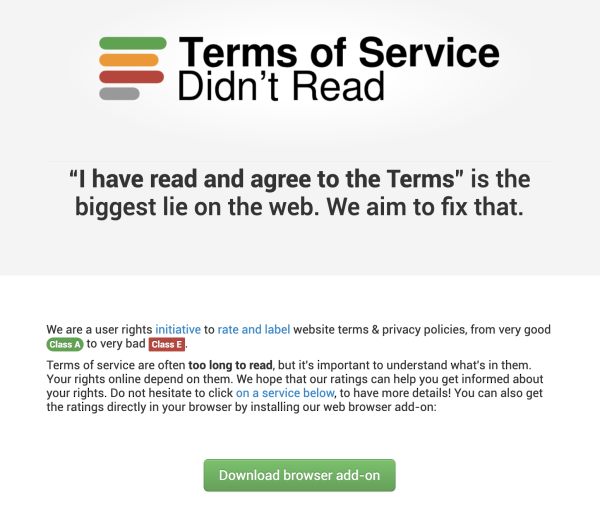
One of the biggest lies on the internet (and there are too many lies to count) is "I have read and agree to the terms of service(ToS)."
There is a plug-in that might help.
Terms of Service Didn't Read has summaries of most ToS, ratings for their user-friendliness and a browser plug-in so when you're about to sign one you can make sure it's safe.
via TOSDR
Unfortunately, many of the ToS tell you that they're going to use your data, sell it to spammers, etc. For example, I talked about how a shadowy Russian company was behind FaceApp and owned the rights to photos you uploaded.
Luckily, not every clause in a ToS is legal, and won't necessarily hold up in court – but that doesn't mean you shouldn't be protecting yourself.
So, check out TOSDR, it's not perfect … but it's probably better than nothing.