Business

  • Changing Your Definition of “Resolution”

    Planning for 2021 is going well here.  How about for you?

    When doing this in a group (or with a team) a common challenge is "alignment".   This is tricky because you have to consider time frames, what you are optimizing for, and also for which "who" you optimizing (you, your customer, some other stakeholder, etc.).

    In other words, it's easy to seem like you agree (or are talking about the same thing) only to find out that you don't have the same target or that different factions want to walk different paths. 

    This year was the start of a new decade – even though it probably wasn't the start anyone asked for or had in mind. Nonetheless, 2020 is over and we can all agree that we want to make 2021 better than 2020.  To start that process, I want to focus on personal resolutions (separate from business resolutions).
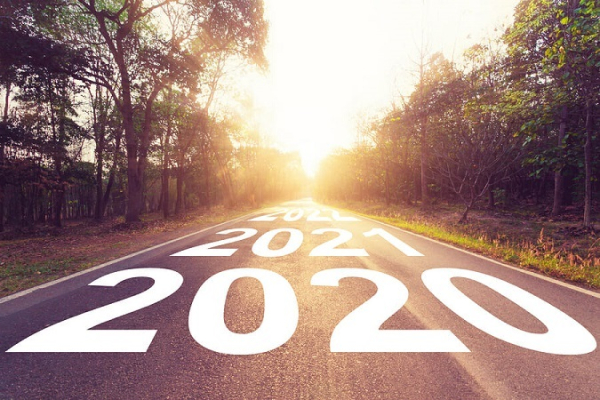
     

    Journey 20221

    Hopefully, you can use some of these concepts.

    • Focus on What You Want.
    • Focus on Why You Want It.
    • Focus on Ways You Might Get it.
    • Focus on Evidence of Progress.

    Below, I'll take you through an example of each of the four steps.

    Moving Towards a Solution, Rather Than Struggling with a Problem.

    In 2020, I made good strides towards being healthy, fit, and vital.  I started a health coaching program that helped me lose weight, gain muscle, and eat more intentionally.  In addition, I exercise smarter and more consistently, and many of my "labs" show marked improvement.  But, before I started making that progress, there was a trigger … someone who regularly gives me a massage told me I looked fat.  It hurt my feelings but it didn't meaningfully change my habits. 

    Frankly, knowing that "you're fat" isn't helpful … even translating that to something a tad more positive, yet generic, like "I choose to be healthy" isn't really helpful either.

    Blah, blah … They are just words. 

    What I needed was something specific, measurable, and actionable.  How about: "I will lose 15 pounds and stop eating after dinner."  OK, but that isn't inspiring, and there isn't much for me to do. I knew I could do better than that.

    Figure-Out a Big Enough WHY, Rather Than Worrying about the HOW's.

    This post isn't about health and fitness, it is about the mindset and techniques you can use to set empowering goals and plans in any situation.

    So, while I could list a lot of ways to lose weight; and I might even remember to do some of them … when you create a driving force, the momentum takes care of itself.  The first step in doing that is knowing WHY you want something.

    I really do want to be healthy, fit, and vital (it sure beats the alternatives), and I want to have the energy and confidence to live and enjoy my life fully.  The world is my playground, and I want to take advantage of more opportunities to play with family and friends.  In order to do those things, I must find better ways for me to live a healthy lifestyle.

    Of course, the "WHYs" are just as important for business goals too.

    Focus on Potential Solutions, Rather than Problems or Challenges.

    Obstacles Exist. The bad news: I don't eat fish and I don't like vegetables (unless French Fries are vegetables).  My joints aren't close to healthy from years of violent contact sports. I rarely get 7 hours of sleep, and my daily life is naturally stressful.  The good news: is none of those things matter … and even if they did, it just would mean that I have a lot of room for progress.

    It is natural to focus on obstacles. But most obstacles are surmountable – with a big enough WHY, even I'll start to eat vegetables. Instead of dwelling on the limitations,  use them as a reminder to focus on potential solutions instead. They are beacons, pointing the way.

    How do you do it?  To focus on solutions, you can make two action-based lists: one is of things To-Do … and another is of things Not-To-Do.

    Here are some of the sample To-Do Items:

    • I will drink more water than coffee.
    • I will stretch (or do basic calisthenics) on days that I don't go to the gym.
    • I will make a healthy shake as a meal replacement rather than as a meal supplement.
    • I will focus on relaxation and meditation as much (or more) as I focus on strength & physical exercises.

    Here is the actionable list of Not-To-Do Items.

    • I will not rely on stretchy pants (or buy new ones with a larger waistband) for comfort.
    • I will not eat snacks out of their container and will portion-out what I want first.
    • I will not compare my current level of fitness to what I used to be able to do. Instead, I will focus on my actions and improvement.

    Create Healthier Habits.

    It is easy to follow your routine.  So, make your routine better.  Here are some examples of things you could do to make being healthier happen with less effort.

    • Pre-sort your vitamins into daily doses, and keep them by the coffee machine.
    • Buy healthy snacks, like fruit, raw nuts, or organic energy bars (instead of chips).
    • Make "exercise time" the time you enjoy listening to music or listen to a book/podcast. Dedicating time to something doesn't mean you can't be multitasking.
    • Park at the end of the parking lot (so you get to walk) rather than trying to find the closest space.
    • Meet with friends at the gym, park, or at a hiking spot (rather than a bar or restaurant).

    You get the idea.  Get in the habit of looking for ways to create better habits.  What habits could you alter slightly, to make a big difference? 

    What things can you automate or outsource?

    One helpful tip I learned this year from Tiny Habits, is to start with something small and easy to do, and then build on it. After you've gotten good at creating the habit – you can change the frequency, duration, etc. 

    Focus on Your Progress.

    In this case, it really is about the journey.  Instead of keeping track of how far you have to go … notice how far you've come. Utilize an internal locus of control. It is about creating energy, momentum, and a sense of possibility.  You may have a big, hairy, audacious goal in mind.  That's fine, as long as you realize that reaching each milestone along the way is still an accomplishment.

    • Find shoes that don't hurt your feet.
    • Pick a gym or a personal trainer.
    • Run more than two laps without stopping.

    It doesn't matter what they are… they all count, as long as you know that you are moving in the right direction.

    Summary

    The point of this post was not really to focus on fitness. These techniques and goal-setting tools work in any situation. The principles are:

    1. First, figure out what you want, and why it is important to you. 
    2. Second, find something you can do, right now, which moves you in the right direction.
    3. Third, notice which things create (rather than take) energy. Spend your time on those, and automate or create routines to take care of the rest.
    4. Fourth,  plan forwards, but measure backward. Set milestones so that you can recognize and celebrate your progress.

    In business, this translates to Capitalogix having a mission and vision – it's what we want, and why it's important to us. I then create a yearly "Big 3" goals that move us toward that long-term vision. My team creates SMARTs (goals that are specific, measurable, attainable, relevant, and timely) and KPIs (key performance indicators) so they know where to spend their time, and what milestones tell them they're on the right track.

    Hope this helped.  
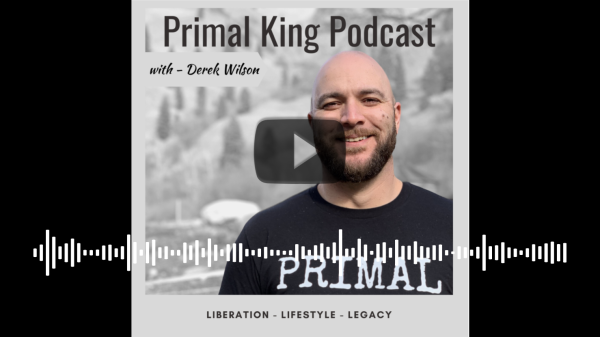
  • Getting To Here: Primal King Podcast

    Here is a podcast worth listening to at the beginning of a new year.

    A friend of mine, Derek Wilson, interviewed me about mindsets, decision-making, and calling the future you want into existence.

    I think it's a good episode,  and it feels very fitting as we start the new year. Check it out.  Or download a transcript made with Otter.AI


    Screen Shot 2021-01-02 at 11.26.13 PMv2


    You can also find his podcast on Apple Podcasts.

    Best wishes for a great 2021!

  • Setting Yourself Up For A Successful 2021

    We're about to usher in a new year – along with the promise and pressure of filling its blank slate.

    2020 is nearly over.  What a strange year it was!

    With 2021, we get a fresh start.  

    We look forward to what we will achieve – even though history says we rarely achieve everything we hope for.  Meanwhile, paradoxically, it is also true that we rarely achieve things we don’t hope for.  So, Hope!  It may not be a reliable strategy … but it beats the alternative.

    Personally, I’m excited about 2021.

    Despite the abnormal market and uncertain political climate, we're clearly moving toward increased stability compared to 2020.

    Even though I expect some volatility, we have become more accustomed to handling it (and we've become better at transforming its strategic byproducts into strategic benefits).

    On a different topic, think about how much progress we've made and how different the "new normal" has become.  For example, think about Zoom and remote work or how quickly our economy migrated online.  On many levels, what we are doing now seemed like science fiction even just a few years ago.

    We are living in an age of exponential technologies and exponential possibilities.

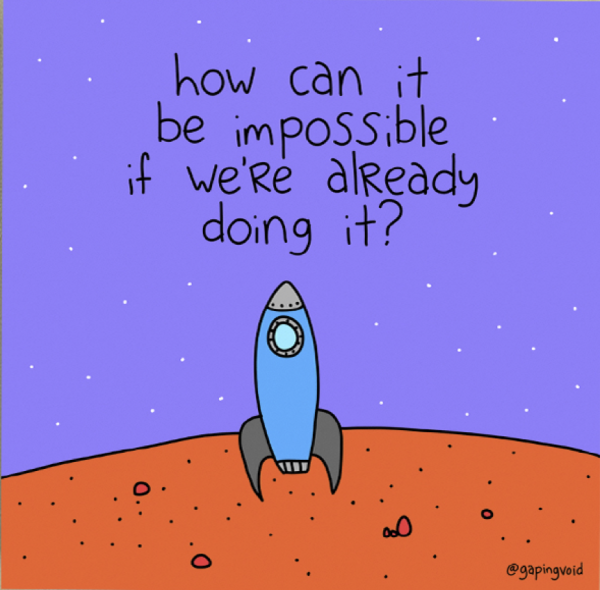
    I commissioned this image, from GapingVoid, to remind our team to keep shooting higher.


    How Can It Be Impossible If We're Already Doing It_GapingVoid


    Resilience, resourcefulness, and a worthy goal are the keys to many entrepreneurial success stories.

    In the spirit of New Year's Resolutions – I’ll add that a deliberate approach to goals is important too.

    I'm a big fan of picking a Big Hairy Audacious Goal (sometimes called a "BHAG") and taking actions that move you in that direction. 

    I'm also a big fan of Strategic Coach's Bigger Future exercise.  It is a 20-year planning exercise where you layout your commitments and goals to yourself, your family, your career, and your legacy. 

    While doing this, I realized that my ideal next 20 years involves taking Capitalogix to the next level (and beyond) through collaboration, cooperation, and joint ventures. 

    Once you know what your long-term goal is, it is relatively easy to plan out the steps you need to achieve that goal.  Achieving smaller goals reinforces success, builds momentum, and makes continued progress feel more likely.

    Extra points if you make them SMARTs (Specific, Measurable, Attainable, Realistic, and Time-Sensitive). 

    Actions speak louder than words, and your words can distract you. 

    If your goal is to win first place at a competition, focus on the metrics of a first-place finish instead of the medal. This makes the goal concrete and sets an internal locus of control on your victory.  This also means that you don't need to tell others your goal too soon. Studies show that when you announce your intention to a goal in public, you decrease the likelihood of you succeeding

    It's okay to misstep, it's okay to get stuck – but recognize where you are, what you've done, and move forward. 

    Often the most frustrating thing that any of us feel on a regular basis is to want something really bad, and not be able to get it right away.

    The world makes that hard – media everywhere is peddling immediate gratification, but it results in higher rates of obesity, drug abuse, and depression. 

    Don't be fooled.  Overnight successes are rarely actually overnight successes.

    It's also important (once you've accomplished your goal) to set new goals. 

    Over the next 20 years, there are a ton of people I want to impact and a lot of goals I want to accomplish. Capitalogix is the way I intend to do that.

    It hasn't always been easy – but building Capitalogix has been an intensely rewarding passion.

    I look forward to you all being a part of it as well. Here's to a successful 2021 and an even more successful 2041.  

    Onwards!

  • Thinking About Thinking

    We're in the middle of annual planning – which I mentioned in my video on Chunking Higher

    Today, I want to focus on another aspect of getting better at planning and alignment … the idea of thinking about your thinking

    I shot a video that discusses several useful techniques to amplify decision making.


    One of the ideas is something called "Think, Feel, Know." Basically, it explains that you have to deal with superficial thoughts before getting to deeper feelings. Then, you have to deal with those feelings before you get to "knowing". 

    Another technique discussed in the video involves adding time to look for "insights" after working on something.  Those insights are often the seeds for something greater.

    Let me know what you think of the video … and I'd love to hear ways you try to amplify intelligence.

  • Processing A Bigger Future

    Whether you think you can or you think you can't. You're right. – Henry Ford

    Processing the possibilities of tomorrow is very difficult for humans.  Part of the problem is that we're wired to think locally and linearly. It's a monumental task for us to fathom exponential growth … let alone its implications.  For example, consider what happened to seemingly smart and forward-looking companies like Kodak, Blockbuster Video, or RadioShack. 

    The world changes quickly.

    Change is constant. The wheels of innovation and commerce spin ever-faster (whether you're ready for it, or not). 

    As a practical matter, it means that you get to choose between the shorter-term pain of trying to keep up … or the longer-term pain of being left behind.  Said a different way, you have to choose between chaos or nothing. 

    It is hard to keep up – and harder to stay ahead.

    Personally, I went from being one of the youngest and most tech-savvy people in the room to a not-so-young person close to losing their early-adopter beanie.  Sometimes it almost seems like my kids expect me to ask them to set my VCR so it stops flashing 12:00 AM all day.

    Def5094d723b4c099755173bc6b580ad

    My company may not really do "rocket science", but it's pretty close. We use exponential technologies like high-performance computing, AI, and machine learning. 

    But, as we get "techier," I get less so … and my role gets less technical, over time, too.

    Because of my age, experience, and tendency to like pioneering … I've battled technology for decades. 

    Don't get me wrong, technology has always been my friend.  I still love it.  But my relationship with it is different now.

    I tend to focus on the bigger picture.  Also, I tend to appreciate technology on a more "intellectual" or "conceptual level" – but in a far less detailed way (and with much less expectation of using the technology, directly, myself).

    The Bigger Picture

    My father said, not worrying about all the little details helped him see the bigger picture and focus on what was possible.

    You don't have to focus on the technological details to predict its progress.  Anticipating what people will need is a great predictor of what will get built.   That means predicting "what" is often easier than predicting "how'. Why? Because technology doesn't often look for a problem; rather, it is the response to one.

    Here's a video from 1974 of Arthur C. Clarke making some very impressive guesses about the future of technology. 


    via Australia Broadcasting Corporation

    Artificial Intelligence, quantum computing, augmented reality, neuro-interfaces, and a host of exponential technologies are going to change the face and nature of our lives (and perhaps life itself).  Some of these technologies have become inevitabilities … but what they enable is virtually limitless.

    Where do see this going?

    We certainly live in exciting times.

    Onwards.

  • Do Candles Smell Worse?

    Covid-19 rates are still rising in many places, and there's an unexpected consequence …

    Candle companies are getting much more negative reviews. Angry people everywhere seem to be reporting that the candles have no smell!  With Covid, perhaps they need to check if they've lost their sense of smell or taste (and whether they have a mild fever). 

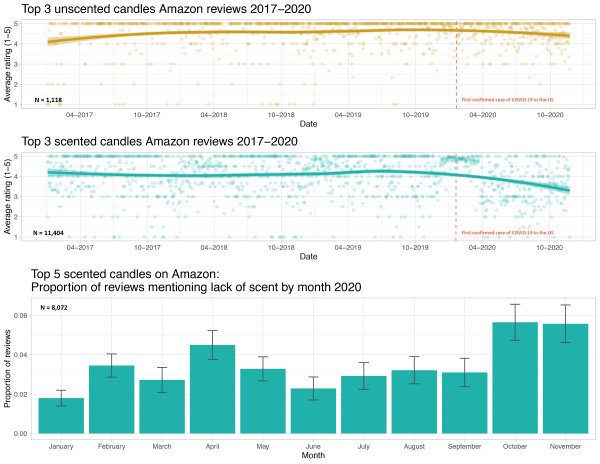
    Katie Petrova, on Twitter, did some research to check if there was really a correlation. 

    En2drsoXUAMNU6tvia Katie Petrova

    And the results were as expected. In 2020, consumer ratings for scented candles declined much more than unscented candles, and there are spikes in reviews mentioning lack of scent during months with increased cases. 

    Since the beginning of this year, the proportion of reviews mentioning lack of scent grew from < 2% in January to close to 6% in November.

    That being said, unscented candle reviews are lowering too … which makes you think about the confounding variables. Are sales simply increasing to the point where reviews (and thus negative reviews) are increasing? Is it a result of people being bored/frustrated at home?

    I'd be curious to see how much candle (or other home scent improving products) purchases increased during 2020.

  • Trends To Watch Due To The Pandemic

    The pandemic has affected many things beyond basic health. Increasingly, I see research showing meaningful increases in pornography consumption, suicide rates, and a host of other trends that are shaping our world today … but, in the longer-term, it is also affecting the face of tomorrow. 

    Flexible Workplaces

    In May, after only several months of lock-down, I was surprised how many businesses decided that they had no intention of ever requiring their employees to come back into the office

    As we close in on a year in the pandemic, I am surprised how easily we adapted to the new normal.  Even with a vaccine in sight, I suspect many of the adaptations will remain.

    Personally, I like going to the office.  Most days, I still do … even though a tiny fraction of our people are there.

    With that said, I know that our business matured.  We are better at the skills, tools, and mindsets that make remote work possible or profitable. We've gotten better at deciding what's a meeting (versus an e-mail or an online chat). People are working hours that are more comfortable for them, and we see meetings happen both earlier and later than they used to, before the quarantine. 

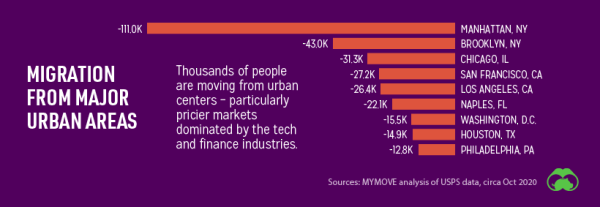
    As a macro trend, we also see a flight from urban centers.


    Migration-from-urban-areas

    via visualcapitalist

    I keep hearing about people moving far from their work-places.  Ultimately, they decided that remote work enables a new form of freedom for them – to live where they want, regardless of what they do (or who they do it for).

    Over time, I'm curious how a remote workforce will impact the quality and the amount of work done. 

    Adding to my initial concerns, flexible workspaces cause (or exacerbate) other issues, including cybersecurity, digital collaboration, defining the new workday, and a host of other challenges. 

    Digital Explosion

    I remember the early 2000s and the distress I felt watching how many time cycles my son "wasted" being on his phone (which to me, at that time, seemed like "all-the-time"). But, in retrospect, that was nothing

    Flash forward to 2019, and everything was even more "digital" and "smart."  Refrigerators, exercise bikes, billboards, and more all had screens, and 2-year-olds were already digitally literate. "All-the-time" took on a whole new meaning.

    Somehow, the pandemic still took our reliance on the digital world (or our augmented alternate reality) to the next level. 


    PAN Graph for HEALTH Survey

    via Alaska DHSS

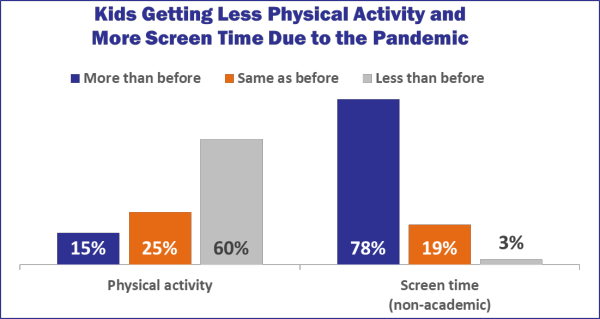
    Kids are also getting less physical activity and human contact, and spending much more time online.  Contributing to this is the reality that much of their academics have been forced online.  Likewise, adults also are shifting more of their attention and activity cycles to the digital world.

    Continued screen-time increases coincide with video game revenue spiking and Internet traffic increasing by more than 50% worldwide. 

    As the world opens up, I still expect digital reliance numbers to stay above pre-COVID benchmarks. People's reliance on digital to feed their need for information, entertainment, and companionship is growing.

    Changing Business Landscape

    Starting with consumers, we've seen a massive movement toward frictionless and touchless payment. Even physical stores are prioritizing getting in and out without having to deal with another human. In addition, there's a massive move toward delivery services for groceries and meals

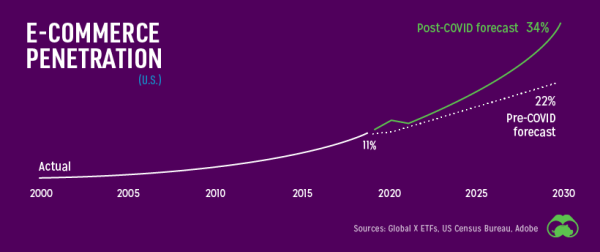
    On top of the changes to normal retail services, reliance on online shopping has increased, while the time it takes for electronic purchases to your door has decreased. Combined, these factors will terraform commerce.  Consequently, this year was likely an inflection point for e-commerce penetration … and, from that perspective, life will never be the same again.


    Ecommerce-forecastvia visual capitalist

    Despite the growth of online retail, many small businesses that couldn't move online are struggling, and many have already gone under. 

    Which leads to the next trend …

    Increasing Wealth Stratification

    While small business owners and front line workers have been struggling, billionaires saw their wealth increase by over half a trillion dollars

    Part of this is due to government aid toward large companies, part of it is due to tax laws, and part of it is due to the digital rise mentioned in the previous section. The big tech companies were already thriving, and the pandemic created a positive inflection point. 

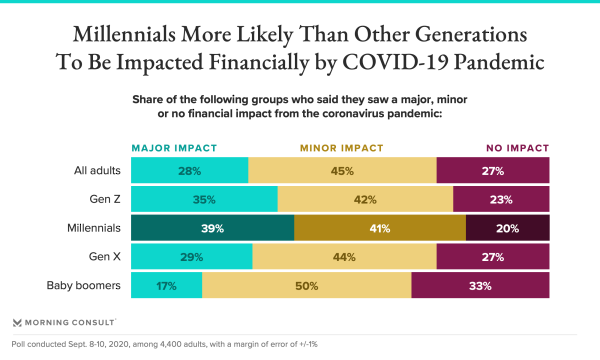
    Despite those gains, the pandemic hit millennials and small businesses hard. 


    200928_millennial-covid-impact_fullwidthvia Morning Consult

    The longer the economy is affected by COVID-19 measures, the larger the wealth inequality will grow, and the more people you can expect looking for government assistance. The strong will thrive while others will suffer increasingly from learned helplessness.

    Obviously, the 2020 quarantine has created impacts in many other areas – including family stress, community isolation, political radicalization, etc. Moreover, these effects won't be isolated to this year – and we should expect many to impact our "new normal" for years to come.

    Some people consider this a challenge. I think it's the playing field. It's going to be true for everyone. What you make it mean, and what you choose to do, it is up to you.  Some will be like a cork, floating on the water, going where the tide takes it. Others will recognize the situation as an opportunity and thrive.

    The impact has been global, but the choices you make are local … and they are still your to make.

    Here is to making 2021 our best year yet!

    Onwards!

  • Chunking Higher

    We've been doing annual planning for 2021.

    The meetings are going well.  There is a lot of back-and-forth idea sharing, negotiating, and priority setting.

    Nonetheless, I had a sneaking suspicion that sometimes what seemed like a dialogue, was really multiple monologues. 

    The reason for the disconnect (or misconnect) was that the participants had fundamental beliefs, at a higher level than we were discussing, that were at odds with each other. 

    I shot this video to explain how to fix that issue.   

    The short answer is to chunk high enough that you truly start from a place of agreement.  Exploring distinctions from there is relatively easy.


    I'll add one more concept for good measure … Start with the end in mind. Alignment happens in stages.  Before you can truly get alignment on what to do next, you have to get agreement and alignment about where you are and where you want to go.

    With that said, another important component of meaningful communication is a shared understanding of common language.  Words can mean different things to different people.  Simply agreeing on a "word" is different than agreeing on a common meaning.

    To summarize these concepts:

    1. Make sure you have a common language
    2. Begin with the end in mind
    3. Start with the highest level of agreement
    4. Make distinctions from there

    Hope that helps.