Business

  • Economic Allies and Economic Enemies

    Last week, I brought up the concept of Economic Freedom. It reminded me of an idea I last shared in 2008, during the housing crisis. 

    I noticed how correlated and coordinated worldwide actions were during the housing crisis. During the pandemic, while there was a lot of dissent, there was also a remarkable amount of coordination. 

    Why Do We Shake Hands? | Mind Fuel Daily | Life & Journey

    The concept of economic allies presupposes that we also have economic enemies. It’s easy to construct a theory that countries like Russia and China use financial markets to exert leverage in a nascent form of economic warfare.

    It's easy to come up with a theory that suggests we are our own worst enemies. Our innate fear and greed instincts (and how we react to them) tend to lead us down a path of horrifying consequences. This has been evident in recent years, not just in society, but also in the world of business. I am confident that this pattern will persist in the context of Artificial Intelligence, with both its potential benefits and risks.

    The butterfly effect theorizes that a butterfly flapping its wings in Beijing on one day can create or impact a rainstorm over Chicago a few days later. Similarly, in a world with extensive global communication and where automated trading programs (and even toasters) can interact with each other from anywhere across the globe, it is not surprising that market movements are becoming larger, faster, and more volatile.

    Perhaps governments cooperate and collaborate because they collectively recognize the need for a new form of protection to mitigate the increasing speed, size, and leverage behind market movements.

    And we can also extend this idea to other entities beyond governments. It doesn’t have to be limited to traditional markets either; it can include cryptocurrencies or other emerging technologies as well.

    It’s worth understanding the currents, but we must also consider the undercurrents and countercurrents. 

    Conspiracy theories are rarely healthy or helpful, but maintaining a healthy skepticism is a great survival mechanism.

    Hope that helps.

  • The AI Hacking Paradox

    Fear is a natural response to change or the unknown, serving as an evolutionary mechanism designed to safeguard us. However, it’s also worth noting that many of our fears turn out to be unjustified.

    Sometimes, however, fear is a much-needed early warning system. 

    In the context of AI hacking, you should be afraid. Given the exponential growth in technology and artificial intelligence, concerns about security breaches and intentional misinformation campaigns have become common.

    64195b4ed646c18b0509a7f1_marketing_1_robots_head

    In 2016, DARPA created the Cyber Grand Challenge to illustrate the need for automated, scalable, machine-speed vulnerability detection as more and more systems—from household appliances to major military platforms—got connected to each other and the internet. During this event, AI systems competed against each other to autonomously hack and exploit vulnerabilities in computer programs. The competition revealed the unprecedented speed, scope, scale, and sophistication with which AI systems can find and exploit vulnerabilities.

    And that was seven years ago. 

    AI hackers operate at superhuman speeds and can analyze massive amounts of data, enabling them to uncover vulnerabilities that might elude human hackers. Their ability to think differently, free from human constraints, allows AI systems to devise novel hacks that humans would never consider. This creates an asymmetrical advantage for AI hackers, making them formidable at infiltrating and compromising systems.

    We expect people to use AI for malicious purposes intentionally, but unintentional AI hacking arises when an AI autonomously discovers a solution or workaround that its creators did not intend. This type of hack can remain undetected for extended periods, amplifying the potential damage caused. 

    So, how do we stop it?

    Ironically, or perhaps, exactly as you would expect it, AI itself holds the key to defending against future attacks. Just as hacking can drive progress by exposing vulnerabilities and prompting improvements, AI hackers could potentially identify and rectify weaknesses in software, regulations, and other systems. By proactively searching for vulnerabilities, they can contribute to making these systems more hack-resistant. This is the paradox of AI hacking. 

    It’s the same concept as I mentioned in the article on potentially halting the creation of generative AI.  

    Unfortunately, when you invent the car, you also invent the potential for car crashes … when you ‘invent’ nuclear energy, you create the potential for atomic bombs. That’s not a reason to stop innovation – it’s a call to action for innovators to respond faster and counteract the bad actors. 

    We can’t stop bad actors from existing – but we can get better at preventing harm due to them. This is a helpful framework for innovation. If you want to stop the bad actors from misusing a technology, the good actors "simply" have to get better at using the technology faster. 

    The best way to stop negative motion is with positive motion. But, we can also make moves in the background to counteract bad actors and bad actions.

    For example: 

    1. Regulation and Transparency: Regulatory frameworks can be established for AI technologies that demand transparency regarding how they function and how they’re secured.
    2. Ethical Guidelines: Implementing ethical guidelines for AI development can help prevent misuse.
    3. Cybersecurity Measures: Enhancing cybersecurity protocols and utilizing state-of-the-art encryption methods could make AI systems more resilient against hacking attempts.
    4. Education: Increasing public understanding of AI technologies would spread awareness of their benefits alongside potential risks.

    While these measures won’t eliminate the potential risk of AI hacking, they could significantly mitigate it and provide reassurances about employing such technologies.

  • Understanding Economic Freedom

    We often think about the U.S. as the "land of the free." That is good marketing … but is it true?  In large part, it depends on the contexts and frameworks you choose to evaluate what constitutes freedom. 

    For example, Strategic Coach breaks "entrepreneurial freedom" into four categories: time, money, relationships, and purpose.

    Meanwhile, if you look at the First Amendment of the U.S. Constitution, you've got freedom of speech, press, assembly, and the right to petition the government … and we've since instituted a litany of other freedoms and liberties. 

    In this post, we will examine the concept of economic freedom.  Economic freedom represents more than just freedom to make money, it pertains to the decisions and liberties one has in that pursuit. 

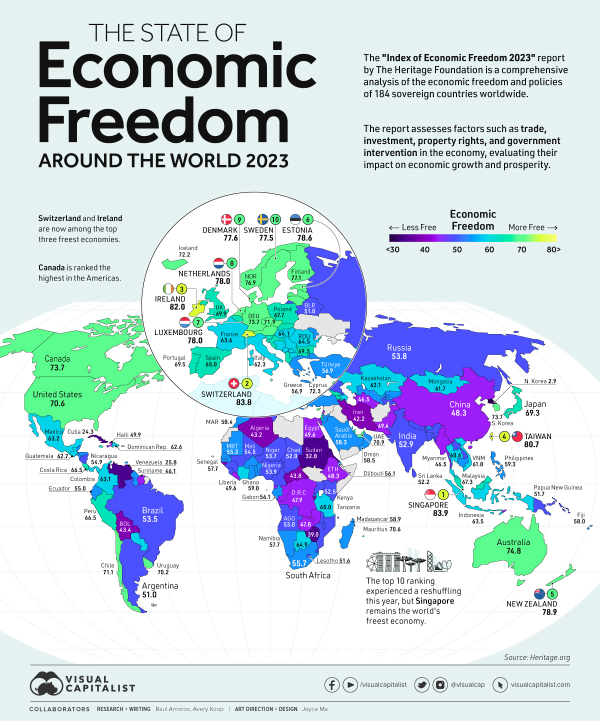
    The Heritage Foundation releases a yearly Economic Freedom Index. 


    Economic-freedom-2023-MAIN-1


    According to VisualCapitalist, the ranking uses four broad categories, each with three key indicators to measure economic freedom.

    1. Rule of law: property rights, judicial effectiveness, government integrity
    2. Size of government: tax burdens, fiscal health, government spending
    3. Regulatory efficiency: labor freedom, monetary freedom, business freedom
    4. Open markets: financial freedom, trade freedom, investment freedom

    The 12 indicators are weighted equally and scored from 0-100.  The overall score is the average score among those indicators. 

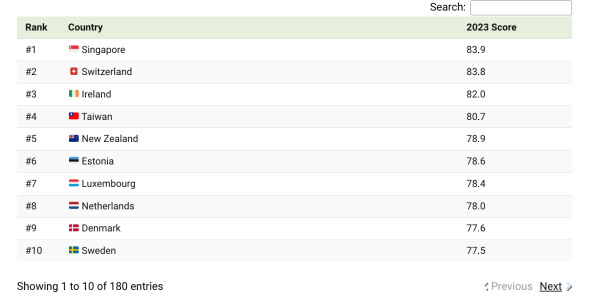
    Based on these metrics, the U.S. doesn't even enter the top 10. 

    Screen Shot 2023-07-01 at 2.14.51 PM

    Surprisingly, the U.S. ranks 25th overall – and only 3rd in the Americas. 

    Now, freedom means a lot of different things, and economic freedom is only one of many modalities … but it's an important factor. 

    If you were in control, what change would you make to increase the United States' economic freedom?  If you're not from the U.S., where does your country rank, and why?

  • Nvidia Joins The Trillionaire Club

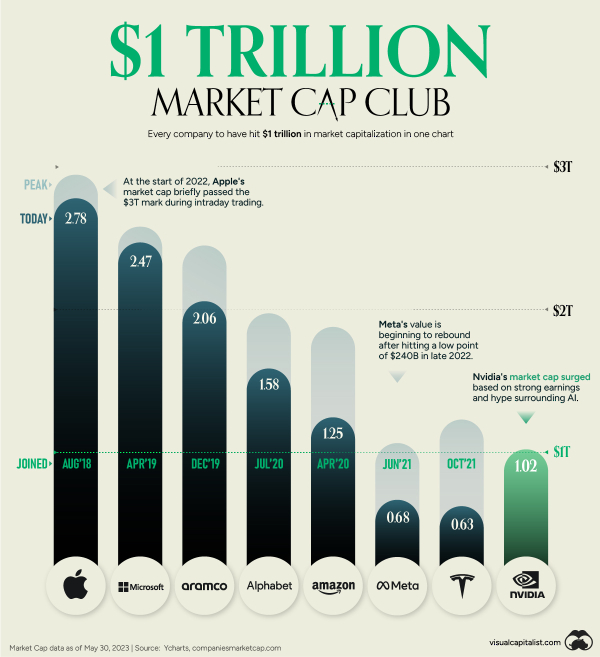
    Believe it or not, Nvidia is now worth nearly as much as Amazon. America’s largest semiconductor company has skyrocketed past the $1 trillion market cap mark and joined the likes of Apple, Amazon, and Microsoft. 

    Nvidia-1-trillion-market-cap-club-MAINvia visualcapitalist

    My Thoughts

    Nvidia’s growth is largely built on the back of the AI hype. It is also a mainstay of technology, benefitting a litany of AI projects, gaming systems, crypto mining, and more. 

    But, the question is whether it will continue to rise in popularity – or see a “correction” to pre-hype levels. I think the reality is you’ll see both happen.

    Despite my obvious bullishness on AI as a market mover and industry transformer, after a hype cycle comes a trough of disillusionment. The media attention on AI will diminish again. Meanwhile, tech giants like Google and Apple rely on the technology, and Nvidia has also launched new products spanning from robotics to gaming. So, as the hype dies down, its mainstream uses will increase. 

    These chips will only continue to be more important. We saw the company’s stock rise and fall during the peak of inflated expectations of cryptocurrency, but AI’s staying power – I believe – is inevitable. 

    So, while it may not be a good investment in the short term, it’s a technology you can count on to be essential for decades. 

  • Musk vs. Zuckerberg: Fight Of The Century

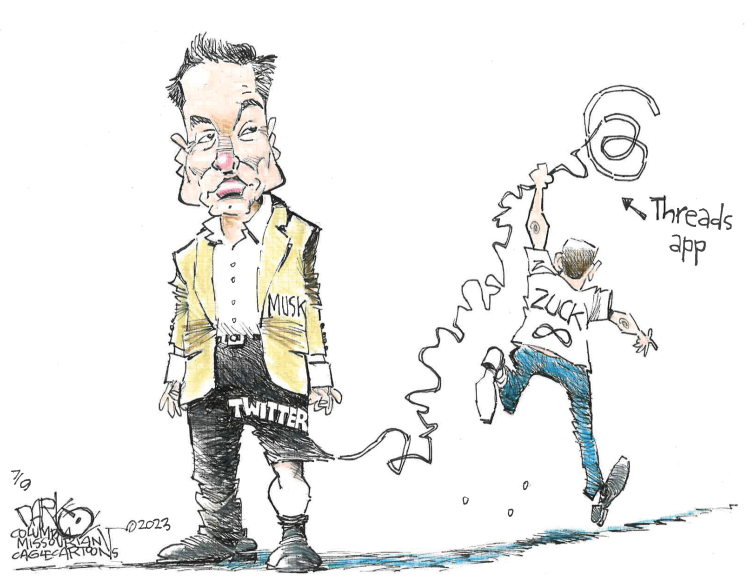
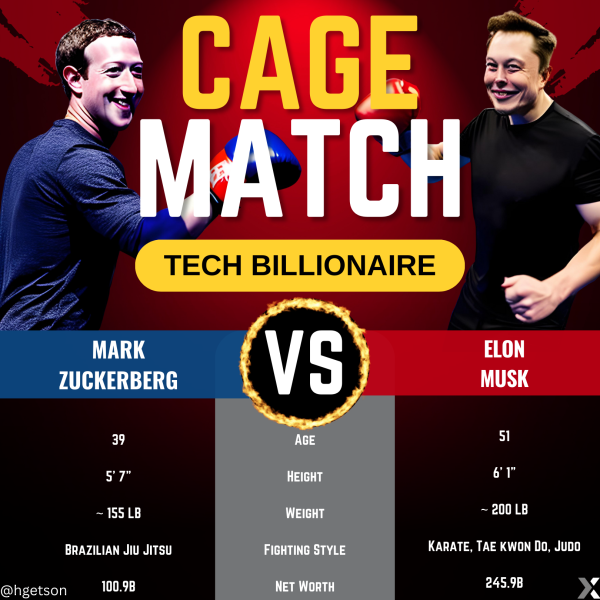
    In today’s “Truth is Stranger than Fiction” episode, Elon Musk and Mark Zuckerberg seem to be discussing a "cage match." But, for those of us who have been around awhile, we remember the first real billionaire fight when Herb Kelleher, co-founder of Southwest Airlines, settled a business dispute with a rival by arm wrestling in front of an audience at an arena, in an event dubbed “Malice in Dallas.” 

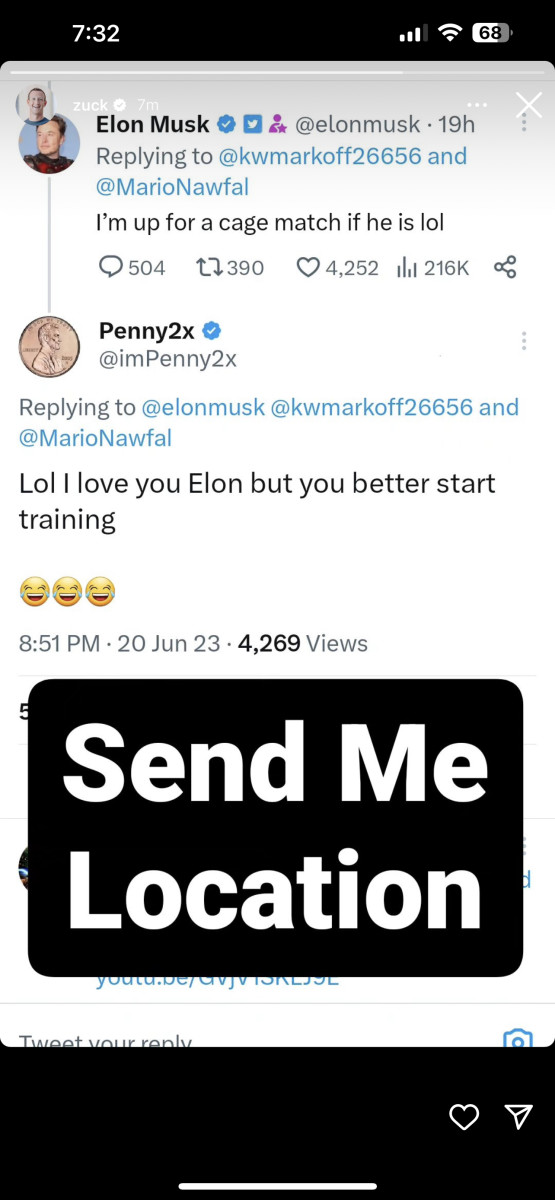
    This supposed cage fight started because Elon responded to someone on Twitter saying, “I’m up for a cage match if he is lol” to which Zuckerberg posted an Instagram story saying, “Send Me Location.”

    Mark-zuckerberg-responds-to-elon-musk

    Supposedly, there’s a real chance they do it, and talks they may do it in Vegas.  

    Now, their beef isn’t new. Back in 2016, Musk’s SpaceX was contracted to shuttle a satellite into orbit for Facebook. During a routine test, an explosion on the ground caused the satellite to be destroyed, and Zuck to say, “I’m deeply disappointed to hear that SpaceX’s launch failure destroyed our satellite that would have provided connectivity to so many entrepreneurs and everyone else across the continent.”

    Ever since, they’ve been going at it. They take different stances on AI. They’ve gotten off each other’s platforms, etc. 

    So … who do you think will win?

    Red and Yellow Modern Boxing Match Facebook Post

  • Where Gen Z Gets Financial Advice …

    I recently hired a new research assistant and brought her to a conference where I gave two speeches and a breakout session.

    After I spoke, I asked her what she thought, and her answer surprised me. 

    She said there were many opportunities for improvement, and she didn't know why I wasn't already doing it. 

    She said I ignored the young people in the room … And that my material, language, and attention were targeted toward older people (like me).

    As annoying as it was – she had a point.

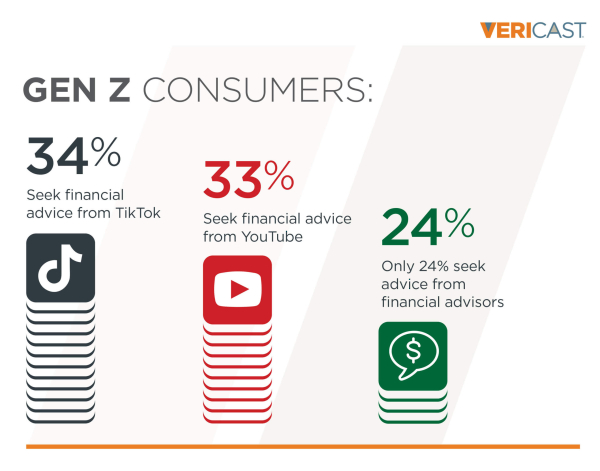
    Take a look at this survey from Vericast. 

    GEN-Z-CONSUMERS-Financial-Advice-Graphic_R1-scaled-1via Vericast

    OK, it is just a survey – still, that's staggering information. 

    The younger generation is getting advice from places like TikTok and YouTube (decidedly not The Economist, Wall Street Journal, Bloomberg, or even LinkedIn).

    While I am on LinkedIn, Facebook, Instagram, YouTube (and even TikTok), those are not places I would search for detailed financial advice. 

    However, social media is a great place to start conversations – or to gain some perspective or context.  It is even a good place to figure out some questions to get you thinking about your future better.

    The wisdom of the crowd is good.  But expert advice is considered "expert" for a reason.  And, often, it makes sense to seek it out specifically. 

    I doubt I'm currently reaching many Gen Z'ers … but if you're reading this … please expand your sources for getting financial advice beyond TikTok and YouTube.

    For the older crowd … I have found it hard enough to change myself, so I don't often expect to change others.  With that in mind, it may be time to adjust your communication strategy to include TikTok and YouTube.  If you can't change them, you might as well meet them where they are.

    I just launched a TikTok channel called BotheringMyBoss. It's run by that research assistant. It's a bit outside of my comfort zone.  But, hopefully, it opens a communication channel with a younger audience.

    Let me know what you think.

  • Understanding A Billion Dollars: A Sense Of Scale

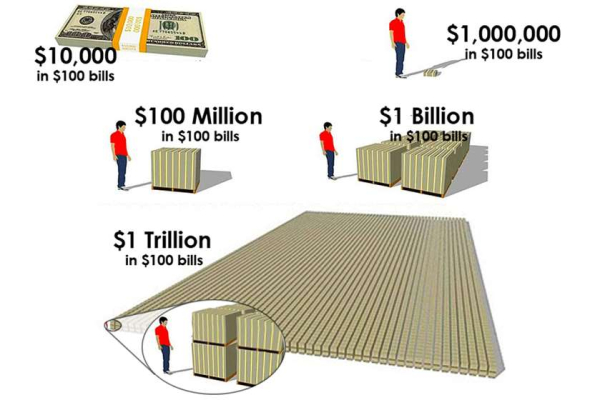
    Humans are notoriously bad at large numbers.  It's hard to wrap our minds around something of that scale.  We're wired to think locally and linearly, not exponentially (it's one of the reasons I love AI so much).  Here are a couple of ways to help you understand a billion dollars. 

    Million-kgcvia AskOpinion

    First, let's look at spending over time.  If you were to spend a dollar every second for an entire day, you would spend $86,400 per day.  If you have a million dollars, you can do that for approximately twelve days.  With a billion dollars, you can do that for over 31 years.  Ignoring the difference between net worth and cash, Jeff Bezos could spend $9M per day for over 31 years.

    If you make $100k a year, you can earn $1 million in 10 years.  At the same rate, it would take you 10,000 years to make $1 billion.

    For another example, let's think about spending money.  Imagine making $50k a year as the base, and imagine buying a laptop, a car, or a house.  Now we're going to shrink the cost of those items, instead of increasing your pay.  If you were a millionaire, a laptop might cost the equivalent of $100 dollars, a Porsche, $3,000 dollars, a house, $25,000.  Now, let's say you're Mike Bloomberg and you're worth $60B.  A laptop is literally worth pennies, a Porsche is less than 60 cents, and your mansion would cost around 500 dollars.  You could have everything you ever wanted for a minute fraction of your wealth. 

    Okay, last one before I show a video … 

    Let's try explaining it through time.  50,000 seconds is just under 14 hours.  A million seconds was 11 days ago.  A billion seconds ago from today?  1988.  Pretty crazy. 

    Here's a video from the 1970s that helps you understand scale through the power of tens, and an exploration of our universe. 

    Eames Office via BetterExplained

    Hopefully, that was helpful!

    Now that you have this context, Forbes keeps a real-time list of Billionaire's valuations based on the trading data from the previous day. 

    As I type this, Elon beats out Bernard Arnault (and family) by about 9 billion, coming in at a whopping $226.4B. 

  • A Tech CEO’s Thoughts on the SEC, Binance, and Coinbase

    Late last year, the FTX exchange collapsed.  During the collapse, there was evidence of a Ponzi scheme, overleveraging, and solvency issues.  Before it crashed, it was the third-largest cryptocurrency exchange with over a million users.  FTX's collapse shook the volatile crypto market, which lost billions at the time, falling below a $1 trillion valuation, and supposedly millions of coins were stolen during the downfall.
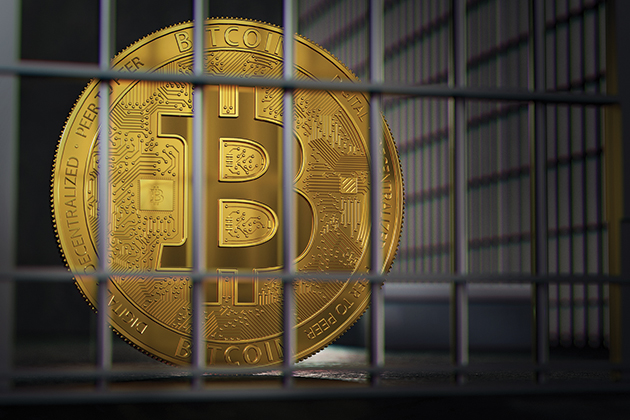
    Risk Management Magazine - Cryptocurrency Crime Cost a Record $14 Billion  in 2021

    This was a massive hit for the mainstream adoption of cryptocurrency.  Since then, crypto has been slowly fighting its way forward – and I know many people with interesting opportunities and ventures planned for this space. 

    Meanwhile, the SEC sued Coinbase, this past week, for potentially operating an unregistered securities platform and brokerage service.  The SEC alleged that Coinbase made billions as the middleman between buyers and sellers without giving investors the lawful protections they should as a broker.  That lawsuit came only a day after the SEC filed charges against the largest crypto exchange, Binance, for misusing investor funds, operating as an unregistered exchange, and violating many U.S. securities laws. 

    Here's a quote from Binance's CCO (recorded in the SEC complaint)

    “We are operating as a f*king unlicensed securities exchange in the USA bro.”

    It is no surprise that Coinbase's stock price plunged almost 20% due to the news.

    I don't want to bog you down with the details of the various cases, but ultimately, Binance was supposed to split their business so that their U.S. company would be subject to U.S. regulations and legally allowed to be an exchange in the U.S. But, instead, there was an improper "comingling" of funds.  Binance subverted its controls to allow certain high-value customers to continue trading on the non-U.S.  platform.  

    So, this begs the question … what does this all mean for cryptocurrencies, exchanges, and the stakeholders?

    My Thoughts

    These recent enforcement actions suggest that the SEC will target firms it sees as bypassing regulation (either by blurring the distinction between on-and-offshore services or by trading unregulated securities).

    This also comes on the back of the various bank collapses in March of this year

    It's clear that regulators are worried about the security of the American taxpayers' money.  Both the FDIC and SEC are cracking down. 

    Just like with the banking issues before, the issues we're dealing with here shouldn't be particularly surprising if you have been paying attention.  We're getting mixed messages on how involved and regulated the government wants these securities to be.  

    Are more regulations required to ensure trust in the American financial system?  Or is this a free market where pain and pleasure point out the evolutionary path?

    Finally, there's an even more fundamental question … are cryptocurrencies truly something new (which requires a unique regulatory approach), or are they simply a new medium of pre-existing financial instruments that the SEC already has rules and regulations for?

    Initially, some of the attractive aspects of cryptocurrency were its decentralized nature and its potential to have its own rules and regulations separate from a national governing body. 

    On the other hand, we've seen what happened in the past when other alternative investments, like Hedge Funds, were unregulated. 

    Currently, two roads are available to cryptocurrency as an industry – and perhaps it can take both.  First, it can become subject to all the regulations of its predecessors and become a mainstream and stable option for the masses.  Or, it can remain a "fringe" option that subverts the governing bodies around it, forcing its relatively small group of loyalists to deal with the uncertainty and volatility – but maintain the autonomy it can. 

    What do you think will happen?