As I wrote that article, I was reminded of my TEDx talk on my father's passing.
In finance, the "time value of money" refers to the principle that the purchasing power of money can vary over time (meaning, money today might have a different purchasing power than money later). This is partly because money's future value might be calculated by accounting for other variables (like interest earned, inflation accrued, etc.).
A similar calculation applies to life … or living.
Live Like You Only Have a Year Left.
During the last part of my Dad's life, I think he would have done almost anything for a little more time.
Things that used to be unimportant, or even mildly irritating, took on increased importance. For example, a dinner together became almost a sacred event; a kiss goodnight was truly heart-felt; and saying good-bye meant something … because it could be the last time.
Nevertheless, as a result of that focus, he took more life out of that time.
Shouldn't we do the same thing? Think about it … We are never going to be younger than we are, right now. We are never going to have more time to fix a big mistake. Isn't it likely that the time value of your life, is worth maximizing?
If you realize that your time is worth more than it ever will be, what can you do differently now to get the most out of it?
For another impactful view of life, here's a great video on how you spend the time in your life – visualized using jelly beans. I think it's pretty powerful and worth watching.
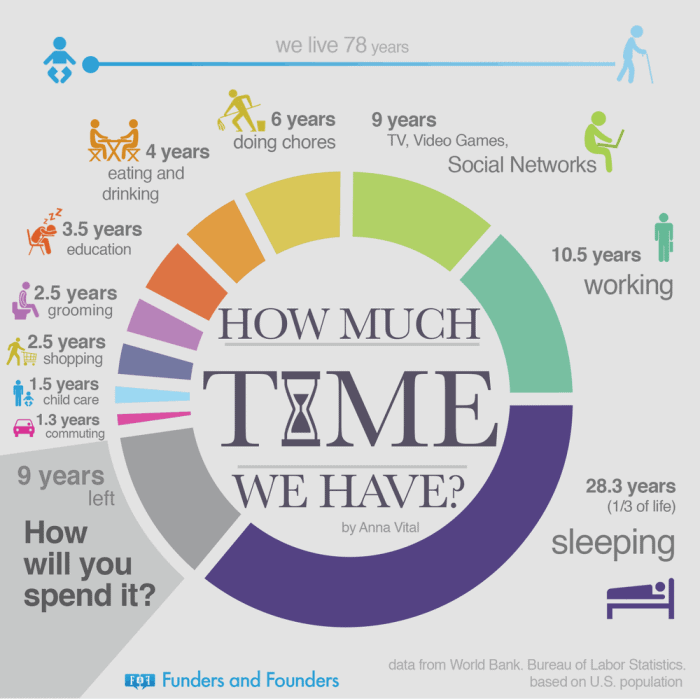
So, if (after accounting for sleep, eating, work, commute, TV, chores, and more) an average person only gets 2,740 days to do what they want … those days are precious. That's less than 8 years of "free time" for you to make the most of.
Based on the demographics of who's likely reading this, you may have half that time (or a fourth).
What are you going to focus on? Making the most money? Helping the most people? Spending the most time with your family? Relaxing? I hope you don't choose worrying.
There's never a better time than now to live a life worth living … and only you can decide what that means!
I'd love to hear what you choose.
Best wishes for a Happy Holiday Season … and I hope you spend your time wisely and well in 2024!
I love planning for the new year – both personally and professionally. To read about my professional planning, check out this article.
I've always been a big-picture person, so I tend to think in 5, 10, and 20-year increments … but thinking about the coming year is helpful, too.
I think about it a bit like using a map. Even if you know your intended destination, you still have to start with 'where you are' to figure out the best way to get there.
There are seemingly infinite potential paths … but motion in a direction isn't really "progress" if it doesn't take you towards your desired destination.
At midnight tonight, it'll be 2024. I know a new year isn't really a blank slate, but I've always enjoyed the symbolism. So, I thought I'd revisit how I set New Year's resolutions.
To start with, resolutions only work if you actually "want" to make them happen. It's one thing to hope that something magically falls in your lap; it's another to want to do the work.
With that being said, here are some tips.
Focus on What You Want.
Focus on Why You Want It.
Focus on Ways You Might Get it.
Focus on Evidence of Progress.
Below, I'll take you through an example of each of the four steps.
Moving Towards a Solution, Rather Than Suffering From the Problem.
Before I got back into my health, my first instinct was to think, "I need to lose weight." Knowing that "you're fat" isn't helpful … my head quickly translates that to something a tad more positive, yet generic, like: "I choose to be healthy and vital, and to live a healthy lifestyle."
Blah, blah … They are just words. What I needed was something specific, measurable, and actionable. How about: "I will lose 15 pounds and stop eating after dinner." OK, but that isn't inspiring, and there isn't much for me to do. I can do better than that.
Figure-Out a Big Enough WHY, Rather Than Worrying about the HOW's.
This post isn't about health and fitness; it is about the mindset and techniques you can use to set empowering goals and plans in any situation.
So, while I could list many ways to lose weight (and I might even remember to do some of them), leveraging a driving force creates momentum. In other words, the first step in "Doing" is knowing WHY you want something.
I really do want to be healthy, fit, and vital (it sure beats the alternatives), and I want to have the energy and confidence to live and enjoy my life fully. The world is my playground, and I want to take advantage of more opportunities to play with family and friends. However, to do those things, I must find better ways to live a healthy lifestyle.
The WHYs are just as important for business goals too.
Focus on Potential Solutions Rather than Problems or Challenges.
Obstacles Exist. The bad news: I don't eat fish, and I don't like vegetables (unless French Fries are vegetables). My joints aren't close to healthy from years of violent contact sports. I rarely get 7 hours of sleep, and who'd have thunk it, but being the CEO of a startup is stressful. The good news: none of those things matter … and even if they did, it just would mean that I have a lot of room for progress.
It is natural to focus on obstacles. But most obstacles are surmountable – with a big enough WHY, I'll even start to eat vegetables. Instead of dwelling on the limitations, use them as a reminder to focus on potential solutions instead. They are beacons marking the way.
How do you do it? To focus on solutions, you can make two action-based lists: one is of things To-Do … and another is of things Not-To-Do.
Here are some of the sample To-Do Items:
I will drink more water than coffee.
I will stretch or do basic calisthenics on days that I do not go to the gym.
I will make a healthy shake as a meal replacement rather than a snack if I'm hungry between meals.
I will focus on relaxation and meditation as much as I focus on strength & physical exercises.
Here is the actionable list of Not-To-Do Items.
I will not buy new bigger pants or wear stretchy pants because of an expanding waistline.
I will not eat snacks out of their container – and will portion out what I want first.
I will not compare my current level of fitness to what I used to be able to do. Instead, I will focus on my actions and improvement.
Create Healthier Habits.
It is easy to follow a routine. So, here's another tip … make your routine better. Here are some examples of things you could do to make being healthier happen with less effort.
Pre-sort your vitamins into daily doses, and keep them by the coffee machine.
Buy healthy snacks, like fruit, raw nuts, or organic energy bars (instead of chips). If Doritos aren't in your house, it's hard to eat them on any regular basis.
When you do snack, don't keep them near you. Make yourself get up to get them. That'll make it harder for you to binge.
Enjoy listening to music, audiobooks, or podcasts during your "exercise time." Dedicating time to something doesn't mean you can't be multitasking.
Park at the end of the parking lot, so you get to walk.
Meet with friends at the gym or a hiking spot rather than a bar or restaurant.
You get the idea. Get in the habit of looking for ways to create better habits. What habits could you alter slightly to make a big difference? Which things can you automate or outsource?
In this case, it really is about the journey. Instead of tracking how far you have to go … notice how far you've come. Utilize an internal locus of control. It is about creating energy, momentum, and a sense of possibility. You may have a big, hairy, audacious goal in mind. That's fine, as long as you realize that reaching each milestone along the way is still an accomplishment.
Find shoes that don't hurt your feet.
Pick a gym or a personal trainer that you enjoy.
Run more than two laps without stopping.
It doesn't matter what they are … they all count, as long as you know that you are moving in the right direction.
Summary
The point of this exercise was not really to focus on fitness. These techniques and goal-setting tools work in any situation. The principles are:
First, figure out what you want and why it is important to you. Only focus on the few things that are actually important to you.
Second, find something you can do, right now, which moves you in the right direction.
Third, notice which things create (rather than take) energy. Spend your time on those, and automate or create routines to take care of the rest.
Fourth, plan forward, but measure backward. Set milestones so that you can recognize and celebrate your progress.
In my business, this translates to having a mission and vision – it's what we want, why it's important to us, and a basic strategy to get there. Then, we create yearly "Big 3" goals that move us toward that long-term vision. Then, the team creates SMARTs (goals that are specific, measurable, attainable, relevant, and timely) and KPIs (key performance indicators) so they know where to spend their time, and what milestones tell them they're on the right track.
What's happening in the Middle East with the Israel-Hamas war is incredibly complicated and polarizing. On top of the long history, partisan interpretations, chronic conflict, and acute suffering, you're seeing propaganda being used at a scale beyond what we've seen before.
Technology is a big driver of misinformation – and what is happening now provides an early warning of what's to come in future wars and political contests.
While the topic of Israel and Hamas is beyond the purview of this blog/newsletter – the impact of war on markets is not.
My heart is with all impacted, and I'm never rooting for war or the death of innocent civilians.
With that said, war seems to be a fact of life.
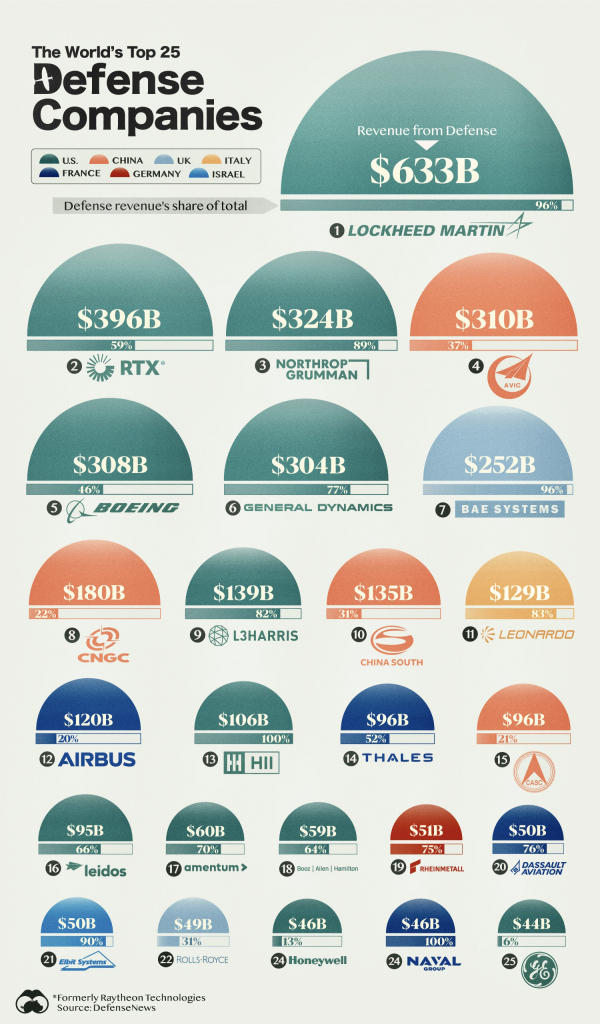
The most powerful countries in the world spend billions of dollars on defense a year.
In light of this, VisualCapitalist put together a chart identifying the top 25 defense companies in the world. Many of these have seen massive spikes in price in the past few months. I was surprised by how many of the companies I didn't recognize.
The U.S. unsurprisingly tops the list, with Lockheed and RTX (formerly Raytheon) taking the top two spots.
While we don't usually think of some of these companies as defense contractors, Airbus produces multiple drones and transports, Rolls Royce is a supplier of aircraft and naval engines, and Honeywell is actually involved not just in aerospace – but actual space.
Understanding where and how companies generate revenue (as well as comprehending the relevant competitive landscapes and cooperative ecosystems) are crucial activities regardless of investment strategy.
I believe it's easier to predict human nature than it is to predict technology. There is a reason that new technology often flows into porn, gambling, and military earlier than other areas … the reason is that it's so easy to monetize there. We know opportunity often rises from pain and conflict – so it's still valuable to understand these concepts and figures.
I've been an entrepreneur ever since I can remember. I sold tadpoles and frogs in elementary school, colored sand terrariums in middle school, stereos and sound systems in high school and college, and I started a database development company in business school.
But it wasn't until the early 90s that I made being an entrepreneur my career.
I quickly realized I needed peer groups and advisors to help take my businesses to the next level.
Verne Harnish was one of the first people I found. I joined the Young Entrepreneur's Organization (but so many of us have lost our "Y" that it's now just called the Entrepreneurs' Organization.) Among many entrepreneurial endeavors, Verne founded EO, Gazelles (a global executive education and coaching company), and Birthing of Giants (now called the Entrepreneurial Masters Program at MIT).
I was recently at a party with him in Arizona. While there, I asked him, "What's changed about entrepreneurship over the last 30 years?". Here is a short video with his response.
I was happy to hear that the answer was "Nothing". While the hot industries, technologies, and players have changed, many of the winning principles are timeless.
This is a helpful reminder that, even when innovating, we should focus on what doesn't change – rather than what does.
As someone who has been in tech and Artificial Intelligence for over 30 years, my personality and thought processes are centered around facts and reason.
With that said, I've always had a soft spot for "arts" over sciences. I appreciate meditation and mindfulness practices. Unquestionably, I've found that technology helps me do that quicker, better, and with more certainty about the results.
That's what made this conversation with Joshua Pellicer so great.
Joshua has lots of experience using AI tools and techniques and getting the most from generative AI.
When I asked him what use cases he was most excited and optimistic about, he answered "Manifestation".
That is not what I expected … but it made sense after discussing it. Check it out.
Manifestation doesn't cause the universe to hand your dreams to you on a golden platter. It does help you maintain a positive mindset and focus on what you want (instead of avoiding what you don't want).
I shared an article titled “Who’s The Most Innovative?” a few weeks ago. That post alluded to the power of patents. Here, we'll discuss the importance and value of intellectual property in more detail.
Historically, profitable companies often built or sold some tangible product. Consequently, the Titans of industry were automobile manufacturers, oil producers, landowners, etc.
However, over the past 20 years, the Titans have changed dramatically. Now, the leaders are in tech, intellectual property, and other intangible assets.
As business becomes more digital, you will see an increasing shift towards creating and protecting intellectual property.
When most people hear that, they probably think about patents. So, let's start there.
A patent is property … meaning it is an asset. Technically, it is a legal right granted by the government to an inventor, giving them the exclusive right to make, use, sell, and import an invention for a limited period (typically 20 years from the filing date) in exchange for public disclosure of the invention. To obtain a patent, an inventor must apply and prove that their invention is new, non-obvious, and useful. In addition, the application process involves disclosing the details of the invention so that others can learn from it.
Patents and trademarks are a great way to build a moat between you and your competitors … but they’re more than that. They help you create partnerships and an ecosystem. Ecosystems & communities have proven to be the difference between legacy businesses and flash-in-the-pans. It’s the difference between having a product and having a platform.
Patents add dimensionality and revenue streams.
Take Tesla. They’re not just in the business of making cars or pushing the proliferation of electronic vehicles. They’re creating a suite of capabilities that are patentable and licensable. In the future, they can license the self-driving capability (because why would someone build it when they can license it?). They can license the ability to update a car’s operating system over the Internet (or by their Starlink Satellite offering). They can also grow into a clean energy business. I’m sure there are other strategic byproducts I’m missing – but you get the idea.
As they develop these tools and create intellectual property, these same inventions can also become a weighing and measuring tool to find out where people are interested, and identify where people are spending time, money, and energy. Here is a 60-second video that explains the concept.
Patents make the intangible, tangible.
They provide a concrete form to innovative concepts, enabling businesses to protect and capitalize on their intellectual property.
This mindset also creates the infrastructure for change and anticipating future needs, and ensures companies remain adaptable and positioned for long-term sustained growth.
Getting Started
When I help people understand how to move forward with AI, the first thing I ask them is “What’s your why?”. I ask that because as soon as you lose sight of why you built your business in the first place, you’re lost.
After you understand yourself and your business, you have to understand the industry-wide ecosystems, and where the low-hanging fruit are.
If you know the low-hanging fruit, your problem statement, your value proposition, and your “why” you’re in a great place to move forward.
You can use that understanding to stack some easy wins and create bandwidth for larger endeavors.
The effort-to-impact ratio is a great way to think of how you get started. As you begin thinking about staking ground, you don’t want to do the flashy and cost-intensive stuff first. You want to keep a low profile and start to create walls that will help you in the future.
You can use trade secrets, instead of patents, when you don't want to disclose what you do and how you do it. A trade secret is any non-public information that provides a business with a competitive edge and is subject to reasonable steps taken by the business to keep it secret. The protection of trade secrets does not require registration or disclosure to the public. The information remains protected as long as it is kept secret and continues to provide a competitive advantage.
You can also use your intellectual property as part of an attraction strategy to find potential partners or collaborators – creating what Dan Sullivan calls the “Freezone Frontier”.
Final Thoughts
In essence, patents are not just legal safeguards—they are strategic instruments that can shape the future trajectory of businesses. By embracing a holistic approach that combines legal protection, market intelligence, and strategic foresight, companies can harness the full potential of patents, unlocking new dimensions of success in an ever-evolving business landscape.
I just shared an updated article on the difference between Skill and Luck.
Serendipitously, this article showed up in my feed from 2012. Instead of updating it, I want to share it as I wrote it, because it's still relevant, and it might lose some of its magic if I update it.
So, here it is:
________________
Title: Some Thoughts On Whether Luck Is Something You Create
Date: November 3rd, 2012
Doing the same things, the same ways, has predictable results. Sometimes, it is important to do things differently.
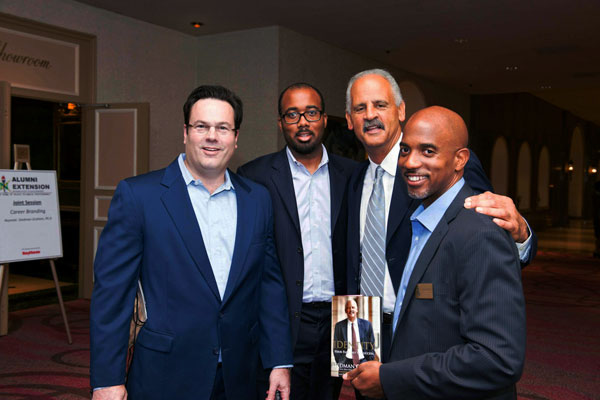
Here is a photo of me at the National Society of Black Engineers' Professional Development Conference, where I had the opportunity to present and participate in several panel discussions.
I'm neither black, nor an engineer, and they aren't traders; so why would they ask me to present… and why would I say yes?
Value is often added at the edges. Likewise, good things often happen when you travel outside your comfort or habit zone.
I gained a lot from the experience. For example, I had a discussion with a nuclear physicist who talked about how they use computer simulations to model the effects of a nuclear explosion. That gave me great ideas about how to measure the effect of a particular trading system or algorithm on a market.
Luck does favor the prepared. That conversation could just as easily have been me simply saying 'hello,' shaking hands and moving on to the next person. To some extent, the ability to take advantage of opportunities comes from the intent to find them.
Is Luck Something That You Can Maximize, Or Would You Consider It Random?
It's possible that luck is both random and something you can maximize.
Here is an example. Many people consider the stock market to be random. Nonetheless, there are groups of people who consistently beat the market and trade profitably. How is that possible?
To explain, let's examine the decision to purchase Apple Computer stock. Regardless of whether that decision was based on gut instinct, fundamental analysis, or a technical chart pattern … whether the price moves up or down the moment after that purchase is for the most part random.
However, if you make 10,000 trades over time, then your ability to make and keep money is about how you manage risk and opportunity. At that point, your system is not necessarily random. Consequently, it is something that you can improve.
Transform Results By Getting Un-Stuck.
Improvement means getting better and different results. And, as you already know, it doesn't make sense to continue to do the same thing, yet expect different results. So, a key skill is learning to recognize when things are "stuck" in a rut.
The trouble with many "ruts" is that you don't know you're in one, while you're in one. Consequently, it often takes a different perspective to become aware of new possibilities, opportunities, or best next steps.
Implications.
The interesting thing that this implies is that those opportunities were always there … they just weren't there for you in your current state of awareness.
Similarly, recognize that many of the processes that we rely on limit our "luck" or opportunities precisely because they limit our choices. When this is done consciously it can be helpful. However, when it's an unconscious act, it can be dangerous.
In general, you can categorize many tools as either being multipliers or diminishers. Neither one is good or bad in and of itself. The trick is to recognize that you have a choice and that not choosing is still a choice.
Nine years in front of entertainment devices – another 10.5 years spent working. You get the idea.
If you have goals you want to accomplish, aspirational travel, and lifestyle plans – this really puts the idea of finding and living your passion in perspective.
Do you have the time to waste it?
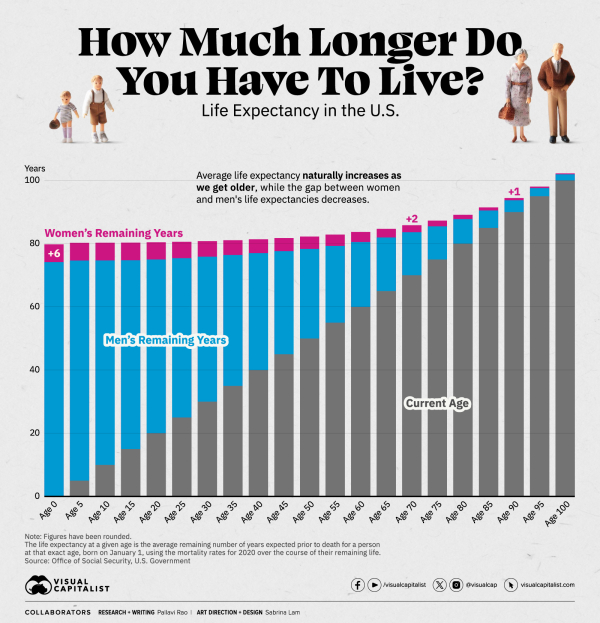
VisualCapitalist put together a chart projecting longevity based on 2020 mortality rates.
I turned 60 this July, so I only have 20 years left, according to this calculator. I expect more!
There are some interesting statistical facts in this; for example, an average American baby boy can expect to live until 74 … but if that boy turns 21, his life expectancy jumps to over 75.
While these numbers seem pretty high, there are two things to consider. First, COVID heavily reduced these numbers because mortality rates went up. That likely won't continue (though it will likely continue to affect your insurance premiums and pension benefits).
Also, remember that these numbers are based on 2020 averages, which likely differ from you (specifically considering your race, income, location, etc.). These numbers also don't take into account expected medical and technology advances, etc.
Finally, I think Purpose is one of the most important catalysts of longevity. People often die when they retire … not because they're done working, but because they're done striving.
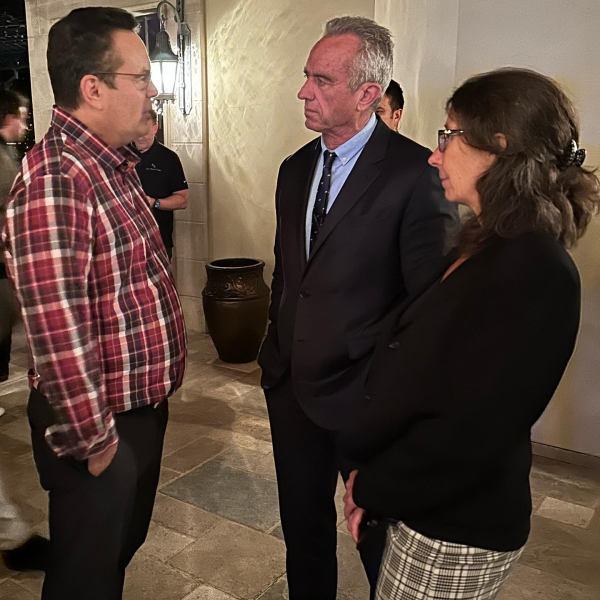
This year, Joe Polish interviewed Robert F. Kennedy Jr. at the conference. To make it didn't seem like a political event, they didn't tell people he was coming until after the event was sold out.
Kennedy stayed to have dinner with a few members later that night. At the dinner, he answered questions from the attendees.
RFK is an interesting guy … he's a newly declared Independent who was a lifelong Democrat. Democrats think he's a conservative. Conservatives think he's a liberal.
It is a little confusing. And most people probably don't know what to think.
I'll be frank. He did much better than I expected. He's undoubtedly a politician. Answers were prudent; he gave nuanced opinions to avoid stepping on too many toes. He was clearly knowledgeable about foreign policy and history. He was sharp. And it is easy to argue that he is more coherent than some of our other options.
I'm still making my own decisions about who I'll vote for in the coming election. But I hope there's a space in modern politics for comment sense and bipartisanship – something I think RFK offers.
At this point in history, can decent ideas and a centrist approach from an Independent gain any real traction?
I voted for Ross Perot, but if you remember, he got 0 electoral college votes, despite getting approximately 20% of America to vote for him. Could this be another situation like that?
Politics has always been divisive, and the internet and technology have made it more so. On the one hand, it's very hard for a moderate opinion to gain traction. On the other hand, both parties are largely sick of their options.
Do you think he has a chance?
On a lighter note, the dinner was hosted at Tom Mello's house, who has bought replicas of K.I.T.T., Herbie, and the Delorean from Back To The Future.
I couldn't help myself. I had to make this video.
Buckle-Up … Instead of heading Back to the Future, we are headed for an election year.
A few years ago, I shared a presentation called Mindset Matters that I had given to a small mastermind group.
Recently, I have revisited that content in more detail and with finer distinction. It’s become an integral part of my goto presentations and our company dialogue.
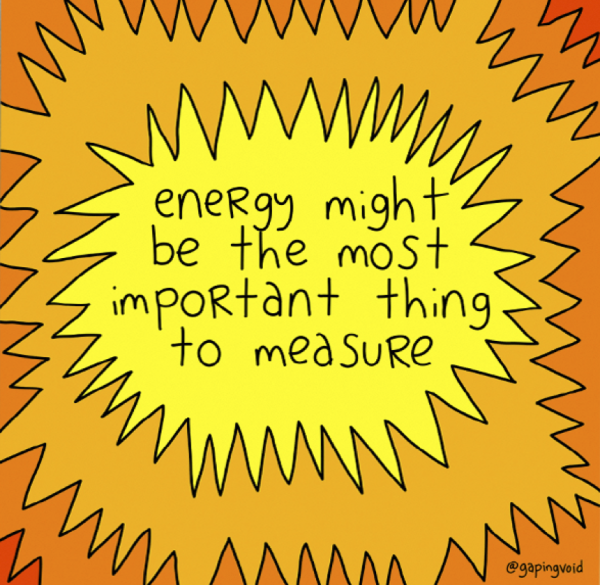
One of my core beliefs is that energy is one of the most important things we can measure. I believe it so strongly I paid Gaping Void to put it on my wall.
It means exactly what it sounds like – but also a lot more.
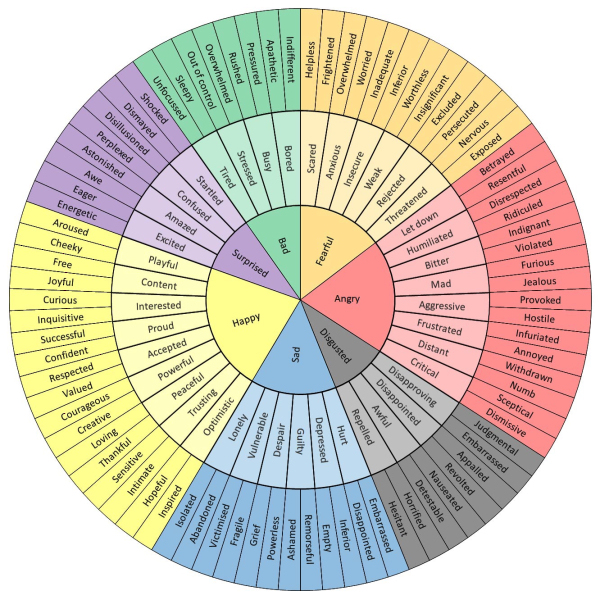
Energy affects how you feel, what you do, and what you make it mean. That means it is a great way to measure your values, too. Consequently, even if you don’t recognize it, energy has a lot to do with who you hire and fire. It affects where you spend your time. Ultimately, it even affects the long-term vision of your company or life.
If something brings profit and energy, it is probably worth pursuing.
In contrast, fighting your energy is one of the quickest ways to burn out. Consequently, figuring out who and what to say “no” to is an important way to ensure you stay on the path and reach your goals.
I believe that words have power. Specifically, the words you use to describe your identity and your priorities change your reality.
First, some background. Your Roles and Goals are nouns. That means “a person, place, or thing.” Let’s examine some sample roles like father, entrepreneur, visionary, etc. They are all nouns.
Your goals are nouns, too. For example, (for us) amplified intelligence, an autonomous platform, and a sustainable edge are all nouns.
How you create or achieve them is done with verbs. So, your strategies are verbs.
Examine your default strategies. They define an action you take. Examples include: connect, communicate, contribute, collaborate, protect, serve, evaluate, curate, share … and love. On the other end of the spectrum, you could complain, retreat, blame, or block (but that wouldn’t be productive).
People have habitual strategies. I often say happy people find ways to be happy – while frustrated people find ways to be frustrated. This is true for many things.
Said a different way, people expect and trust that you will act according to how they perceive you act.
Meanwhile, you are the most important perceiver.
Another distinction is that our nouns and verbs range from timely to timeless. “Timely” words relate to what you are doing now. They relate to your situation or perceived challenges or opportunities. Meanwhile, “Timeless” words are chunked higher and relate to what you have done, what you are doing, and what you will do.
The trick is to chunk high enough that you are focused on words that link your timeless Roles, Goals, and Strategies. When done right, you know that this is part of what makes you … “You”.
My favorite way to do this is through three-word strategies.
These work for your business, priorities, identity, and more.
I’ll introduce the idea to you by sharing my own to start.
Understand. Challenge. Transform.
The actual words are less important than what they mean to me.
What’s also important is that not only do these words mean something to me, but I’ve put them in a specific order, and I’ve made these words “commands” in my life. They’re specific, measurable, and actionable. They remind me what to do. They give me direction. And, they are a strategy (or process) that creates a reliable result.
First, I understand because I want to make sure I know all sides before I take action. For me, it is about seeing the bigger picture. It creates a golden thread from where I am to the bigger future possibility that I want. Then, I challenge situations, people, norms, and more. I don’t challenge to tear down. I challenge to find strength … to figure out what to trust and rely upon. Finally, I transform things to make them better. Insanity is doing what you always do and expecting a different result. This is about finding where small changes create massive transformations. It is about committing to the result rather than how we have done things till now.
If I challenged before I understood the situation, or if I tried to transform something without properly doing my research, I’d be shooting from the hip … and I’d likely cause more damage than good.
Likewise, imagine the life of someone who protects, serves, and loves. That produces a ripple in the world. Now, compare that to the life of someone who loves, serves, and protects. The result is likely very different.
The order matters!
I’ve set daily alarms on my phone to remind me of my three words. I use them when I’m in meetings and to evaluate whether I’m showing up as my best self.
You can also create three words that are different for the different hats you wear, the products in your business, or how your team collaborates.
Finding Your Three Words
Like recipes, your three-word strategy has ingredients, orders, and intensities. The optimal ingredients, order, and intensities might change as you use your words.
For example, when my son was just getting out of college, one of his words was “contented” because he was focused on all the things he missed from college – instead of being appreciative of what he had. Later, his words switched to “grateful” and then “loving”… each an evolution that paired with his journey.
Remember, your words should be actions. They should be things you do, … not just words that describe you. You can also see that in my son’s words. As he grew, the word became a calling to the actions he wanted to approach life with, instead of a reminder of the feelings he longed for.
Once you learn how to create and use these simple three-word strategies, you can use them everywhere.

 via
via