Business

  • Reflecting on Steve Jobs’ Words of Wisdom and Insightful Questions

    Looking back over his career and body of work, it is clear that Steve Jobs deserves credit.

    He was a world-class innovator and showman.

    More importantly, Steve Jobs said "I want to put a ding in the universe."  He did!
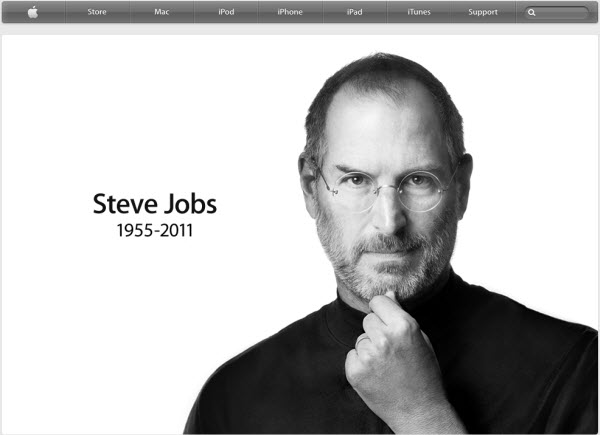
     

    111005 Steve Jobs
     

    There is not an app to replace Steve Jobs.  He was one of a kind.

    One of the phrases people associate with Jobs is "Think Different!"  He did.  Bill Gates said he wanted to put a PC on every desktop.  Steve Jobs put magic in your pocket.

    As we mourn his death and celebrate his life, here are a few of Steve's quotes:

    • "Innovation distinguishes between a leader and a follower."
    • "Be a yardstick of quality. Some people are not used to an environment where excellence is expected."
    • "You can't just ask customers what they want and then try to give that to them. By the time you get it built, they'll want something new."

    Apparently he knew when it was time to quit.

    When he stepped-down from his role at Apple, HBR pointed out that Jobs knew something needed to change. Perhaps it really is time for Jobs to go home, as he put it, to a "wonderful family" and an "amazing woman" and re-reflect on a few of the provocative questions (slightly altered) that he posed to the world in his 2005 Stanford Commencement Address.

    Here is the video.


    Here are some of the questions he posed. (click here for the complete text version of the speech)

    • Have you found "what you love" to do in life?
    • Are you wasting your life "living someone else's?"
    • Do you "have the courage to follow your heart and intuition?"
    • Are you nurturing a "great relationship," one that "just gets better and better as the years roll on?"
    • Do you tell "your kids everything you thought you'd have the next 10 years to tell them in just a few months" or days?
    • Do you make "sure everything is buttoned up so that it will be as easy as possible for your family" when "the single best invention of Life" takes its toll?
    • Do you say "your goodbyes" before it's too late to say them?

    For almost four decades Steve Jobs has certainly tried his best to "put a ding in the universe."

    If you are looking for more on Jobs' wisdom and insights, Umair Haque has a nice post on the Harvard Business Review site; it is called "Steve's Seven Insights for 21st Century Capitalists".

    He highlights lessons that jumped out at him while looking through this compendium of Jobs quotes.

    Here are two examples.

    It Matters that it Matters. "Do you want to spend the rest of your life selling sugar water — or do you want to change the world?" That's what Steve famously asked John Sculley. Translation: do you really want to spend your days slaving over work that fails to inspire, on stuff that fail to count, for reasons that fail to touch the soul of anyone?

    Do the insanely great. "When you're a carpenter making a beautiful chest of drawers, you're not going to use a piece of plywood on the back, even though it faces the wall and nobody will ever see it." We're awash in a sea of the tedious, the humdrum, the predictable. If your goal is rising head and shoulders above this twisting mass of mediocrity, then it's not enough, anymore, to tack on another 99 features every month and call it "innovation." Just do great work.

    Those aren't the only lessons, nor probably the best lessons. There are lots to choose from.

    Umair Haque challenges: Steve took on the challenge of proving that the art of enterprise didn't have to culminate in a stagnant pond of unenlightenment — and won. In doing so, he might just have built something approximating the modern world's most dangerously enlightened company. Can you?

    What a great thing career he had.  He ends his Stanford speech with a quote that sums it up well.
    "Stay Hungry … Stay Foolish."

    Enhanced by Zemanta
  • Reflecting on Steve Jobs’ Words of Wisdom and Insightful Questions

    Looking back over his career and body of work, it is clear that Steve Jobs deserves credit.

    He was a world-class innovator and showman.

    More importantly, Steve Jobs said "I want to put a ding in the universe."  He did!


    111005 Steve Jobs
     

    There is not an app to replace Steve Jobs.  He was one of a kind.

    One of the phrases people associate with Jobs is "Think Different!"  He did.  Bill Gates said he wanted to put a PC on every desktop.  Steve Jobs put magic in your pocket.

    As we mourn his death and celebrate his life, here are a few of Steve's quotes:

    • "Innovation distinguishes between a leader and a follower."
    • "Be a yardstick of quality. Some people are not used to an environment where excellence is expected."
    • "You can't just ask customers what they want and then try to give that to them. By the time you get it built, they'll want something new."

    Apparently he knew when it was time to quit.

    When he stepped-down from his role at Apple, HBR pointed out that Jobs knew something needed to change. Perhaps it really is time for Jobs to go home, as he put it, to a "wonderful family" and an "amazing woman" and re-reflect on a few of the provocative questions (slightly altered) that he posed to the world in his 2005 Stanford Commencement Address.

    Here is the video.


    Here are some of the questions he posed. (click here for the complete text version of the speech)

    • Have you found "what you love" to do in life?
    • Are you wasting your life "living someone else's?"
    • Do you "have the courage to follow your heart and intuition?"
    • Are you nurturing a "great relationship," one that "just gets better and better as the years roll on?"
    • Do you tell "your kids everything you thought you'd have the next 10 years to tell them in just a few months" or days?
    • Do you make "sure everything is buttoned up so that it will be as easy as possible for your family" when "the single best invention of Life" takes its toll?
    • Do you say "your goodbyes" before it's too late to say them?

    For almost four decades Steve Jobs has certainly tried his best to "put a ding in the universe."

    If you are looking for more on Jobs' wisdom and insights, Umair Haque has a nice post on the Harvard Business Review site; it is called "Steve's Seven Insights for 21st Century Capitalists".

    He highlights lessons that jumped out at him while looking through this compendium of Jobs quotes.

    Here are two examples.

    It Matters that it Matters. "Do you want to spend the rest of your life selling sugar water — or do you want to change the world?" That's what Steve famously asked John Sculley. Translation: do you really want to spend your days slaving over work that fails to inspire, on stuff that fail to count, for reasons that fail to touch the soul of anyone?

    Do the insanely great. "When you're a carpenter making a beautiful chest of drawers, you're not going to use a piece of plywood on the back, even though it faces the wall and nobody will ever see it." We're awash in a sea of the tedious, the humdrum, the predictable. If your goal is rising head and shoulders above this twisting mass of mediocrity, then it's not enough, anymore, to tack on another 99 features every month and call it "innovation." Just do great work.

    Those aren't the only lessons, nor probably the best lessons. There are lots to choose from.

    Umair Haque challenges: Steve took on the challenge of proving that the art of enterprise didn't have to culminate in a stagnant pond of unenlightenment — and won. In doing so, he might just have built something approximating the modern world's most dangerously enlightened company. Can you?

    What a great thing career he had.  He ends his Stanford speech with a quote that sums it up well.
    "Stay Hungry … Stay Foolish."

    Enhanced by Zemanta
  • What Is the State of the Economy [Infographic]

    Walmart just re-instated its Layaway plan for cash-starved consumers. That sends an interesting message; but so did billionaire investor George Soros.  Speaking on the sidelines of the International Monetary Fund meeting, Soros said that the crisis is worse than the global financial crisis in the wake of the collapse of Lehman Brothers in the fall of 2008.

    Is It Really That Bad?

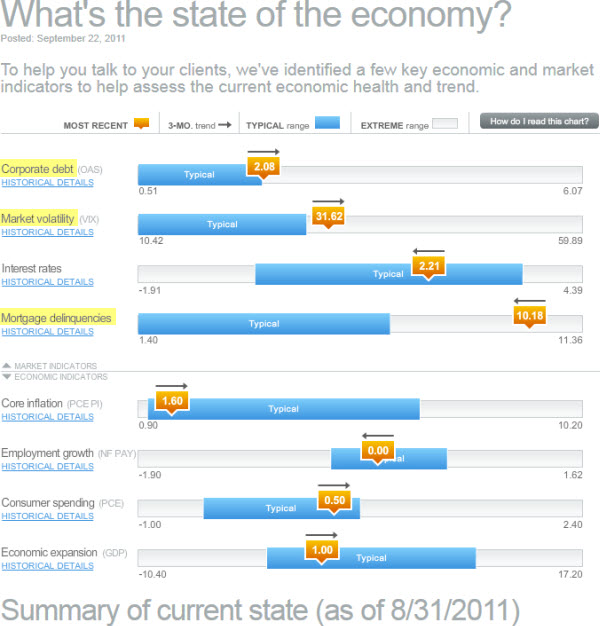
    Thought this was helpful in setting context (sort of an "X" marks the spot; "we are here" graphic) for several key economic and market indicators.


    110922 State of the Economy

    Summary of Market indicators.

    So, in general, corporate debt has moved to the high end of the historical range and the VIX has risen aggressively higher, just above the historical range. Interest rates remain in typical ranges. Meanwhile, mortgage delinquencies continue to come down slightly in second quarter 2011. Overall, U.S. equity markets continued to fall in August, with the Russell 3000® Index returning -6.0% for the month.

    Yet, things might be getting a little bumpier.


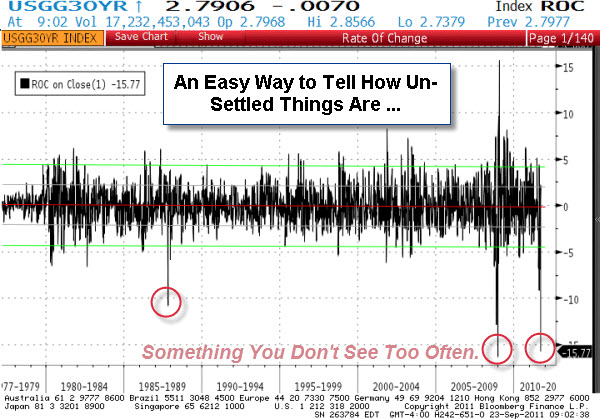
    Another Indicator Shows How Volatile Things Have Become.

    We just saw the biggest weekly move in 30 year bond since Black Monday (which happened way back in 1987). 


    110923_30yrROC

    30-Year bond rates moved more than three standard deviations this week.  Zero Hedge points out that this move can be looked at as a 7 standard deviations of a percentage move basis, given how low rates are at this point. 

    So much for stability. 

    Maybe this will make you feel better?  Global economic policy-makers gathered, this weekend, for the annual meeting of the IMF.  Publicly, they tried to sound united as they try to calm financial market concerns about European sovereign debt and the region’s fragile banks.  Word is Europe would do “whatever is necessary” to resolve the crisis.  Feeling better already; don't you?


    Enhanced by Zemanta
  • What Is the State of the Economy [Infographic]

    Walmart just re-instated its Layaway plan for cash-starved consumers. That sends an interesting message; but so did billionaire investor George Soros.  Speaking on the sidelines of the International Monetary Fund meeting, Soros said that the crisis is worse than the global financial crisis in the wake of the collapse of Lehman Brothers in the fall of 2008.

    Is It Really That Bad?

    Thought this was helpful in setting context (sort of an "X" marks the spot; "we are here" graphic) for several key economic and market indicators.


    110922 State of the Economy

    Summary of Market indicators.

    So, in general, corporate debt has moved to the high end of the historical range and the VIX has risen aggressively higher, just above the historical range. Interest rates remain in typical ranges. Meanwhile, mortgage delinquencies continue to come down slightly in second quarter 2011. Overall, U.S. equity markets continued to fall in August, with the Russell 3000® Index returning -6.0% for the month.

    Yet, things might be getting a little bumpier.


    Another Indicator Shows How Volatile Things Have Become.

    We just saw the biggest weekly move in 30 year bond since Black Monday (which happened way back in 1987). 


    110923_30yrROC

    30-Year bond rates moved more than three standard deviations this week.  Zero Hedge points out that this move can be looked at as a 7 standard deviations of a percentage move basis, given how low rates are at this point. 

    So much for stability. 

    Maybe this will make you feel better?  Global economic policy-makers gathered, this weekend, for the annual meeting of the IMF.  Publicly, they tried to sound united as they try to calm financial market concerns about European sovereign debt and the region’s fragile banks.  Word is Europe would do “whatever is necessary” to resolve the crisis.  Feeling better already; don't you?


    Enhanced by Zemanta
  • Moneyball

    110925 Moneyball Moneyball is out in theaters. Lots of people consider it a sports movie; but, it is so much more.

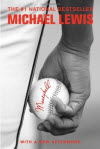
    Yes, it is the film version of the book by Michael Lewis (which was a pretty good read).  Still, underneath the sports story, it is about finding and refining an edge (or sustainable competitive advantage).

    If you've ever thought "if I'm so smart and talented, how come I'm here"?  You're not alone.

    This is a movie about someone who "should" have been a star player … but never quite got there.  Instead, he moved up to the front office of a pro team – and made his mark there, differently than he expected.

    The big idea?  Rather than following conventional wisdom, find something that gives you an edge.  For example, If you ignore a lot of the obvious flaws that damage players in the eyes of professional scouts (bad legs, can't field, too thick in the middle, likes strip clubs or gets high too often), and you focus instead on a single, telltale metric — the percentage of times that they get on base — then tons of players who don't cost very much will turn out to be winners. What would happen if you built an entire team out of these green-diamond misfits?

    Where there are undervalued assets to exploit, there are by implication overvalued ones to avoid.  Sounds like business or trading, doesn't it?  In any case, the scope and scale of the overvaluation is often so large, learning to identify and exploit those situations can be a winning recipe. 

    Here is a video trailer of the movie.


    The underlying message is to focus a critical eye on everything you do and be vigilant about the process, reassessing, challenging assumptions and constraints to find a way that works for you.

    Enhanced by Zemanta
  • Moneyball

    110925 Moneyball Moneyball is out in theaters. Lots of people consider it a sports movie; but, it is so much more.

    Yes, it is the film version of the book by Michael Lewis (which was a pretty good read).  Still, underneath the sports story, it is about finding and refining an edge (or sustainable competitive advantage).

    If you've ever thought "if I'm so smart and talented, how come I'm here"?  You're not alone.

    This is a movie about someone who "should" have been a star player … but never quite got there.  Instead, he moved up to the front office of a pro team – and made his mark there, differently than he expected.

    The big idea?  Rather than following conventional wisdom, find something that gives you an edge.  For example, If you ignore a lot of the obvious flaws that damage players in the eyes of professional scouts (bad legs, can't field, too thick in the middle, likes strip clubs or gets high too often), and you focus instead on a single, telltale metric — the percentage of times that they get on base — then tons of players who don't cost very much will turn out to be winners. What would happen if you built an entire team out of these green-diamond misfits?

    Where there are undervalued assets to exploit, there are by implication overvalued ones to avoid.  Sounds like business or trading, doesn't it?  In any case, the scope and scale of the overvaluation is often so large, learning to identify and exploit those situations can be a winning recipe. 

    Here is a video trailer of the movie.


    The underlying message is to focus a critical eye on everything you do and be vigilant about the process, reassessing, challenging assumptions and constraints to find a way that works for you.

    Enhanced by Zemanta
  • If a Wild Parrot Can Learn to Talk in the Wild, Imagine What Humans Pick Up From Each Other

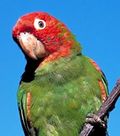
    110918 Wild Parrot Imagine being lost deep in the woods, only to hear "Hello" or "What's Happening" come at you from afar.  Hikers in Australia have increasingly been surprised to find no one there.  Rather than hallucination, the calls have been coming from birds.
    "Some chatty pet parrots that have escaped back into the wild have taught wild parrots to talk.

    The learned behaviors could be integrated into the flock through generations. 'The evolution of language could well be passed on through the generations, says Ken. "If the parents are talkers and they produce chicks, their chicks are likely to pick up some of that," he says.

    This phenomenon is not unique; some lyrebirds in southern Australia still reproduce the sounds of axes and old shutter-box cameras their ancestors once learnt.'"

    The story of the 100th Monkey is similar, where island monkeys learned to wash sweet potatoes and supposedly began passing on the skill.

    These phenomena remind me of how human Culture becomes codified and spreads.  If a wild parrot can learn to talk in the wild, imagine what humans pick up from each other.

    The point: maybe it's time to notice what your organization (or team) is learning in the wild and passing-on to each other?

    Enhanced by Zemanta
  • A Humorous Look at Infographics on the Web

    Companies are spending more time, money, and resources analyzing data and creating meaningful visualizations. 

    With so many more examples, it shouldn't come as a big surprise that there are a lot more crappy infographics on display.

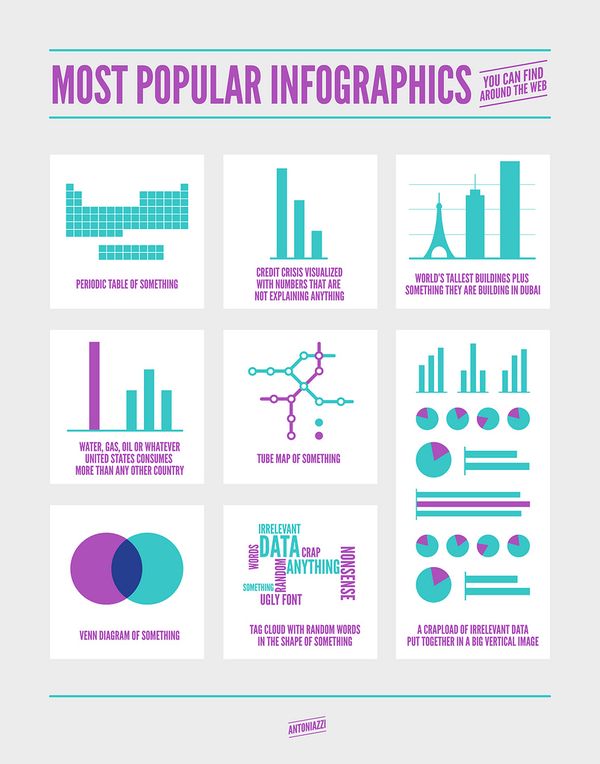
    Here is a chart showing the most popular infographics you can find around the web.


    Types of Infographics
     

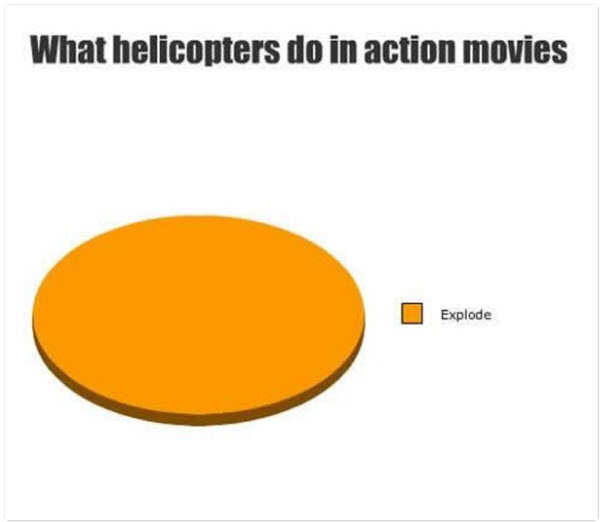
    Of course, there is also the 'just for fun' infographic.  For example, here is one showing what helicopters do in action movies.

    110918 Infographic Helicopters in Action Movies 

    Enhanced by Zemanta