The Internet has changed a lot of things. Who knew storage was going to be one of them?
The whirring hard drives that once occupied entire university labs held but a fraction of the data we carry in our pockets every day — and that’s only 50 years of progress.
Today, as we move further into the cloud, and witness the latest and greatest pocket media devices, we thought it fitting to take a look back at how far we’ve come on our quest to store as much information in as little space as possible.
The Internet has changed a lot of things. Who knew storage was going to be one of them?
The whirring hard drives that once occupied entire university labs held but a fraction of the data we carry in our pockets every day — and that’s only 50 years of progress.
Today, as we move further into the cloud, and witness the latest and greatest pocket media devices, we thought it fitting to take a look back at how far we’ve come on our quest to store as much information in as little space as possible.
As we enter 2012, we stand together at a financial crossroad.
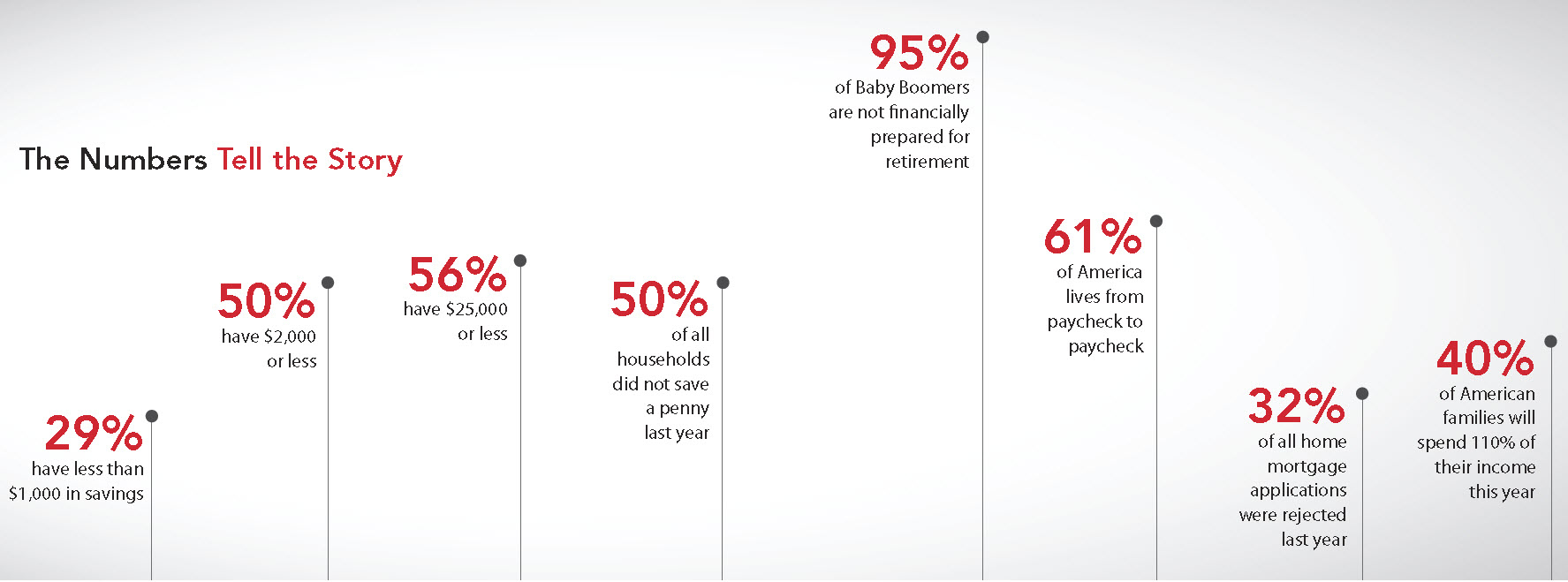
America is the wealthiest nation on earth. Yet, the majority of American Families are failing to manage their own personal finances. More citizens (since the Great Depression) are in debt, default, or financial despair.
Americans overspend. Undersave. Overborrow. Most are undereducated about managing their personal finances. Our future generations will suffer today’s mismanagement. Statistics are alarming. The consequences are grim.
Here is a video that lays-it-out simply and quickly.
Responsible management of our personal finances is the foundation to a healthy national economy. The better our citizens effectively manage their personal savings, expense budgeting and financial planning, the stronger we grow as a culture, and as a country.
Learn more about the Financial Truth campaign, download the PDF.
As we enter 2012, we stand together at a financial crossroad.
America is the wealthiest nation on earth. Yet, the majority of American Families are failing to manage their own personal finances. More citizens (since the Great Depression) are in debt, default, or financial despair.
Americans overspend. Undersave. Overborrow. Most are undereducated about managing their personal finances. Our future generations will suffer today’s mismanagement. Statistics are alarming. The consequences are grim.
Here is a video that lays-it-out simply and quickly.
Responsible management of our personal finances is the foundation to a healthy national economy. The better our citizens effectively manage their personal savings, expense budgeting and financial planning, the stronger we grow as a culture, and as a country.
Learn more about the Financial Truth campaign, download the PDF.
No matter what you've heard to the contrary, "there is QE3, the Fed is pumping money into the system," says legendary investor Jim Rogers, disregarding most every Federal Reserve statement over the last six months.
In the video, below, Rogers explains his lack of trust for the Federal Reserve and Fed Chairman Ben Bernanke.
Rogers has been a critic of the Fed's quantitative easing programs and artificially low interest rates, pointing to the latter as something akin to "QE3 in drag".
"They're lying to us," he says of the Fed. "One reason the markets are holding up so well is that they are printing money as fast as they can."
"What the Federal Reserve is doing now is ruining an entire class of investors," says Rogers. By forcing rates down and keeping the economy on a flatline, he believes the Fed could cause another lost generation of investments.
Rogers isn't simply a disgruntled American , he's an investor with a legendary record of success. So, where Rogers is putting his money now?
"I'm long commodities and currencies; I'm short emerging market stocks, U.S. technology stocks, and I'm short European stocks," Rogers discloses. His logic is that he wins if the economy turns up due to commodity scarcity. And if the economy remains weak, Rogers' short positions will more than offset his long positions.
No matter what you've heard to the contrary, "there is QE3, the Fed is pumping money into the system," says legendary investor Jim Rogers, disregarding most every Federal Reserve statement over the last six months.
In the video, below, Rogers explains his lack of trust for the Federal Reserve and Fed Chairman Ben Bernanke.
Rogers has been a critic of the Fed's quantitative easing programs and artificially low interest rates, pointing to the latter as something akin to "QE3 in drag".
"They're lying to us," he says of the Fed. "One reason the markets are holding up so well is that they are printing money as fast as they can."
"What the Federal Reserve is doing now is ruining an entire class of investors," says Rogers. By forcing rates down and keeping the economy on a flatline, he believes the Fed could cause another lost generation of investments.
Rogers isn't simply a disgruntled American , he's an investor with a legendary record of success. So, where Rogers is putting his money now?
"I'm long commodities and currencies; I'm short emerging market stocks, U.S. technology stocks, and I'm short European stocks," Rogers discloses. His logic is that he wins if the economy turns up due to commodity scarcity. And if the economy remains weak, Rogers' short positions will more than offset his long positions.
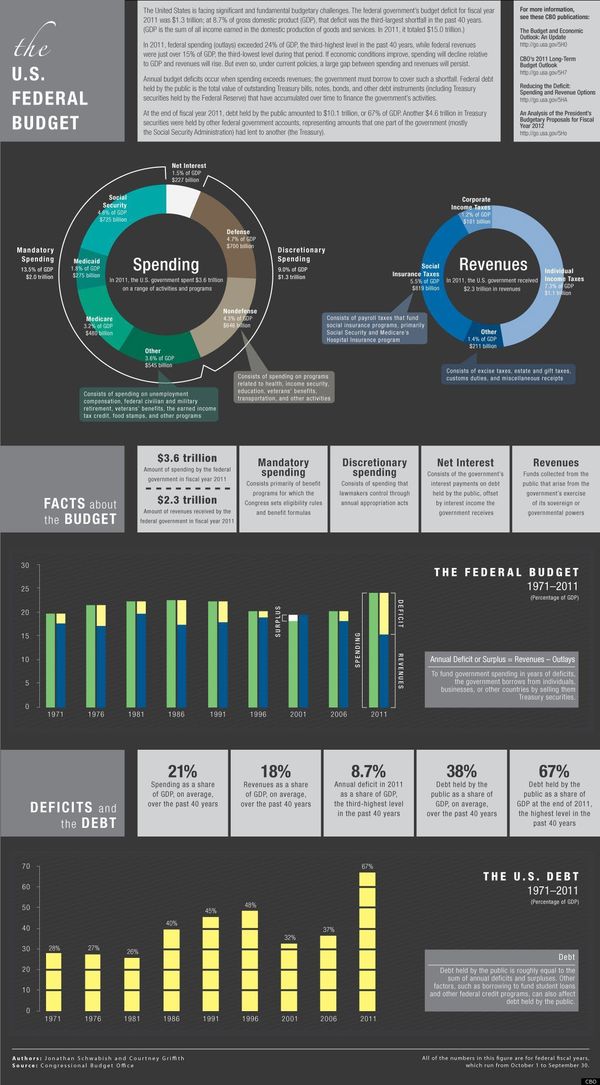
Here is a picture of our Federal Budget as we close out 2011.
Since last August, it's been clear that the United States federal deficit would top $1 trillion in 2011 for the third year in a row. At 8.7 percent of the nation's Gross Domestic Product, the debt-to-GDP ratio is one of the worst in the past 40 years, according to the Congressional Budget Office.
Government spending far outweighs, government revenues by a difference of nine percentage points in favor of spending, according to a CBO infographic .
The graphic also shows that individual's debt has grown especially large in recent years; debt held by the public accounted for 67 percent of U.S. GDP in 2011, the highest level in four decades.
Here is a picture of our Federal Budget as we close out 2011.
Since last August, it's been clear that the United States federal deficit would top $1 trillion in 2011 for the third year in a row. At 8.7 percent of the nation's Gross Domestic Product, the debt-to-GDP ratio is one of the worst in the past 40 years, according to the Congressional Budget Office.
Government spending far outweighs, government revenues by a difference of nine percentage points in favor of spending, according to a CBO infographic .
The graphic also shows that individual's debt has grown especially large in recent years; debt held by the public accounted for 67 percent of U.S. GDP in 2011, the highest level in four decades.