Did you ever wonder where talent in Silicon Valley comes from?
Here is a map that purports to show that … and a lot more.
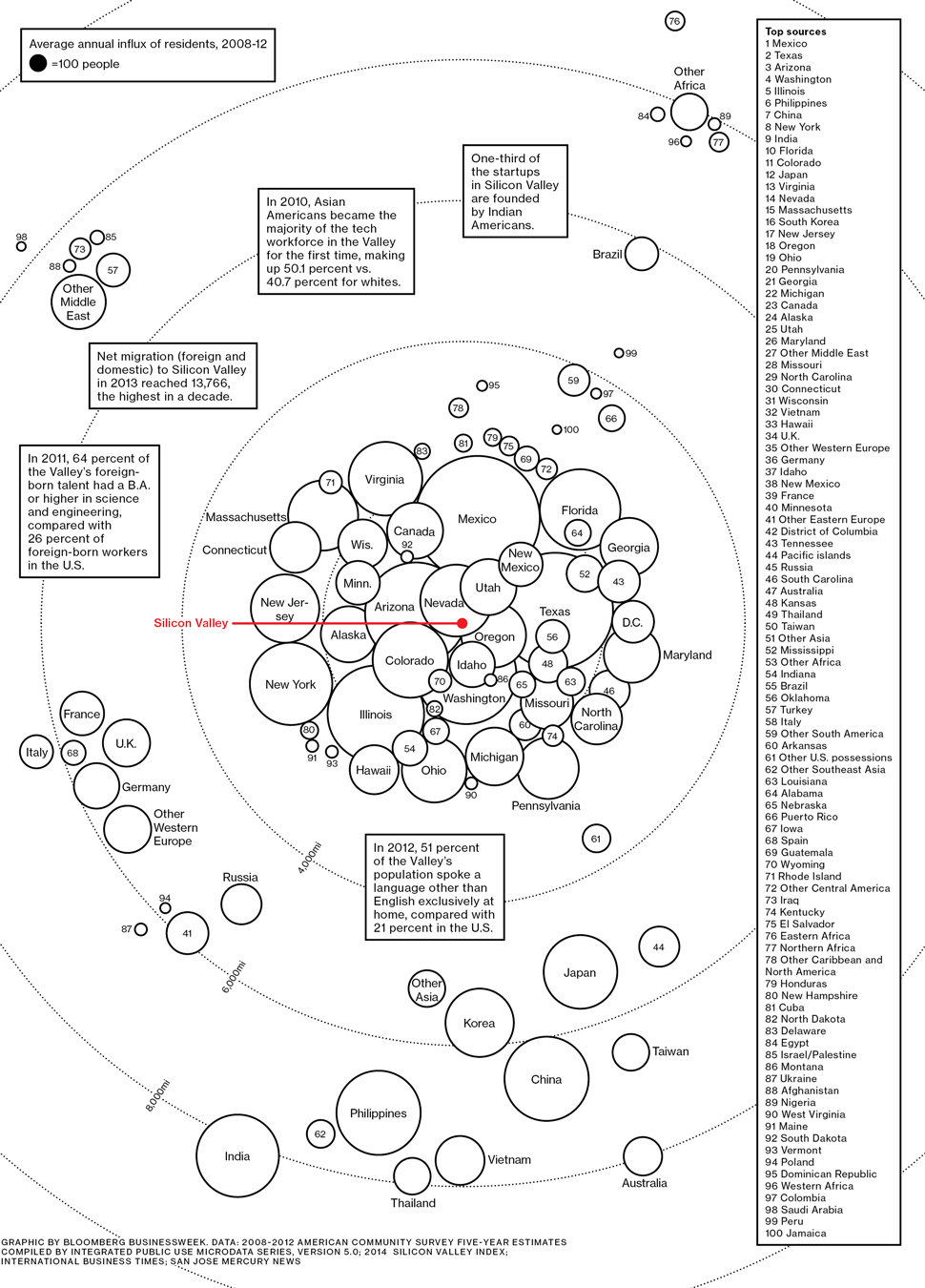
via Businessweek.
Some of the data is hard to believe. Interesting though.
Did you ever wonder where talent in Silicon Valley comes from?
Here is a map that purports to show that … and a lot more.
via Businessweek.
Some of the data is hard to believe. Interesting though.
Did you ever wonder where talent in Silicon Valley comes from?
Here is a map that purports to show that … and a lot more.
via Businessweek.
Some of the data is hard to believe. Interesting though.
Here is the TED Talk I delivered at the TEDx Plano event.
It is about the time value of life. I hope you like it.
via YouTube.
Part of the talk is about lessons learned during my father's year-long fight with cancer.
One of my biggest take-aways from that struggle was about the time value of life.
Let me explain.
In finance, the "time value of money" refers to the principle that the purchasing power of money can vary over time (meaning, money today might have a different purchasing power than money later). In part, this is because the value of money at a future point in time might be calculated by accounting for other variables (like interest earned, or inflation accrued, etc.).
It occurred to me that a similar calculation applied to life … or living.
Live Like You Only Have a Year Left.
During the last part of my Dad's life, I think he would have done almost anything for a little more time.
Things that used to be unimportant, or even mildly irritating, took on increased importance. For example, a dinner together became almost a sacred event; a kiss goodnight was truly heart-felt; and saying good-bye meant something … because it could be the last time.
Nevertheless, as a result of that focus, he took more life out of that time.
Shouldn't we do the same thing? Think about it … We are never going to be younger than we are, right now. We are never going to have more time to fix a big mistake. Isn't it likely that the time value of your life, is worth maximizing?
Instead, "life" (the noun) often gets in the way of "living" (the verb).
That is why I called the talk: The Time Value of a Life Worth Living.
Here are some other excerpts from the talk.
People Who Are Good Take Advantage of Opportunities. People Who Are Great Create Them.
When I think back to that year, I spent so much time moving away from pain … that I forgot to move towards opportunity. I feel like I wasted so much time.
My Dad said the difference between good and great is infinitesimal. People who are good take advantage of opportunities … But people who are great create them.
I think what he meant was that when they see the opportunity, they move towards it. They shoot through it.
It is easy to say, "I see that opportunity; but it's not the right time." Or, "I see that opportunity, and I really want to remember it for when this is over." And as much as I want to believe that's true … deep down, I know that it's always a good time to take the right action.
The Game of Life.
Do you like playing games? That's like asking if you like surprises … You like the good ones!
Life is like a blank game board. And we get to choose the games to play. We get to choose the rules, the scorecard … even how we show up, and when we play. And together, that determines whether we feel like we're winning or losing … or growing or dying.
I believe that, to some extent, how you do 'something' is how you do 'everything'. And so, how you play games probably says a lot about how you deal with life.
To Improve Your Life, Improve Your Minimum Standards.
Minimum standards define your life, your accomplishments, and your sense of who you are.
Most goals are aspirational … They define things that you know you want, and want to move towards. But some goals really define the absolute minimum. The absolute 'Yes'es and the absolute 'No's … with no leeway.
Think about the water line when you are treading water. If your nose is beneath, you can't breathe. If you stay there too long, you die. So you have to kick hard enough to get above. And it's only when you're above, that you can see the other areas that are falling beneath. And it seems like there's always something falling underneath.
That's precisely why minimum standards define the quality of your life. It is because so many of your thought cycles, so much of your effort, so much of your activity, is spent trying to kick back above … that you don't always have time for more.
To Change Your Life, Change Your Perspective.
When you are 'stuck' … a shift in role, or a shift in perspective, is often all you need to see a new path forward or a new possibility.
Have you ever been stuck playing a role that you knew didn't serve you? Where you knew what the best next step was, from your perspective, but you had a sense that it wasn't the right action? Sometimes it makes sense to step back and ask, "What role can I play that would get a better result?"
That is often all it takes to change the game. Other times, what it takes is the decision to play a new game.
There is a lot more, so hopefully you will watch the TEDx Talk.
Please contact me if you have questions or comments. I'd love to hear from you.
Sign-up for our Weekly Commentary, here is the link.
Here is the TED Talk I delivered at the TEDx Plano event.
It is about the time value of life. I hope you like it.
via YouTube.
Part of the talk is about lessons learned during my father's year-long fight with cancer.
One of my biggest take-aways from that struggle was about the time value of life.
Let me explain.
In finance, the "time value of money" refers to the principle that the purchasing power of money can vary over time (meaning, money today might have a different purchasing power than money later). In part, this is because the value of money at a future point in time might be calculated by accounting for other variables (like interest earned, or inflation accrued, etc.).
It occurred to me that a similar calculation applied to life … or living.
Live Like You Only Have a Year Left.
During the last part of my Dad's life, I think he would have done almost anything for a little more time.
Things that used to be unimportant, or even mildly irritating, took on increased importance. For example, a dinner together became almost a sacred event; a kiss goodnight was truly heart-felt; and saying good-bye meant something … because it could be the last time.
Nevertheless, as a result of that focus, he took more life out of that time.
Shouldn't we do the same thing? Think about it … We are never going to be younger than we are, right now. We are never going to have more time to fix a big mistake. Isn't it likely that the time value of your life, is worth maximizing?
Instead, "life" (the noun) often gets in the way of "living" (the verb).
That is why I called the talk: The Time Value of a Life Worth Living.
Here are some other excerpts from the talk.
People Who Are Good Take Advantage of Opportunities. People Who Are Great Create Them.
When I think back to that year, I spent so much time moving away from pain … that I forgot to move towards opportunity. I feel like I wasted so much time.
My Dad said the difference between good and great is infinitesimal. People who are good take advantage of opportunities … But people who are great create them.
I think what he meant was that when they see the opportunity, they move towards it. They shoot through it.
It is easy to say, "I see that opportunity; but it's not the right time." Or, "I see that opportunity, and I really want to remember it for when this is over." And as much as I want to believe that's true … deep down, I know that it's always a good time to take the right action.
The Game of Life.
Do you like playing games? That's like asking if you like surprises … You like the good ones!
Life is like a blank game board. And we get to choose the games to play. We get to choose the rules, the scorecard … even how we show up, and when we play. And together, that determines whether we feel like we're winning or losing … or growing or dying.
I believe that, to some extent, how you do 'something' is how you do 'everything'. And so, how you play games probably says a lot about how you deal with life.
To Improve Your Life, Improve Your Minimum Standards.
Minimum standards define your life, your accomplishments, and your sense of who you are.
Most goals are aspirational … They define things that you know you want, and want to move towards. But some goals really define the absolute minimum. The absolute 'Yes'es and the absolute 'No's … with no leeway.
Think about the water line when you are treading water. If your nose is beneath, you can't breathe. If you stay there too long, you die. So you have to kick hard enough to get above. And it's only when you're above, that you can see the other areas that are falling beneath. And it seems like there's always something falling underneath.
That's precisely why minimum standards define the quality of your life. It is because so many of your thought cycles, so much of your effort, so much of your activity, is spent trying to kick back above … that you don't always have time for more.
To Change Your Life, Change Your Perspective.
When you are 'stuck' … a shift in role, or a shift in perspective, is often all you need to see a new path forward or a new possibility.
Have you ever been stuck playing a role that you knew didn't serve you? Where you knew what the best next step was, from your perspective, but you had a sense that it wasn't the right action? Sometimes it makes sense to step back and ask, "What role can I play that would get a better result?"
That is often all it takes to change the game. Other times, what it takes is the decision to play a new game.
There is a lot more, so hopefully you will watch the TEDx Talk.
Please contact me if you have questions or comments. I'd love to hear from you.
Sign-up for our Weekly Commentary, here is the link.
The Game of Thrones is getting more popular. Who do you think will win?

Here are some of the posts that caught my eye. Hope you find something interesting.
The Game of Thrones is getting more popular. Who do you think will win?
Here are some of the posts that caught my eye. Hope you find something interesting.
Last week, the Jobs Report hit a big milestone.
The U.S. economy has finally recovered all of the jobs lost during the recession.
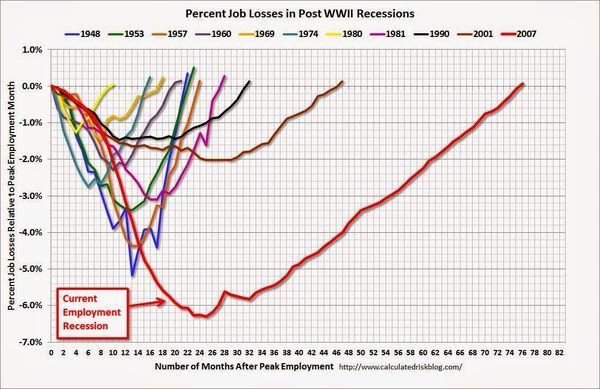
via Calculated Risk.
It took more then 6 years to exceed the previous employment peak. However, this recovery took place during a period of declining participation – partially due to demographics – and that made making the milestone harder.
Of course because of population growth, we're still "behind" in terms of total jobs, but at least this is one benchmark that's been cleared.
Many people called it the "Scariest Jobs Chart Ever". Well, it got a lot less scary.
Nonetheless, there is still a long way to go.

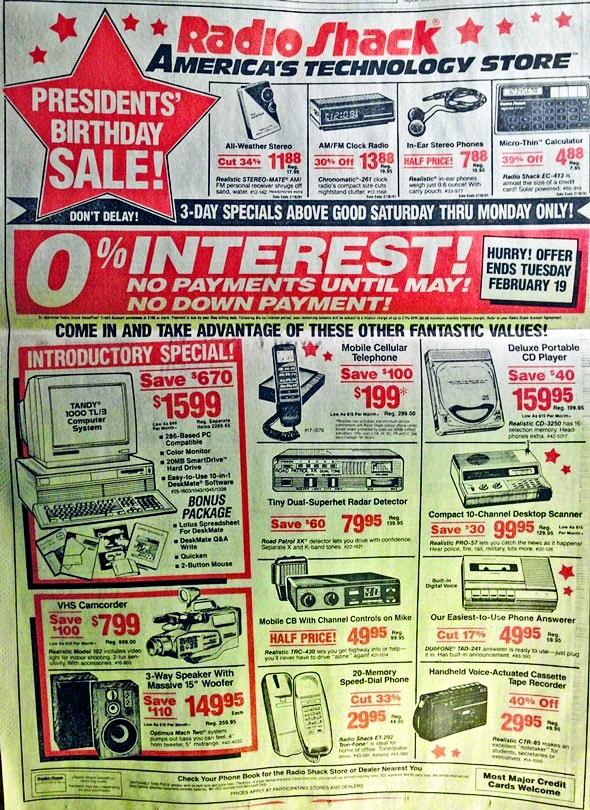
Everything in this 1991 RadioShack ad now exists in a single smartphone … Tough Business!
Here are some of the posts that caught my eye. Hope you find something interesting.
To use an athletic analogy, a normal speech and a TED Talk are totally different events (like a sprint vs the decathlon). It takes a surprisingly different set of skills and type of preparation to perform well.
I've given hundreds of presentations, and don't normally stress about them. I did for this one.
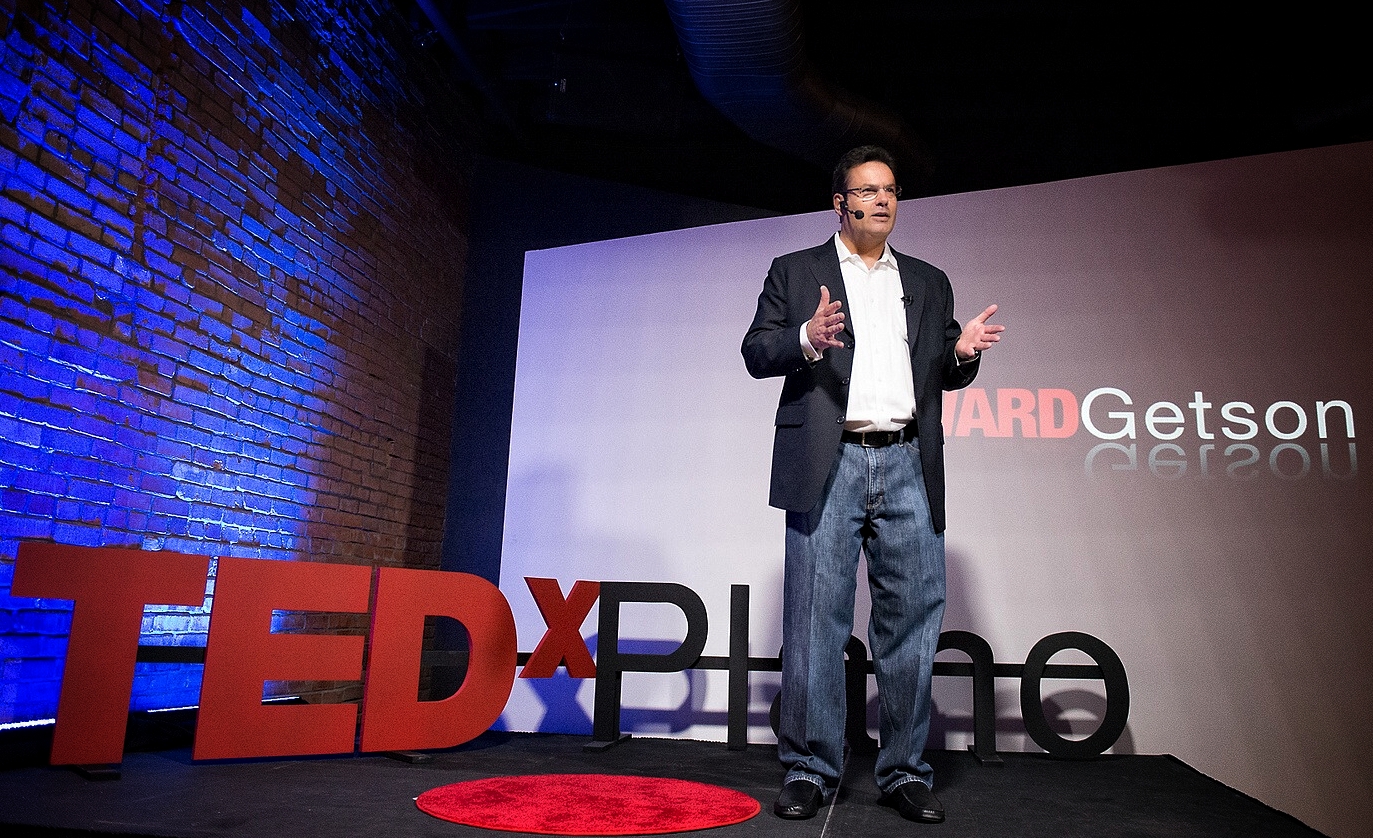
In most of my talks, there is very little "set in stone" to memorize. I tend to have a main topic (or theme), and each slide serves like a module … and I think, talk, interact, and improvise throughout the framework.
This works well for me because I tend to think in anecdotes that branch out from the main theme. That may be a great skill to have, but it's not one that helps you write a good TED Talk.
Why? Because, in contrast, a TED Talk is really about "one idea worth sharing".
In many respects, it's much harder to write and deliver a good 10 minutes about one idea, than it is to prepare to talk about a much broader topic for one hour.
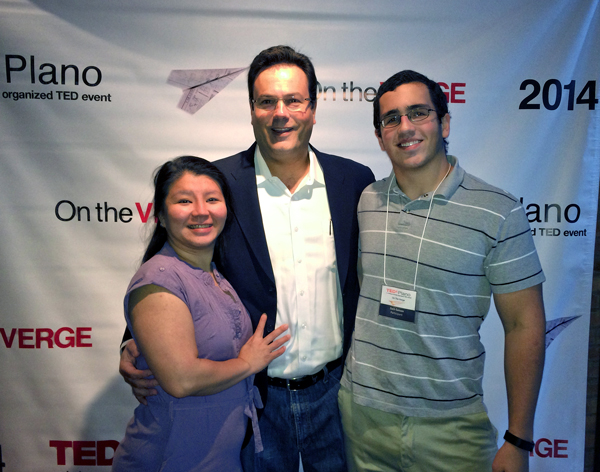
The TEDx committee created a sense of formality with stringent standards and deadlines. My guess is that, during the planning and rehearsal process, they wanted uncomfortable speakers to provoke better speeches.
As a result, I prepared (and threw away) four separate talks before coming up with something that felt right and flowed properly.
Here are some bullet points that highlight lessons learned.
I didn't realize how hard it was to make something simple.
The video should be ready next week.
EDIT: Here it is:

 TED Talks are pretty well-know for their quality. So, I was understandably excited (nervous, even) about presenting at the TEDx Plano Conference this past weekend.
It was fun (in the way that preparing for a marathon is "fun").
For example, in the days leading up to the event, I would give it to the unsuspecting people who chose to use the StairMaster next to me. It seemed like a good way to practice with my heart rate up.
I also gave it one-on-one to employees. Why? Because it gave me extra practice runs, and I got to experiment with different variations to gauge responses.
How did it go? The speech, itself, went pretty well … Though it is hard to believe how much work goes into something so fleeting. I guess that is why they have video.
They filmed it with a professional multi-camera crew. At this point, I still have no idea how long it takes for them to edit it and then put it online. I will let you know when I get the link.
By the way, my topic was "The Time Value of a Life Worth Living — An entrepreneur's reflections on not letting life get in the way." It is about a year that brought my Dad's death, the forced sale of my company by venture capitalists, and a divorce (in that order). Sometimes, life's darkest days bring the greatest gifts … if you are willing to look for them.
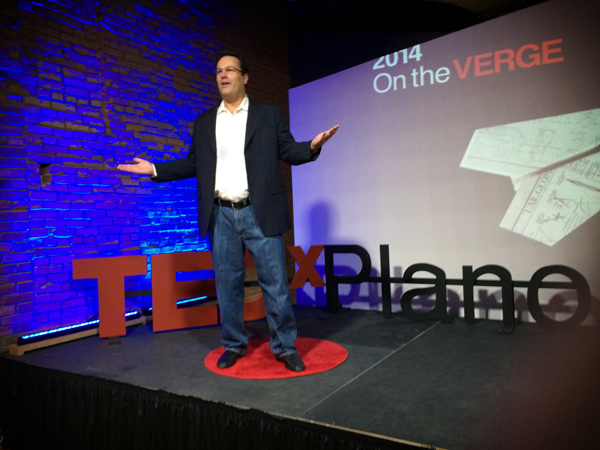
Next week, I'll write about what it is like to prepare for a TED Talk, and what I believe are some of the key differences from traditional presentations.
EDIT: Here's the video: