People seem rattled right now, don’t they?
Between persistent inflation, geopolitical uncertainty, gas prices, trade tensions, and fears about where the economy and markets are headed, there’s plenty to make people uneasy.
Even though markets and the economy are not the same thing, many voters believe they are. Consequently, as we near midterm elections, I suspect the government will push every button and pull every lever it can to build momentum leading into November.
We’re in a particularly partisan election year, punctuated by seemingly endless negative news cycles.
Now, on to the real point … those things don’t matter and shouldn’t steal your focus. Why? Because that’s the playing field we all have to navigate.
There will be winners and losers. The key distinction lies in whether you choose to focus on opportunities or risk.
So I thought this would be a great time to revisit how to cope with losses and manage your anxieties in “scary times.”
The Anxiety Antidote
During scary times, many people struggle with “I should have …”, “if I would have …”, or “if I could have …” thoughts.
The problem is that thoughts like those create more stress and distraction.
I’m reminded of a quote.
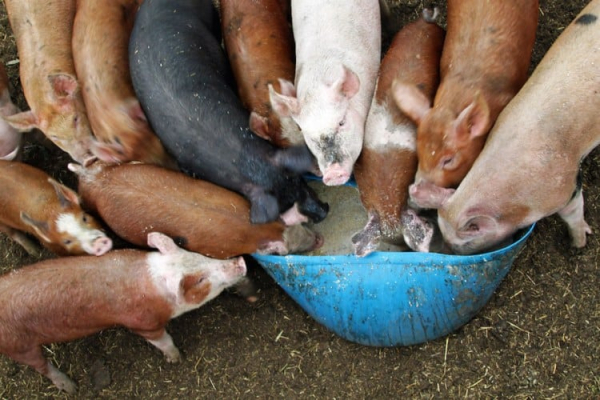
“When the trough gets smaller … the pigs get meaner.” – Dan Sullivan
Negative focus highlights loss, difficulties, past events, missing things, and what you don’t want.
Think of them as an unhealthy reflex that wastes energy, confidence, and time.
All We Have To Fear Is Fear Itself
I often talk about market psychology and human nature. The reason is that markets reflect the collective fear and greed of their participants… people tend to get paralyzed during scary times like these.
But the economy isn’t what makes people feel paralyzed. People feel paralyzed because of their reactions and their beliefs about the economy. Your perception becomes your reality.
A little examination reveals that most fear is based on a “general” trigger rather than a “specific” trigger. In other words, people fear everything that could happen and are paralyzed by the sheer scope of possibilities. These things don’t even have to be probabilities to scare them.
You gain a competitive advantage as soon as you recognize that it’s not logical. Why? Because as soon as you distinguish that fear as not necessarily true, you can refocus your insights and energy on moving forward. You can act instead of react. You make better decisions when you come from a place of calm instead of fear… so create that calm.
Even a tough environment like this presents you with opportunities if you watch for them … or even better … if you create them.
The Scary Times Success Manual
The goal is to move forward and feel better.
Strategic Coach offers ten strategies for transforming negativity and unpredictability into opportunities for growth, progress, and achievement. They call it the “Scary Times Success Manual,” and what follows are some excerpts:
Forget about your difficulties; focus on your progress.
Because of some changes, things may not be as easy as they once were. New difficulties can either defeat you or reveal new strengths. Your body’s muscles always get stronger from working against resistance. The same is true for the “muscles” in your mind, spirit, and character. Treat this period of challenge as a time to make your greatest progress as a human being.
Forget about events; focus on your responses.
When things are going well, many people think they control events. That’s why they feel so defeated and depressed when things turn bad. They think they’ve lost some fundamental ability. The most consistently successful people in the world know they can’t control events – but continually work toward greater control over their creative responses to events. Periods of uncertainty are an excellent time to focus all your attention and energy on being creatively responsive to the unpredictable events ahead.
Forget about what’s missing, focus on what’s available.
When things change for the worse, many desirable resources are inevitably missing – including information, knowledge, tools, systems, personnel, and capabilities. These deficiencies can paralyze many people, who believe they can’t make decisions and take action. A strategic response is to use every resource immediately available to achieve as many small results as possible and make as much daily progress as possible. Focus on recognizing and using every resource and opportunity, and your confidence will continually grow.
Forget about your complaints; focus on your gratitude.
When times get tough, everyone must make a fundamental decision: complain or be grateful. In an environment where negative sentiment is rampant, the consequences of this decision are much greater. Complaining only attracts negative thoughts and people. Gratitude, on the other hand, creates the opportunity for the best thinking, actions, and results to emerge. Focus on everything you are grateful for, communicate this, and open yourself to the best possible consequences.
For more, check out the full version below:
Final Thoughts
We can speculate and pontificate all day about the short-term causes of the markets’ gains and losses, but I don’t think it does much good. I let the algorithms worry about those. It’s the larger trends we have to stay on top of.
I sound like a broken record, but volatility is the new normal. Here’s why:
- Markets exist to trade, and if there’s no “excitement” on either side, trades don’t happen.
- Trades are getting faster, which means more information has to disturb or confuse both the buyer and the seller.
- You’re no longer competing solely against companies and traders like you. It’s like the cantina from Star Wars; you’ve got a bunch of different creatures (and bots) interacting and fighting with each other, trying to figure out how to make their way through the universe.
Pair that with all the fear and uncertainty, and you’ve got a recipe for increased volatility and noise. That means that the dynamic range of a move will be wider and happen in a shorter period of time than ever before. You’ll hear me echo this thought over the next few years as the ranges continue to expand and compress. Cycles that used to play out over weeks often now take just days or hours. The game is still the same; it just takes a slightly different set of skills to recognize where the risks and opportunities are.
Today’s paradigm – both in life and trading – is about noise reduction. It’s about figuring out what moves the needle and focusing only on that.
The crucial distinction is between adding data and adding information. Adding more data does not equal adding more information. In fact, blindly adding data increases your chances of misinformation and spurious correlations.
My final comment is that there’s a difference between investing and trading, and while humans can invest, if you’re “personally” still trying to trade – you’re likely playing a losing game. If you don’t know what your edge is, you don’t have one.
If you’re investing, I’ll advise you to act like a robot. If you removed fear and greed from your decision-making, what would you do?