
It helps to have a map before you’re lost in the woods. It also helps to have one to anticipate the technological challenges, roles, and milestones that will shape your business’s future.
This week, I want to show you how to use ‘desire paths’ and “functional mapping” to build products and platforms that follow the path of least resistance for your customers and your team.
The Road More Traveled …
First, let’s examine a concept in design and transportation called Desire Paths. It refers to the path users take rather than the one intended by the builder.
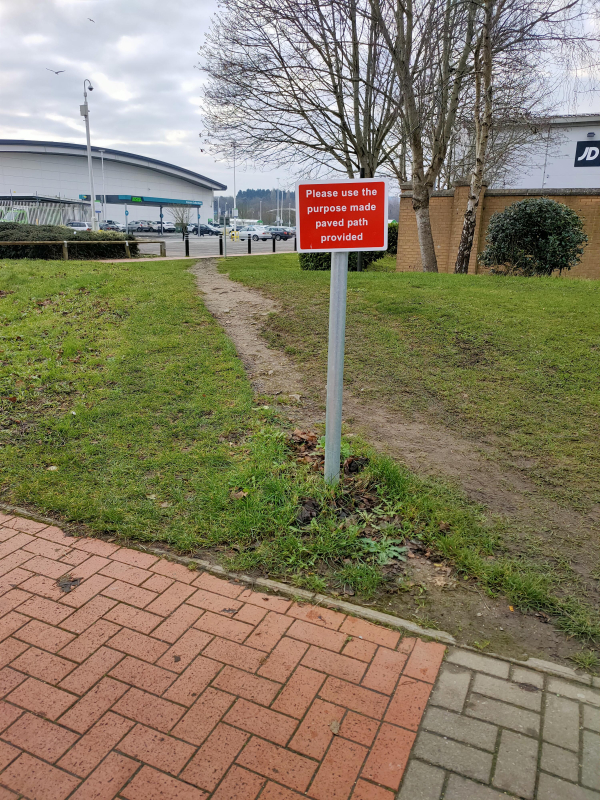
Reddit via itstartswithani
In business and technology, the same thing happens. Customers, employees, and even markets rarely follow the path you draw on the whiteboard — they follow the path that feels most natural and useful to them. The leaders who notice and design around these ‘desire paths’ create products, processes, and strategies that are easier to adopt and harder to disrupt.
Think about your last internal tool rollout. Did people embrace the official workflow, or did they hack together spreadsheets, Slack messages, and side processes that actually got the work done? Those hacks are desire paths. They reveal where your real product or process needs to go.
Every business knows your product isn’t finished until the users have broken it, found new use cases, and pointed out bugs countless times.
If you are interested, there is an active online community forum that shares examples of Desire Paths. It may give you some ideas and laughs.
I am a creature of habit, and even though much of what I think, feel, or do seems to be happening based on real-time choices or decisions, much of that is just a well-worn rut of unconscious behavior.
As a subtle reminder to my son, who recently got married, I told him to expect many of his existing desire paths to change (even if he doesn’t want them to). The same is true for your company: big changes in context overwrite old paths, no matter how comfortable they feel. The question is whether you notice the new paths and design around them — or cling to the old map.
The lesson … It’s often easier to account for or take advantage of human nature (or nature) than to fight against it.
Building A Better Roadmap …
Here is a short video on how this relates to your business and tech adoption. I call it Functional Mapping. Check it out.
The video provides additional depth and detail beyond what’s covered in this post. I encourage you to watch it for a more complete perspective.
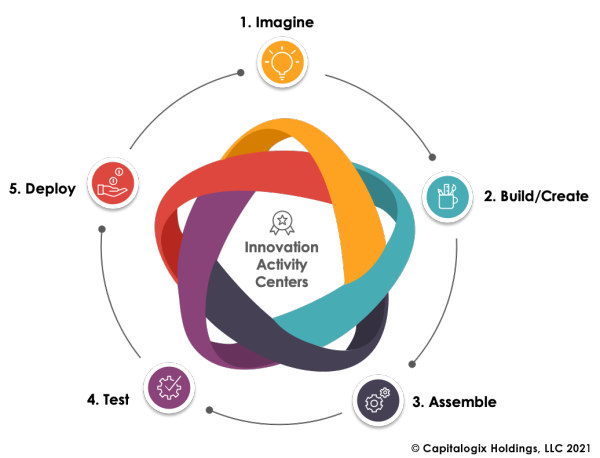
Functional Mapping is a way to visualize who does what, when, and why throughout the journey from thought to thing. It forces you to match roles and personalities to the specific phase of the journey.
Understanding the natural paths of technological development and human nature makes it easier to anticipate the capabilities, constraints, and milestones that likely will define your path forward.
That means understanding the different types of users and what they expect to do or accomplish.
Below is a diagram we use at Capitalogix to help us anticipate the roles (including their personality, tendencies, and skills) needed to navigate the milestones along our journey. For example, the person who imagines a product often loves ambiguity and possibility, while the person who builds it prefers precision and proof. And that knowledge helps you choose the person for the role, as well as the materials and resources you provide them with.
If you treat them as interchangeable, you create friction. If you map their functions clearly, you create flow.
While it’s easy to pay attention to what changes often, it’s also important to understand what doesn’t change. As long as people are building things for people, it’s crucial to recognize that both creation and adoption are heavily influenced by human nature (which isn’t likely to change).
Understanding this helps you anticipate and navigate the strengths, weaknesses, opportunities, and threats you will likely find on your path.
You’ve probably heard me talk about how Capabilities become Prototypes. Then, Prototypes become Products. And, ultimately, Products become Platforms.
Here is a simple example. Let’s describe a new AI model as a capability. When you wrap it into a simple internal tool, it becomes a prototype. Once it consistently solves a valuable problem for someone, you can turn it into a product they can buy. If that product becomes central to how customers run their business, it evolves into a platform that other products and services plug into.
The point is that the model is fractal. That means it works on many levels of magnification or iteration.
What first looks like a product is later seen as a prototype for something bigger.
SpaceX’s goal to get to Mars feels like their North Star right now … but once it’s achieved, it becomes the foundation for new goals.
This Framework helps you validate capabilities before sinking resources into them.
It helps you anticipate which potential outcomes you want to accelerate. It really means beginning with the end in mind. So, rather than simply figuring out the easiest next step, you have to figure out which path is most likely to lead to your desired outcome.
Pick one area of your business where people already ignore the ‘paved path’ and follow their own route. This week, map that desire path, identify which capability it represents, and ask what it would take to turn it into a prototype or product instead of fighting it.
The world is changing fast! Hope you’re riding the wave instead of getting caught in the riptide!
Onwards.
Leave a Reply