
How automated is too automated?
“To speak to a representative, say … representative …. “
“Representative.”
“Sorry I didn’t catch that … would you like for me to repeat the options menu?”
“NO”
“Sorry I didn’t catch that … please state wh…”
“REPRESENTATIVE”
“Sorry, all of our representatives are busy helping others at the moment … Goodbye.”
*CALL ENDS*
How many of us have been in this scenario when on the phone with an airline, insurance company, or any other automated call center?
Where are the people? Why can’t I speak to a human?
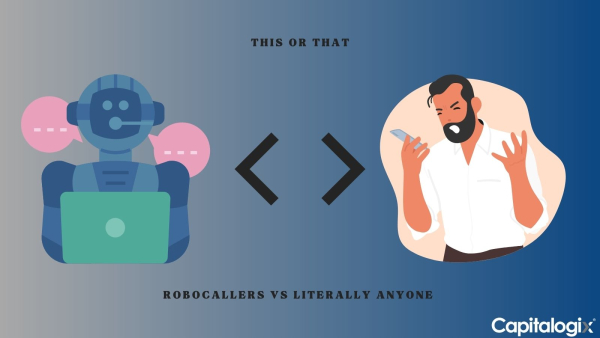
One of my son’s few memories of my Dad involved listening to him go through a scenario like this with a late-1990s auto-attendant. It was funny. My Dad became increasingly frustrated that he couldn’t get to an actual human being. It devolved into: “Shut up! Stop talking! I’ll give you $50 if you let me talk with a real person.” And it went downhill from there.
Despite being frustrating, these systems save companies time, money, and resources. And in an ideal world, they streamline callers into organized categories, resulting in a more efficient experience. They’re clearly working on some level because you’re seeing increased adoption of AI chatbots, robo-callers, and digital support systems.
The evolution of this technology is already replacing people in marketing, sales, consulting, coaching, and even therapy. Sometimes to mixed effects …
But does the efficiency or effectiveness it creates justify the lack of human connection? Why did so many of the legacy call systems get rated so poorly?
There’s hope, though. I remember air travel before apps let me check in online and skip the counter. I remember banks before ATMs. In both of those situations, I was so anchored in my past experience. I was more aware of what I was missing rather than what I was getting.
Recently, I came across an article highlighting a trendy new restaurant in Venice, Italy. They serve the best dishes from several popular restaurants across the city! They must have a massive kitchen and extensive staff to take on such a task, right? Wrong. This restaurant is fully automated; you order and receive food via … vending machines.
My first reaction was this … the convenience sounds fantastic, but wouldn’t that turn a valuable part of the experience into a commodity? It seems like you’d lose so much of the community, human interaction, and pampering that you enjoy when going to a nice restaurant. As I continued to read, however, the article explained that, to “humanize” the restaurant, it is used as a meeting place for food tastings, community gatherings, and question-and-answer sessions. As the world changes, so do the types of experiences people crave.
Humanity and automation merged beautifully.
Semi-Automated Often Beats Fully Automated
Systemize the predictable so you can humanize the exceptional
— Isadore Sharp, Four Seasons
Earlier, I mentioned automated call centers and how frustrating they can be. I’ve come in contact with several who have found a healthy balance in how they automate their system.
For example, an apartment complex near me uses an AI agent to screen calls and send them to the correct department.
Often, the automation tags and organizes calls before routing them to their intended destination, or answers frequently asked questions without connecting them to a human. Either way, it reduces the need to transfer calls to find the correct department or gets the caller the information they need without tying up phone lines and wasting their and the receptionists’ time with basic questions.
“There’s a lot of automation that can happen that isn’t a replacement of humans, but of mind-numbing behavior.”
— Stewart Butterfield
This quote highlights the point of automation! Expedite the menial tasks, which in turn frees up the people working to provide a far more attentive experience.
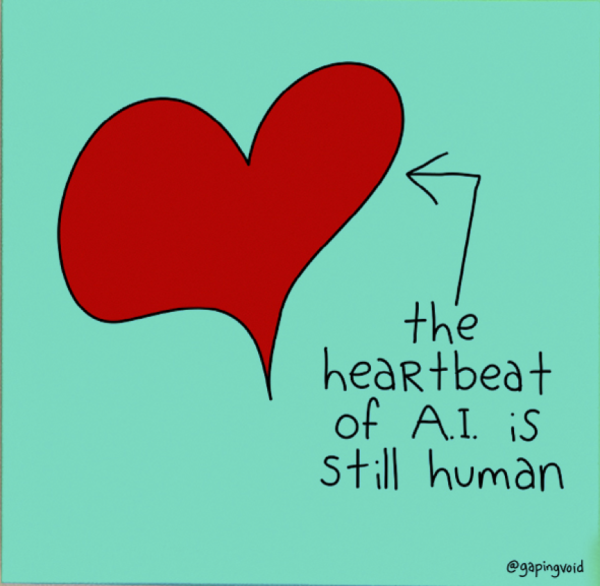
Humans tend to seek ways to increase efficiency in every aspect of their world. But we are social creatures, craving meaningful connection and community. Therefore, the human element will not only persist but remain vital.
Leave a Reply