
Thoughts about the markets, automated trading algorithms, artificial intelligence, and lots of other stuff

  • Beware The Siren Song

    Imagine that aliens have landed on earth, and of everyone on the planet – they end up in front of you. It's now your responsibility to explain the rules of life to these hypothetical aliens.

    Like you, they are facing a new year and an opportunity for a new journey. 

    Would you tell them to let the media, politicians, and the economists determine what kind of a year they would have?

    Or would you explain that they have a lot of freedoms, one of the most important being the freedom of thought; that they can think and make whatever plans they choose.

    Admittedly, this is rather ridiculous question, as we both know you are not going to be instructing any aliens (or are you?!). But, it is a thought experiment to get you focused on the positive polarity.

    We are facing a new year and we do have freedom of thought. You and I can plan to enjoy tremendous results this year. However, with all the negative energy swirling around the us, it's important to be deliberate. Without such plans it's easy to be swept into the "I can't because …" rut, and it's way easier to maintain a habit than to dig yourself out of a bad one.

    Positive framing won't substitute for hard work and intelligence – but it will act as a force function. 

    Beware of Stories!

    On a related note, here's an interesting TedTalk.

    Economist Tyler Cowen loves a good story. But he asks us to step away from thinking of our lives — and our messy, irrational world — in terms of simple narrative.


    Tyler Cowen via TEDx

    The moral: pay attention to what's really happening and respond intelligently. 

    It's not what humans are best at – it's why I love robots – but, it's an important task nonetheless. 

    We're headed into a new decade … honestly ask yourself how the last year, and the last 10 were, and then ask yourself what you need to do to make the next ten better than the last ten. 
     

  • The Market Doesn’t Care About Trump’s Impeachment

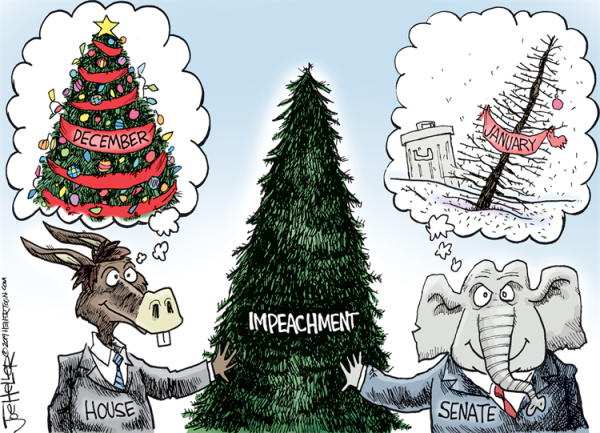
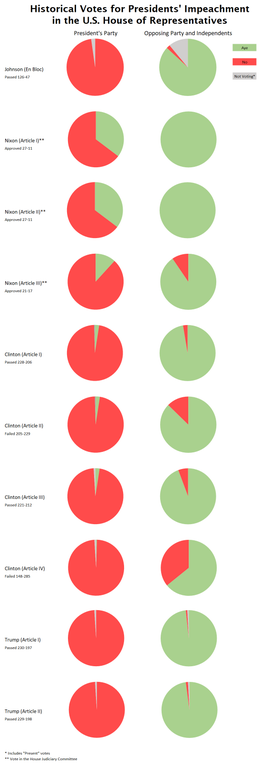
    On Wednesday, Trump became the  third U.S. president in history to be impeached. The Democratic-led House of Representatives passed charges against him for "abuse of power" and "obstruction of Congress." 

    Wednesday was also the day that I learned many of my friends don't understand the impeachment process. Trump has not been removed from office, and with the vote to remove him coming from the Senate (assuming that the parties will vote along lines) it seems unlikely he will be removed. 

    While impeachment still matters – it's essentially a demerit. He's been called to the principal's office – but he hasn't been expelled, and he's still allowed to finish the year and apply for next year. He'll likely finish his first term, and has a chance for a second term. 

    So why go through with the process?

    Democrats hope to convince "moderate" Republicans to vote against party lines, and Republicans believe this is a farce/smear campaign that will only solidify support for Trump and embolden their base.

    Currently, it feels like Nancy Pelosi is going through the motions just to say she went through them. 

    It's a seemingly futile exercise in partisan politics … but it will take until the results of the upcoming Presidential election to truly decide. 

    Regardless, the market currently doesn't care … at all. 

    The Bulls Live On 

    Before impeachment, Trump warned that the stock market would plummet if he was impeached. 

    By the end of Wednesday's regular session, equities had weakened slightly, but all major indexes were trading near all-time highs.

    It makes sense. Republicans and Democrats voted along party lines, and they'll do the same in the Senate. So, there's little reason for the market to worry. 

    M6wsypotwj541via cub3dworld

    Even if some Republicans voted against party lines, the vote needs a 2/3 majority to pass. 

    Markets respond to fear and excitement – and while there's political grandstanding on both sides, nothing really has happened. Even if Trump were removed, Pence would remain a supporter of Trump's policies. 

    In the long-term, this raises questions about who will govern us in the future, what policies will be passed, etc… All things that will influence the market. 

    Time will tell what the results will be, but it feels like we're safe from major political news until Super Tuesday in March. 

  • Happy Hanukkah! (and Happy Holidays!)

    It's that time of year again.  Wow, how time flies. End of the year and the first night of Chanukah - the Jewish festival of lights. 

    We light the Menorah (Chanukah candles), eat latkas (potato pancakes), exchange gifts, spin the Dreidel (a gambling toy), and enjoy a sense of family togetherness for 8 days and nights.

    That's a long time right?! Sometimes it seems even longer with my family. 

    As a gift to all of you, here is "The Chanukah Song," performed by comedian Adam Sandler on Saturday Night Live.  It became an instant classic (and he since released a second, third, and fourth version.)

    Here is the video. And, if you're feeling left out – here's Adam Sandler's Christmas Song.


    via SNL

    It's not too different from Christmas. 

    The cynic in me believes the gift part of the holiday was invented by merchants.

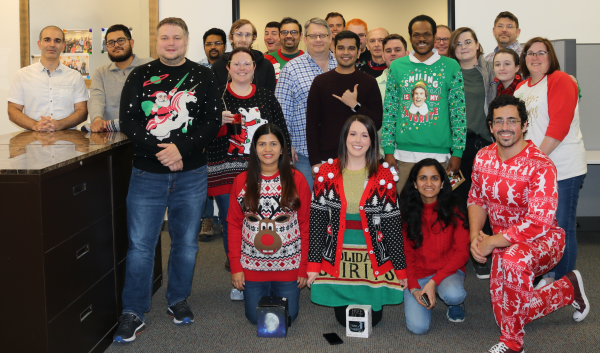
    Regardless, the Capitalogix team has been in a festive mood and the office has been filled with holiday cheer.

    Capitalogix Christmas 2019 2
     From my family to yours, Happy Holidays!

  • Playing Small To Play Big

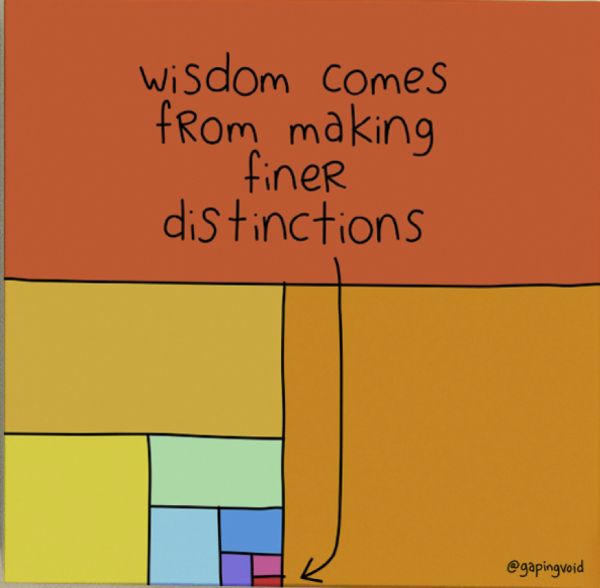
    In my office, there's a series of artwork I had commissioned from GapingVoid. One important piece states that "wisdom comes from finer distinctions". 


    Wisdom Comes From Making Finer Distinctions_GapingVoid


    The more nuance you can capture, from less, the better – think Sherlock Holmes's perceptiveness compared to a normal police officer or detective. He noticed things others didn't and came to conclusions that others couldn't.

    The best detective isn't necessarily the one who looked at the most stuff.  It might be the one that was clever enough to ignore the wrong stuff (which led to being able to discern the right answer in less time). 

    The same concept applies to AI and data. More isn't always better.

    The evolution of mastery requires gaining more from a dataset. 


    Vishal Chatrath via Codex

    Don't get me wrong – data is a precious commodity, and more (and different) data is often better – but it means much less when you're not using it right. 


    More Data = Less Visibility

    We're living in the best era (so far) but people are increasingly frustrated and unhappy. They're less happy in their relationships, they're less happy in their jobs, and they're more depressed than recent generations.

    Comparison is the Thief of Joy 

    It's too easy to say it's because they're "snowflakes", but it makes sense. They're surrounded by people yet have less meaningful connections due to so much of it being "online".  They see everyone's highlight reels and feel like they can't live up. They're inundated with media from all directions and they have infinite options in our hyperconnected society. 

    Data is exhausting. Choice is exhausting. It's the reason willpower doesn't work, and it creates anxiety and lack of movement. 

    It's the same with data – the more data an AI has to sift through the harder is to separate the signal from the noise. It's why daily optimization is harder than monthly optimization. 

    That doesn't mean that there's not value in more data (or in daily optimization) – but it means you need to be calculated about it. 

    It needs to be built on solving the right problem.


    We Don't Have More Problems Than Ever, We Have More Complex Problems

    As a society, we've solved so many of the low hanging fruit that we're having to solve more complicated problems. From a theory of constraints viewpoint, we've fixed a lot of life's bottlenecks and we're now dealing with the real underlying issues. 

    Solving for the "local optima" is fixing a symptom – we have to look for the global optima and solve for the disease. 

    Today, I'd rather have a 10-layer algorithm than an algorithm that looks at 10 datasets … creating finer distinctions. 


    Sparse Data + Agile Decision Engine = Better Outcomes 

    You'll get a better outcome by focusing on answering the right question with the right datasets than by throwing a mountain of data at a random neural net. 

    Scale matters, but is secondary. It's built on the back of finer distinctions. 

    The more noise you can remove before feeding information to an algorithm the better.

    It seems simple – but that's the game, and it's the one most aren't playing. 

  • I See You

    It feels like we're always being watched, right?

    It's not just me?

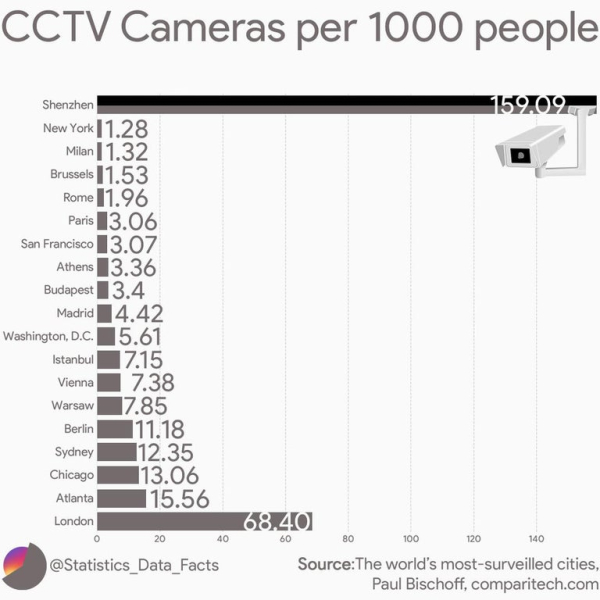
    From governments, to Google, to Facebook … it feels like it's impossible to have any expectation of privacy today. Amazon knows what I want before I do. 

    This is an issue that cuts both ways. On the one hand, increased surveillance means we are arguably safer – because the digital omniscience makes it harder to get away with crimes … but all this extra data on us makes it easier to commit other crimes and to suffer from the increasing lack of privacy. 

    C6f0zf4bqpt31

    Paul Bischoff via Comparitech

    Unsurprisingly, 8 of the top 10 most-surveilled cities in the world were in China. It's even less surprising with the Hong Kong protests and the new social credit system

    My eldest son spent several years focused on cybersecurity. One of his "warnings" was that everyone's been hacked – not everyone has been targeted. 

    I find that somewhat comforting. 

    If everyone's information is out there, that's a lot of noise to sift through. 

    Still, this is one of the issues that will be increasingly important.  Big Data with an AI parser creates a new set of promises and perils.

  • Hedge Funds: Do Not Go Gentle Into That Good Night

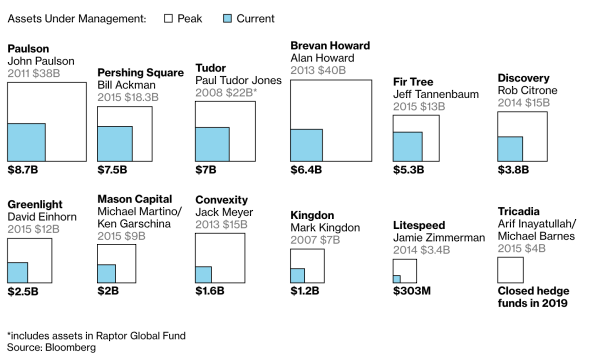
    Hedge Funds – and active managers in general – have been under fire for several years. Almost 50% of Hedge Funds saw a decline in assets under management (AUM) in 2018.

    On the surface, it makes sense … during a long-term bull market, indexes and other passive options like ETFs become en vogue. During a bear market, active management offers more opportunities to outperform the market. 

    Hedge funds are designed to, you guessed it, hedge risk. So, when investors see less risk in indexes, the demand for active management declines. Especially when performance declines as well

    Screen Shot 2019-12-06 at 4.30.47 PM

    via Bloomberg

    When something monumental changes the past is left behind and you begin a new future. When electricity was created, no one was going to make candles the primary form of lighting. After the introduction of the car, horses & buggies were never going to be the #1 mode of transportation, and we're also seeing that with the adoption of AI & automation. 

    Most changes aren't monumental.

    I have a fundamental belief that things go in and out of phase and that what's once old is often new again. You see it with fashion, music, phones – etc. First phones got bigger in order to do more, then smaller for convenience, and then larger again so that old dudes like me can read the text. 

    I believe it's the same with active management – the techniques may have gone out of phase – but active management still offers the potential outperformance. The trend mirrors the stock market; bulls turn to bears when buyers run out – so as outflows from funds continue to peak, and funds continue to close, it seems reasonable that there will come a time when demand rises again. 

    At that point, "active management" will give way to "Active Switching™" (which goes beyond stock picking to choose the markets, techniques, time frames, risk levels, allocation strategies, etc. using a variety of techniques, data sources, and real-time contextual clues).

    This is part of what's covered in my upcoming book, "Next On Wall Street: Understanding AI's Inevitable Impact on Trading."

    Looking forward to launching that book in early 2020.

  • Is WiFi Becoming Part of Our Hierarchy of Needs?

    My wife's mother and sister were staying with us last week.  We also had two other house guests.  And our Internet service went out.  Not just momentarily, but for days.  Catastrophe!

    Is Internet access becoming one of our basic human needs?

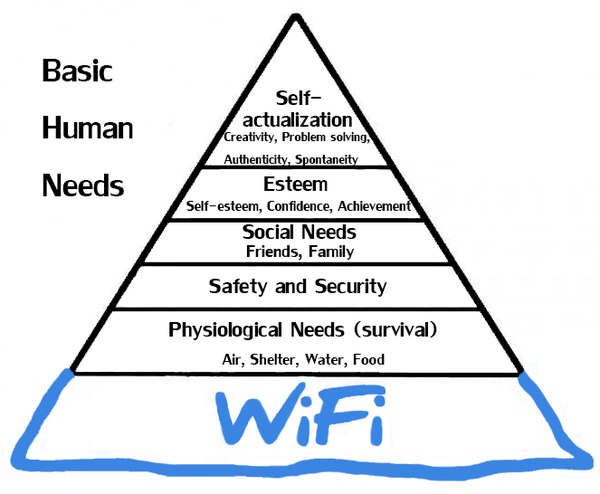
    In 1943, psychologist Abraham Maslow published his famous “Hierarchy of Needs”. The idea was simple: the essential survival needs in the lowest level of the pyramid must be satisfied before the individual can turn his or her attention to the next level, and so on. Maslow’s “essential needs” are physiological; food, water, shelter, and physical safety.

    Today, as we approach the 2020s, perhaps we need to add one more layer to Maslow’s pyramid: WiFi.


    191208 Wifi in Hierarchy of Needs 

    OK, humans probably don’t really need WiFi more than food, but without it, we feel frustrated and "twitchy". 

    My solution: dual providers and a fail-over router.  

    On a higher level, is Internet access a "basic human right" that should be handled like the New Deal treated electricity at the beginning of the 20th Century?

    Expect to hear more about this (and not just because Bernie Sanders made it a campaign issue).