While I'm not really in a supply chain business, they are interesting to me because they do with physical things, many of the same things I do with virtual things.
Supply chains use complex systems to achieve "simple" goals. Figuring out how to streamline processes is both an art and science.
Global supply chains remind me of the complicated machinery and gearing that goes into a finely made analog watch … the watchmakers know that even if you don't know how the watch was made or what a mechanism does, it's still interesting to watch it tick and admire the engineering.
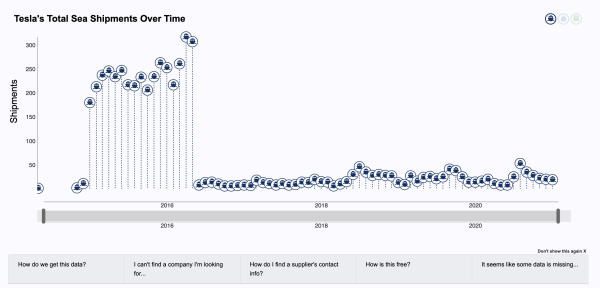
Recently I found a website – ImportYeti – that tracks over 60 million companies' sea shipment records. Here is an example showing Tesla.
It uses bills of lading and other public information to tell you information about the frequency of shipments, the suppliers, and what they delivered.
There is a ton of interesting information here. Hope you find some creative ways to use it.
If you are interested in this, I also suggest looking at Eli Goldratt's The Goal, which describes the "Theory of Constraints," which deals with how bottlenecks limit performance.
Yes, that is Tom Hanks wearing a Bubba Gump shirt punching Covid-19.
So, what is an NFT, and why are they becoming so popular?
NFTs stand for non-fungible tokens, which are unique digital assets on the blockchain. They've been around since 2014, but only recently blew up in popularity. They're essentially collectibles … but digital.
An NFT might be an image, a gif, a video, etc. But, because they're given a unique code on the blockchain, the ownership and validity of that item can be tracked.
Surprisingly, owning that NFT does not give you copyright of that digital asset. In fact, some images have been made into multiple tokens, and some tokens include multiple pieces of art which have been sold individually. The digital files themselves are still infinitely reproducible … but that code on the blockchain is not.
In a sense, that means that NFTs are the digital equivalent of an autographed item.
In the past, when I've talked about Blockchain, digital art wasn't something I actively considered. Blockchain made sense to me as a way of proving provenance and helping establish the authorship and authenticity of an object – but I assumed it would be high-end physical art.
At the end of the day, if someone will pay for it, then you can sell it. That's part of the beauty of Capitalism. Most collectibles don't make sense from a macroeconomic value sense. They're worth something because of their value to their collectors.
Think about Beanie Babies, or Pokemon Cards, or even more mainstream collectibles like Sports Memorabilia or Whiskey.
While I won't say that "I get" the appeal of NFTs … I get it. As the world becomes increasingly digital, "real" and "tangible" have new meanings.
Is something not "real" just because it's digital?
It reminds me of a painting by René Magritte called "The Treachery of Images." The painting shows an image of a tobacco pipe. Below it, Magritte painted, "Ceci n'est pas une pipe," which is French for "This is not a pipe."
The famous pipe. How people reproached me for it! And yet, could you stuff my pipe? No, it's just a representation, is it not? So if I had written on my picture "This is a pipe", I'd have been lying! — René Magritte
If you're still a little lost, SNL had a funny skit last night with an NFT rap song. Enjoy.
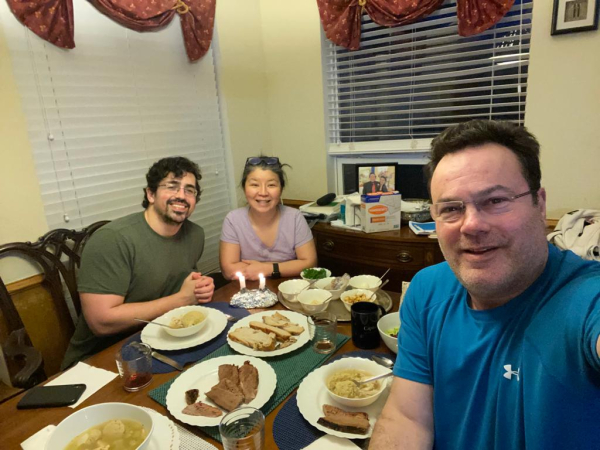
Last night was the first night of Passover, a family-centric holiday that recounts the biblical story of the Exodus of the ancient Israelites from Egypt into the Promised Land. For me, it's a reminder to appreciate what we have – and how we stand on the shoulders of those who came before us.
One of the memorable phrases from Exodus is when Moses says "Let my people go!" For generations, people assumed he was talking to the Pharoh about his people's freedom. For modern Jews, after a week of eating clogging matzoh, matzoh balls, and even fried matzoh … for many Jews "Let my people go" takes on a different meaning.
A friend asked me what part of the matzoh do the balls come from? I don't know … but I hope the matzoh ball fairy brought you some good ones.
Apparently (according to my youngest son), Sea Shanties are en vogue with today's youth. So, here's a pirate Passover song.
For Jews, a notable part of the ritual dinner is naming each of the 10 plagues that rained over Egypt and saying "never again".
Perhaps, this year, COVID-19 gets added to the list?
Just like the Jews making it through slavery, the plagues, and 40 years wandering through the wilderness and desert before entering the Promised Land … We are approaching the post-COVID promised land after a year of being stuck inside.
With the coming of spring, the re-opening of the world, and the reminders from the stories of Exodus and Easter - it's a great time to do a mental and physical "spring cleaning". Mine your experiences for the things you want to keep doing (or continue not doing) as things go back to "normal".
I spend a lot of time doing research … not the way data scientists do, but I enjoy keeping an eye on the pulse of things.
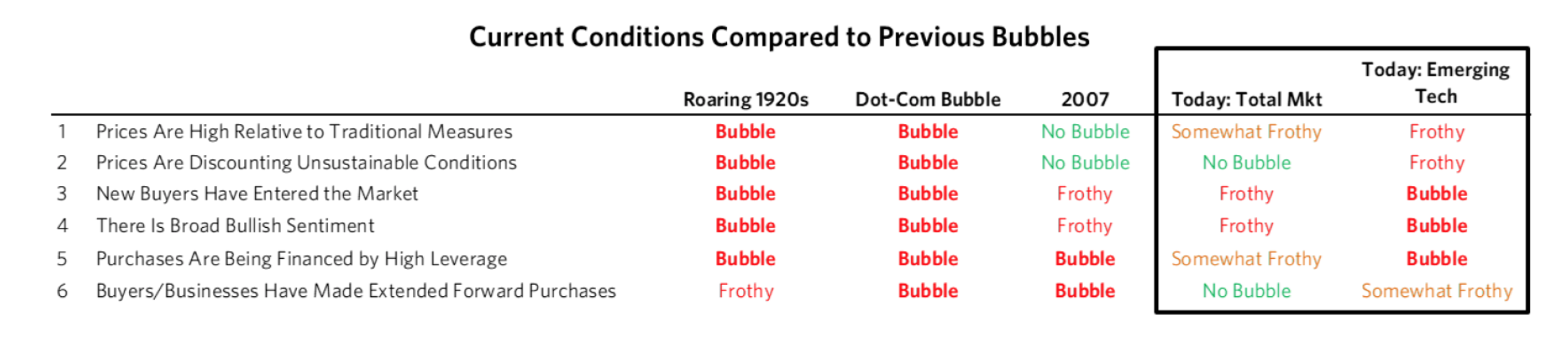
Recently, I've noticed increasing talk about bubbles. One of the most obvious potential "bubbles" being the relatively stable bullish performance of the markets, despite the lack of a full economic recovery.
So, without making a prediction, caution is probably fair, but recognize that people aren't blaring sirens and running with their arms flailing in the air.
Instead of focusing as much on today's bubbles, I thought I'd share a great summary on "how to spot a bubble" by Barry Ritholz.
He suggests 10 elements:
1. Standard Deviations of Valuation: Look at traditional metrics – valuations, P/E, price to sales, etc. — to rise two or even three standard deviations away from the historical mean.
2. Significantly elevated returns: The S&P500 returns in the 1990s were far beyond what one could reasonably expect on a sustainable basis. The years around Greenspan’s “Irrational Exuberance” speech suggest that a bubble was forming:
3. Excess leverage: Every great financial bubble has at its root easy money and rampant speculation. Find the leverage, and speculation won’t be too far behind.
4. New financial products: This is not a sufficient condition for bubble, but it does seems that each major bubble has new products somewhere in the mix. It may be Index funds, derivatives, tulips, 2/28 Arms.
5. Expansion of Credit: This is beyond mere speculative leverage. With lots of money floating around, we eventually get around to funding the public to help inflate the bubble. From Credit cards to HELOCs, the 20th century was when the public was invited to leverage up.
6. Trading Volumes Spike: We saw it in equities, we saw it in derivatives, and we’ve seen it in houses: The transaction volumes in every major boom and bust, almost by definition, rises dramatically.
7. Perverse Incentives: Where you have unaligned incentives between corporate employees and shareholders, you get perverse results — like 300 mortgage companies blowing themselves up.
8. Tortured rationalizations: Look for absurd explanations for the new paradigm: Price to Clicks ratio, aggregating eyeballs, Dow 36,000.
9. Unintended Consequences: All legislation has unexpected and unwanted side effects. What recent (or not so recent) laws may have created an unexpected and bizarre result?
10. Employment trends: A big increase in a given field — real estate brokers, day traders, etc. — may be a clue as to a developing bubble.
11. Credit Spreads: Look for a very low spread between legitimately AAA bonds and higher yielding junk can be indicative of fixed income risk appetites running too hot.
12. Credit Standards: Low and falling lending standards are always a forward indicator of credit trouble ahead. This can be part of a bubble psychology.
13. Default Rates: Very low default rates on corporate and high yield bonds can indicates the ease with which even poorly run companies can refinance. This suggests excess liquidity and creates false sense of security.
14. Unusually Low Volatility: Low equity volatility readings over an extended period indicates equity investor complacency.
There are many ways to make money trading … and even more ways to lose money trading. If it were easy, everyone could do it. There is a mix of art and science combined with hard-to-quantify factors at play.
But, survivorship bias is big in trading because hindsight is 20/20. It's easy to look at a popped bubble and say "oh, obviously that was a bubble" … but if it was that easy, trading wouldn't be so hard.
Trends continue until they don't … but at some point, they don't, and that's where people get hurt.
My gut tells me it is time to pay closer attention.
Sometimes I write posts about business ideas I've found to be particularly helpful. Today, I am writing about a concept that I would call "foundational," called the Gap and the Gain (which was created by Dan Sullivan of Strategic Coach). The base concept is simple – nonetheless, understanding and applying it can have transformative effects. The central concept is that you can be successful and happy or successful and unhappy … and the difference between the two is likely how you choose to measure your results.
Are you focused on the gap (all the things you still don't have) or the gain (all the things you already have)?
As an entrepreneur whose business is based on innovation, one of my unique abilities is being able to think about what's possible … and then find the golden thread from where we are to where we want to be. It's why I believe one of the "secrets to success" is to become comfortable being uncomfortable. Why? Because almost anything you want is beyond your current capabilities (otherwise, you'd already have them). Being able to transform the goal into a directional compass leading you in the right direction is easy for me, and gives me energy.
But, that unique ability comes with a pretty obvious drawback … I'm never where I want to be (because I'm constantly looking at the horizon, and as I move towards it, the horizon continues moving). This is the curse of many entrepreneurs. They live and die without a fulfilling sense of accomplishment because they're always focused on the next mountain. The progress that they've made getting to here, and the confidence they built getting to here, raise the bar of what's possible. Instead of focusing on the progress and wins that got them where they are, they monomaniacally focus on the gap between the current reality and their new shiny goal.
The distance between where you currently are and where you want to go should be motivating. In fact, I'd argue that the ability to stretch your vision further is a skill you should reward rather than punish. It is simply a matter of perspective. Measure from where you started, but don't lose sight of the bigger future. One pushes you from behind, and the other pulls you forward.
That's the gap and the gain, and it's a great lesson that is useful in businesses and life in general. Ultimately, you're in control. You get to decide what you focus on, what it means, and what you choose to do.
Personally, probably the most important way this lesson has impacted me was in making more of the time left with my dad while he was dying.
That video is about a year that brought my Dad's death, the forced sale of my company by venture capitalists, and a divorce (in that order). In many respects, it was a horrible year … a year where it would have been easy to focus on the gap rather than the gain.
Luckily, sometimes, life's darkest days bring the greatest gifts … if you are willing to look for them.
One of my biggest takeaways from that struggle was about the time value of life.
In finance, the "time value of money" refers to the principle that money's purchasing power varies over time (meaning, money today has more purchasing power than money later). In part, this is because the value of money at a future point in time might be calculated by accounting for other variables (like interest earned, or inflation accrued, etc.).
It occurred to me that a similar calculation applied to life … or living.
During the last part of my dad's life, it was easy to focus on what we were lacking … time … we would have done almost anything for a little more time.
In his last year, things that used to be unimportant, or even mildly irritating, took on increased importance. For example, a dinner together became almost a sacred event; a kiss goodnight was truly heartfelt, and saying goodbye meant something … because it could be the last time.
Because of that focus, he took more "life" out of that time. Necessity is often the mother of invention. While I wouldn't have chosen the situation, it changed his mindset (frankly, it changed our mindset), and as a result, we increased the amount of life we squeezed out of that little bit of time.
Obviously, the choice to make more of life shouldn't wait for the death of a loved one or a similar crisis.
We can choose to focus on what we want and what we gained to make the most life out of whatever time we're given.
I spent a lot of that year moving away from pain when I could have been moving toward opportunity. I'm grateful I learned that lesson before he passed.
To close, I want to leave you with a lesson from my dad that really stuck with me.
The difference between good and great is infinitesimal. People who are good take advantage of opportunities … but people who are great create them. ~ Jacob Getson
It's a conscious choice we can all make.
Hope that helps.
If you want to learn more about the specifics of the "Gap and the Gain," Ben Hardy wrote a great article on the subject.
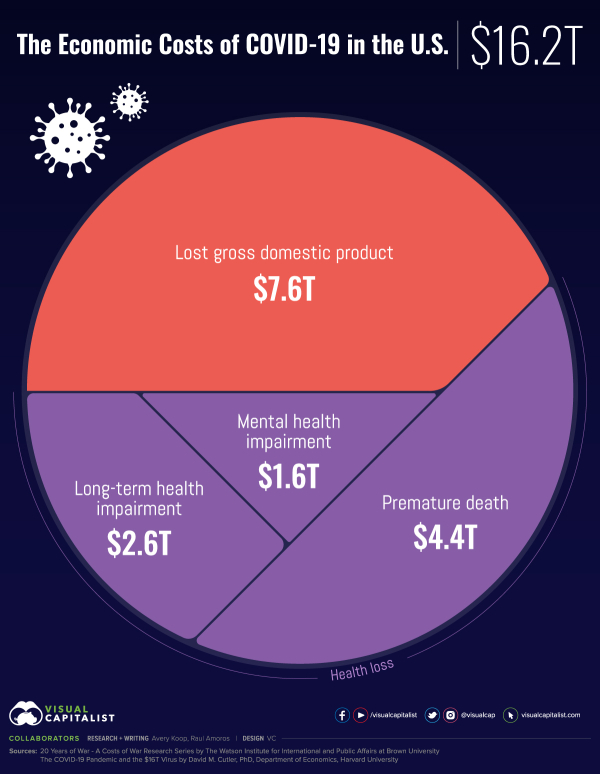
The toll of COVID-19 on mental health, productivity, and GDP is tough to quantify. Yet, even at a glance, it's clear that the impact of the quarantine and isolation are significant enough to warrant serious consideration independently from the medical implications of the virus.
The numbers from the above chart aren't perfect, but they are from a Harvard study, so I'll assume they are at least somewhat credible (unlike a lot of what you read on the Internet these days).
To put it in perspective, that $16.2T estimate of the total economic cost of COVID-19 in the U.S. is $10 trillion more than the estimated aggregated costs of the post-9/11 wars.
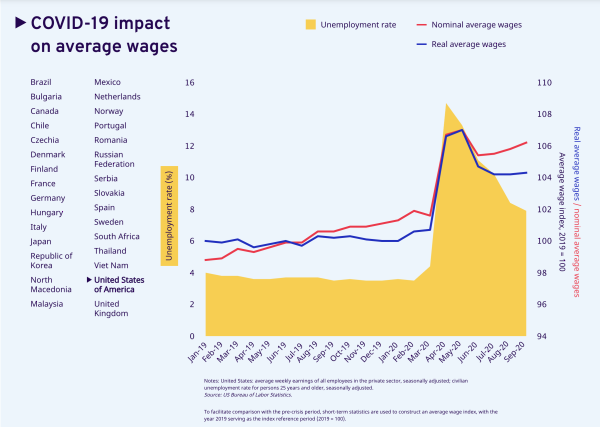
You can click the chart to view other countries interactively.
There are many things to consider as you look at this chart.
First, rising wages aren't necessarily a sign of a recovering economy – though wages have actually increased in most countries.
Next, in countries where wages have dropped, many have wage subsidies that have heavily compensated for the wage loss. As a practical matter, this tends to happen only in high-income countries.
Third, average wages can increase with unemployment due to the compositional changes of the labor market – both due to lower-income jobs being the first to be cut and also due to fewer people working in general. Brazil is a great example of this.
Looking at the US, unemployment is going down while average wages are increasing. That seems terrific (perhaps even surprising). The vital question is … how much of that is due to economic stimulus and how much is real recovery? To some degree, necessity is the mother of invention and the US adapted quickly.
What do you think? Are we out of the woods? Guess time will tell.


 via
via  via
via 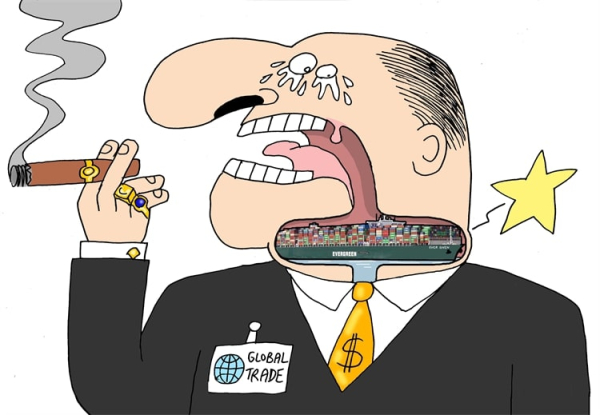
 via
via 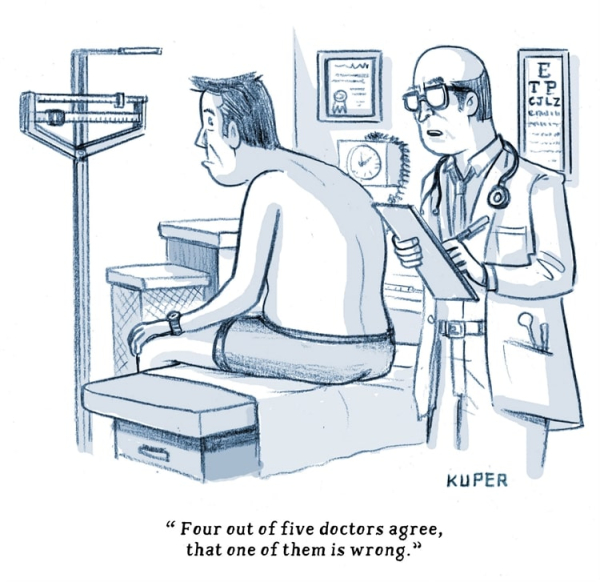
 via
via