Have you ever seen a funny photo that was captured just before a "something bad" happens? The tag-line is usually something like … "This isn't going to end well". Here's an example.
The photo is funny unless you're the guy about need a dentist.
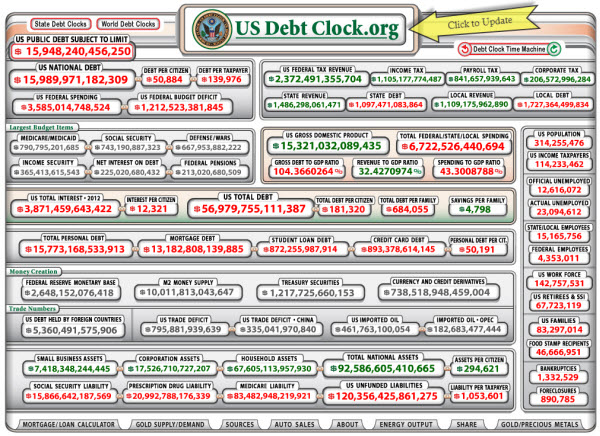
In related news, a giant debt clock was featured at the Republican Convention. Why? To capture the moment our national debt crosses the $16 Trillion dollar level.
To give you some context for this issue, here is an interactive U.S. Debt Clock.
Click the picture and you'll see a version that updates in real-time. There are a number of very cool features and facts (including a "time machine" to rewind the clock to a prior date, so you can compare what happened since then).
Whether you like the Cowboys, or not, one thing we can probably all agree about is that old white dudes shouldn't rap too often. At least that's what my kids tell me when I try it.
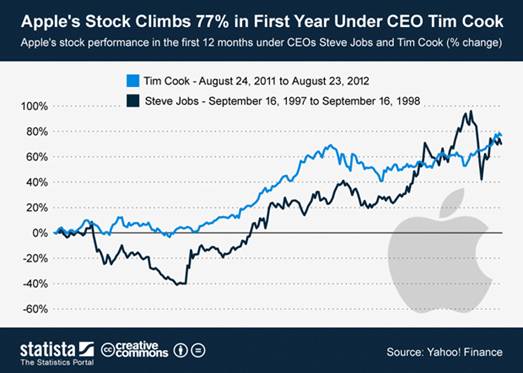
One year ago, on August 24, 2011, Apple announced the resignation of Steve Jobs as CEO and named Tim Cook his successor. Questions as to whether Apple would continue to thrive without its iconic CEO Jobs immediately surfaced.
One year later, it can be said that Tim Cook did a very good job, given the enormous footsteps he had to fill. During his first year as CEO, Apple’s stock price climbed 77 percent and Apple became the most valuable company in the world.
Interestingly, in the first 12 months after Steve Jobs had been named interim CEO of Apple in September 1997, Apple’s stock also soared more than 70 percent. The obvious difference being that Apple was on the verge of bankruptcy in 1997 and Jobs managed to turn the company around.
Tim Cook didn’t need to turn anything around but he managed to keep the company where it was when he took over: on top. That’s not too bad an accomplishment to start with.
Further, the big patent case win will shape the competitive landscape for years to come … onward.
We
were looking for an easy way to track employee time and activities. On one
hand, we wanted to ensure that people are working (and that they were working
on the "right" things). On the other hand, we didn't want to disrupt
focus time or hinder performance.
After
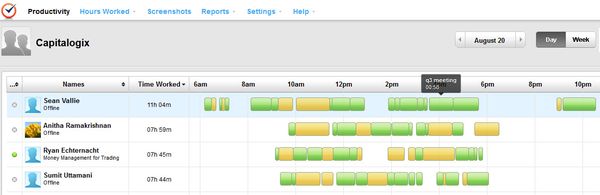
doing some research, we found a tool called "Time Doctor". It sends daily reports to workers (and
their managers) of current tasks and the time log for the previous day.
This
software also tracks web sites visited and applications used. As you might
hope, if someone seems to be spending too much time on “distracting” sites like
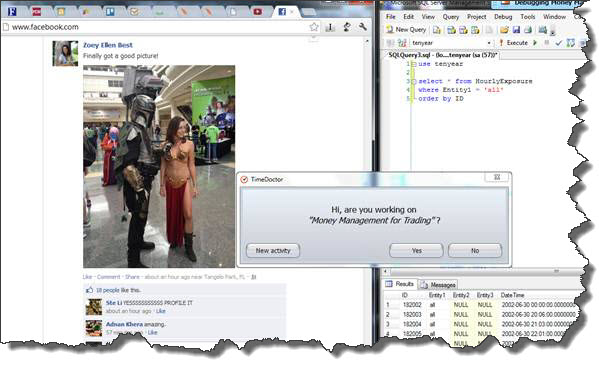
YouTube or Facebook, it “nudges” them by asking whether or not they are still
working. Likewise, after a period of inactivity, Time Doctor will ask whether
or not that time was spent working.
It
is worth noting that Time Doctor does these things automatically, with minimal
disruption or effort.
The
application consists of a desktop component which connects with a server and
provides reports to management via e-mail (or a website). That means it works great even when people are in different locations.
You
Can’t Manage What You Don’t Measure.
With
that said, collecting data is different than gaining insights from data. For example, Time Doctor helped us figure-out what the chunks (or sub-projects) really looked like at the work level; this allowed us to name and right-size them at the planning level.
In addition, employees
can gain insights about how they actually spend their day compared to how they
planned to spend their day. Likewise, this data is useful at planning sessions
to ensure that we actually do the things we said we were going to do — and
that people are working on doing what is necessary for “success” in their job.
When someone is working too long — that may show effort; but you don't necessarily want people working harder. It is an opportunity to discuss delegating, automating, or just saying "no" to certain things. With growth, many projects become possible. As a team, you have to be careful with your choice of which ones get scarce resources (your time, machine cycles, etc.). Your choice to do something often means a corresponding choice not to do something else. That choice should be conscious.
Time Doctor creates an opportunity to do more than just say "No" to a task … Instead, it can be the catalyst to re-direct that work to a different resource. Something that would cause overflow for someone
might be a career upgrade or great opportunity for someone else.
What
Are You Trying to Improve?
A
tool like Time Doctor is not a replacement for assessing someone's actual work
output, yet, it’s a very powerful tool to get extra data points. For
example, you can find-out how many hours someone has been working, who they
have been collaborating with, and whether they are in front of a computer or a
customer?
Right
out of the box, Time Doctor does what it's supposed to do. Nonetheless, if you
want to get more out of it, you have to have the right intent.
Simply
seeing a list of the tasks and activities that people work on throughout the
day is useful. However, using that information to time when you talk with
them, or help coach them to spend time on higher priority items is when you are
actively managing and adding value, rather than simply data tracking.
So check out Time Doctor. It is an effective productivity and
management tool for your team. Used properly, it will help you mark good management practice and encourage your team to a higher standard of performance and participation.
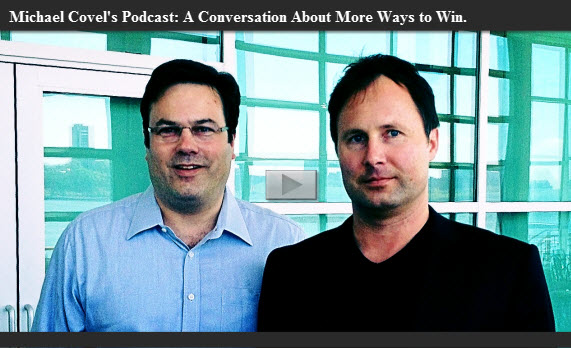
In addition, he has been talking with great traders and thought leaders about a wide range of topics. I'm honored that he chose to talk with me last week. Here is a link to the Interview.
We talk about the business of systematically finding edges through all sorts of different approaches – not only trend following. I like to think of it as finding more ways to win.
And we talk about a broader range of topics as well. For example, we discuss the "E-gene", and how entrepreneurism is at the core of what we practice.
Other topics include:
how hunches can be dangerous;
turning your hobby into your business;
recognizing patterns;
thinking big;
the "three levels of mastery" – cognitive, emotional, and physical;
how minimum standards can define your life;
how systematic trading can define your minimum standards; and
controlling emotions through automation.
We also discuss the importance of the world outside America, and which area both of us agree is important to keep an eye on.
There is a lot of good stuff in the interview. Hope you enjoy it.
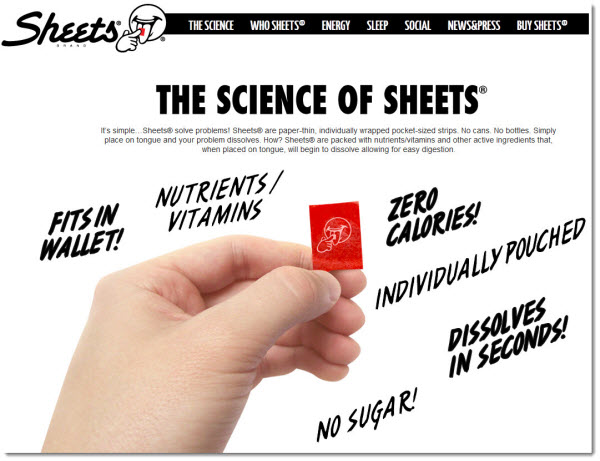
Energy Sheets are more subtle than that. They provide a quick and convenient energy boost without the sugar crash. And they work and taste good enough that I now keep a few in my back pocket and computer bag so they are there when I need them.
They also have sleep-time product called Sleep Sheets. It is honey flavored with melatonin and extracts from goji berry and chamomile — which are natural ingredients purported to induce restful sleep.