There are few certainties in life … according to Benjamin Franklin:
"Our new Constitution is now established, and has an appearance that promises permanency; but in this world nothing can be said to be certain, except death and taxes."
According to the ancient Greek philosopher Heraclitus:
"Change is the only constant in life"
He's also quoted as saying "everything changes and nothing stands still."
Maybe he didn't pay his taxes.
Change is a constant, yet, it's often hard to see the forest for the trees.
It seems like just yesterday that my son, Zach, was making sand castles on the beach – or wearing silly t-shirts. Now, he's 26, the soft spot on his head has filled in enough to consider him an adult – and he is generally unrecognizable from that kid on the beach at the Jersey Shore.
On a day-by-day basis, I rarely noticed the change. However, looking at old pictures makes it obvious that there was massive growth and progress.
So, what did I notice? Sometimes it was what a great kid, or how loving, he had been. Other times, it was almost the opposite. Or, perhaps, I noticed that he didn't eat vegetables, or that he drove with a heavy foot. In any case, what I focused on is what my life seemed filled with, to me. And it was mostly about the moment. The bigger picture was lost (or hidden) behind the small things that make up the fabric of our life (or at least our perception of our life).
It is human nature. Survival of the fittest rewarded a focus on avoiding predators or other dangers … as well as recognizing the opportunity to eat.
Thousands of years later, fear and greed still drive more than we like to admit. It is also a big part of the engine that drives our markets.
It is all about perspective, isn't it?
We are where we are. It doesn't really matter how or why we got there. We are here. And little-by-little we won't be here anymore.
If you are looking at the country or the economy, realize that it took years to get here. Simply changing a regime won't flip a switch. Some changes happen in slow-motion.
Or, perhaps from our perspective, some changes appear to happen in slow-motion … but what others see as change, you see as symptoms of the root cause.
From different vantage points, the rate of change can seem different.
The same can be said for changes in a person or changes in a business. It's easy to see the gap between where you are and where you'd like to be. Regardless, you will probably get there faster by building momentum and confidence by focusing on the improvements and progress you're making. If you change your perspective – you may realize you've made more progress than you thought.
Tough times are great opportunities to discover character. I'm often amazed at the innovation and insight that occurs at times like these!
Don't pay so much attention to what you think you have to do that you forget the reason you're doing it in the first place.
What're everyone's two favorite things? Paying taxes and receiving robocalls, obviously.
Phone scammers used to just target the elderly or those with poor English skills, but today, they go after everyone. In fact, Americans received over 30 billion robocalls last year … and it's only getting worse. Around half of those are "legal," but more and more are scams.
Those scams increase during tax season.
Several of my friends have received calls from the "IRS" demanding immediate payment. That is a scam. The IRS has stated repeatedly, they will not call you asking for your credit card numbers over the phone, they will not threaten lawsuits, and they will not call you unless they've already tried reaching you by mail.
If increased robocalls weren't enough, you can expect your refund to be 8% lower than last year. Though the average refund is still several thousand dollars, and my home state of Texas can expect the highest returns.
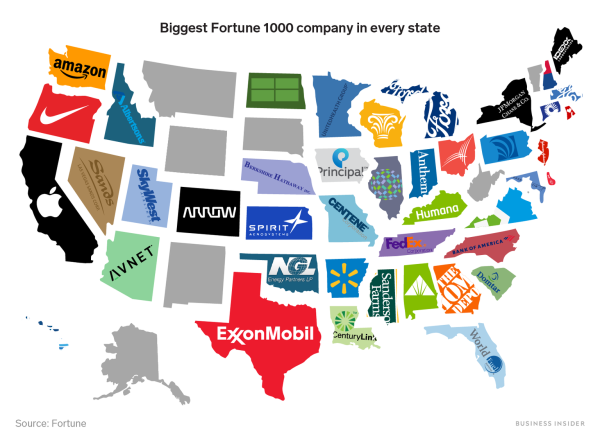
Texas tops the list (Everything IS bigger in Texas) with $3,206 as the average tax refund. Maine inhabitants bottom out the list with $2,336.
It's worth mentioning that these refunds represent federal figures, and don't take into account any refunds from your state government – meaning there's likely more money flowing back to taxpayers than this map illustrates.
What many people don’t understand is that the size of your tax refund isn’t solely based on tax cuts or raises.
Getting a refund feels like a win, but it represents an interest-free loan to the government for the last year. In an ideal world, you'd have a refund of $0 – meaning you paid exactly what you were supposed to.
Don't forget to file your taxes (Monday, April 15th is the deadline to file without an extension) and if you want to protect yourself from robocallers, here are some tips:
Don't answer calls from unknown phone numbers – let them go to voicemail and call back if necessary
If you do accidentally answer a spam call, don't press any buttons or speak, as that simply alerts them that they've reached a working phone number
Don't call a scammer back, and don't engage with them … it's like talking with cops, Anythingyou say can and will be used against you
To decrease legal calls sign up for the federal and state do not call lists
Check out CTIA's tip sheet on How to Stop Robocalls to see a list of apps available to prevent robocalls on your mobile OS
April Fools is a good chance for some much-needed levity, but it's also an opportunity for tone-deaf companies to try and resonate with their younger clientele. You get some fantastic pranks and funny jokes, but you also get some cringe.
Google claimed to have a physical screen cleaner feature on their phones that would also create a long-lasting non-stick shield.
Spotify replaced Discover Weekly playlists with Discocover Weekly playlists, including actual disco cover songs from artists you listen to.
The Bad
Logitech said it was rebranding its wireless mice as "hamsters" since they don't have tails.
U.K. Based Libert Games created a "Trump V Kim Nuclear Foosball Table" which comes with latex masks of Donald Trump and Kim Jong-un so you can truly embody the roleplay.
Elon Musk released an auto-tuned rap song called "RIP Harambe" about the Cincinatti Zoo Gorilla who was unceremoniously killed in 2016
Yet, some of the best April Fools pranks came ages ago:
The Best of All Time
In 1957, the BBC ran a segment on the Swiss growing pasta on trees. The story was on television, and back then, the television wouldn't lie to you … right?!
In 1974, a local Sitka, Alaska prankster Oliver Bickar flew 70 old tires into Mt. Edgecumbe – a volcano that had been dormant for 400 years - and set them on fire. It was such a good prank that the Associated Press ran with it, Alaska Airlines used it in ads, and the admiral of the Coast Gaurd called the prank a "classic."
In 1996, Taco Bell announced it had purchased the Liberty Bell and named it the "Taco Liberty Bell" in an effort to help the national debt.
In fact, I just hit five million "butt-in-seat" miles on American Airlines.
I don't expect to continue at this place forever … but now is the time to push.
I have a different workflow when I travel, and it works for me.
Ultimately, I believe that good things happen when you are in motion!
Many people, however, are focused on the hassle.
The practical realities of travel mean I spend some time thinking about the things airlines do well or poorly. Nonetheless, I appreciate the benefits more than the frustrations.
Yes, it is true … Status means much less today than it used to. Every week it feels like they make the space between seats smaller while the time for finding overhead luggage space gets shorter.
Yet, the planes themselves are getting better. Here, for example, is what an empty 787 looks like.
It looks more like a set from Star Trek then the hellscape passengers complain about on a regular basis.
If you really don't like commercial flying, you can fly on any of the "economical" private options like JetSmarter or WheelsUp. Or, better yet, you could be like this guy and buy the world's only private Boeing 787 Dreamliner.
There was a lot of controversy over the title "self'-made" … Regardless, her accomplishments are impressive. Jenner is an example of a different form of intelligence and hard work (and the power of the Kardashian media empire).
Clearly, Americans are fascinated with the idea of billionaires as an extension of the American dream.
The actual data is interesting. The US has about doubled in Billionaires since 200. Meanwhile, China has grown from 1 Forbes list billionaire to over 300. In that same time, the US GDP grew from approximately 10.5 trillion USD to 21.5 trillion, and China's GDP went from about 1.3 trillion USD to over 13 trillion.
Global GDP has increased by 2.5x since 2001. Consequently, most people in the world are richer than they were back then.
How many billionaires are there … and how many in America? Forbes has an interactive chart to answer those and many more questions., Click the chart below to see the data.
The issue with this chart – and any chart on this subject - is that the data is incomplete and suspect for a variety of reasons. For example, think about the assumptions made on the amount of money tied up in a variety of assets like private companies, art, and real estate.
In addition, there are many billionaires who don't want to be tracked. For example, the list only shows Saudi Arabia having 20 billionaires. Likewise, it is estimated that India has over $500 billion in undocumented wealth (with some estimates putting it as high as $1.5 trillion.)
March Madness is in full swing and will have the world's attention for a few more days. As you could guess – most brackets have already busted. Louisville lost, UC Irvine won, and Duke barely weathered UCF's onslaught.
Lots of skill, lots of adrenaline and lots of natural talents (including amazing physical talents). Here is a picture of 7'6 Tacko Fall. Tacko still looks taller than his opponents even when kneeling.
The allure of March Madness is the same as gambling or trading. These are all fertile grounds for emotion, biases, and statistics.
The holy grail is mighty elusive in March Madness (as in most things) … For example, the odds of getting the perfect bracket is 1 in 9,223,372,036,854,775,808 (2.4 trillion based on a Duke Mathematician's formula that takes into account rank). It's easier to win back-to-back lotteries than picking a perfect bracket. Nonetheless, I bet you felt pretty good when you filled out your bracket.
"Not only is there more to life than basketball, there's a lot more to basketball than basketball." – Phil Jackson
In 2017, I highlighted 3 people that were (semi) successful at predicting March Madness. A 13-year-old who used a mix of guesswork and preferences, a 47-year-old English woman who used algorithms and data science (despite not knowing the game), and a 70-year-old bookie who had his finger on the pulse of the betting world. None of them had the same success even a year later.
Finding an edge is hard – maintaining an edge is even harder.
That's not to say there aren't edges to be found.
Bracket-choosing mimics the way investors pick trades or allocate assets. Some people use gut feel, some base their decisions current and historical performance, and some use predictive models. You've got different inputs, weights, and miscellaneous factors influencing your decision. That makes you feel powerful. But knowing the history, their ranks, etc. can be helpful in making an educated guess and they can also lead you astray.
The allure of March Madness is the same as gambling or trading. As sports fans, it's easy to believe we know something the layman doesn't. We want the bragging rights of that sleeper pick, of our alma mater winning, of the big upset.
You'd think an NCAA analyst might have a better shot at a perfect bracket than your grandma or your musical loving co-worker.
In reality, several of the highest-ranked brackets every year are guesses.
The commonality in all decisions is that we are biased. Bias is inherent to the process because there isn't a clear cut answer. We don't have the answers to "who will win" and we don't have the answer to "what makes a perfect prediction".
Think about it from a market efficiency standpoint. People make decisions on many factors – sometimes irrational ones – and that creates inefficiencies & complexities. It can be hard to find those inefficiencies and capitalize on them – but they're there to be found.
In trading, that's where AI and advanced math come in – taking away our biases and identifying inefficiencies humans miss.
Can machine learning also help in March Madness?
“The greater the uncertainty, the bigger the gap between what you can measure and what matters, the more you should watch out for overfitting – that is, the more you should prefer simplicity” – Tom Griffiths
That being said, people have tried before with mediocre success. It's hard to overcome the intangibles of sports – hustle, the crowd, momentum – and it's hard to overcome 1 in 9.2 quintillion odds.
Two lessons can be learned from this:
People aren't as good at prediction as they predict they are.
Machine Learning isn't a one-size-fits-all answer to all your problems