
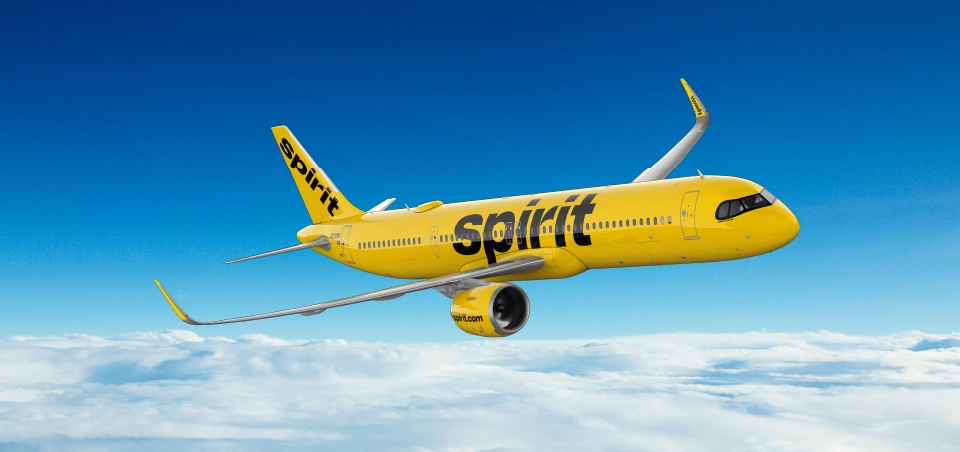
This week, Spirit Airlines announced it was shutting down. They’ve been the butt of jokes for a long time, and many people saw it coming. Nonetheless, their troubles say a lot about the economy, the air travel industry, and Spirit Airlines itself.
The Times Are Changing
I’ve spent enough time in the air to see the system from the inside … and things are definitely changing.
I grew up in a time when business deals were done face-to-face (and that didn’t mean Zoom). I’ve flown over 6 million miles butt-in-seat miles on American Airlines. To put that in perspective, it amounts to hundreds of flights a year at the peak. The kind of travel volume where small details (like upgrades, flight changes, and customer service) stop being luxuries and start being the difference between a manageable routine and a cascade of disasters.
That experience has changed.
I bet you’ve noticed it as well. Upgrades are harder to come by. Lounges are more crowded, and what used to be customer service has become a revenue center. The little efficiencies that made constant travel tolerable have been quietly stripped away.
That’s not just nostalgia. It’s a signal.
And the clearest version of that signal showed up somewhere else entirely.
What Happened to Spirit?
On Friday, Spirit announced it was closing after 34 years of operation, leaving thousands of travelers and employees in the lurch.
On the surface, the reasons are straightforward: rising fuel costs, heavy debt, and an unsustainable balance sheet. But those explanations don’t fully answer the more important question … why does a company built around being the lowest-cost option no longer work?
For a long time, the airline industry operated on a relatively stable exchange.
At the bottom, you could sacrifice comfort for price. At the top, loyalty earned you a meaningfully better experience. And in the middle, there was enough balance that both ends could coexist. The average consumer would complain about travel, but not enough to stop them from booking that ticket.
That exchange is breaking down.
Spirit lived at one extreme. It stripped flying down to its bare minimum and charged for everything else. In doing so, it forced the rest of the industry to respond — introducing basic economy tiers and expanding access to cheaper travel.
But that model only works if there’s room to be the absolute lowest-cost option. As costs rise and pricing becomes more sophisticated, that edge disappears. “Cheap” doesn’t go away, but it gets redefined.
When there’s no longer enough margin to operate at that extreme, the model collapses.
Something structurally similar is happening at the other end of the spectrum as well.
Remember When Status Mattered
Elite status used to be scarce. It meant something because relatively few people had it. And, to get it, you had to be a real road warrior.
“I’ve flown over 6 million miles … and that used to mean something to the airline.”
I remember a time when I would see familiar faces on my routine flights. I also remember a time when the airline telephone agent actually knew who I was (and vice versa).
But over time, especially during and after COVID, airlines expanded access. And many of those road warriors have likely switched many of their flights to Zoom calls.
Is the Travel Business Still About Travel?
Credit cards became an alternative (and preferred) pathway to status. Short-term revenue became more important than long-term loyalty.
The reality is that more passengers are competing for fewer upgrades. The same lounge space. The same finite set of perks. The experience gets diluted and devalued.
That’s not an accident. It’s a reflection of where airlines are now making their money.
Breaking Down the Breakdown
Post-pandemic, carriers leaned heavily into premium travel. Higher fares, more segmented cabins, and more ways to extract value from passengers willing to pay for comfort or flexibility. At the same time, rising costs across labor, fuel, and financing have forced a more disciplined approach to pricing.
The system hasn’t gotten worse. It’s gotten more optimized. But optimization changes the experience.
Instead of a clear trade-off between price and comfort, we now have a layered system of constraints and upsells. Economy is fragmented into finer tiers. Premium is more expensive and more protected. And the space between them—where loyalty once created meaningful differentiation — has narrowed.
Which, while a bummer for the price-conscious seasoned traveler, theoretically creates a more distinct experience at the two ends of the spectrum.
That’s why both extremes are under pressure at the same time.
At the bottom, a pure low-cost carrier like Spirit has no room to absorb shocks. At the top, loyalty programs have expanded beyond the capacity of their own benefits. In both cases, the underlying exchange no longer holds the way it used to.
And when that happens, the outcomes start to look familiar.
The middle compresses. The edges strain. The players that survive are either large enough to absorb volatility or differentiated enough to command higher prices.
Airlines aren’t unique in this. You see the same pattern in retail, media, and parts of tech. More efficiency. More segmentation. More options on paper.
But a narrower lived experience.
So yes, flights feel more crowded. Perks feel less reliable. Even with millions of miles behind me, I recently found myself in a middle seat.
But that’s not really the story.
The system is still working. It’s just working differently.
The underlying exchange has shifted. Loyalty no longer buys what it used to. Price no longer guarantees access the way it once did.
More rational. More optimized.
Just not as rewarding for the people who built their routines around the old version.
Leave a Reply