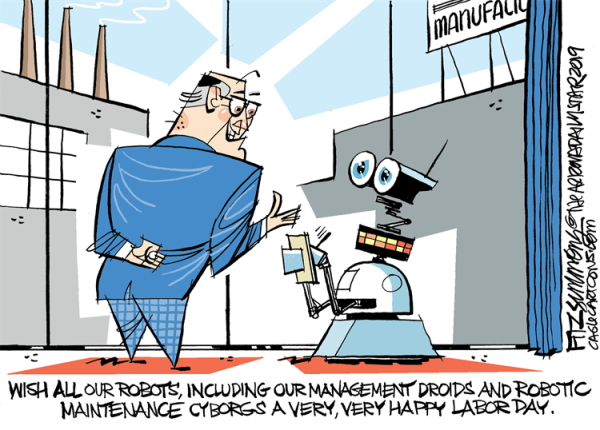
Boston Dynamics just released a video of their Atlas robot doing an impressive gymnastics routine. Comparing it to their videos from 2009 shows how insane the progress is.
You see the fear of Skynet-esque advanced AI … but Terminator-style robots may be a more immediate threat.
On the one hand, Boston Dynamics makes robotics look cute but there's promise and peril. For example, Syria is using autonomous killer drones in Turkey.
Any tool can be used for good or evil, there's no inherent morality in a tool, but we're certainly good at finding ways to push the boundaries of their uses.
I enjoy looking at great disruptive companies and great examples of industries that are primed for disruption.
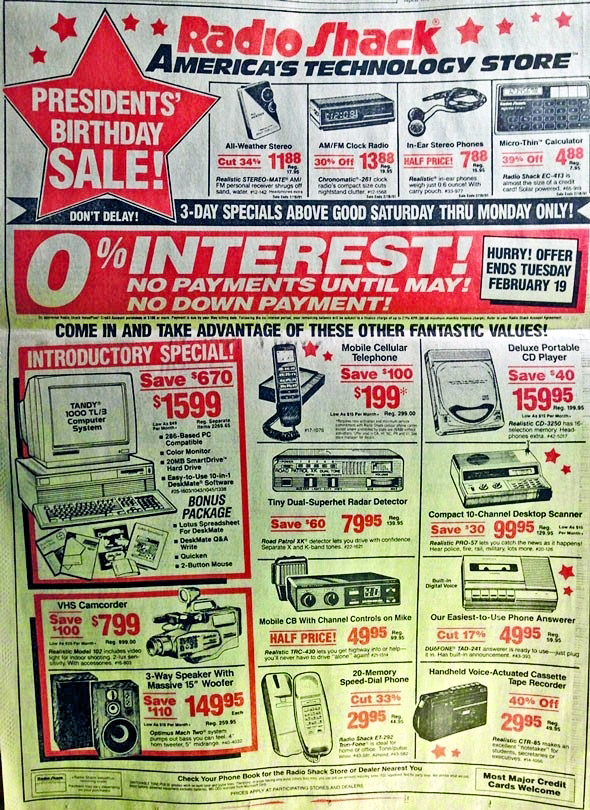
Think about how many companies have failed due to myopia… Radioshack couldn't understand a future where shopping was done online and Kodak didn't think digital cameras would replace good ol' film. Blockbuster couldn't foresee a future where people would want movies in their mailboxes, because "part of the joy is seeing all your options!" They didn't even make it long enough to see "Netflix and Chill" become a thing.
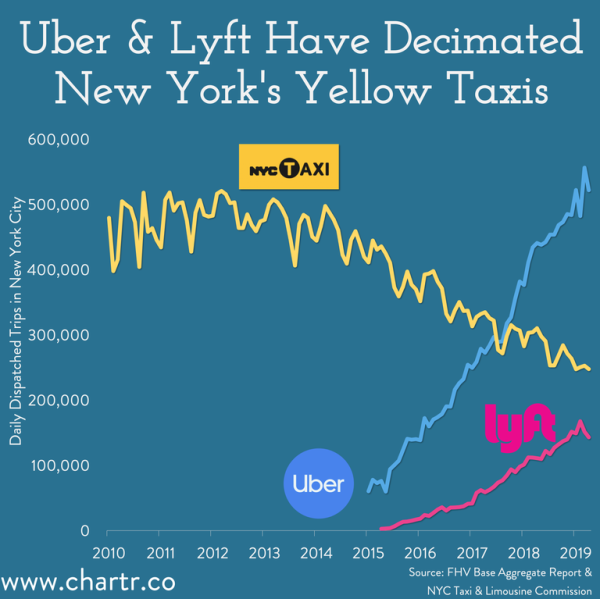
The Taxi industry had been ready for disruption way before Uber came along, yet, Uber may have mismanaged their opportunity. Taxis now have a chance to innovate back.
To run a taxi in New York you need a medallion. There are approximately 13.5 thousand medallions in NYC. In 2013, prices peaked at over 1.3 million dollars for a single medallion.
The medallion system has been broken for a long time. NYC taxis, in particular, were corrupt and the prices of medallions were artificially inflated by Bloomberg and de Blasio, and built on a debt bubble.
Taxis offered mediocre service, high rates due to artificial caps/greed, and often didn't take credit cards.
They didn't adapt and got disrupted. It's an age-old tale. The same tale as Blockbuster or Kodak; companies thinking linearly in an age of exponential change.
Taxi agencies had the infrastructure to edge ridesharing out and adopt friendlier policies but were slow to adopt the apps and convenience that modeled ridesharing.
It's clear that there's an increased demand for rides. Increased demand is likely caused by access in places that didn't previously have enough demand for a full taxi-service. Ridesharing means you can have drivers in small towns, rural areas, etc. Almost all the new demand is being monopolized by ridesharing.
Should it be, though?
Many would argue Uber's model isn't sustainable; neither are many of these gig-based companies like DoorDash. Uber has a product almost everyone uses, no inventory, very little staff, and despite "winning" the race, it lost $370 million in 2018 and $4.5 billion in 2017.
They gained market share by offering lower prices (even at a loss). They also incentivized an army of drivers to join based on flexible hours and side-income.
The road to profitability for these companies is uncertain.
Uber's low prices got it here, but prices have slowly raised, and AB5 in California has passed, though Uber is claiming exemption – it's likely their prices will jump again if forced to comply.
Rideshare companies are trying to convince workers that hour flexibility is worth the non-employee status, but I don't think that has any real basis. Gig workers can't unionize, have little labor protection and don't receive benefits.
The industry is in a period of massive disruption – but taxies have a chance to fight back. As the gig economy becomes regulated, the already defined system may regain an edge.
In the game of disruption, Uber was shortsighted. In the game of knowing their customers, Taxis were shortsighted.
Will taxies see a resurgence as Uber inevitably hikes up rates? Will autonomous fleets put drivers out of business as they will for long-haul freight?
When your doctor tells you that you are fat, it is easy to discount (because you pay them to tell you that). When your massage therapist tells you that you are getting fat, you've got to listen (because they're trying to be nice to get a better tip).
Well, for the past two months, I've been getting back into fitness.
I used to be a competitive athlete. In the past, for me, exercise was about gaining an edge and competing better. In a sense, that is still true (just on a different field). Now, I work out to stay healthy, fit, and vital while managing the challenges of running a company, navigating an overbooked calendar, and traveling every week.
This is about focusing on the right things so you can best measure progress.
Normalizing your habits and picking the right metrics isn't just a habit for the gym. It's a habit you should pick up in life. If you don't set the right measuring stick you'll always be unhappy or underperform.
Plan forward – but measure backward … you have to make sure you're not so focused on the horizon that you don't track what you've accomplished.
Normalizing the result makes this easier and better.
In running, for example, it is the time it takes me to finish one mile, while never going above 170 heartbeats per minute.
Meanwhile, in trading, we do this by comparing different opportunities based on a constant risk level (for example, the expected return for the next day of $1M, assuming a 2% maximum drawdown). It doesn't matter what market we trade, or how many trades the system makes … we can make a fair comparison and get better insights about performance.
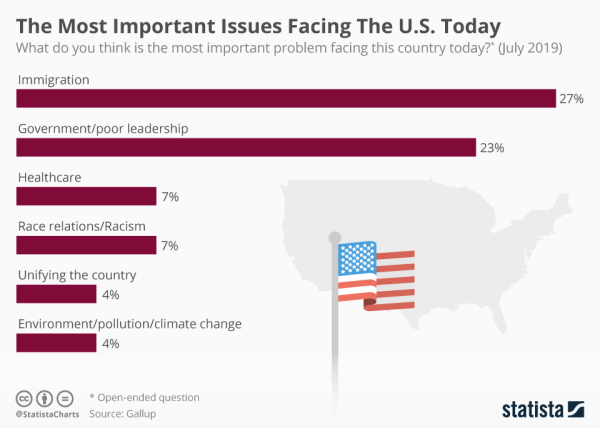
In July, immigration topped the list, presumably by people on one side of the political spectrum, followed by the government (likely by people on the other side of the spectrum).
Surprisingly to me, the economy and the trade war were nowhere to be found.
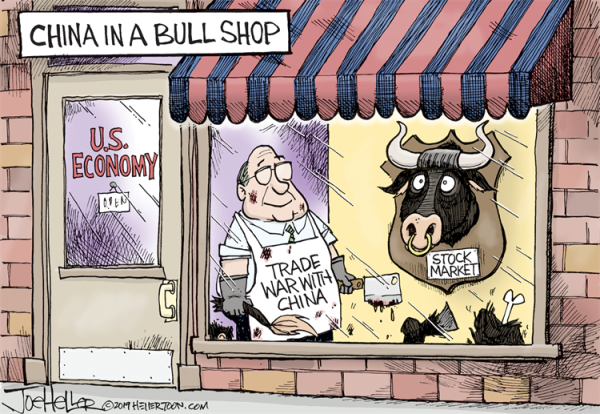
Whether or not we have to worry, they seem fairly germane issues. I started writing an article on yield curves and the fear of recession before realizing our Chief Investment Officer, John DeTore, was already writing his own letter on it. So, I'll deal with some of the surrounding issues here.
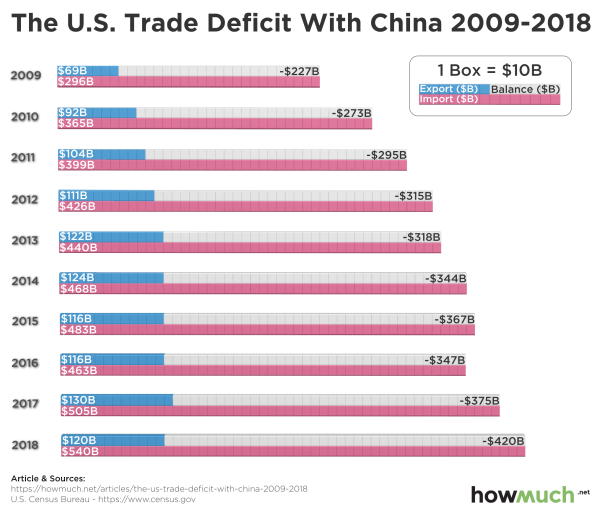
To start, the U.S. imports nearly 4.5x what it exports to China.
While the USA's GDP is the highest globally, China is gaining quickly.
Meanwhile, China is still the biggest holder of U.S. debt – and is currently allowing the Yuan to weaken to try and make its products more competitive and offset tariffs.
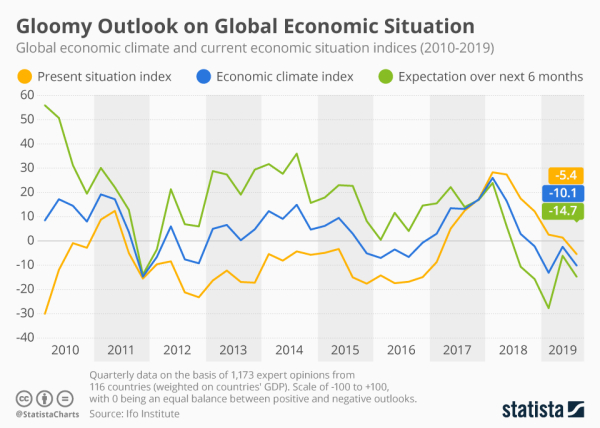
It feels like we're losing some ground. But, everybody seems to feel that right now. The next chart shows that sentiment about the economic situation has been globally gloomy.
Everything seems different, yet everything seems the same. Markets tend to climb a wall of worry before falling off a cliff … and then repeating the cycle.
Trends continue until broken.
Seems like a time for caution. But, historically, times like these seem to have great opportunities hidden in them.


 via
via