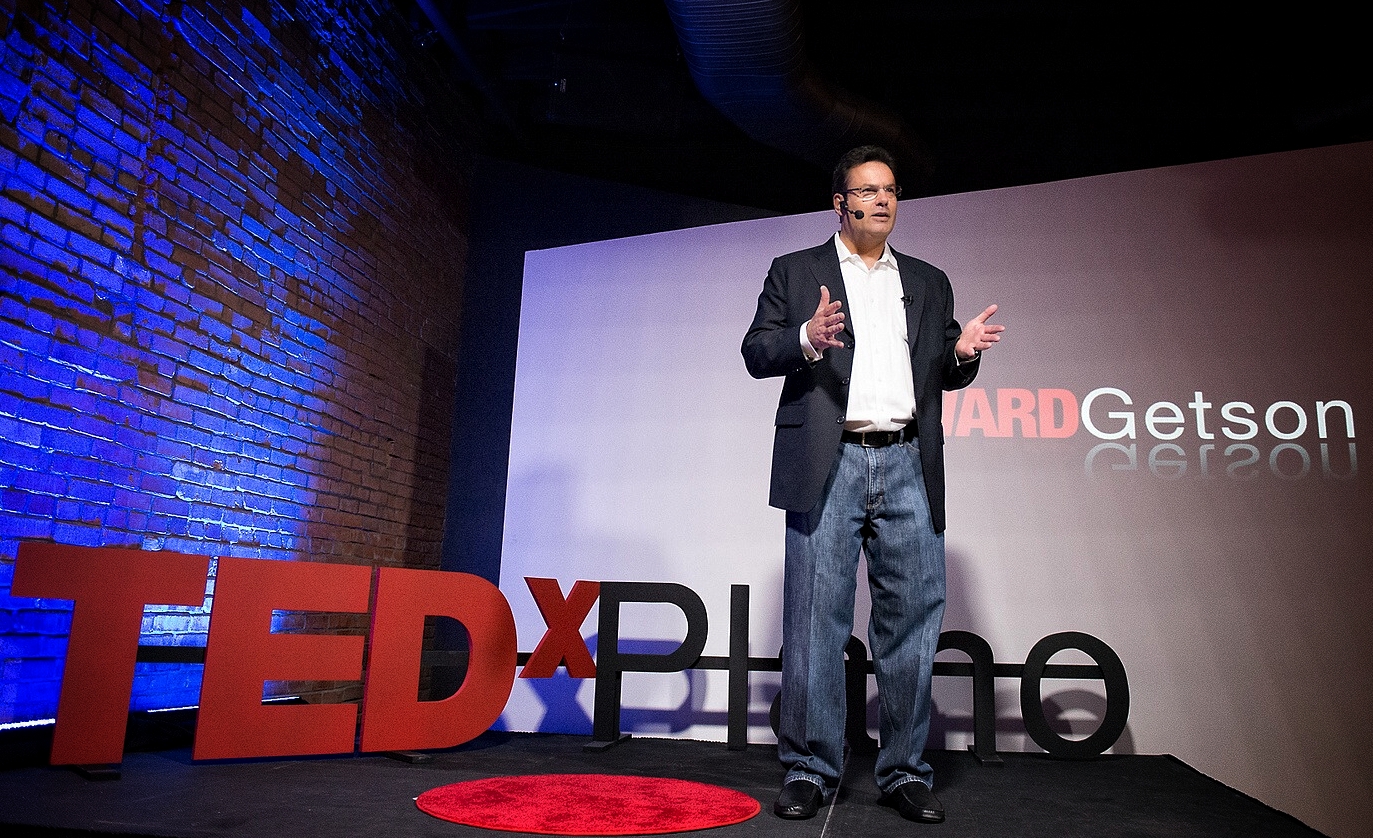
To use an athletic analogy, a normal speech and a TED Talk are totally different events (like a sprint vs the decathlon). It takes a surprisingly different set of skills and type of preparation to perform well.
I've given hundreds of presentations, and don't normally stress about them. I did for this one.
In most of my talks, there is very little "set in stone" to memorize. I tend to have a main topic (or theme), and each slide serves like a module … and I think, talk, interact, and improvise throughout the framework.
This works well for me because I tend to think in anecdotes that branch out from the main theme. That may be a great skill to have, but it's not one that helps you write a good TED Talk.
Why? Because, in contrast, a TED Talk is really about "one idea worth sharing".
In many respects, it's much harder to write and deliver a good 10 minutes about one idea, than it is to prepare to talk about a much broader topic for one hour.
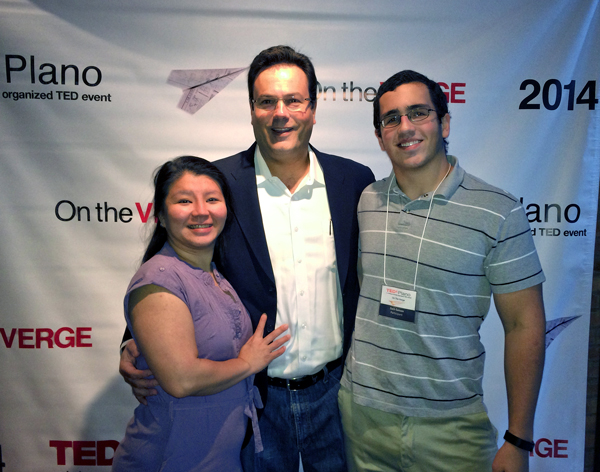
My wife, son, and me at the TEDx Plano event
The TEDx committee created a sense of formality with stringent standards and deadlines. My guess is that, during the planning and rehearsal process, they wanted uncomfortable speakers to provoke better speeches.
As a result, I prepared (and threw away) four separate talks before coming up with something that felt right and flowed properly.
Here are some bullet points that highlight lessons learned.
One of my early listeners coached me that the trick to a good TED Talk is that it is not about what you say, but rather about what they feel. In other words, for a TED Talk, evaluate the story and the particular wording choices based on the emotions they elicit in listeners.
One of the best ways to get a point across emotionally is to tell a story. And, if I couldn't remember it easily, it probably wasn't a story.
The speech committee and several early listeners strongly encouraged me to go with as few slides as possible. I started with 15 … I got it down to six … and I ended up with two (relying, instead, on the performance and connection rather than images and words).
They encouraged me to take almost everything about business (in general) or my business (specifically) out of the talk.
In fact, they kept encouraging me to make it simpler and more basic on almost every level. "Why did you say that?" I would answer; and they would say "Then say that."
I didn't realize how hard it was to make something simple.
Here are a few things you might not know about it.
1. The Rubik's Cube was invented by Erno Rubik, a Hungarian professor of architecture and design, who wanted a working model to help explain three-dimensional geometry to his students.
2. The toy was originally named the Magic Cube. In a recent interview with The New York Times, Rubik admitted that it was strange to refer to his creation as a "Rubik's cube" and says that he calls it "my cube." Rubik introduced the toy as the Magic Cube in Hungary, named for his theory of "magic cubology," but the Ideal Toy Corp. dubbed it the Rubik's cube in 1979.
3. All possible Rubik's cube combinations can be solved in 23 moves. No matter how the cube starts out, its colors can be perfectly rearranged in 23 or fewer steps. See here.
Toys aren't just for Kids.
CubeStormer 3, built from Lego mechanical and robotics parts and powered by a Samsung Galaxy S4, shattered the world record by solving a Rubik’s Cube in only 3.253 seconds – considerabley faster than the fastest human time of 5.55 seconds.
You can watch the robot break the world record yourself below:
The smartphone acts as the brain of the robot. It uses a custom app that uses the camera to make note of what the scrambled cube looks like, then sends instructions to eight Lego Mindstorm EV3 bricks, which then in turn manipulate the arms of the robot to move the cube.
“We knew CubeStormer 3 had the potential to beat the existing record but with the robot performing physical operations quicker than the human eye can see there’s always an element of risk,” Gilday said in a statement, “In the end, the hours we spent perfecting the robot and ensuring its motor and intelligence functions were properly synchronized paid off. Our big challenge now is working out if it’s possible to make it go even faster.”
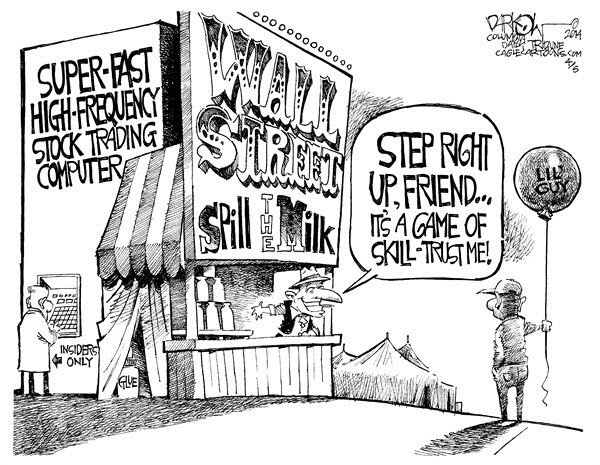
Trading pros may not think things are different. However, the public is reacting to suggestions that Wall Streets may be rigged against them.
In this cartoon, Darkow draws the Carnival Midway Game of Wall Street, "Spill the Milk" … which disguises the super-fast high-frequency stock trading center for insiders only.
The Carny beckons to the 'Little Guy': "Step right up, friend… It's a game of skill. Trust Me!".
This kind of public sentiment often triggers regulatory scrutiny … which, in turn, triggers new games of 'skill'.
Here are some of the posts that caught my eye. Hope you find something interesting.
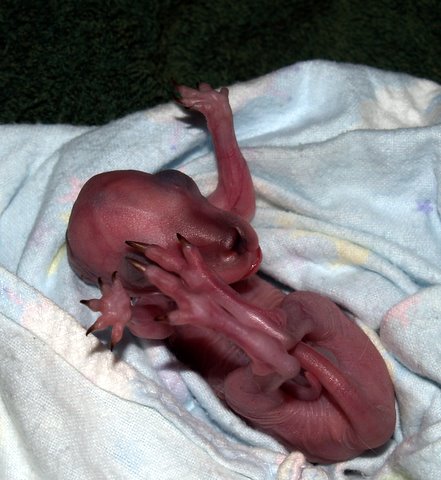
Scientists at Liverpool's John Moore University have successfully cloned a dinosaur, a spokesman from the university said yesterday.
The dinosaur, a baby Apatosaurus nicknamed “Spot,” is currently being incubated at the University's College of Veterinary Medicine.
The scientists extracted DNA from preserved Apatosaurus fossils, which were on display at the university’s museum of natural science. Once the DNA was harvested, scientists injected it into a fertile ostrich womb.
“Ostriches share a lot of genetic traits with dinosaurs,” said Dr. Gerrard Jones, a biology professor at LJMU and the project’s leading scientist. “Their eggshell microstructures are almost identical to those of the Apatosaurus. That’s why the cloning worked so perfectly.”
Those in the scientific community say the dinosaur cloning – the first ever of its kind – is a milestone for genetic engineering.
“I used to think this kind of thing could only happen in the movies,” said Dr. Gemma Sheridan, a LJMU chemistry professor. “But we’re making it happen right here in our lab. It’s astounding.”
The cloning attracted the attention of a wide variety of animal rights activists and religious groups. They claim that animal cloning is unethical and immoral.
PETA President Craig Farmer criticized the scientists for performing potentially life threatening threats on a new species.
“These scientists brought an animal from the Jurassic age back to life – just to watch it suffer!” he said.
But Dr. Sheridan doesn’t seem to be bothered by the activists’ quibbling. She says that the opportunities afforded by dinosaur cloning are endless.
Within ten years, we could repopulate the world with dinosaurs,” she said.
As of press time, the dinosaur is in stable condition. Scientists plan to run more tests on him today.