During the Robinhood & Gamestop debacle, I wrote an article about r/WallStreetBets where I essentially said that most of the retail investors that frequent the site don't know what they're doing, but there is the occasional real post with strong research you would see at a real firm.
As an example of good research done by the subreddit, here's a link to a post where a user (nobjos) analyzed 66,000+ buy and sell recommendations by financial analysts over the last 10 years to see if they had an edge. Spoiler: maybe, but only if you have sufficient AUM to justify the investment in their research.
There are also posts that show a clear misunderstanding of markets, and more jokes than quality posts, but I saw a great example of correlation ≠ causation.
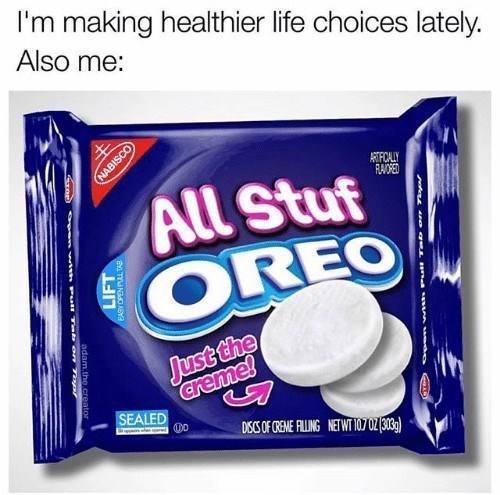
In the past I've posted about the Superbowl Indicator and the Big Mac Index, but what about Oreos?
The increasingly-depraved debuts of Oreos with more stuffing indicate unstable amounts of greed and leverage in the system, serving as an immediate indicator that the makings of a market crash are in place. Conversely, when the Oreo team reduces the amount of icing in their treats, markets tend to have great bull runs until once again society demands to push the boundaries of how much stuffing is possible.
1987: Big Stuf Oreo released. Black Monday, a 20% single-day crash and a following bear market.
1991: Mini Oreo introduced. Smaller icing ratios coincide with the 1991 Japanese asset price bubble, confirming the correlation works both ways and a reduction of Oreo icing may be a potential solution to preventing a future crash.
2011: Triple Double Oreo introduced. S&P drops 21% in a 5-month bear market
2015: Oreo Thins introduced. A complete lack of icing causes an unprecedented bull run in the S&P for years
2019: The Most Stuf Oreo briefly introduced. Pulled off the shelf before any major market damage could occur.
2021: The Most Stuf Oreo reintroduced. Market response: ???
It's surprisingly good due diligence, but also clearly just meant to be funny. It resonates because we crave order and look for signs that make markets seem a little bit more predictable.
The problem with randomness is that it can appear meaningful.
Wall Street is, unfortunately, inundated with theories that attempt to predict the performance of the stock market and the economy. The only difference between this and other theories is that we openly recognize the ridiculousness of this indicator.
More people than you would hope, or guess, attempt to forecast the market based on gut, ancient wisdom, and prayers.
While hope and prayer are good things … they aren’t good trading strategies.
A good reminder that even if you do the work, if you're looking at the wrong inputs, you'll get a bad answer.
Over the years, I've used a number of different assessment tests on myself and our team. It's a great way to help people better understand each other and the different forms of communication and problem-solving styles we use.
Here are several of the tests that have proven themselves time and again:
Kolbe: measures a person's instinctive method of problem-solving, and identifies the ways they will be most productive.
Predictive Index (PI) – helps you understand the way their traits manifest in relation to their true nature and their perceived role.
StrengthsFinder: helps people uncover their talents, so they can do more of those things each day.
On top of my normal tests, as a team of data scientists, it's always fun to see what's available.
For example, Ray Dalio recently created a personality assessment called PrinciplesYou that you can take for free. I've seen a number of articles claiming that the assessment is not only accurate, but that it also has impressive insights.
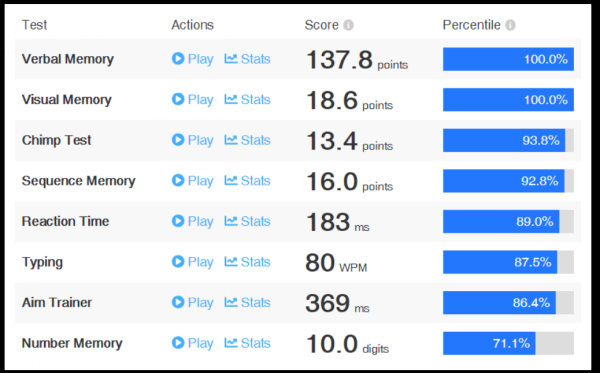
Less meaningful, but still fun, I also found a website that lets you test your performance on various reaction and memory tests. Unsure how scientific it is, but it was an interesting use of 10 minutes nonetheless.
In addition, here's an A.I. remastered World War II cartoon written by Dr. Seuss with a character named Private Snafu. It's one episode of a series of shorts that were banned post-WWII, and it's one of the more tame episodes. For an extra piece of trivia, the name of Private Snafu and his series of shorts was based on the military acronym for "Situation Normal: All F***ed Up".
While produced by Warner Bros., these shorts which were made for the US military did not have to go through the Production Code Administration and thus got away with raunchier humor, foul language, and what we would today categorize as racist propaganda against the Japanese and Germans.
While it's okay to acknowledge that we should be doing better today, I also think it's interesting and informative to watch older materials in the context and time period they were written.
Racism isn't okay, but if you don't know history, you're doomed to repeat it, and art can be discussed and enjoyed within that context as well.
Last week, Microsoft won a contract to provide the U.S. army augmented reality ("AR") headsets. It's worth up to $21.9 billion over 10 years, and they'll be providing over 120,000 AR headsets. Porn has been the leader in VR/AR innovation, but it's unsurprising that war is also being used to drive innovation. Human nature is human nature.
Virtual reality (VR) and augmented reality have been around for a long time, but there's been a massive boom in innovation and interest over the last 3-5 years. Not only are the technologies becoming more affordable, but the animation is becoming more realistic, headsets are becoming more portable and longer-lasting, and our physical and virtual realities are beginning to blend.
We're moving towards a world where technology envelops every aspect of our lives … figuratively and literally. It's funny because I felt the same way in the late 90s as cell phones and the internet proliferated. It feels quaint in comparison to the ubiquity of technology today. Even our toasters are smart now.
The following (still fictional) video is thought-provoking. What happens when these new technologies are used to influence behavior, decision-making, and even your identity?
Like many things, these technologies make possible awesome new capabilities (if used well) and horrific consequences (if abused or used in authoritarian ways).
Your doctor or nutritionist could help you make better choices for yourself. Your therapist or coach could help you perceive and respond differently to the challenges life presents you. Marketers could better influence your purchases. Employers could better monitor and measure your performance and productivity. And governments will not be far behind … doing what they do. It all toes the line between beneficial and creepy.
Because of where we are in the adoption curve, it is becoming more common to discuss bioethics and AI ethics. Likewise, as we accelerate into an age of exponential technologies and mindsets, be prepared for increasing scrutiny of the promise versus the peril of various new technologies and capabilities.
We live in interesting times, and only getting more interesting as it goes!
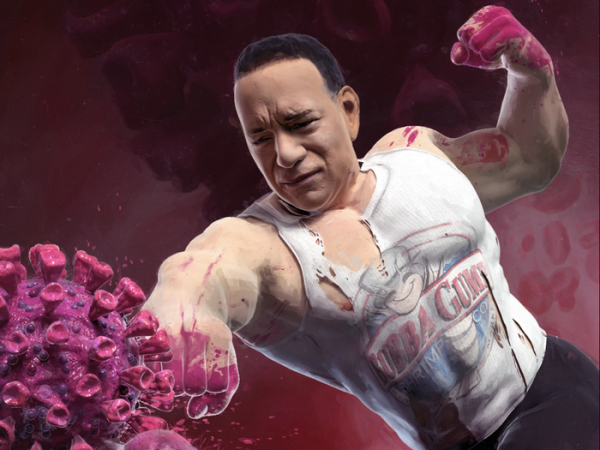
Yes, that is Tom Hanks wearing a Bubba Gump shirt punching Covid-19.
So, what is an NFT, and why are they becoming so popular?
NFTs stand for non-fungible tokens, which are unique digital assets on the blockchain. They've been around since 2014, but only recently blew up in popularity. They're essentially collectibles … but digital.
An NFT might be an image, a gif, a video, etc. But, because they're given a unique code on the blockchain, the ownership and validity of that item can be tracked.
Surprisingly, owning that NFT does not give you copyright of that digital asset. In fact, some images have been made into multiple tokens, and some tokens include multiple pieces of art which have been sold individually. The digital files themselves are still infinitely reproducible … but that code on the blockchain is not.
In a sense, that means that NFTs are the digital equivalent of an autographed item.
In the past, when I've talked about Blockchain, digital art wasn't something I actively considered. Blockchain made sense to me as a way of proving provenance and helping establish the authorship and authenticity of an object – but I assumed it would be high-end physical art.
At the end of the day, if someone will pay for it, then you can sell it. That's part of the beauty of Capitalism. Most collectibles don't make sense from a macroeconomic value sense. They're worth something because of their value to their collectors.
Think about Beanie Babies, or Pokemon Cards, or even more mainstream collectibles like Sports Memorabilia or Whiskey.
While I won't say that "I get" the appeal of NFTs … I get it. As the world becomes increasingly digital, "real" and "tangible" have new meanings.
Is something not "real" just because it's digital?
It reminds me of a painting by René Magritte called "The Treachery of Images." The painting shows an image of a tobacco pipe. Below it, Magritte painted, "Ceci n'est pas une pipe," which is French for "This is not a pipe."
The famous pipe. How people reproached me for it! And yet, could you stuff my pipe? No, it's just a representation, is it not? So if I had written on my picture "This is a pipe", I'd have been lying! — René Magritte
If you're still a little lost, SNL had a funny skit last night with an NFT rap song. Enjoy.
Last night was the first night of Passover, a family-centric holiday that recounts the biblical story of the Exodus of the ancient Israelites from Egypt into the Promised Land. For me, it's a reminder to appreciate what we have – and how we stand on the shoulders of those who came before us.
One of the memorable phrases from Exodus is when Moses says "Let my people go!" For generations, people assumed he was talking to the Pharoh about his people's freedom. For modern Jews, after a week of eating clogging matzoh, matzoh balls, and even fried matzoh … for many Jews "Let my people go" takes on a different meaning.
A friend asked me what part of the matzoh do the balls come from? I don't know … but I hope the matzoh ball fairy brought you some good ones.
Apparently (according to my youngest son), Sea Shanties are en vogue with today's youth. So, here's a pirate Passover song.
For Jews, a notable part of the ritual dinner is naming each of the 10 plagues that rained over Egypt and saying "never again".
Perhaps, this year, COVID-19 gets added to the list?
Just like the Jews making it through slavery, the plagues, and 40 years wandering through the wilderness and desert before entering the Promised Land … We are approaching the post-COVID promised land after a year of being stuck inside.
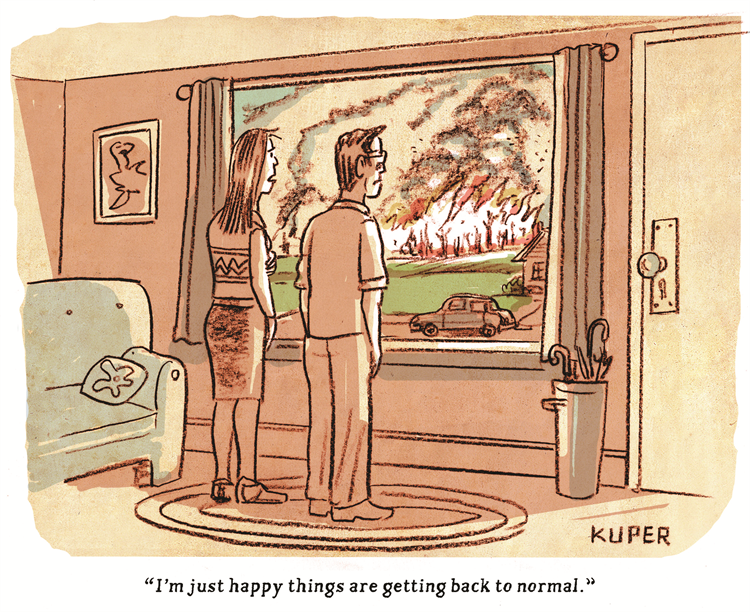
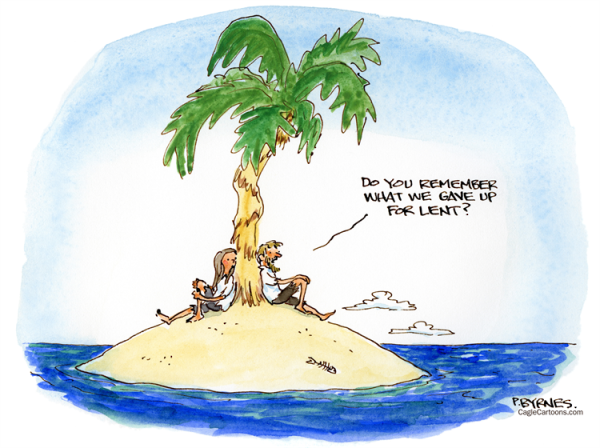
With the coming of spring, the re-opening of the world, and the reminders from the stories of Exodus and Easter - it's a great time to do a mental and physical "spring cleaning". Mine your experiences for the things you want to keep doing (or continue not doing) as things go back to "normal".
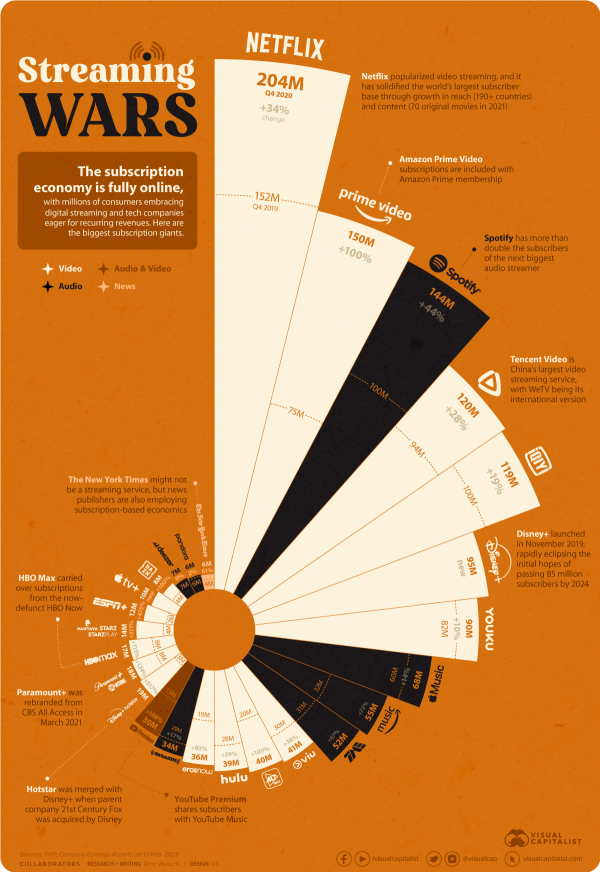
I enjoyed the chart, and had a couple of different takeaways:
Many companies tried to capitalize on the streaming wave by launching half-baked streaming services, but it's clear that the pioneers are still extending their lead on the fast followers.
Despite Netflix already being the industry leader, they saw a 34% increase in 2020.
China's largest provider – Tencent Video – only has 120M users, which is about 8% of China's population. In contrast, Netflix has 74M US users, which is about 23% of the population.
The New York times is the only News subscription source big enough to make the list, yet it's at the very bottom with 6M users. Though, it did see a 61% increase in 2020.
Disney+ grew 95M in its inaugural year, which is a credit to the brand recognition Disney holds.
Interesting stuff and large numbers!
How will the world re-opening impact those numbers? How about 5 years from now? What do you think?
Will virtual reality and augmented reality start to impact these numbers?
With that much money and on the line, I expect this to remain an industry segment primed for innovation, growth … and a few surprises.

 via
via