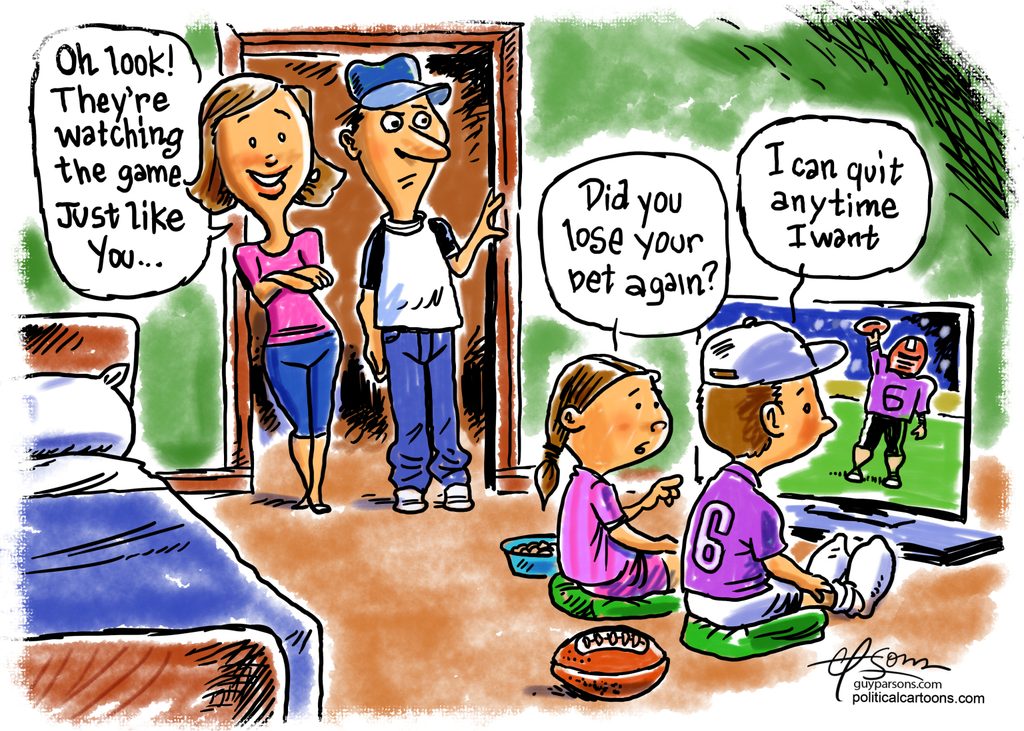
There was a time when gambling came with a certain social stigma. Casinos occupied their own corner of the cultural imagination, bookies operated behind closed doors, and betting was something many people did quietly, if at all. Gambling was associated with vice, desperation, or the occasional reckless weekend in Las Vegas (or the worst of the daytraders). You rarely heard of people gambling between meetings, while watching TV, or while scrolling through your phone on the couch.
Somewhere along the way, that changed. Gambling didn’t just become more accessible. It became cool, frictionless, and increasingly indistinguishable from ordinary entertainment.
A recent Visual Capitalist ranking of online gambling by country offers a glimpse of how thoroughly the habit has spread.
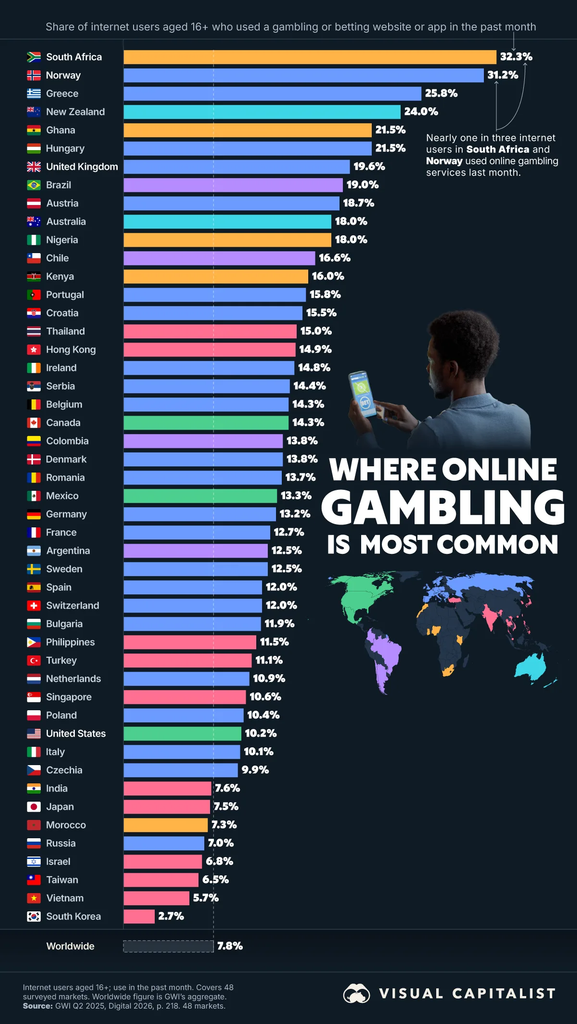
Based on second-quarter 2025 survey data, 19.6% of internet users aged 16 and older in the United Kingdom visited an online gambling or betting platform in the previous month. In Australia, the figure was 18%. In the United States, it was 10.2%. South Africa and Norway topped the ranking, at 32.3% and 31.2%, respectively. These figures measure participation, not the amount wagered, but they point to a world in which online betting has become a routine part of life for millions.
The transformation is especially striking in America, where the smartphone has made gambling possible almost anywhere, at almost any time. Since the Supreme Court cleared the way for states to legalize sports betting in 2018, betting companies have worked to make wagering feel less like a trip to a casino and more like an extension of being a sports fan. Odds are embedded in broadcasts. Promotions arrive on phones. Betting slips sit alongside box scores, fantasy lineups, and social feeds.
And then there are the platforms that complicate the definition of gambling itself.
Stake has built a global brand around online casino games and sports betting, wrapped in the aesthetics of internet culture, livestreaming, and influencer entertainment. Underdog, by contrast, has built its identity around fantasy sports and related contests, including products whose legal classification depends on their structure and jurisdiction. Other players include FanDuel, DraftKings, ReBet, and more. They are not identical businesses, and their products do not all fall under the same legal rules. But they illustrate a broader shift: wagering can be packaged as gaming, competition, skill, community, or financial opportunity, rather than simply gambling.
Gambling has been rebranded as gaming … similarly, speculative trading has increasingly been rebranded as financial empowerment. Robinhood built confetti animations and push notifications into options trades — the same dopamine loop that keeps someone pulling a slot machine lever (it later pulled the confetti after regulators pushed back). Both are accessible through apps, wrapped in slick interfaces, and marketed around the possibility of making money.
While trading can (and should) use technology, research, valuation, risk management, and disciplined strategies, accessibility has made it easier to treat it flippantly.
The Stories You Tell Become Real
The language matters. A bet can become a fantasy contest. A wager can become a prediction. Risk can be presented as a game of skill. The terminology may reflect genuine differences in how products work and how laws classify them. Still, it can also soften the cultural associations that once came with putting money on an uncertain outcome. The experience is increasingly gamified; the financial risk remains.
Gambling’s great rebranding is that it no longer needs to look or seem like gambling.
The irony is that the normalization of betting may be creating the conditions for a new kind of stigma. When wagering was less accessible, the risks were easier to avoid. Today, the same technology that makes betting convenient can make it continuous. And when gambling becomes woven into the entertainment itself, the boundary between enjoying a game and risking money on it begins to blur.
Public sentiment about gambling is still mixed. A 2025 Pew Research Center survey found that 43% of U.S. adults considered the legalization of sports betting in much of the country a bad thing for society, up from 34% in 2022. The share who said it was bad for sports also increased, from 33% to 40%. The industry is becoming more visible, but so are concerns about its effects.
Will the pendulum swing back?
History suggests that cultural acceptance is rarely permanent, particularly when the consequences of a newly normalized behavior become harder to ignore. A backlash need not mean a return to outright prohibition. It could take the form of tighter advertising restrictions, limits on promotional incentives, greater scrutiny of influencer partnerships, or renewed pressure to separate sports coverage from betting marketing. It could also be a quieter cultural shift, in which people begin to see ubiquitous wagering less as harmless fun and more as an industry competing for their attention and money.
The counterargument is that gambling has always adapted. Lotteries, casinos, horse racing, and sports betting have survived decades of moral disapproval by changing their presentation and finding new audiences. Today’s platforms have powerful incentives to keep betting socially acceptable, and many customers regard it as a legitimate form of entertainment when practiced within their means.
Perhaps the pendulum won’t swing all the way back. Perhaps gambling will remain legal and mainstream while becoming less culturally fashionable, much as other industries have learned that widespread participation does not guarantee public approval.
But the most interesting question is whether a generation raised to think of betting as just another feature of entertainment will eventually reconsider that assumption. When every game offers a wager, every prediction has a price, and every spare moment presents an opportunity to play, what happens when people begin to feel that the house has followed them everywhere?