September 6, 2026

  • Don’t Do It … The Fall of Nike?

    For decades, Nike’s slogan was one of the world’s most recognizable: Just Do It.

    In November of 2021, it was worth a staggering $280B. Today, it’s down to $57B (a 78% decline) and is set to be removed from the S&P 100 on September 21. Not the end of the world for the market behemoth, but certainly an ominous bellwether.
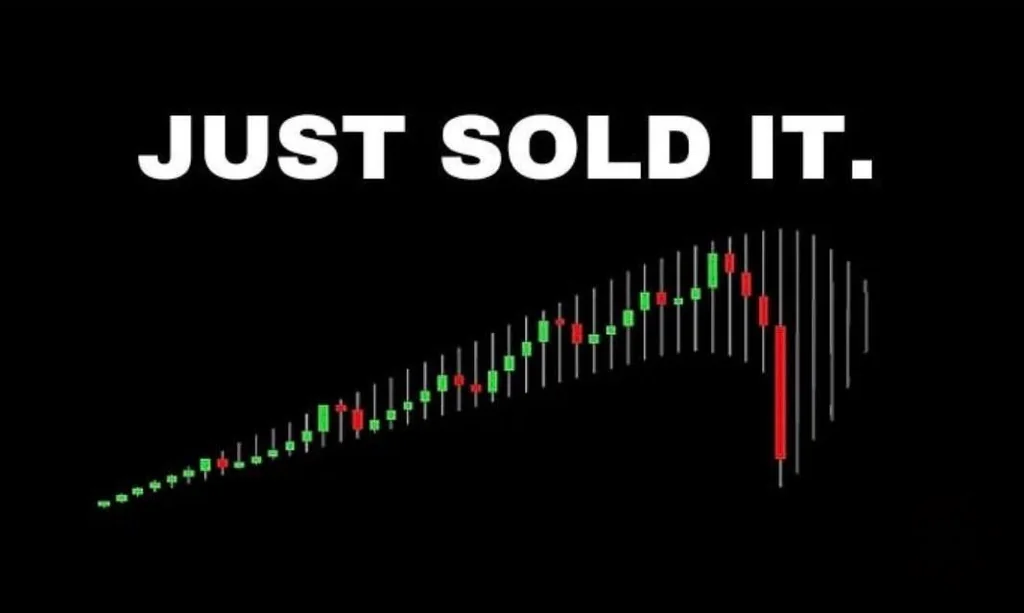
    via reddit

    After being the face of sports, and certainly basketball, for decades, Nike decided to try something new …

    It pulled back from retailers.

    It pushed consumers toward direct-to-consumer channels. It became obsessed with digital data, memberships, and measurable marketing. And in the process, it made a classic mistake: confusing efficiency with relevance.

    More importantly, it forgot why people bought it in the first place.

    Don’t Lose Sight Of The Prize

    Companies often forget a simple business principle when things are going well: keep the main thing the main thing. The world is always full of flashy new strategies, technologies, and trends promising to reinvent how business is done. But you can’t get so focused on chasing the new thing that you lose sight of what you’re really chasing.

    Kodak didn’t lose because photography disappeared. RadioShack didn’t lose because people stopped buying electronics. Both lost relevance as the world changed around them and they failed to protect—or evolve—what originally made them valuable. Kodak was in the business of making memories, not selling film. Radioshack was in the business of being an expert source, not selling niche tech.

    Nike faces a similar risk. Data, DTC, and digital optimization are useful tools, but they were never supposed to become the product. The main thing was always their brand identity … not just making people want to wear Nike, but making them want to wear it while performing. Customers wanted to feel like high-performance athletes, like they could be the next Michael Jordan or Tiger Woods.

    When companies forget what made them great in the first place, they can spend years optimizing themselves right into irrelevance.

    Nike didn’t disappear overnight (and it’s not dead yet)… but it’s certainly much easier to miss.

    Just Do … Something Else

    When Nike pulled products from stores, competitors happily filled the shelves. When Nike shifted its focus toward data and retention, smaller brands captured attention and culture. On, Hoka, and others didn’t just gain distribution—they gained an opportunity to become part of people’s identities.

    For decades, Nike was more than a shoe company. The swoosh meant something. It represented athletes, ambition, rebellion, and culture. But as Nike focused inward—optimizing its own channels and selling more efficiently to people already in its ecosystem—it left more room for consumers to discover and identify with something else.

    And Nike made an even more fundamental strategic mistake, that every sports franchise knows not to make.

    Don’t get caught up in your opponent’s pace. Play your game.

    Nike had spent decades winning a game almost no one else could play: building one of the world’s most powerful brands through culture, athletes, storytelling, and ubiquity, and pouring ridiculous money into the intangibles because everyone already knew the name.

    Then it stepped onto the field with its competitors and started playing their game.

    DTC optimization. Digital acquisition. Customer data. Efficient supply chains. Targeted retention.

    The problem is that this is exactly the kind of game smaller, faster, more lightweight companies are built to play. They can move faster. Experiment faster. Pivot faster. While Nike was trying to keep up, its competitors were doing what competitors are supposed to do: finding openings and taking advantage of them.

    Choose A Winning Game

    The lesson isn’t that DTC is bad. It’s that distribution isn’t just about sales. Retailers create visibility. Marketing creates cultural relevance. And sometimes the hardest-to-measure things are the ones that matter most.

    Nike built one of the greatest brands in history by being everywhere athletes were—and inspiring people who weren’t athletes yet.

    Then it tried to optimize the magic.

    Don’t do it.
  • Tech Adoption 101 … Making Tech Work For You

    I often say, Standing still is moving backward,” and You’re either growing or dying.”

    So when I hear people resist new technologies, I can’t help but cringe a little. Smart people don’t avoid innovation and new technologies — they find ways to harness them.

    On the other hand, we’ve certainly seen countless businesses get so distracted by innovation that they lose sight of what they’re supposed to be optimizing for.

    With Nike getting delisted from the S&P 100, I thought it was worth a short revisit. For a more comprehensive article, check this out. While these frameworks focus on technology, you can replace the word technology with anything, e.g., data, the internet, new laws, etc.

    Step 1: Start With Why

    Before you can get the right answers, you have to ask the right questions.

    Simon Sinek popularized a concept called “Start with Why.” His 2009 Ted Talk “How Great Leaders Inspire Action,” which remains one of the most-viewed TED Talks ever, with almost 70 million views.

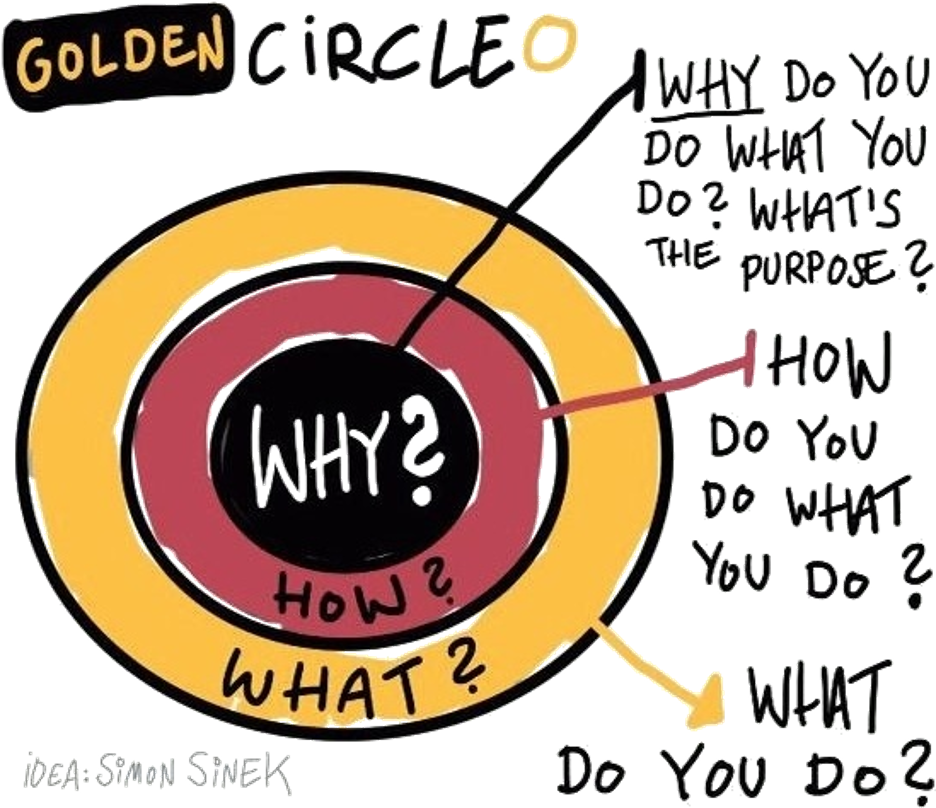
    This talk introduced his core framework: The Golden Circle, the concept that catapulted him to fame. It is a simple but powerful model for understanding why some leaders and organizations inspire while others don’t. It consists of three concentric circles, like a bullseye. At the center is Why, the middle ring is How, and the outermost ring is What.

    When most people and organizations start trying to innovate to keep up, they start with the outermost circle first, and they lose sight of the innermost circle.

    Why Start With Why

    Here’s an analogy: Think of a magnet. The strongest force comes from its core. Similarly, in leadership and business, the Why is your core—it’s what attracts people to you. It’s not just about selling a product; it’s about sharing a belief or vision that resonates emotionally with others.

    For example:

    • Apple doesn’t just sell computers (What). They believe in challenging the status quo and thinking differently (Why). Their How—innovative design and user-friendly technology—flows naturally from this belief.
    • Martin Luther King Jr. didn’t say, “I have a plan.” He said, “I have a dream.” His Why inspired millions because it connected with their values and emotions.

    When new opportunities arise, filter whether they’re a step in the right direction through your “why”.

    Pragmatically, your why is also your differentiator. It’s what makes your business unique, which makes it part of your moat… and you have to protect your moat.

    Step 2: Adapting to Technology the Right Way

    It’s similar to Maslow’s Hierarchy of Needs: you have to address things like food and shelter before you can tackle higher-level needs like affiliation or self-actualization. 

    The Improve phase is crucial because if you don’t pass this stage, you don’t get to the stuff beyond it. Said simply, the first stage is about helping somebody do what they already do, just better. Doing this increases efficiency, effectiveness, or certainty … buying you time and space to focus on what comes next. It’s also a way to show you’re making progress in the right direction, increasing capabilities, and building confidence (the fuel you need to keep making progress). In this phase, you’re really still doing exactly what you were already doing … just better.

    Once people have tested the waters and seen results, they tend to jump straight to transformation, but that’s a mistake.

    Transform is the big, hairy, audacious goal that you want to make possible. It’s the mountain top you’re trying to climb. It’s helpful to know what that is. But when trying to climb the mountain, you still have to take the steps in front of you.

    The first step on the mountain is to innovateIt’s about what you could do, and what you should do – instead of what you’re already doing.

    Redefine is where you start climbing the mountain and adding new capabilities to your arsenal. You’re now at a stage where you can imagine a bigger future and grow your vision to match your new capabilities. In a sense, you’re playing the same game, but at a different level and with different expectations.

    When you finally make it to Transform, you are playing a new game (often on a different playing field), and you’re likely influencing not just your company but other companies. At this point, former competitors often approach you with ideas and resources, seeking to collaborate.

    Another distinction I make about transform is that it’s very different from change. Change is about bringing the past forward and hoping that minor adjustments yield desired outcomes. Transform is about committing to the outcome and accepting the fact that the process may change dramatically.

    Another key mistake entrepreneurs make is pivoting to something completely new. When you’re charting a path up a new mountain, you will find unstable ground or insurmountable peaks. At that point, many people give up and look for something new. They start wandering in different directions. That’s a lot of wasted movement.

    My rule at Capitalogix is “This … or something better.” When we hit a roadblock, we’re allowed to go around it, but only if it improves our current situation, expectations, or goals. 

    Playing The Right Game

    If you keep sight of your why, and you innovate with purpose and direction, you start to build a playbook for long-term success.

    Innovation becomes an exciting next step rather than a scary specter on the horizon.

    And, best of all, you start to compete only at your expertise, which makes every space a blue ocean.

    Nike risks making its brand a commodity instead of an identity because it’s starting to innovate in the wrong direction.

    It’s not enough to play with AI. That becomes a distraction.

    You need a roadmap and the discipline to follow it.