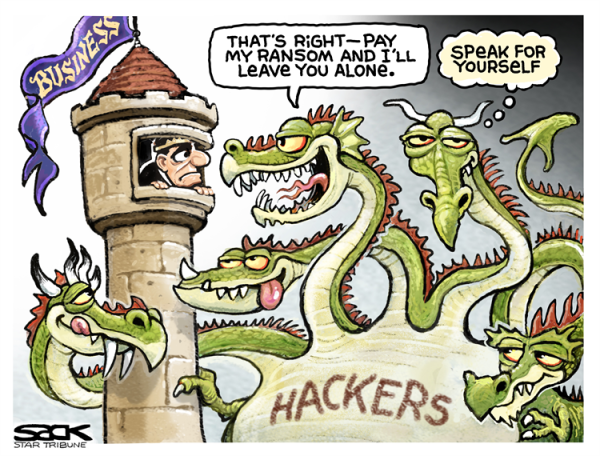
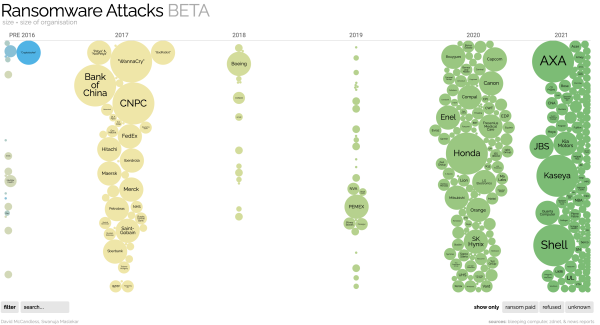
At the beginning of July, a ransomware attack on IT management company Kaseya's VSA systems by REvil, became big news after influencing over 1500 companies and millions of devices.
It took 19 days before they had a solution that they received from a "trusted third party." It's believed that Kaseya got the decryptor either from paying the ransom or from the US or Russian governments.
It's impossible to protect yourself completely, but there are a lot of simple things you can likely be doing better.
Use better passwords… Even better, don't even know them. You can't disclose what you don't know. Consequently, I recommend a password manager like LastPass or 1Password who can also suggest complex passwords for you.
Keep all of your software up to date (to avoid extra vulnerabilities)
Don't use public wifi if you can help it (and use a VPN if you can't)
Have a firewall on your computer and a backup of all your important data
Never share your personal information on an e-mail or a call that you did not initiate – if they legitimately need your information, you can call them back
Don't trust strangers on the internet (no, a Nigerian Prince does not want to send you money)
How many cybersecurity measures you take comes down to two simple questions … First, how much pain and hassle are you willing to deal with to protect your data? And, second, how much pain is a hacker willing to go through to get to your data?
Happiness is a complex concept comprised of positive emotions, lack of negative emotions, comfort, freedom, wealth, and more.
Regardless of how hard it is to quantify … humans strive for it.
Likewise, it is hard to imagine a well-balanced and objective "Happiness Report" because so much of the data required to compile it seems subjective and requires self-reporting.
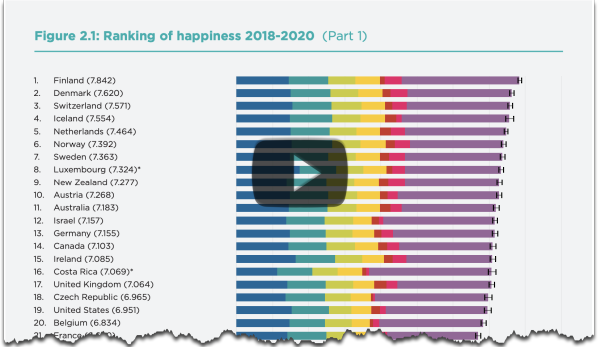
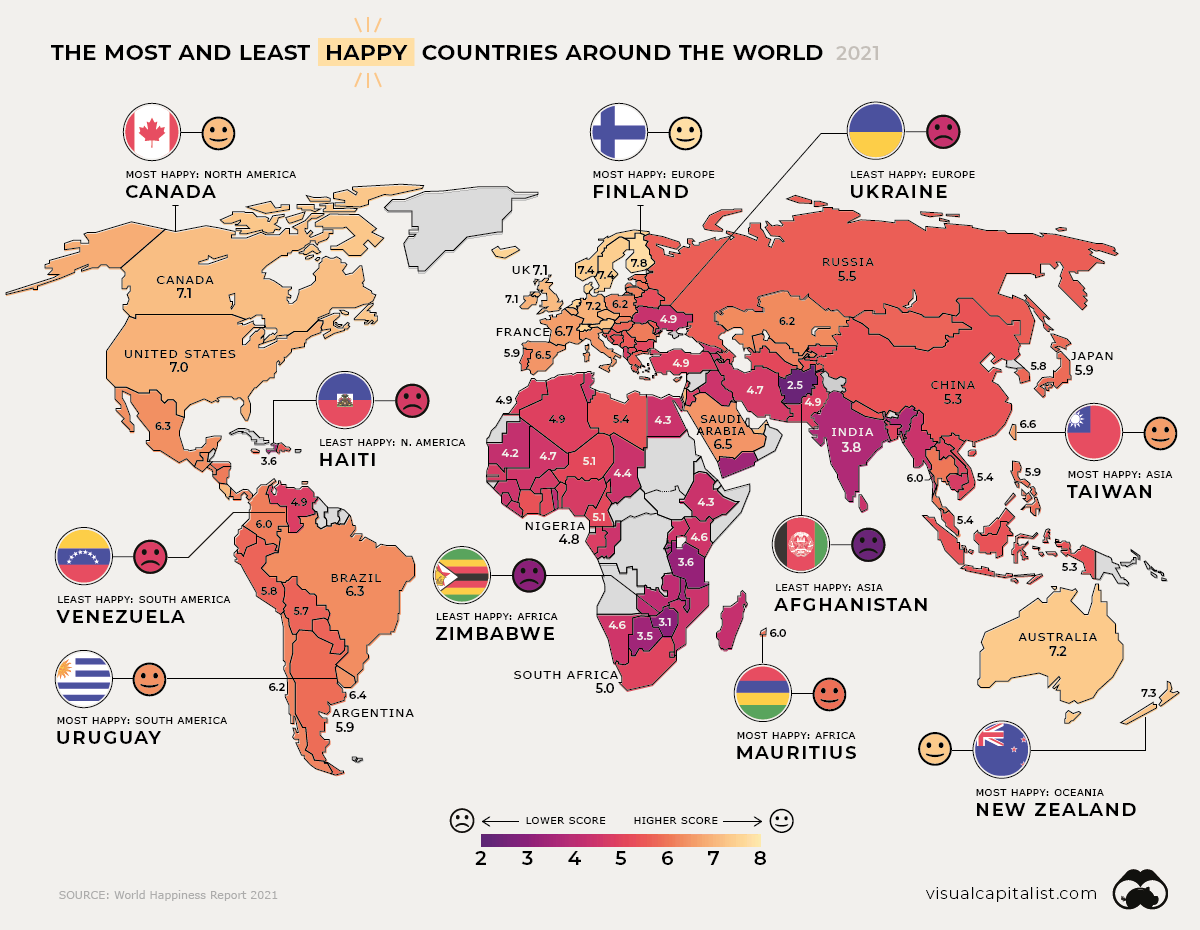
Nonetheless, the World Happiness Report does a good job with its annual look at quantifiable factors (like health, wealth, GDP, and life expectancy) and more intangible factors (like social support, generosity, emotions, and perceptions of local government and businesses). Click the image below to view the Report.
In their 2021 report, there was a significant focus on the effect of COVID-19 on happiness levels and mental health.
As you might expect, the pandemic caused a significant increase in negative emotions reported. Specifically, there was a significant increase in reports of worry and sadness across the ninety-five countries surveyed. Moreover, the decline in mental health was higher in groups that already had mental health problems – women, young people, and poorer people.
What's interesting about this is the resilience and bounce-back seen within the data. Considering the amount of disruption to households this past year, it's remarkable how stable the averages for countries have been.
Ultimately, globally, humans persevered in the face of economic insecurity, anxiety, and challenges to mental and physical health.
Despite the changes in emotions in 2020, overall life satisfaction rebounded quickly after March of 2020.
While there was a decrease in overall happiness, the relative balance in the face of such adversity may point towards the existence of a hedonic treadmill – or set point of happiness. I'm always impressed by what people can get used to, and how you can find pockets of joy in even the hardest times … or how people with everything they could ever ask for can still feel profound unhappiness.
It's oddly beautiful and a great reminder that happiness comes from within. Obviously, our environment and circumstances play a part. It's easier to be content with a roof over your head and a stable job. But, after a certain point, it's on us to create our realities.
While the Olympics are more controversial this year than normal, I think most of us can appreciate watching the best athletes performing at their peak. We can also laugh at the cardboard "anti-sex" beds they put in the Olympic Village.
With that, I thought I'd bring back a video I shot with Sébastien Toutant who won a gold medal at the most recent winter Olympics. I met Sébastien while leaving an F1 race in Montréal. I had a chance to talk to him about what makes him tick and where he sees his future.
It's a great case study in self-actualization after you've reached the top of your proverbial mountain top.
There are multiple factors at work in high performance and in keeping yourself passionate and motivated.
1. Find Your Unique Ability
"Snowboarding is my passion. I was doing it every day … Over time, It's my job, but it's still my passion. Every time I strap in on my board, I love it. You have to balance it. You have to keep the fun alive."
Unique Ability is where there's superior skill and it gives you energy, instead of taking energy. When you have to grind every day to become the best, and it's taking energy away from you, you're not going to stick with it.
When it lights you up, there's no limit to the hours or years you can commit to it.
2. Maintain Good Habits and Build New Skills
"Keep Snowboarding. Keep Training. Keep Trying New Tricks. The sport is moving so much, so you always have to improve your riding and invent new tricks. Push the sport to the next level."
Success is a war of attrition. You gain it every day through consistent habits and hard work. It's easy to talk the talk, but it's harder to set yourself up for success. Structure your life, and your environment in a way that makes success the default.
3. Stay Focused on the Future
"You have to make sacrifices to make it there. But it's worth it."
At my office, we practice the idea of "Measure Backwards, Plan Forwards".
To us that means it's important to take time to appreciate how far you've come … yet, it's also important to stay focused on what you can still accomplish.
Your edge is decaying faster than ever before. Competition is growing not just from your competitors but from technology as well. Stay focused on next.
By the way, there is one other lesson this encounter reminded me about – opportunity is all around you … waiting for you to notice and act! It would have been easy for me to filter out the "kid" standing behind me in a line after an event. Luck favors the prepared. Stay focused on what you want and keep your eyes, ears, and mind open for ways to get it!
Last week, we talked about the future of AI and the potential for AI to start taking over some jobs (freeing humans to raise their chins and do something better and more meaningful).
One of the key factors I talked about was "mindset." For example, consider whether you’re in a scarcity or abundance mindset? If you are in a scarcity mindset, that probably means you see life as a finite pie with only so many slices … and if someone else gets a big slice (or something new interrupts you getting your slice), you worry that you might not get what you deserve. On the other hand, an abundance mindset recognizes that there’s plenty out there for everybody, and if there’s no more pie, we can always create new pies (or something better).
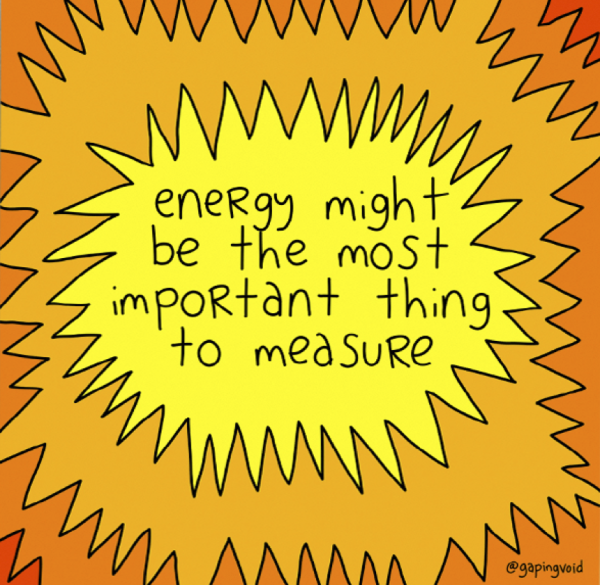
I have a picture in my conference room that says energy might be the most important thing to measure.
Yes, it means what it sounds like – but, for us, it also means more.
We use A.I. to trade. So, measuring performance is important. But so are all sorts of production, efficiency, and effectiveness measures.
There are hundreds of important metrics we track day-to-day. Energy impacts many of them (and absolutely affects your ability to respond to change).
Energy affects how you feel, what you do, and what you make things mean. Consequently, energy is an effective way to measure your values too.
We’ve seen numerous inflection points in the past with the introduction of electricity, and then the assembly line and the industrial revolution, with the internet, and now with AI.
There’s always disruption, and there’s always pain, but your mindset and energy can radically change what that means to you … and what you choose to do.
AI is coming. Disruption is coming! It's no longer simply possible; it's not even just probable; it is inevitable. With that said, what you make it mean and how you respond is up to you.
In a prior post, I shared a mindset scorecard I created at Genius Network.
Normally, Genius Network is private, and these recordings are for internal use only; but I asked permission to share my impromptu session with you.
Check it out. In the first 5 minutes, I introduce the scorecard concept. For the next 10 minutes, you'll get an extra look at the resulting group discussion.
Think of each comparison as a spectrum. They're not necessarily "one-or-the-other," but they can help identify where you are on the scale of "what to avoid" versus "what you want."
Blaming <—–> Encouraging
Insistent <—–> Inspirational
Fearful <—–> Abundant
Steadfast <—–> Curious
Clogging <—–> Cleansing
Resentful <—–> Grateful
Zero-Sum <—–> Relational
Small-Minded <—–> Visionary
These words mean something to me, but they may need tooling to work for you. Changing the names, the order of the comparisons, the number of comparisons, etc., can have a profound effect on the usefulness of this scorecard to you.
I encourage you to think about how you could use this scorecard and how you can bring attention to those people and actions that best embody the traits that are important to you or your business.
Identifying the words you want to embody and the person you want to be can help make you responsive to change and a better version of yourself.
In an interview with Tom Bilyeu (co-founder of Quest Nutrition), he addresses the issue of managing Millennials – and why they seem lazy, entitled, and unfocused.
via Inside Quest
Sinek points to four characteristics that help "create" this issue:
Parenting,
Technology,
Impatience, and
Environment.
Sinek suggests that this generation is a product of failed parenting strategies … being told they're special without effort, being told they can have anything they want, and being handed trophies for showing up.
Next, add technology to the mix.
Before millennials, interaction happened in person much more frequently … meaningful trust-based relationships were built with time and effort, and when you were at dinner with friends or watching a movie, you were living in the moment, not distracted by your phone.
For added irritation, next add impatience (which is a byproduct of instant gratification).
Why wait for amusement when it's a text away? You've got Netflix making video rental a thing of the past, Tinder making dating as easy as "swiping right" and Amazon making it so you don’t have to check out when you go to a store.
Is it any wonder that these kids have short attention spans? Now imagine the Gen Z kids forced into quarantine where their only companionship was online?
Now put those kids in an environment where they're forced to realize you can't rush success, and you can't force meaningful relationships. Where they have to put in the effort and stay focused for extended periods of time
It's a story that often doesn't have a happy ending.
I thought it would be fun to ask one of them what they thought about it … So I asked my son, Zachary. Here are his thoughts.
I was born in 1993. When I was in elementary school, I was already using a computer almost daily, and a lot of my education and entertainment was computer-centric.
As such, I am a textbook “Millennial.”
I use Snapchat too much, I often relax by playing games on my phone, and I am easily distracted. Because of that, I found this interview with Simon Sinek particularly interesting.
I’m lucky. My dad forced me to work hard and valued my efforts more than my results. So, while I'm constantly reminded that I'm lucky I'm not working 80-hour days (and being forced to get a haircut every week), I do feel as if I'm a step ahead of many of my peers.
I still find myself falling into a lot of the "traps" Sinek describes – I'm reliant on social media; I'm frustrated when my effort doesn't transfer into immediate impact; and I struggle to not take my phone out whenever there's not another stimulus keeping me occupied.
That being said, I do think the issue is bigger than millennials. It's not just our generation that takes their phones out at meetings and ignores who they're with for someone on their phone. If you pay attention, I'll bet you'll notice that you do it as well. To me, it seems more like a trapping of the era than of a generation.
The difference, I think, is that millennials spent their formative years in this environment. This does affect the way we see and interact with the world. But you can watch each generation chastise the youth for the same things as they get older.
"This new generation has no respect! They're too reliant on technology, and don't know how to do anything themselves! Lazy and entitled!
I'm positive I can find similar rhetoric levied against Generation X, Boomers, and more. There's always been resistance to new technologies and the belief that the new generation takes what they're blessed with for granted. I even catch myself judging Gen Z for the same things I remember being judged for as a teenager.
Will we ever measure up to your expectations? Perhaps not … because our generations approach the world the world so differently.
Nonetheless, we are still capable of greatness. We are still driven to pursue growth, to create new things, and to provide value to our communities. It's just that we are playing a different game and keeping score a little differently. 2020 brought a lot of that to the forefront of the conversation.
Understanding that, in and of itself, can help to close the gap. As we mature and become the main working force, as we become managers and leaders, I think you'll find that a lot of our failings were the symptoms of youth – and have dissipated with age.
There's plenty more I want to say, but I don't want to go on for too long. I'm happy to have a more in-depth conversation offline. You can e-mail me at [email protected] with any thoughts on the subject, any questions, or just to say hello.
While we all know that pop culture representations of AI aren't accurate – I'm still surprised how often I see people who are against Artificial Intelligence. It seems that many people are focus on science fiction's dystopian depictions of sentience and omniscience, while the reality is exciting (and much less scary).
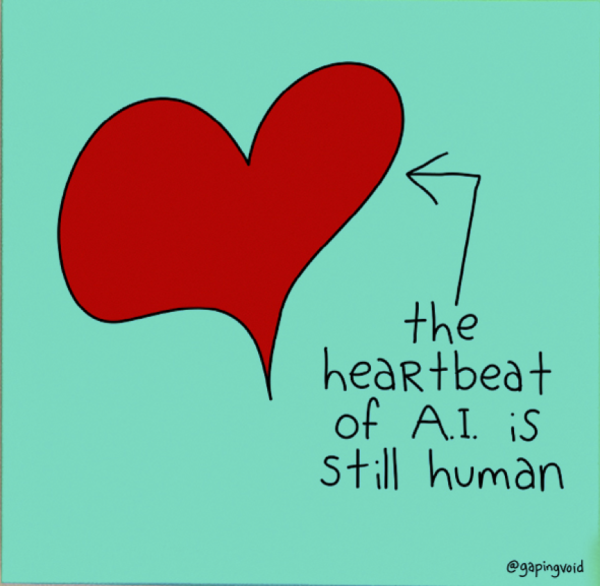
In my office, we use a lot of what seems like "futuristic" artificial intelligence approaches to understanding financial markets and enhancing decision-making. Most of my team are technical or data-science specialists that develop and drive the systems that create our systems. Despite the exponential growth of AI and its supporting technologies, I still believe the heart of AI is human.
Of course, I'm not sure how long that will be true. But I'd bet it remains true for the next 25 years.
The video below was shot in 2014 and gives a great perspective on how quickly automation, robots, and eventually autonomous robots, are becoming pervasive.
Automation used to mean big, bulky machines doing manual and repetitive work. Today, however, automation can land an aircraft, diagnose cancer, and trade. I'm fascinated by what is becoming possible … and how, even when the A.I. is little more than an elegant use of brute force, incredible results are becoming commonplace.
In the past, innovation created new industries or allowed increased scale … nonetheless, people are worried that the number of jobs the internet and Artificial Intelligence create isn't matchingthe number of jobs they're making obsolete.
Personally, I believe that freeing us to elevate our perspective and do more has always been a boon to society. Electricity put a lot of people out of work as well. Nonetheless, look what it made possible.
To date, human progress has been based on the division of labor. As our society progressed, our jobs have become increasingly specialized. Now, machines will be able to break down complex jobs into simple parts and complete them faster than we can.
So, yes, the same technology that's currently creating opportunities could eventually put you out of a job … but it also creates an opportunity for something new.
There's a lot of change coming, and that can be scary, but there's reason to be excited as well.
We live in a golden era of innovation, and we have longer life expectancies than ever before. Humans are immensely adaptable, and I'm sure we'll continue to grow to meet the challenges and opportunities we face.
The reality is, we've been working symbiotically with "machines" since the very beginning. Our definition of a "machine" simply continues to improve. It's fractal, and each time the technology we're adopting gets bigger, so does the eventual positive effect on day-to-day life.
AI adoption is a big step, but the positive effect it can have on our lives is astronomical.
You might imagine something based on pop culture references of virtual lifeforms with sentience and free will … but, at least for now, that's far from the truth.
Modern AI does many things and has many applications, but it's still relatively primitive. It works in the background, silently collecting vast amounts of data, and performs increasing amounts of work.
AI may not currently compare with the Star Trek character Data, yet it already is transforming our economy at warp speed. For a recent example, McDonald's is now doing a 10-store pilot replacing their human drive-thru attendants with AI.
Some current uses of AI and robotics are genuinely impressive. Here's a video taking you into "The Hive" a supermarket warehouse run by a "Hivemind" AI. With thousands of "bots" and various other forms of AI and technology, this will give you a glimpse of the future of AI and automation.
 via
via