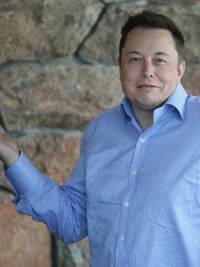
For the past 80~ years, John D. Rockefeller was the undisputed richest person in history, but now Elon Musk is giving him a run for his money with a $340 billion net worth.
Many historians estimate Rockefellers' inflation-adjusted net worth to be around $340B, which would tie them.
While this is fun to look at, realistically, it's hard to get accurate numbers for many of these people. Think how much land Genghis Khan held or that Augustus Caeser essentially owned an entire empire. The calculations of their wealth are very subjective, and records from ancient eras are very scarce.
It is, however, surprising to see someone amass such personal wealth in an era with much more competition.
Do you think someone will surpass that wealth soon?
It is possible. How and why? Because we live in interesting times!
Imagine owning 10% of the most profitable company in the world … now imagine selling your shares for $800 dollars.
You've now put yourself in the shoes of the little-known third co-founder of Apple, Ronald Wayne.
Crazy … but true.
You'd think that lack of foresight would be rarer – but people are often more focused on the risks and prior obligations instead of the potential. In fact, during Apple's early phases, HP and Atari both opted against investing for ownership.
When you ask people on their deathbed what they regret, their #1 answer is having the courage to live a life true to themselves – where they fulfilled their dreams and took chances.
No one wants to be a laggard, but I think, sometimes, we all find ourselves resisting change for a sense of comfort.
Seize Opportunity! Seize the Day! And have a nice week.
Freeing humans to do more has always been a boon to society. Electricity put a lot of people out of work … but, look what it made possible.
We'd be naive to think AI isn't going to influence the job market, but that doesn't mean you can't navigate that shift.
A Look At Industrial Revolutions
The Industrial Revolution has two phases: one material, the other social; one concerning the making of things, the other concerning the making of men. - Charles A. Beard
There are several turning points in our history where the world changed forever. Former paradigms and realities became relics of a bygone era.
Today, we're at another turning point.
Tomorrow's workforce will require different skills and face different challenges than we do today. You can consider this a Fourth Industrial Revolution. Compare today's changes to our previous industrial revolutions.
Third industrial revolution – The world wide web and computers connect the world together, heralding the digital age.
Each revolution shared multiple similarities. They were disruptive. They were centered on technological innovation. They created concatenating socio-cultural impact.
The fourth shares all the same hallmarks.
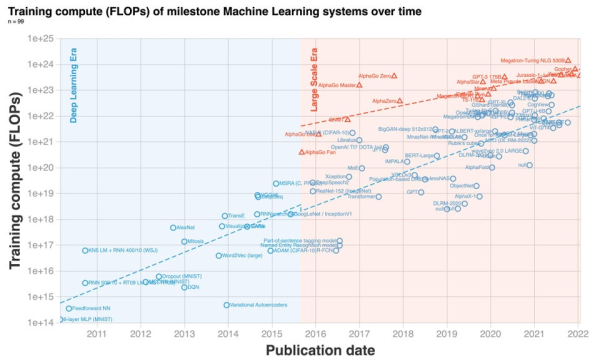
We're harnessing new technologies like AI, the IoT, renewable energy, and the blockchain. Automation will reach new levels in this revolution. But there also will be an explosion of new fields, new markets, and new necessary skillsets – it's going to impact the world as holistically as electricity did.
How will humans create value in an increasingly automated world?
I believe that, if managed well, the Fourth Industrial Revolution can bring a new cultural renaissance, which will make us feel part of something much larger than ourselves: a true global civilization. I believe the changes that will sweep through society can provide a more inclusive, sustainable and harmonious society. But it will not come easily. - Klaus Schwab
One of the distinctions I've recently made about the industrial revolutions is that for a long time, technology helped humans act like robots. Think about a plow and a farmer, or a seamstress and a sewing machine. After that, it helped robots try to act like humans, which you've seen more recently.
I believe we're at another inflection point, where new capabilities will free up humans to be more human and to pursue more of what they really want.
Robots can do many things, but they've yet to match the creativity and emotional insight of humanity. As automation spreads to more jobs, the need for management, creativity, and decision-making won't go anywhere … they may be bolstered by data analytics, but they won't disappear.
Our uniqueness and flexibility rightly protect our usefulness. AI and automation free us up to be our best selves and to explore new possibilities.
In 2017, I shot my first video with Alan Olsen. Alan is a wealth manager to the ultra-affluent. His American Dreams show is immensely popular with the High-Net-Worth demographic in Silicon Valley.
Alan's show is about finding your path in life, and what it takes to make businesses thrive through adversity and challenging times.
In my first video with him, we talked about defining a meaningful life. We started by talking about my career path from a young lawyer to spending over 25 years running tech companies … and the lessons learned along the way.
The main issue addressed during the video is how you can best get what you want as the world changes and forces like AI terraform the world and your role in it.
It's worth watching.
Ultimately, I believe AI is simply another vehicle freeing human nature. As AI does what humans used to … you have an opportunity to choose what to do with the freedom you get. Will you relax or lift your gaze to something better? The choice is yours.
Similarly, some will want to direct new AI capabilities towards things they want to monetize better. Others will want to weaponize AI. Still others will use it to spread peace and love.
You've seen it with nuclear power (and a host of other technological capabilities) … tools aren't good or bad in and of themselves – it is what people use those capabilities for that determines their impact.
I had someone ask me recently if I was scared of AI surpassing humans. My answer was that (essentially) it already has. Meaning, it already seems inevitable. The question is whether you will benefit from it or fight it? Regardless, it’s going to happen.
Comparatively, humans are slow, weak, and prone to bias. So, yes, AI is better than us at many things.
Until now, humans have been at the top of the food chain because of our intelligence … but I’d also argue it’s because of our intelligence in knowing that we’re not always the most intelligent or capable. We use the tools at our disposal. And there are a lot of great tools being created all around us.
So, how do you ride the wave of the future instead of being capsized by it?
As the world becomes more technical, and we have more tools, it can become overwhelming. Processing the opportunities in front of us today is tough, let alone the possibilities (or inevitabilities) of tomorrow.
Think how many companies have failed due to that inability … Radioshack couldn't understand a future where shopping was done online and Kodak didn't think digital cameras would replace good ol' film. Blockbuster couldn't foresee a future where people would want movies in their mailboxes, because "part of the joy is seeing all your options!" They didn't even make it long enough to see "Netflix and Chill" become a thing.
Change is constant. The wheels of innovation and commerce spin ever-faster (whether you're ready for it, or not).
As a practical matter, it means that you get to choose between the shorter-term pain of trying to keep up … or the longer-term pain of being left behind. Said a different way, you have to choose between chaos or nothing.
It is hard to keep up – and harder to stay ahead.
Personally, I went from being one of the youngest and most tech-savvy people in the room to a not-so-young person close to losing their early-adopter beanie. Sometimes it almost seems like my kids expect me to ask them to set my VCR so it stops flashing 12:00 AM all day.
But, luckily for you and I … you don’t actually have to do the tech itself. My company may not really do "rocket science", but it's pretty close. We use exponential technologies like high-performance computing, AI, and machine learning.
But, as we get "techier," I get less so … and my role gets less technical, over time, too. Fortunately, it helped me take a step back and see the bigger picture.
The Bigger Picture
While many things are changing around us, the secret is that some things never change.
My father said, not worrying about all the little details helped him see the bigger picture and focus on what was possible.
You don't have to focus on the technological details to predict its progress. Anticipating what people will need is a great predictor of what will get built. Because while technology changes, human nature doesn’t. That means predicting "what" is often easier than predicting "how'. Why? Because technology doesn't often look for a problem; rather, it is the response to one.
A medium is just a tool. And the tool is just a way to accomplish something more efficiently.
Kodak’s goal should have been to preserve memories – not to sell film. Blockbusters' goal should have been to get movies in homes – not to get people in their stores.
What’s the real goal of your life or your business, and what tools are going to help you do that most efficiently over the next 3-5 years? What do you need to create, and what do you need to destroy? History has many prior examples of Creative Destruction (and what gets left in the dust).
Much like Google's change to Alphabet, Facebook will become a subsidiary of the parent company, Meta. The change comes with a change in focus to the metaverse. Zuckerberg described it as "a set of virtual spaces where you can create and explore with other people who aren't in the same physical space as you." It seems like a focus on VR/AR, but also it seems like a distraction from all the recent bad publicity.
What do you think of the change?
Here are some of the posts that caught my eye. Hope you find something interesting.
It is hard to “predict” the future. Technically, that’s not true … It is easy to predict the future. What’s difficult is to predict the future accurately and consistently.
As we become better and more nuanced at predictive modeling, we look for ways to use technology to “know” things faster. Building dynamic and adaptive models based on discovery and learning lets you compound edges and improve your signal-to-noise ratio.
Another way to improve your predictions is to choose the “right things” to predict. For example, in general, I believe human nature is one of the easier things to predict because even as the world changes, humans remain remarkably consistent. Consequently, instead of predicting technology advances directly, it makes sense to predict the capabilities humans will desire and the likely constraints to getting them.
Here is a video that noted science fiction writer, Arthur C. Clarke, made in 1974. In it, he made some guesses about the future of technology. Pretty impressive!
The entrepreneurial journey is about making the impossible “possible”, the possible “likely”, the likely “inevitable”, and then making the inevitable happen!
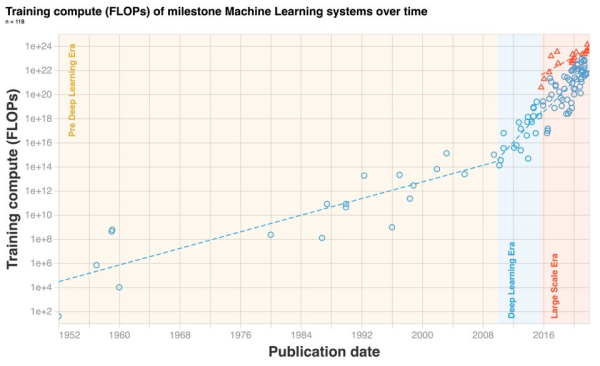
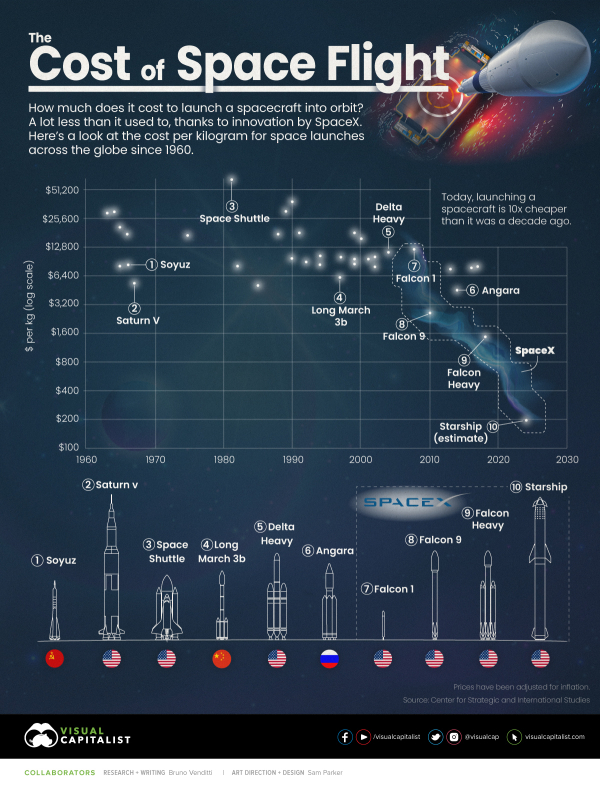
Many life-changing (or world-changing) technologies already exist. Which do you believe will have the biggest impacts? Here is a quick and dirty list: Artificial Intelligence, the Blockchain, Quantum Computing, Augmented Reality, Neuro-interfaces, the ability to read and write our genes, and printing organic material (like food or replacement organs).
There is a promise and a peril to each. Nonetheless, we are living in a golden age for exponential technologies that will change the face and nature of our lives (and perhaps life itself). Some of these technologies have become inevitabilities … but what they enable is virtually limitless.