Thoughts about the markets, automated trading algorithms, artificial intelligence, and lots of other stuff

  • How’d These 2022 Predictions Fair?

    As we brought in 2022, I asked the question:

    What's going to happen as a result of the continuing pandemic, inflation, interest rates, the ongoing supply chain issues, and the growing anxiety and unrest brewing underneath the surface of the new normal? In January, we'll get to see VC's predictions. Before that, what do you expect to happen in 2022? - How'd These 2021 Predictions Fair?

    I proceeded to share visualcapitalist's 2022 predictions

    6a00e5502e47b288330282e13fec75200b-600wi

    via visualcapitalist

    Well, there was undoubtedly increased volatility. 

    While the whole board isn't correct, there's a surprising amount of prediction accuracy. On some level, predictions benefit from being generally vague. Also, many of the predictions that may not seem as accurate "today" seemed more accurate at some point this year. For example, we heard a lot about NFTs in the first half of the year, and while Big Tech is currently laying off employees, there was massive growth this year. 

    What are you surprised they got right? In what areas were the predictions most off-base? Why?

    And, of course, what are your mega-trend predictions for 2023?

    Interesting stuff! 

  • What Year Is It?

    It is officially 2023 …  new year – and a new set of opportunities. 

    But that's only based on the Gregorian calendar. Those of you that have followed me for a while know I often go to Asia for Chinese New Year (Gong Xi Fa Cai!) … but that's also only one of many New Years. 

    While the following chart is a day late (and thus, a year out-of-date from a Gregorian perspective), it is a handy little guide for knowing what year it is. Check it out. 

    IMG_9728 Like most things, time is relative. It can seem to go fast, it can seem to go slow … sometimes it seems like it stands still. It's a matter of perspective. As we just saw, so is the calculation of what year it is. But, so too is the perspective of what you pay attention to, what you make it mean, and what you choose to do. There's no absolute "right" – only a seemingly endless stream of choices and opportunities.

    I hope you had a productive and happy 2022 – and an even better 2023. 

    Onwards!

  • The Twelve Days of Christmas …

    Most people know the song about the 12 Days of Christmas, but here's an interesting visualization of what presents were gifted by "their true love." 

    Zyojonouzf4a1

    via Neil R Kaye


    I don't know about you … but that's a ton of birds. Probably too many. Forty gold rings doesn't sound too bad (and less likely to become worthless than the NFTs they thought about substituting here). 

    All together pretty noisy. 

    Hopefully, you bought presents that your partner would actually enjoy. 

  • Merry Chrismakkuh

    Today is Christmas … and it is also the last night of Chanukah.  So, Merry Christmas and Happy Chanukah!  And Happy Festivus to anyone who doesn't celebrate either. 

    For those that don't know, Chanukah is the Jewish festival of lights.  This is the holiday that involves lighting the Menorah (Chanukah candles), eating latkes (potato pancakes), exchanging gifts, playing spin the Dreidel (a gambling game), and enjoying a sense of family togetherness for eight days and nights.

    That's a long time, right?!  Well, sometimes it seems even longer with my family. 

    To help you stay in the right mood, here is a video of "The Chanukah Song," performed by comedian Adam Sandler on Saturday Night Live.  It became an instant classic (and he has since released a secondthird, and fourth version.)

    Here is the video.  And, if you're feeling left out – here's Adam Sandler's Christmas Song.

    The cynic in me believes merchants invented the gift part of the holiday.

    Regardless, the Capitalogix team has been festive, and the office has been filled with holiday cheer.  Here is a picture that some of the team took after our ugly sweater contest.

    MicrosoftTeams-image (3)

    I hope you're having a wonderful celebration surrounded by people you love and food that would make your cardiologist feel safe buying a new Porche.

  • OpenAI’s ChatGPT is Pretty Cool

    One of my go to claims about AI is that it can do almost anything … but it can't do everything. Specific AI systems are becoming incredibly robust. Last year, I wrote an article emphasizing how big of a jump GPT-3 was from past language processors.  I also shared a Seinfeld sketch created by GPT-3 that was so good it was almost unimpressive … it just felt like a Seinfeld sketch. 

    It feels like every week, there's a new breakthrough in pop AI. OpenAI just released ChatGPT (for free) to the public. The promise of ChatGPT is to give a cogent reply to conversational discussions. It can help you code, it can write a poem, can answer your questions, and more. The code it produces is stellar, and it can even create a convincing romantic comedy using characters from various famous shows. It does a lot very well, but it does have some failings. 

    Screen Shot 2022-12-16 at 1.09.55 PM
    ChatGPT via OpenAI


    GPT-3 is 100x bigger than any previous language AI model and comes pre-trained on 45TB of training text (499 billion words). It cost at least 4.6 million US dollars (some estimated as high as $12 million) to train on GPUs. The resulting model has 175 billion parameters. This was impressive enough, but ChatGPT is actually not based on GPT-3 but GPT3.5 an even more robust model that improved on the ability to answer in a way that feels natural. 

    ChatGPT can talk about almost any topic you can think of, and even create prose that feels human; however, it's not perfect yet. 

    Unfortunately, this chatbot fails in many of the same ways as its predecessors. To start, it can present false information as true because it's essentially a "stochastic parrot" basing its answers on statistical regularities in its data sources, not on an actual understanding of the world. As well, a lot of its answers can include meaningless fluff that sounds good but doesn't actually answer the question meaningfully … almost like a high schooler that forgot to read the book before writing an essay. It also can't produce ASCII art despite the advancements in AI art we've recently discussed. 

    Regardless of ChatGPTs faults, it's a very impressive piece of software. It can answer trivia like Google, write poetry and dialogue, it can pretend to engage in philosophic discussion, and it can help you correct your code or improve your writing. 

    Here's a sonnet I had it write about Artificial Intelligence:

    AI, the future's shining light,
    A force that shapes our world anew,
    A source of endless possibility,
    A tool that cuts our burdens in two.

    From language translation to deep learning,
    AI's capabilities are vast and grand,
    It helps us solve problems, find solutions,
    And gives us new ways to understand.

    But with great power comes great responsibility,
    As AI transforms our world and lives,
    We must ensure that it's used ethically,
    That it helps, rather than subverts or deprives.

    So let us embrace this technological marvel,
    And use it wisely, for the common good,
    For AI has the power to unravel
    Our deepest mysteries, as well as hurdles.


    It does what it is supposed to do very well. It is much more conversational and robust than previous chatbots. Obviously, it doesn't do everything well, and I doubt a chatbot will any time soon. Nonetheless, it is a step forward … and it will create ripples of progress.

    What do you think?

  • Tech Company Layoffs

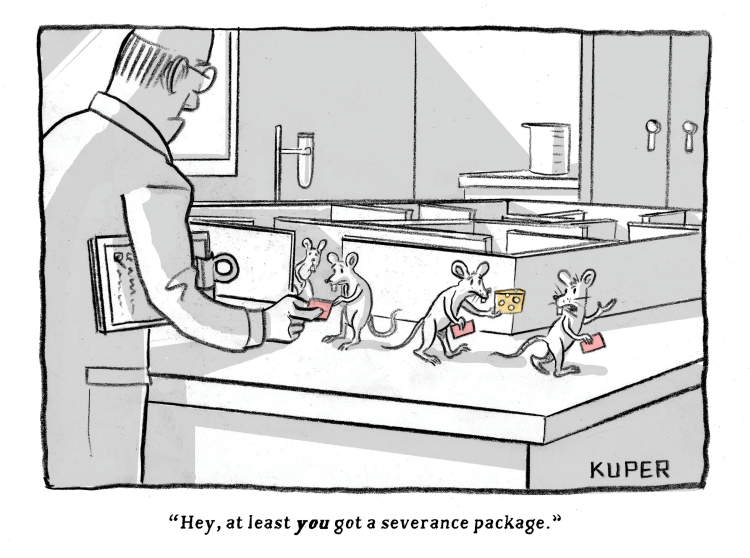
    For all the drama at Twitter, they're not the only ones experiencing layoffs in the tech industry. Though, Elon is now (supposedly) trying to renege on his severance packages.  

    Tech-layoffs-2022-MAIN-1via visualcapitalist

    Meta and Amazon saw even steeper layoffs than Twitter. Is this a result of overhiring during the tech boom, or a sign of dire times? Time will tell.  

    Stated reasons are economic uncertainty and poor performance, we're also seeing unsuccessful departments downsize – like Alexa. 

    To help allay economic fears, payroll and wage data from the U.S. government are exceeding expectations, and the country’s unemployment rate is close to a half-century low. As well, tech jobs account for 3% of the workforce – and many of those laid off will be picked up by smaller companies. 

    Even if the layoffs represent a short term reaction to what tech companies are seeing, hearing, or otherwise experiencing … they won't necessarily translate to long term bad news for our economy. 

  • Reaching Your Goals In The New Year

    Two weeks ago, I shared an article about creating your annual plan (and how Capitalogix does it).  Last week, I shared how to set your goals higher and envision a bigger future for yourself and your business. 

    This week I want to talk about how I set and meet my goals.  Clearly, I'm a big-picture guy … but it's important to think about the coming year as well.

    I think about it a bit like using a map.  Even if you know your intended destination, you still have to start with 'where you are' to figure out the best way to get there.

    6a00e5502e47b28833027880626264200d-600wi

    There are seemingly infinite potential paths … but motion in a direction isn't really "progress" if it doesn't take you toward your desired destination.

    To start with, resolutions only work if you actually "want" to make them happen.  It's one thing to hope that something magically falls in your lap; it's another to want to put in the work. 

    With that being said, here are some tips. 

    • Focus on What You Want.
    • Focus on Why You Want It.
    • Focus on Ways You Might Get it.
    • Focus on Evidence of Progress.

    Below, I'll take you through an example of each of the four steps.

    Moving Towards a Solution, Rather Than Suffering From the Problem.

    Before I got back into my health, my first instinct was to think, "I need to lose weight."  Knowing that "you're fat" isn't helpful … my head quickly translates that to something a tad more positive, yet generic, like: "I choose to be healthy and vital, and to live a healthy lifestyle."

    Blah, blah … They are just words.  What I needed was something specific, measurable, and actionable.  How about: "I will lose 15 pounds and stop eating after dinner."  OK, but that isn't inspiring, and there isn't much for me to do.  I can do better than that.

    Figure-Out a Big Enough WHY, Rather Than Worrying about the HOW's.

    This post isn't about health and fitness; it is about the mindset and techniques you can use to set empowering goals and plans in any situation.

    So, while I could list many ways to lose weight (and I might even remember to do some of them), leveraging a driving force creates momentum.  In other words, the first step in "Doing" is knowing WHY you want something.

    I really do want to be healthy, fit, and vital (it sure beats the alternatives), and I want to have the energy and confidence to live and enjoy my life fully.  The world is my playground, and I want to take advantage of more opportunities to play with family and friends.  However, to do those things, I must find better ways to live a healthy lifestyle.

    The WHYs are just as important for business goals too.

    Focus on Potential Solutions, Rather than Problems or Challenges.

    Obstacles Exist.  The bad news: I don't eat fish, and I don't like vegetables (unless French Fries are vegetables).  My joints aren't close to healthy from years of violent contact sports.  I rarely get 7 hours of sleep, and who'd have thunk it, but being a CEO of a startup is stressful.  The good news: is none of those things matter; and even if they did, it just would mean that I have a lot of room for progress.

    It is natural to focus on obstacles.  But most obstacles are surmountable – with a big enough WHY, even I'll start to eat vegetables.  Instead of dwelling on the limitations, use them as a reminder to focus on potential solutions.  They are beacons pointing the way.

    How do you do it?  To focus on solutions, you can make two action-based lists: one is of things To-Do … and another is of things Not-To-Do.

    Here are some of the sample To-Do Items:

    • I will drink more water than coffee.
    • I will stretch, or do basic calisthenics, on days that I do not go to the gym.
    • I will make a healthy shake as a meal replacement rather than a snack of min-meal.
    • I will focus on relaxation and meditation as much as I focus on strength & physical exercises.

    Here is the actionable list of Not-To-Do Items.

    • I will not buy new bigger pants or wear stretchy pants because of an expanding waistline.
    • I will not eat snacks out of their container – and will portion out what I want first.
    • I will not compare my current level of fitness to what I used to be able to do.  Instead, I will focus on my actions and improvement.

    Create Healthier Habits.

    It is easy to follow a routine.  So, here's another tip … make your routine better.  Here are some examples of things you could do to make being healthier happen with less effort.

    • Pre-sort your vitamins into daily doses, and keep them by the coffee machine.
    • Buy healthy snacks, like fruit, raw nuts, or organic energy bars (instead of chips).
    • Enjoy listening to music or a book/podcast during your "exercise time." Dedicating time to something doesn't mean you can't be multitasking.
    • Park at the end of the parking lot, so you get to walk.
    • Meet with friends at the gym or a hiking spot rather than at a bar or restaurant.

    You get the idea.  Get in the habit of looking for ways to create better habits.  What habits could you alter slightly to make a big difference?  Which things can you automate or outsource?

    For two books about the subject, I recommend Tiny Habits by B.J. Fogg and Willpower Doesn't Work by Benjamin Hardy. 

    Focus on Your Progress.

    In this case, it really is about the journey.  Instead of keeping track of how far you have to go … notice how far you've come.  Utilize an internal locus of control.  It is about creating energy, momentum, and a sense of possibility.  You may have a big, hairy, audacious goal in mind.  That's fine, as long as you realize that reaching each milestone along the way is still an accomplishment.

    • Find shoes that don't hurt your feet.
    • Pick a gym or a personal trainer that you enjoy.
    • Run more than two laps without stopping.

    It doesn't matter what they are … they all count, as long as you know that you are moving in the right direction.

    Summary

    The point of this exercise was not really to focus on fitness.  These techniques and goal-setting tools work in any situation.  The principles are:

    1. First, figure out what you want and why it is important.  Only focus on the few things that are actually important to you. 
    2. Second, find something you can do, right now, which moves you in the right direction.
    3. Third, notice which things create (rather than take) energy.  Spend your time on those, and automate or create routines to take care of the rest.
    4. Fourth, plan forward, but measure backward.  Set milestones so that you can recognize and celebrate your progress.

    In my business, this translates to having a mission and vision – it's what we want, why it's important to us, and a basic strategy to get there.  Then we create yearly "Big 3" goals that move us toward that long-term vision.  Then, the team creates SMARTs (goals that are specific, measurable, attainable, relevant, and timely) and KPIs (key performance indicators) so they know where to spend their time, and what milestones tell them they're on the right track.

    It isn't magic, but it works.

    Hope this helped.

    If you're interested in the health aspect of it, here are a few more articles I've written on health.