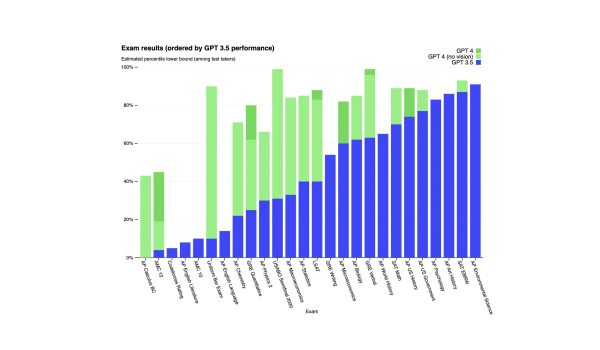
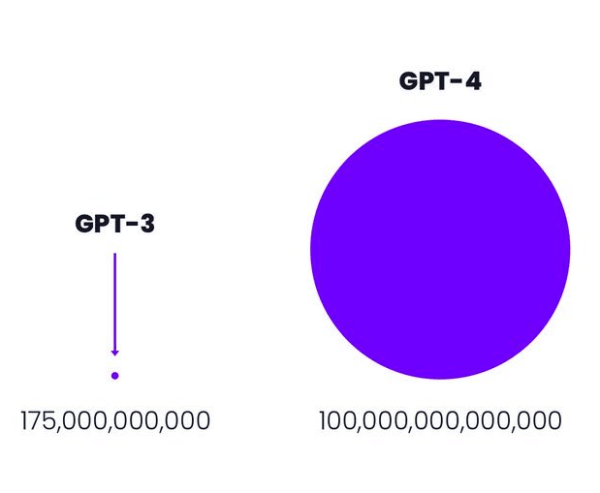
In December 2022, I shared that GPT-3 was trained on 100x more parameters than any previous language model. Well, here's what GPT-4 looks like compared to GPT-3.
And it is also much more robust. Which is mildly scary to think about … but also very exciting.
I was already very excited about what GPT-3 and the applications built on it were making possible, but this takes it to another level.
Though, I have to be the voice of caution and remind you – don't rely on it as your business. It is a tool to help you increase the speed or scope of a business opportunity. But it isn't mature enough to blindly rely on it to be right – or even factually accurate. GPT-4 was optimized to sound good, which means that it might hallucinate or mislead you, even when it has the correct answer in its dataset. But it will sound good, even when it isn't right.
That being said, it outperforms GPT-3 in every single way.
This week, the rapid collapse of Silicon Valley Bank (“SVB”) stunned the venture capital and startup community. SVB customers initiated withdrawals of $42bn in a single day (a quarter of the bank’s total deposits), and it could not meet the requests. By Friday, the Federal Deposit Insurance Corporation (the “FDIC”), the US bank regulator that guarantees deposits of up to $250,000) declared SVB insolvent and took control. The run was so swift SVB’s coffers were drained in full, and the bank carried a “negative cash balance” of nearly $1bn.
Silicon Valley Bank’s death spiral started on Wednesday when it told investors that it needed to raise over $2 billion … in large part due to unforced errors. To start, its balance sheet took a massive hit because of inflation and the subsequent rise in interest rates. Deposits in the bank grew massively from 2019 to 2021, and interest rates were low, so the bank heavily invested in treasury bonds. Those bonds were yielding an average of only 1.79% at the time. When the Fed jacked up rates, the approximately $80 billion SVB had in bonds cratered in value. Suddenly, SVB customers began a hysteric bank run, ultimately withdrawing $42 billion worth of deposits by the end of Thursday. By Friday, the FDIC had seized the bank in the most significant failure since the Great Recession. To make matters worse, 97% of deposits in the bank were above the FDIC insurance threshold and thus uninsured.
When I started writing this article, it was unclear what would happen to the thousands of VCs, PE Funds, and startups heavily reliant on SVB. Over 65,000 startups were worried about missing payroll, and it was all dependent on the whim of the FDIC. Luckily for them, they took aggressive action and agreed to backstop all depositors – hoping to prevent runs on any other financial institutions.
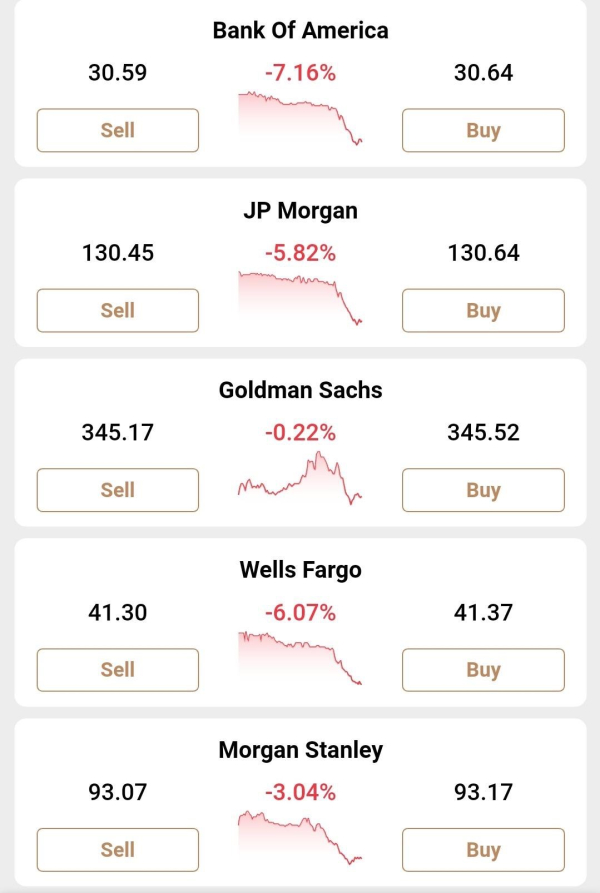
Meanwhile, the Dow posted its worst week since June on the back of the big banks being hit with big losses.
The FDIC stepping in is part of a broader effort by regulators to reassure customers that their money is safe. For example, the US central bank added it was “prepared to address any liquidity pressures that may arise.”
The Fed’s new facility, the Bank Term Funding Program (BTFP), will offer loans of up to one year to lenders who pledge as collateral US Treasuries, agency debt, mortgage-backed securities, and other “qualifying assets.”
Those assets will be valued at par, and the BTFP will eliminate an institution’s need to quickly sell those securities in times of stress. The Fed said the facility would be big enough to cover all US uninsured deposits. The discount window, where banks can access funding at a slight penalty, remains “open and available,” the central bank added.
Officials on Sunday said that the taxpayer would bear no losses stemming from the resolution of deposits. A levy on the rest of the banking system would fund any shortfall. They added shareholders and certain unsecured debtholders would not be protected.
A Look at How This Happened
We’ve already touched on the bank run and what caused it … but let’s dive deeper.
One of the biggest risks to SVB’s business model was catering to a very tightly-knit group of investors who exhibit herd-like mentalities. The problem with a business model like that is that when capital dries up, the deposits flee. Unfortunately, that sounds like a bank run waiting to happen … and it did.
The situation created a prisoner’s dilemma for depositors: I’m fine if they don’t draw their money, and they’re fine if I don’t draw mine. But once some started withdrawing, others followed suit.
Part of what started the run was SVBs decision to search for yield in an era of ultra-low interest rates. SVB ramped-up investment in a portfolio of highly rated government-backed securities, A significant portion of those in fixed-rate mortgage bonds carrying an average interest rate of just 1.64 percent. While slightly higher than the meager returns it could earn from short-term government debt, the investments locked the cash away for more than a decade and exposed it to losses if interest rates rose quickly.
When rates rose sharply last year, the portfolio’s value fell by $15bn, almost equal to SVB’s total capital. If SVB were forced to sell any of the bonds, it would risk becoming technically insolvent.
Although SVB’s deposits had been dropping for four straight quarters as tech valuations crashed from their pandemic-era highs, they plunged faster than expected in February and March. As a result, SVB decided to liquidate almost all of the bank’s “available for sale” securities portfolio and reinvest the proceeds in shorter-term assets to earn higher interest rates and improve the pressure on its profitability.
The sale meant taking a $1.8bn hit, as the value of the securities had fallen since SVB had purchased them due to surging interest rates.
To compensate for this, SVB arranged for a public offering of the bank’s shares, led by Goldman Sachs. It included a large investment from General Atlantic, which committed to buying $500mn of the stock. Although that deal was announced on Wednesday night, by Thursday morning, the deal was failing. SVB’s decision to sell the securities had surprised some investors and signaled to them that it had exhausted other avenues to raise cash. Some “smart” VC clients directed their portfolio clients to withdraw their deposits en masse to avoid losing it all.
What happened was the “perfect storm.” Many say it was predictable, especially after a decrease in regulation (which the bank’s management successfully lobbied for in 2015).
For now, SVB seems like an outlier, with its unusual (and specific) clientele. Still, there’s already nervousness for other small/regional banks … and there’s bubbling fear about the system as a whole.
Where Do We Go From Here?
My first question is, should the FDIC raise the insurance limit above 250K? While Giannis Antetokounmpo might have his money in 50 banks to keep it insured, it doesn’t seem a reasonable expectation of small companies that need liquidity for payroll and other monthly expenses. While some might be happy to see a bank potentially penalized for perceived recklessness, you also have to consider the clientele of this bank – many of the innovators that are driving the future of technology (or at least, hoping to).
My second question is, where were the regulators? The issues that led to this disaster were pointed out publicly months before this happened. Are more regulations required to ensure trust in the American financial system? Or is this a free market where pain and pleasure point out the evolutionary path?
What happens when another bank fails the same way? Do we continue to find a way to bail them out?
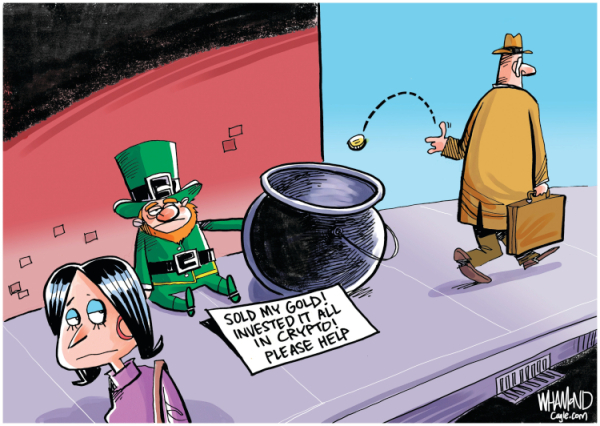
Trust in the Fed – and the government as a whole – is low. It’s one of the reasons why people are so interested in cryptocurrency and the blockchain. As a result, we’re at a bit of a crossroads. Various governmental agencies want to assure you your money is safe, but there’s no belief that will always be the case.
SVB failed, in part, due to their own mistakes … but they also failed due to herd mentality and negative sentiment. Had people felt confident in this 40+ year-old bank, business might have continued as usual.
And, what does this mean for banks and regulation as a whole? Perception is often more important than reality in the case of markets, pricing, and a host of other supposedly logic-and data-based decisions. Clearly, Markets are not rational … that’s why you shouldn’t try to predict them. Even scarier is the potential lack of trust in banks’ ability to meet the needs of their stakeholders. There are countless banks with more than 50% of their money in uninsured deposits … will companies want to bank with them if there aren’t safeguards protecting them?
A big crisis was averted this time … but this won’t be the last crisis for banks.
As news continues to shake out, I’ll give more of my thoughts, but for now, I want to watch more and see what changes.
For a bonus laugh, here’s Jim Cramer calling Silicon Valley Bank a buy a month ago.
For more context, several massive companies have large portions of their money with SVB, including
Circle – $3.3 Billion
Roku – $487 Million
BlockFi – $227 Million
and Roblox – $150 million
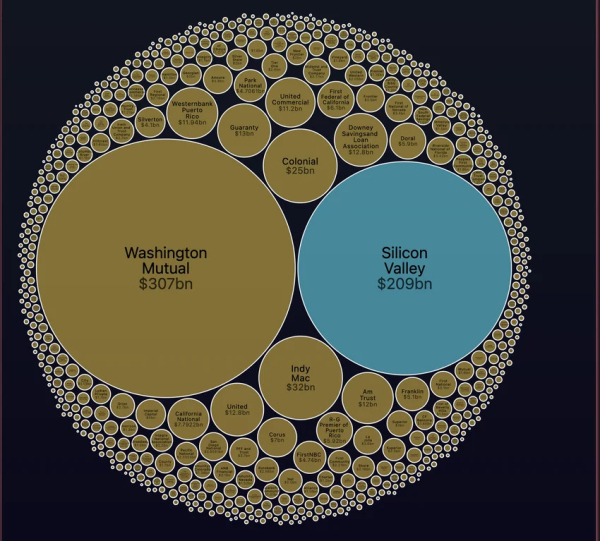
In 2008, Washington Mutual was taken over by the FDIC, filed for bankruptcy, and then was bought by JP Morgan.
Some of the other significant failures of the Great Recession, like Lehman Brothers, aren't in the chart because they were financial services firms – not banks.
“Words can be twisted into any shape. Promises can be made to lull the heart and seduce the soul. In the final analysis, words mean nothing. They are labels we give things in an effort to wrap our puny little brains around their underlying natures, when ninety-nine percent of the time the totality of the reality is an entirely different beast. The wisest man is the silent one. Examine his actions. Judge him by them.” ― Karen Marie Moning
The current socio-political climate has me thinking about the consequences of labeling things, creating boxes, and simplifying ideas into news-ready headlines.
With more news sources than ever and less attention span, you see ideas packaged into attention-grabbing parts. The focus isn't on education or the issues, but on getting the click, making your stay on their page longer, and sending you to a new article utterly unrelated to why you clicked on the page.
Complex issues are simplified – not even into their most basic forms – but instead into their most divisive forms … because there's no money in the middle.
The amplified voices are those on the fringe of the average constituents' beliefs – precisely because those are the ones who are often the most outspoken.
Issues that should be bipartisan have been made "us" versus "them," "liberal" versus "conservative," or "right" versus "wrong." The algorithms of most of these sites create echo chambers that increase radicalization and decrease news comprehension. Identity politics have gotten so strong that you see families breaking apart and friend groups disintegrating … because people can't imagine sharing a room with someone they don't share the same values as.
In psychology, heuristics are mental models that help you make decisions easier. They're a starting point to save mental bandwidth, allowing you to spend more brain cycles on the important stuff.
That's a great use of "boxes" and "simplification"… but it shouldn't preclude deeper thought on important issues.
In an ideal world, we would all have the bandwidth to view each case of an issue as a whole issue within itself. Most things are nuanced, and the "correct" answer changes as you change your vantage point.
I recognize that's not realistic.
Instead, I encourage you to remember to continue to think and learn … even about things you already know. Confirmation Bias is one of the more common forms of cognitive bias. Here is an infographic that lists 50 common cognitive biases. Click to explore further.
Important issues deserve more research. New insights happen between the boundaries of what we know and don't. Knowledge comes from truly understanding the border between what you are certain and uncertain about.
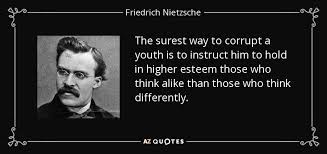
I challenge you to look beyond the headlines, slogans, and talking points you like most. Look for dissenting opinions and understand what's driving their dissent. Are they really blind or dumb (or are their value systems just weighted differently)?
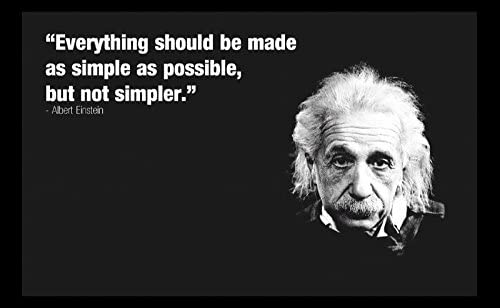
Not everything needs to be boxed. Not everything needs to be simple. You should explore things and people outside of your comfort zone and look to see things from their point of view … not your own.
Applying This Lesson
“I am ashamed to think how easily we capitulate to badges and names, to large societies and dead institutions.” ― Ralph Waldo Emerson, Self-Reliance
I love learning a lesson in one space and applying it to other spaces. It's one of the cool things about AI. An algorithm can learn rules in the construction space that may help in the medicine or trading space. Everything's a lesson if you let it be.
In that vein, the lesson on labeling also applies to yourself and your business. Don't get me wrong – naming things is powerful. It can help make the intangible tangible. However, don't let the label (or your perception of the label) stop you from achieving something greater.
Many things are true because we believe them to be, but when we let go of past beliefs, the impossible becomes possible, and the invisible becomes visible.
We are our choices … and you can make choices today that change who you are (and what you or your business is capable of) tomorrow.
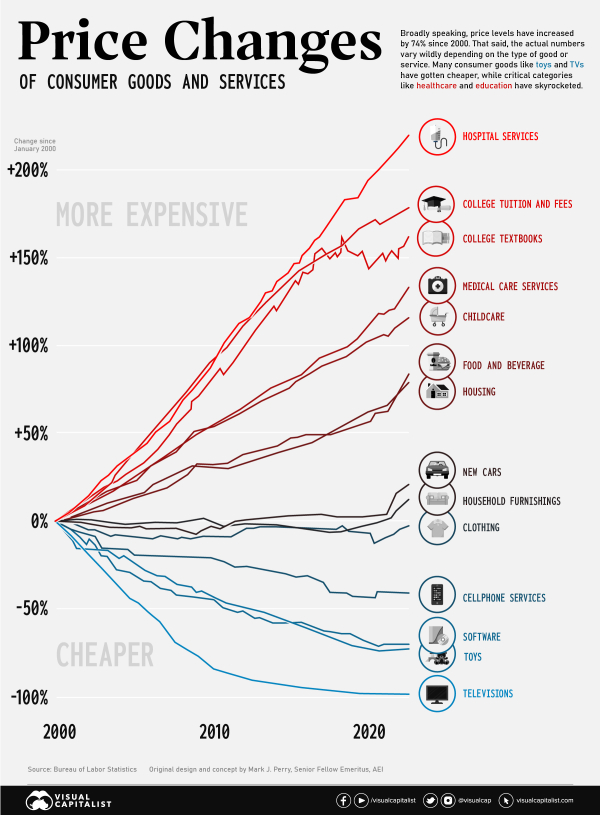
This post considers the “Chart of the Century” created and named by Mark Perry, an economics professor, and AEI scholar. This chart has gotten a lot of attention because it’s loaded with information regarding the challenges faced by the Fed and other Washington policymakers.
VisualCapitalist put together the most recent version of this chart. The most current version reports price increases from 1998 through the end of 2022 for 14 categories of goods and services, along with the average wage and overall Consumer Price Index.
It shows that prices of goods subject to foreign competition — think toys and television sets — have tumbled over the past two decades as trade barriers have come down worldwide. Costs of so-called non-tradeable items — hospital stays and college tuition, to name two — have surged.
From January 1998 to June 2019, the CPI for All Items increased by approximately 74% (up from 59.6% in 2019 when I last shared this chart). The graph displays the relative price increases for 14 selected consumer goods and services and average hourly earnings.
Lines above the overall inflation line have become functionally more expensive over time, and lines below the overall inflation line have become functionally less expensive.
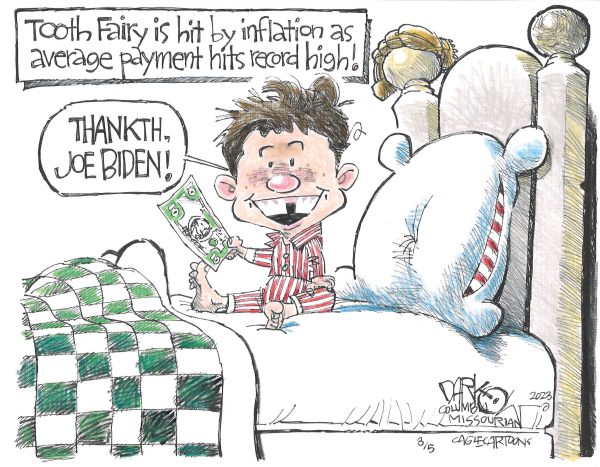
At the beginning of 2020 (when I shared the 2019 post), food & beverages and housing were in line with inflation. They’ve now skyrocketed above inflation – which helps to explain the unease many households are feeling right now.
There are a lot of ways to take this chart. You can point to items in red – whose prices have exceeded inflation as government-regulated or quasi-monopolies. You can point to items in blue as daily commodities that have suffered from ubiquity, are subject to free-market forces, or as goods that are subject to foreign competition and trade wars. Looking at the prices that decrease the most, they’re all technologies. New technologies almost always become cheaper as we optimize manufacturing, components become cheaper, and competition increases. From VisualCapitalist, at the turn of the century, a flat-screen TV would cost around 17% of the median income ($42,148). In the early aughts, though, prices began to fall quickly. Today, a new TV will cost less than 1% of the U.S. median income ($54,132).
Compare “tradable” goods like cell phones or TVs (with lots of competing products) to less tradable “goods” like hospital stays or college tuition, and unsurprisingly they’ve gone in opposite directions. In 2020, I asked what the Coronavirus would do to prices … and the answer was less than I would expect. If you don’t look at the rise in inflation, but instead the change in trajectories, very few categories were affected heavily. While hospital services have skyrocketed since 2019, they were already skyrocketing.
There are a lot of complex economic relationships displayed in this chart, and we’ve only covered the basics.
Last week, I shared a post about the rise of ChatGPT. To summarize … new AI tools (like ChatGPT) are cool, but they can be a distraction if you're not focused on your actual business goals. Likewise, those tools seem smart, but they are not smart enough to replace you.
Below is a video containing an edited version of my contributions about using AI in business at a recent Genius Network meeting.
With something as powerful and game-changing as AI, smart people find a way to take advantage of it (rather than finding ways to avoid or ignore it).
If you keep your head in the dirt, you'll get left behind like Blockbuster, Kodak, or RadioShack.
With that said, one of the key things I've noticed about new tech is that there's massive churn. You've seen it with the blockchain and cryptocurrencies. The companies, products, and modalities that pioneer the industry aren't always the ones who make it. I think it's because they focus on technology instead of solving their customers' real problems.
Pioneers often end up with arrows in their backs and blood on their shoes. Too often, this causes them to give up before they achieve real and lasting success.
You don't have to rush, even if it feels like you're falling behind. To use a surfing metaphor, you shouldn't ignore the coming waves, but you can certainly take the time to wax your board, get in the ocean, and choose which wave you want to ride.
You can catch the little waves and take advantage of ChatGPT or Midjourney, but as a final reminder, if everyone is doing it, it's not a competitive advantage … it's the playing field.
Technology is on the mind of most people I have talked to recently. Even with Big Tech letting go of droves of employees, the innovation happening in the world is impressive.
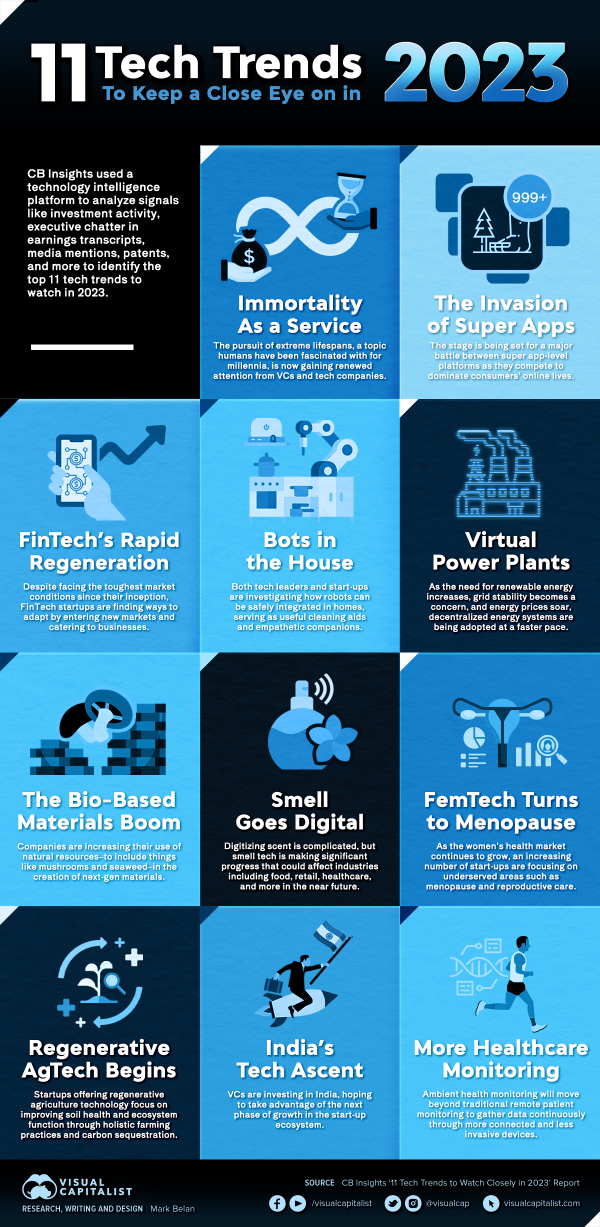
VisualCapitalist put out a list of 11 trends to look out for this year. Check it out.
As always, no list gets it entirely correct. Lists like this are made to spark interest and influence the direction of tech development. However, I've been impressed with what visualcapitalist has gotten right in the past.
A lot of the trends on the list make sense. India has been a massive investment space in tech over the last few years, and it's about time for more results to show. Healthcare is a massive investment space, and we're seeing a lot of innovation go to the medical space before migrating to other industries … on top of health monitoring, other specifics like menopausal care could see more investment, especially with an increase in women-led and women-focused companies.
As well, Fintech has been hit hard since 2020. Many of the bulwarks of the industry have been sliced down as a result of covid-19, market turmoil, the Russia/Ukraine conflict, and more. These years haven't been without learnings. New market conditions require new approaches, but the past 2+ years have been a great opportunity for adaptation and advancement. After winter comes spring.
What trends do you think are missing, and what trends do you think won't come to fruition?


 And it is also much more robust. Which is mildly scary to think about … but also very exciting.