
Jennifer and I traveled to the Roaring Lion Ranch in Hamilton, Montana last week.
It was an amazing few days in the High Plains … Especially since there was a major forest fire there just a few weeks ago.
Many fires, like this one, could be avoided with some common sense.
You don't have to be a rocket-scientist to understand the issues.
Koko (the gorilla is that can talk with humans using sign language) was recently informed about some nature-related issues. Then, supposedly, she was allowed to improvise.
The Olympics are inspiring to me … and not just the physical feats of prowess … It is the planning, the preparation, the sacrifice, the competition, and the sportsmanship.
Unfortunately, politics still can get in the way. Below, an Egyptian Judo competitor refused to shake hands with his opponent (from Israel) after losing to him on Friday.
But, that is the exception, rather than the rule. There’s also sportsmanship and diplomacy shown between countries that normally show animosity, evidenced by this selfie taken by a South Korean gymnast and a North Korean gymnast.
It has been a rough week for the Presidential prospects of Donald Trump.
According to Betfair, the odds for Clinton to win in November have rallied in the last several days and are back near their highs of the year at slightly more than 75%.
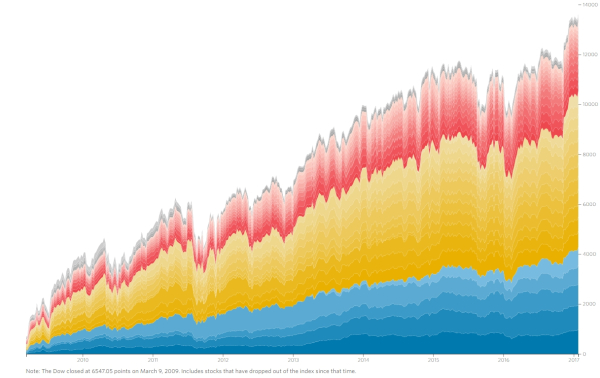
The chart, below, overlays the odds for a Democratic win and the performance of the S&P 500 Index.
That being said, in politics, three months is a lifetime; and Trump has made some miraculous recoveries before in his career.
In each of the prior times where Clinton’s odds (late April and late June) have approached current levels, they have quickly pulled back.
Conventional wisdom says that a strong stock market and a good economy are good for the incumbent party. Consequently, the Dems are feeling confident with the S&P 500 at new highs and jobs data coming in strong for the second straight month. Will this be where Clinton finally breaks out (or are her odds due for another pullback)?
My son, Zach, had my favorite Philly cheesesteak sent in from the Jersey Shore. Shipping cost way more than the sandwiches. Worth It!!
As much as I love innovation (or finding something better), sometimes things are perfect as they are.
Wow, how time flies! Birthdays seem to come more quickly as I get older. It makes sense, though. When you were four, a birthday represented a quarter of your life. Now, a year represents a much smaller percentage.
Reminder: while aging may suck. It sure beats the alternative.
It's like a game where the ecosystem and the other players adapt and interact to the moves and responses of the others.
As a result, many innovations evolve (or mutate) … and ultimately get used for drastically different purposes than they were created.
It makes sense because the inventor is often focused on solving a particular puzzle (or finding a specific advantage), but once the innovation is exposed, others try to imagine how to use it for their (often different) benefit.
One one level, it's DarwinianNatural Selection. It's not always the best idea that wins; rather it's often the easiest (or quickest) to adapt that survives.
Historically, space exploration was funded by nations based on their wants and needs (including defense initiatives). However, recently, profit is becoming a bigger catalyst. Space travel for travel's sake is seemingly within grasp. So too is asteroid mining (with promises rich profits).
When the prize is big enough, it is more likely that someone finds a way.
The result is more innovation (as more resources are directed at the problem).
The point is that innovation often follows a prize.
There has been a ton of press about the poor air quality in China. Not much has made it better.
Now, however, there is an idea for towers to suck up polluted air, and clean it, releasing it back into parks and playgrounds (which then are supposedly 70-75% cleaner than the rest of the city). The difference is that this idea revolves around transforming the captured smog into diamonds.
If it works, China may actually have a disincentive to reduce smog.
Then, someone will figure out how to put that Tower on top of smog-producing sites (presumably capturing the carbon more efficiently and effectively).
At some point, the company that figures out how to do this will offer to do it for free (in exchange for its ownership of the byproducts of the process).
Soon others will sense the "profit" and compete. Predictably, they will offer to share the profits with the company (and later the city, the county, the state, or the nation).
And the game goes on …
Eventually, someone will complain that someone else got rich. But, on a different level, that's an innovation tax (the price society should gladly pay to have a better society).
It makes sense to let people search for value. It's even better when they create it.