We said goodbye to Duke today. He was our faithful companion for 13 years. He will be missed.

We did everything we could, until we couldn't … Then we switched to a different strategy.

Thoughts about the markets, automated trading algorithms, artificial intelligence, and lots of other stuff
We said goodbye to Duke today. He was our faithful companion for 13 years. He will be missed.

We did everything we could, until we couldn't … Then we switched to a different strategy.
Some dogs run fast; other dogs do tricks … my 100 pound lab, Duke's best talent is his ability to remain immobile in almost any situation (some call it "laziness" … I prefer "calm" or "even-tempered").
At the other end of the spectrum is Boo, our 20 pound mix between a Beagle and a Boston terrier. Let's just say that he has higher metabolism than Duke.
When Boo hears a noise, he lets out an involuntary, barely audible, sound. His body becomes rigid and his head cocks. He becomes alert and carefully tunes his ears to their most sensitive setting, seeking any information that will help identify the "danger." And now he's waiting for the next intrusion.
Usually there are no other disturbances to follow, and the noise is cataloged and soon forgotten. His alertness level slowly subsides over the next 10-15 minutes or so. He'll go back to napping, a little more fitfully this time … and just a little bit on edge.
Things get a little more interesting when another noise surfaces shortly after the first one. What could once be dismissed now must be treated as a threat – and just to be safe, a threat of the highest order. Now the appropriate response is a series of barks, nervous glances, pacing, rushing off in the direction of the noise to investigate, and a barrage of barks meant to sound more menacing than the source of the noise. Who or what is it? How much harm can they cause? How grave is the threat?
Duke is a different story. Nothing upsets Duke more than Boo. The same noise that prompted Boo to become alert does nothing to Duke. However the first time that Boo makes noise, that makes Duke alert. And the second time Boo makes noise, Duke starts vocalizing, and the third time, well now both of them start yapping and when they both start yapping, then other dogs in the neighborhood start yapping.
I realized that the same thing happens in the market with people.
In the market, it is the second noise – and subsequent noises – that creates the equivalent of the Homeland Security "Red Alert." Once an elevated level of alertness has been established, it takes a long period of relative calm for it to subside. And when on "Red Alert" … any additional noises (for example, the responses of the other market participants) – big or small – will highlight, magnify and further validate the issue.
But, like in the story "The Boy Who Cried Wolf," even legitimate threats are ignored after too many false alarms (or prolonged periods of constant alert). So, bad news about the economy isn't as likely to get people excited after the past few weeks.
Thanksgiving is a holiday where we're encouraged to feel thankful for all the bounties in our life – and to appreciate those around us.
I enjoyed spending time with my kids, watching the Cowboys win, and eating too much.

That's a great start; but, feeling thankful is different that being thankful.
Think of it as the difference between passive voice and active living.
It reminds me of an idea called "Tikkun Olam" (or – healing the world).
Even if you're not Jewish, I think we can all agree the world needs a little of that.
For example, instead of just feeling thankful, what could you do to make the life of someone around you better? Likewise, how can you let others know that you're thankful for them?
Transformational change is often easier than incremental change (because you don't have to drag the past forward).
So, what can you do that would trigger 10X results? Will you?
Got this from a friend and thought it was funny.
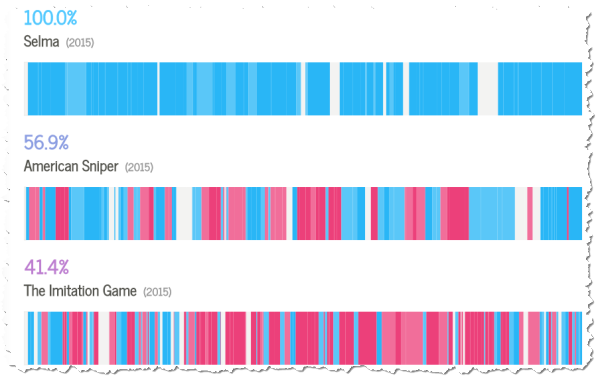
Experts have found the following analysis to be nearly 100% accurate.
In this environment, the news can be harder to believe than fiction.
Here are some of the posts that caught my eye. Hope you find something interesting.
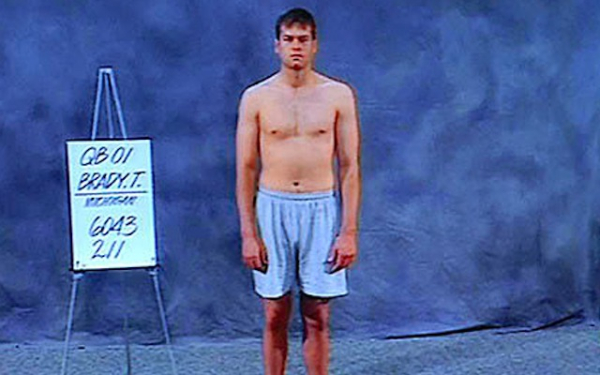
This Thanksgiving, my son Zach made a stupid bet with himself – that he could gain 10 pounds in one day.
His mom and I both tried to tell him not to do it; but we forgot a golden rule: Never tell a Getson they can't do something.
The image speaks for itself.

He gained over 13 pounds.
Even considering the weight normally gained on a Thanksgiving, that's "disgusticating" (worthy of a made-up word).
Hope you enjoyed your holiday too!
Here are some of the posts that caught my eye. Hope you find something interesting.
The Dallas Cowboys are 9-1 this year (a feat entirely unexpected after an early injury by Tony Romo in the preseason).
I recently talked about going to a Cowboys practice, and how impressed I was with the attention to detail and precision they displayed.
Tony Romo's recent "concession speech" to rookie QB Dak Prescott is worth watching … Interesting, nuanced, and deep.
via NFL.
Romo covers his feelings of sadness and regret over his injuries, and addresses his position on the team, and acknowledges that Prescott has earned the right to "his spot."
You see football is a meritocracy. You aren't handed anything. You earn everything. Every single day, over and over again. You have to prove it. That's the way the NFL, that football works; you have to prove it.
There's a lot to learn from Romo's speech about humility, about putting others before you, and being a team player … Oh, and also about meritocracy.
The deck isn't always fair, but if you work harder and smarter than those around you, there's often a light at the end of the tunnel.
It's a reminder that you can't rest on your laurels. "Every single day, over and over again." winning is a habit, and you win with the time you put in before you ever step on a field.
Unhappy people find a way to be unhappy; losers find a way to lose – and winners find a way to win.
If you're standing still, you're moving backwards … Here is to moving forwards.
Onwards.
As Trump's Presidency starts, I thought it made sense to get an overview of alternative investment options.

via CoInvest.
That reminded me of something else I'd seen recently … Check out this Periodic Table of Elements that shows what they're commonly used for.
via Discover
Pretty interesting – It gives you some insight into what it takes to keep the world running.
If you ask nicely, perhaps they'll name an element after you?
The election was very interesting to me.
While Hillary Clinton deftly followed the wisdom of Napoleon: “Never interfere with the enemy when he is in the process of destroying himself.” It didn't work.
I believe Trump’s success is a direct result of a broader collective dissatisfaction and negative mood trend in America.
As unlikely as the outcome was, socioeconomics explains it well.
Socionomics is the study of how social mood motivates social actions. It studies how waves of social mood regulate changes in social behavior, including changes in the economy, political preferences, financial markets and popular culture.
Last year, if you told me 2016 would be the year that: the Cubs would win the world series, a reality TV show host would be president, and Britain would leave the EU, I'd have assumed you were on drugs.
Even three months ago I would have been surprised.
Last week, MogIA, an AI, predicted that Donald Trump would win, making it 4 for 4. If you had been tracking the polls, that would have felt ridiculous, but computers can be more objective than you or me.
Trump's campaign was a polarizing affair, with massive backlash from liberals, and a mainstream media which almost completely missed the momentum Trump had.
There're massive parallels between the way the media reported this campaign, and what happened with Brexit. The media echo chamber was pro-Clinton and ended up ignoring the feelings of a large group of voters. In Britain it was the elderly … in America, it was working-class white people.
Trump won swing states like Pennsylvania and Michigan in large part due to those voters feeling ignored and attacked by Clinton. Coal and Gas are their livelihoods, and efforts towards clean renewable energy could leave them jobless.
Think of all the moving pieces that had to align for Trump to get this far. Look at the candidates in the Republican primary, look at what happened with the Democratic primary, and look at voter turnout:
via Reddit
If "Did Not Vote" was a candidate, they would have won by a landslide.
But, people did vote – and the result is change.
So, what do you think the effect will be on America and our stock market, long term under Trump?
via Finviz
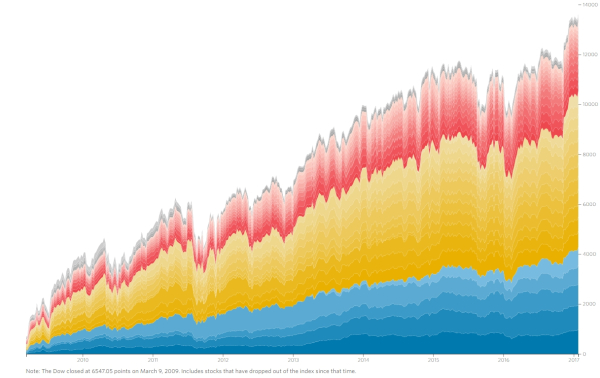
Leading into the final days of the election, you can see a steep drop in markets. Uncertainty often has that effect on a market, but since Trump's election, there's been a rebound.
In fact, the Dow Jones Industrial Average was able to set an all-time high.
As well, Putin has expressed interest in restoring ties with the U.S. It will be interesting to see the effects of this on the geopolitical environment.
If there's anything to learn from this experience, it's that trying to time the market is dangerous, and that ignoring dissidents makes you out of touch and vulnerable.
On a lighter note, here's the President-elect, Donald Trump, wrestling at Wrestlemania 23. He's a regular Ronald Reagan.
I've been sent this by a couple people. Thought it was funny.
What do you think the aftermath will be for Hillary?

Here are some of the posts that caught my eye. Hope you find something interesting.