Elon Musk and Alibaba co-founder Jack Ma recently held a debate about AI at a conference in Shanghai. Their conversation was captured in a 46-minute video. Even if you don't watch all of it, it's interesting to see how these different thought archetypes position different issues.
My son, Zach, watched it and sent me some notes and takeaways.
Fascinating Stuff!
________
While they talk about Mars, education, and other topics, the discussion tends to revolve around AI.
In the video, Jack Ma comes off as optimistic and somewhat uninformed while Elon Musk comes off as so optimistic about AI that he's pessimistic about humans.
Musk's intelligence shines through, though he tends toward hyperbolic best- and worst-case scenarios.
With Jack Ma, I'm curious how heavily exogenous forces influenced the expression of his opinions. The conference took place in China and was partially sponsored by the Chinese government. As a result, I'm not sure how much of what Jack Ma said represented his true beliefs or fears. Taking into consideration State censorship and "spin," it isn't hard to imagine being encouraged to remind people that the Communist party is (and will remain) smarter than AI.
Jack takes positions that make people feel safe, while Elon is committed to pointing out potential dangers.
Elon focused on three main points. Here they are:
People Underestimate AI
Laymen often compare AI to a smart human, but it's much more than that. He uses the comparison that to a chimpanzee we're a strange alien, but AI's disparity may be even worse than that.
Humans vastly underestimate the scale of time. I think Tony Robbins makes the comment that we overestimate a year and underestimate 10. Elon's equivalent would be that we overestimate 10 years and underestimate 1000. On the scale of Earth's existence, humanity is blip. On the scale of human existence, our current level of technology is a blip.
We're wired to think locally and linearly, but not only are we at the very beginning of a 20-year innovation curve, but we also have a theoretical thousands-of-years to worry about.
The Biggest Mistake AI Researchers Make Is Thinking They're Intelligent
“I hope they’re nice … If you can’t beat them, join them. That’s what neuralink is about.” – Elon Musk
This is one of the ideas we talk about a lot at Capitalogix – but it's this idea that many researchers think they can predict AI despite messing up 99% of predictions ever. We constantly underestimate technology, we constantly underestimate change, and it's naive to think that won't continue to be true.
He uses an interesting comparison between our bandwidths. We're already so integrated to our phones and computers but the bandwidth is very different from a computer – or from his proposed neuralink.
Our input bandwidth has skyrocketed. We're always tuned in. Data downloads faster. We have more sources of data. Yet, our output bandwidth has slowed. As we spend more time on our phones instead of computers, we're less efficient.
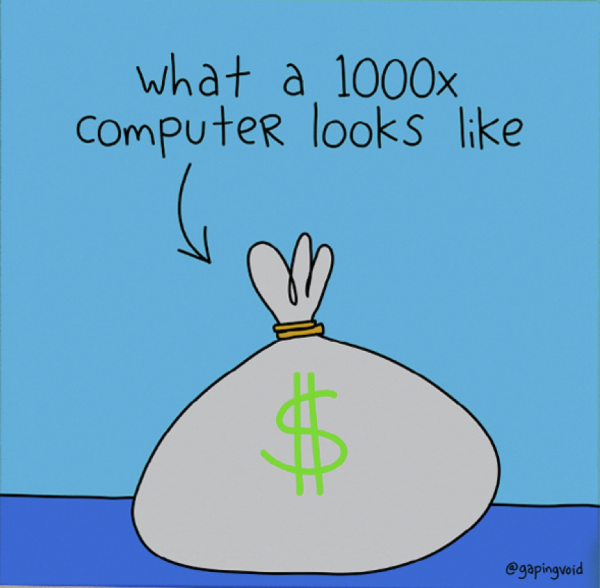
Compare that to a computer with an exaflop of compute capability… a millisecond becomes an eternity. Our speech becomes a whale song. We're inefficient.
Our Biggest Concern Should Be The Proliferation of Consciousness
Sustainability, cryogenics, Mars, Neuralinks, biohacking, these are all attempts at expanding the scope and scale of human consciousness. Of hedging our bets against any number of potential bad futures.
Even if any potential doomsday has a minuscule probability of happening, why not prepare for them?
The probabilities are non-zero, the better we understand our universe, the better we can handle things here.
Jack Ma – AI Isn't A Threat
Jack's response to most of Elon's comments is that AI isn't a threat to jobs, to us, or to the world. Instead, it's an opportunity to change ourselves, an opportunity to understand people better and to better self-actualize.
He also states that it's an opportunity not to replace jobs but to work less. His ideal is three days a week. Giving us more time to enjoy being human.
Jack also believes that while AI is more clever, humans are smarter. His argument is that intelligence is experience-driven and that humans have created computers but no computers create humans. AI still isn't as good at the subjectivity of the human experience. Can a human determine if something is delicious? Can it write a comedy? He believes AI doesn't have the heart humans do.
The only thing that Elon and Jack really agreed on was that our biggest fear over the next 20 years is population collapse.
My Thoughts
We Should Go To Mars
Elon and Jack are at odds for various reasons, but I think a big part of the issue is that Jack Ma wants us to focus on improving the earth. He views Mars as a waste of time. Musk (and I) view these exercises as improving earth. It shouldn't be an "either/or" … it should be an "and". We do need to do a better job on taking care of each other and our planet, but that shouldn't be at the expense of moonshots.
I like the 80/20 rule. In economics it's the Pareto Principle – 20% of the "causes" cause 80% of the effects. In personal finance, 80% of what you invest in should be safe and 20% can be alternative investments. In our office, it's 20% of your time being spent on "what if's".
For Earth, 80% of our focus should be on the incremental improvements we're eschewing, and 20% should be on moonshots. If even one of the moonshots we focus on (elongating human life, going to mars, hybridizing humans and computers) happens, they improve the quality of life exponentially.
Just Because We Can't Predict The Future Doesn't Mean We Shouldn't Try
During the debate, Elon said the goal should always be to "try to predict the future with less error."
While it's clear we can't solve tomorrow's issues because we can't predict them all, it doesn't mean there aren't actions we can take and questions that we can ask to better prepare our children for the future.
We Should Be Cautiously Optimistic About AI
I've always been taught to be cautious and to exhibit moderation. We don't know what's possible with AI. While that means there's a potential timeline where AI doesn't become Skynet, it also means there's a potential timeline where it does.
It's human hubris to not worry about AI ethics and to not keep those ideals in mind when creating a technology that will be ubiquitous.
In human history we've often weaponized tools that were intended for other uses. It's likely AI will be used in the same way (if not by AI, then by humans).
I like Jack's focus on the human aspect of AI and while it seems clear to me that Elon understands AI better, if we can manage to balance a focus on the human while growing the artificial, I think we'll go a lot farther.
Closing Thoughts
Humans are at the top of the food chain not because of any athletic dominance, but because of our intelligence and our ability to create tools that enhance our capabilities. Our tools define us as a species.
One key takeaway from the book was that technology should be an extension of humans. An example being the calculator on my phone. I'm not great at math, but I'm great at using my calculator to perform whatever math I need to. Donald Norman would argue that means for all functional purposes, I'm good at math.
As our tools evolve, we evolve.
To me, the fact that technology is growing so fast is heavily weighted towards a positive impact. There will be negative impacts, but they can be mitigated. I'm sure plenty of carriage operators were really bummed about the creation of the automobile.
I resonated with Musk's fears and joys because I felt he was championing that belief.
We don't know the answers, but we should be asking the questions and we should be preparing for the possibilities.
When your doctor tells you that you are fat, it is easy to discount (because you pay them to tell you that). When your massage therapist tells you that you are getting fat, you've got to listen (because they're trying to be nice to get a better tip).
Well, for the past two months, I've been getting back into fitness.
I used to be a competitive athlete. In the past, for me, exercise was about gaining an edge and competing better. In a sense, that is still true (just on a different field). Now, I work out to stay healthy, fit, and vital while managing the challenges of running a company, navigating an overbooked calendar, and traveling every week.
This is about focusing on the right things so you can best measure progress.
Normalizing your habits and picking the right metrics isn't just a habit for the gym. It's a habit you should pick up in life. If you don't set the right measuring stick you'll always be unhappy or underperform.
Plan forward – but measure backward … you have to make sure you're not so focused on the horizon that you don't track what you've accomplished.
Normalizing the result makes this easier and better.
In running, for example, it is the time it takes me to finish one mile, while never going above 170 heartbeats per minute.
Meanwhile, in trading, we do this by comparing different opportunities based on a constant risk level (for example, the expected return for the next day of $1M, assuming a 2% maximum drawdown). It doesn't matter what market we trade, or how many trades the system makes … we can make a fair comparison and get better insights about performance.
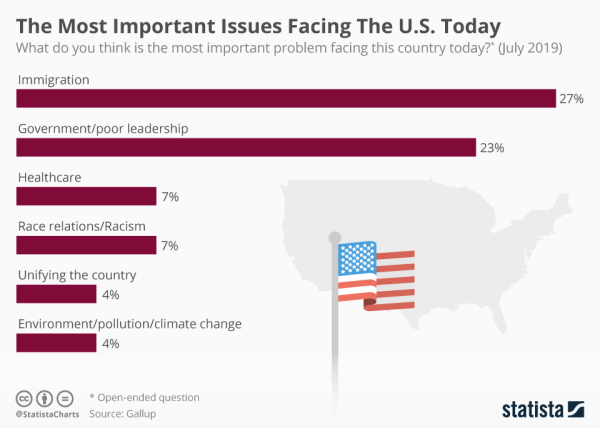
In July, immigration topped the list, presumably by people on one side of the political spectrum, followed by the government (likely by people on the other side of the spectrum).
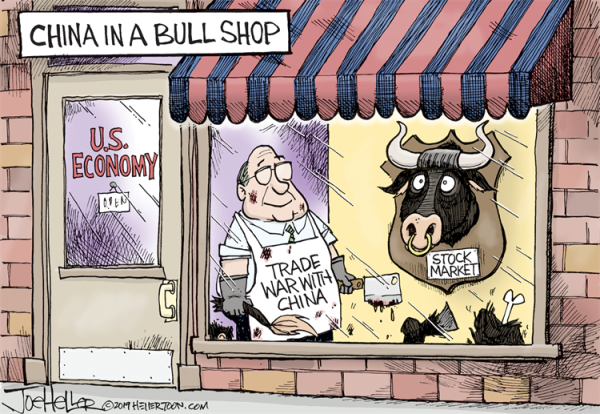
Surprisingly to me, the economy and the trade war were nowhere to be found.
Whether or not we have to worry, they seem fairly germane issues. I started writing an article on yield curves and the fear of recession before realizing our Chief Investment Officer, John DeTore, was already writing his own letter on it. So, I'll deal with some of the surrounding issues here.
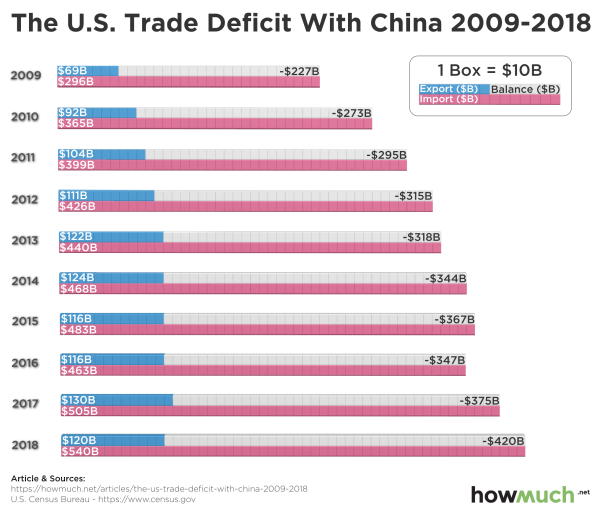
To start, the U.S. imports nearly 4.5x what it exports to China.
While the USA's GDP is the highest globally, China is gaining quickly.
Meanwhile, China is still the biggest holder of U.S. debt – and is currently allowing the Yuan to weaken to try and make its products more competitive and offset tariffs.
It feels like we're losing some ground. But, everybody seems to feel that right now. The next chart shows that sentiment about the economic situation has been globally gloomy.
Everything seems different, yet everything seems the same. Markets tend to climb a wall of worry before falling off a cliff … and then repeating the cycle.
Trends continue until broken.
Seems like a time for caution. But, historically, times like these seem to have great opportunities hidden in them.
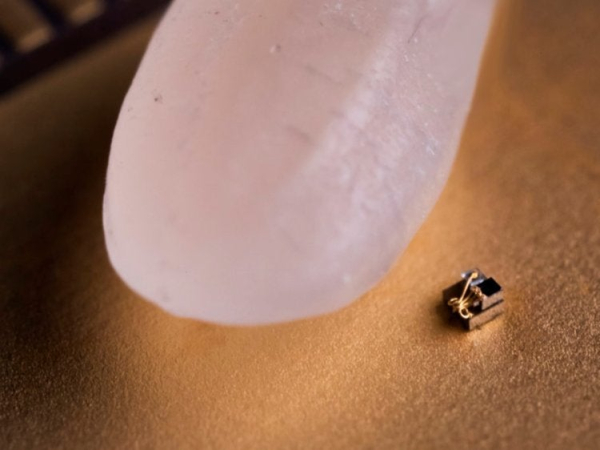
The "thing" next to the fingernail is a functioning computer created at the University of Michigan (and it measures just .3 mm a side). It's run by photovoltaics and is primarily used as a precision temperature sensor. The caveat is that once it loses power, it loses all prior programming and data.
It tests the limits of what we call a computer – but it's multitudes better than the previous iteration, and innovation breeds innovation.
The trick is recognizing that you can create conditions that make your success much more likely.
No matter how much internal resolve you have, changing the story you tell yourself, and the environment you create for yourself, are reliable ways to make meaningful and lasting change.
Is How You Do Something, How You Do Everything?
On some level, I think so. To make the point, let me start with a brief story.
I was at the gym and getting pretty close to the end of my workout.
Frankly, I was at a point where being done was way more attractive than the option of doing additional exercise.
Over time, I've developed many habits and beliefs that focus on finding the best next step – or a way to do just a little bit more. So this time, I used reverse-counting to help me finish that workout strong.
I started with 10 push-ups. I know I can do 10 push-ups, even at the end of a hard workout. Without putting my knees down, I can rest in plank position for a moment or two … then I do nine more push-ups. That has to be easier than 10, right? Then eight more … seven … six. You get the point.
Each set is a little bit harder than the one before; but mentally I'm prepared for it, and can convince myself that I'm so much closer to the goal.
So I get to three, and sweat is dripping off my nose, my arms are shaking, and my hips want to sway. Somehow knowing that there are only two more sets, then only one more, allows me to finish.
That story could have been about creating profitable trading systems, developing a new database, or recovering from a setback. It's about finding a way, regardless of external circumstances.
Finding a Way to Do Just a Little Bit More.
There are many times that it seems easier to do nothing, or to give up. That's just not my nature. It's not in my "nurture" either.
My father used to say that the secret to success was getting up. What he meant was that if someone knocked you down 10 times, then the secret to success was getting up 11 times. And if someone knocked you down another time, then the secret was to get up 12 times. There's a lot of truth in that.
I laugh when I think of all the little things I do that condition me to take the best next step. Here are a few examples of small things that help define that mindset.
I never stop reading until I finish a chapter.
Also, when I play a strategy game on my iPhone, I never stop until I win.
And, when I play a strategy game that I'm good at, I never stop until I achieve a certain score.
It doesn't matter if I'm frustrated or tired. I find a way. Each of these things, in its own small way, helps condition me to know that I can do anything I commit to do. Ultimately, what that means is that regardless of what happens, my outcome depends most on what I choose to do.
Sometimes these habits seem silly, quirky, or even a little bit OCD to me. Yet, they serve me.
Many benefits come from knowing that the game's not over until you say it is … or until you win.
Moreover, it's comforting to know that there's always a best next step, or at least a different perspective that will create new opportunities and possibilities.
I tend to take that perspective in business as well. We focus on the progress we're making, and what that makes possible, rather than how far we are from the ultimate goal. Why? Because, as we continue to make progress, the things we shoot for are bigger and farther away. Focusing there would always show a shortfall. Obstacles and setbacks become the raw material for new growth, ideas, and strategies. The trick is getting back up, isn't it?
Sometimes the best advice is simple. Nike got it right in their ad … Just Do It.
AI has plenty of weaknesses – I've talked about some before, and I'll continue to talk about them in the future, but two specific weaknesses were brought to my attention this week.
AI Portraits – Won't Steal Your Data, But Might Steal Your Soul Dorian Gray-Style
I assume most of you have seen the FaceApp trend – people age-ifying their photos and unwittingly giving the rights to their photos to a shadowy Russian tech company. You've also likely seen AI paintings selling for ridiculous money.
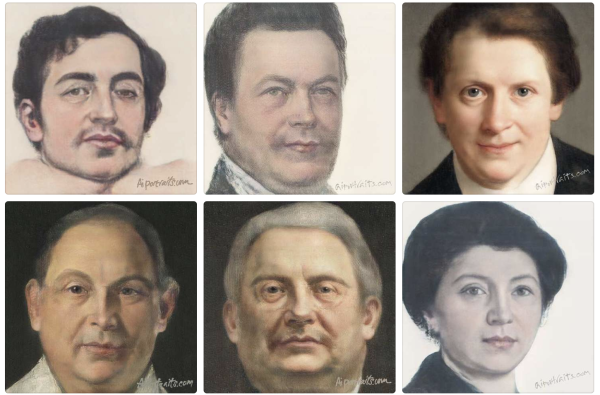
But have you seen their lovechild AI Portraits – a more wholesome experiment run by the MIT-IBM Watson AI Lab. AI Portraits uses approximately 45,000 different Renaissance-esque 15th-century portraits and General Adversarial Networks to translate your selfie into an artistic masterpiece. It's novel because instead of simply drawing over your face it's generating new features and creating an entirely new version of your face.
Mauro Martino via YouTube
It's impressive because it determines the best style for your portrait based on your features, your background, and more.
However, it's not without "flaw". The choice of 15th-century portraiture creates a couple of clear biases. At the time, portraits of smiling or laughing individuals were rare, so your smile will likely not transfer. As well, there's a clear bias towards anglo-saxonification.
My son got excited while playing with the app and sent several of his coworkers, friends, and family through the app. If you look at the bottom right, you'll see my lovely wife Jen's portrait.
Most of you have seen my wife and know that she is Indonesian, something that is very much removed from the translation.
All photos are immediately deleted from their servers after creating your image, so your privacy is safe (this time!)
All biases can be considered quirks of this current iteration of the program – which I do earnestly believe is interesting.
Later, you can imagine an AI choosing between various different styles of art based on a cornicopia of factors – or off human selection – but you have to walk before you can run, and this is a fun way to get people excited about AI.
Computer Answering Systems – No, The Answer Isn't 42
“Yes…Life, the Universe, and Everything. There is an answer. But I’ll have to think about it…the program will take me seven-and-a-half million years to run.” – Deep Thought, Hitchhiker's Guide To The Galaxy
Think of the global excitement when IBM's Watson first beat Ken Jennings in Jeopardy … it's widely considered one of the holy grails of AI research to create a machine that truly understands the nuances of language and human thought. Yet, if you've talked to Alexa recently, you know there's a long way to go.
Today's question answering systems are basically glorified document retrieval systems. They scan text for related words and send you the most relevant options. Researchers at the University of Maryland recently figured out how to easily create questions that stump AI (without being paradoxical, impossible to answer, requiring empathy etc.) in order to enhance those systems.
A system that understands those questions will be a massive step toward a real understanding and processing of language.
So what's the secret to these "impossible" questions?
The questions revealed six different language phenomena that consistently stump computers. These six phenomena fall into two categories. In the first category are linguistic phenomena: paraphrasing (such as saying “leap from a precipice” instead of “jump from a cliff”), distracting language or unexpected contexts (such as a reference to a political figure appearing in a clue about something unrelated to politics). The second category includes reasoning skills: clues that require logic and calculation, mental triangulation of elements in a question, or putting together multiple steps to form a conclusion […]
For example, if the author writes “What composer's Variations on a Theme by Haydn was inspired by Karl Ferdinand Pohl?” and the system correctly answers “Johannes Brahms,” the interface highlights the words “Ferdinand Pohl” to show that this phrase led it to the answer. Using that information, the author can edit the question to make it more difficult for the computer without altering the question’s meaning. In this example, the author replaced the name of the man who inspired Brahms, “Karl Ferdinand Pohl,” with a description of his job, “the archivist of the Vienna Musikverein,” and the computer was unable to answer correctly. However, expert human quiz game players could still easily answer the edited question correctly.
The main change is increasing the complexity of the questions by nestling another question. In the above example, the second question forces the AI not only to decide the composer inspired by Karl Ferdinand Pohl, but also to decipher who is inspiring (hint: It's Karl Ferdinand Pohl).
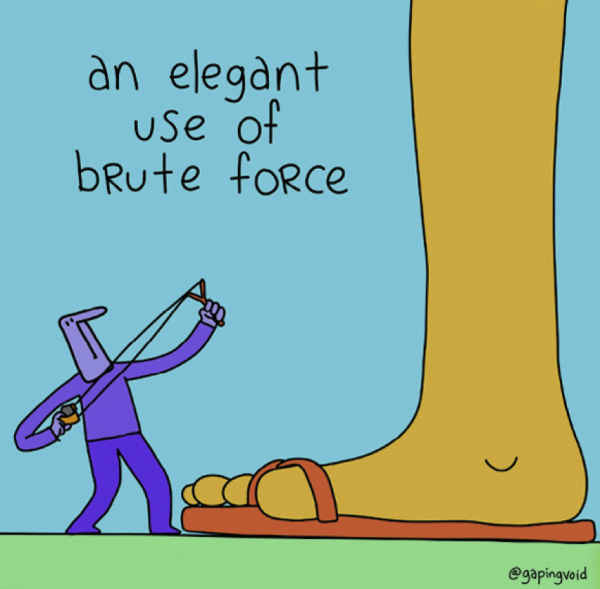
AI isn't great yet at mental triangulation; at putting together multiple steps to form a conclusion. While AI is great at brute force applications – we're still coding the elegance.
 via
via 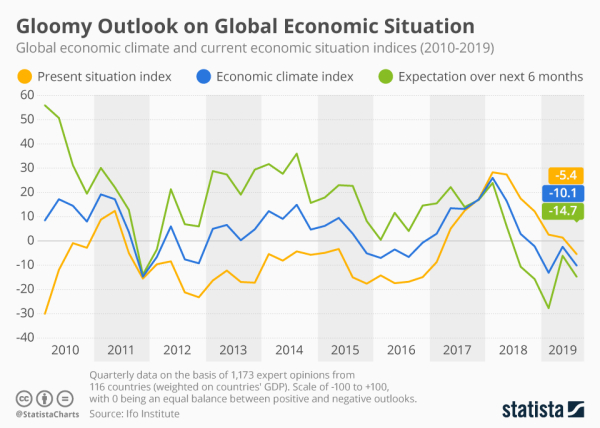
 It's hard to fight Mother Nature.